




News
Oct 1st, 2026
Canada invites 1.9 Lakh+ Candidates in 9 months in 2026. You Can Be The Next One. Apply Now!





Don' know what to do?
Get Free CounselingTrending News
Latest Article
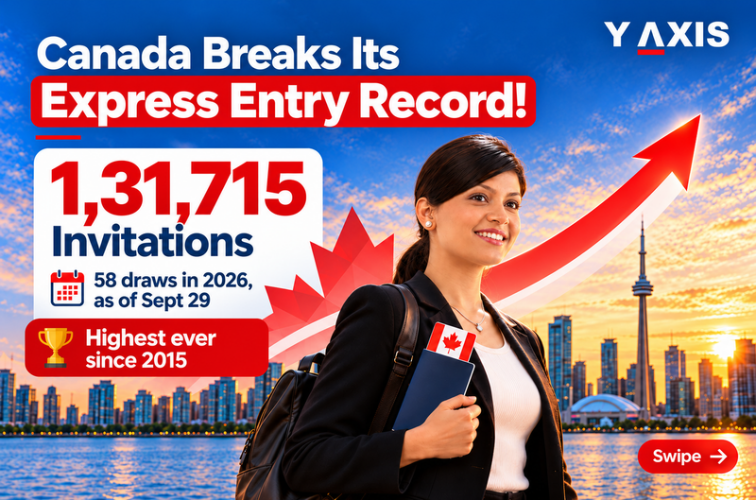
Canada invites 1.9 Lakh+ Candidates in 9 months in 2026. You Can Be The Next One. Apply Now!
Highlights: Canada Reaches New Immigration Milestone With 1.9 Lakh+ Invitations in 2026
- Canada has issued 190,822 invitations to apply for permanent residence between January and September.
- Express Entry led with 129,715 invitations, about 68% of the total.
- Provincial programs and Quebec issued a combined 61,107 invitations.
- Quebec, Ontario and Alberta were the top provinces, with 15,065, 13,314 and 11,642 invitations.
- February was the busiest month, with 29,319 invitations across all programs.
*Interested to qualify for Canada immigration draws? Avail Y-AxisCanada Immigration Points Calculator to assess your profile.
Canada Issues 190,822 Invitations Through Express Entry and Provincial Draws in 2026
Canada has issued 190,822 invitations to skilled workers between January and September. These came through Express Entry, Provincial Nominee Programs (PNPs) and Quebec's immigration programs. Express Entry issued 129,715 invitations, while provinces and Quebec issued 61,107 for Canada permanent residence (PR).
Monthly totals for ITAs ( Invitations to Apply) changed through the year. February had the most invitations at 29,319, followed by March at 29,159 and April at 28,472. May had the fewest at 11,893. Express Entry's busiest month was March, with 20,982 invitations.
Ontario PNP issued 13,314 invitations, mostly in February, March and April. Alberta PNP and Manitoba PNP held draws every month, issuing 11,642 and 6,883 invitations. British Columbia(BCPNP), New Brunswick(NBPNP), Newfoundland and Labrador(NLPNP), Prince Edward Island (PEI PNP) and the Northwest Territories (NTNP) also invited candidates through their own programs.
The table below shows the invitations issued by each program and province:
|
Express Entry / Province |
Invitations (Jan–Sep) |
Highest Month |
|
Express Entry |
1,29,715 |
March (20,982) |
|
Quebec |
15,065 |
April (2,555) |
|
Ontario |
13,314 |
April (7,730) |
|
Alberta |
11,642 |
February (2,305) |
|
Manitoba |
6,883 |
July (2,989) |
|
British Columbia |
6,103 |
September (1,214) |
|
New Brunswick |
4,110 |
July (750) |
|
Newfoundland and Labrador |
2,695 |
March (690) |
|
Prince Edward Island |
1,230 |
July and September (195 each) |
|
Northwest Territories |
65 |
March (65) |
|
Total |
1,90,822 |
February (29,319) |
*Want to work in Canada? Let Y-Axis guide you with the steps.
Why Does Canada Keep Inviting Skilled Workers for Permanent Residence?
Canada relies on immigration to grow its workforce and support its economy. Regular draws through Express Entry, provincial programs and Quebec help the country bring in skilled workers where they are needed most.
- Labour shortages: Key sectors such as healthcare, construction, technology and trades still need skilled workers.
- Ageing population: Many workers are retiring, so Canada needs new talent to fill these roles.
- Immigration targets: Canada's Immigration Levels Plan sets yearly targets for economic immigrants, which draws help meet.
- Provincial needs: Each province uses its own Provincial Nominee Program to invite workers who match its local job market.
- French-speaking immigration: Quebec runs its own selection programs, and Canada also aims to increase French-speaking immigration in other provinces.
- Economic growth: New permanent residents add to the workforce, start businesses and help Canada's economy grow.
*Are you looking for step-by-step assistance with Canada immigration? Contact Y-Axis, the world's No. 1 overseas immigration consultancy.
For recent Canadian immigration updates, check out the Y-Axis Canada Immigration News Page.
FAQs
How many invitations has Canada issued between January and September?
Canada has issued 190,822 invitations to apply for permanent residence between January and September. Express Entry issued 129,715 of these invitations. Provincial Nominee Programs and Quebec's immigration programs issued the remaining 61,107. The invitations went to skilled workers across many occupations, helping Canada meet its economic immigration targets and fill labour shortages in key sectors. This shows steady demand for skilled immigrants across Canada.
How many invitations were issued through Express Entry?
Express Entry issued 129,715 invitations between January and September, about 68% of all invitations. March was the busiest month, with 20,982 invitations. May had the fewest, with 8,214. Express Entry manages applications for the Federal Skilled Worker Program, the Canadian Experience Class and the Federal Skilled Trades Program, making it Canada's main route for skilled workers. Each draw invites candidates with the highest CRS scores in the pool.
Which province issued the most invitations?
Quebec issued the most invitations among the provinces, with 15,065 invitations through its own immigration programs. Ontario followed with 13,314 invitations, most of which came in February, March and April. Alberta was third with 11,642 invitations, issued through draws held every month. Manitoba and British Columbia also issued more than 6,000 invitations each during the period. New Brunswick and Newfoundland and Labrador also issued thousands of invitations.
Which month had the highest number of invitations?
February had the highest number of invitations, with 29,319 issued across Express Entry, provincial programs and Quebec. March followed closely with 29,159, and April had 28,472. May had the lowest total at 11,893. Monthly totals change based on the size of Express Entry draws and the timing of draws held by each province. This makes it important to keep your profile ready at all times.
What is a Provincial Nominee Program (PNP)?
A Provincial Nominee Program lets a Canadian province or territory nominate foreign workers who meet its local labour needs. Each province runs its own streams, with different eligibility rules. A nomination can lead to permanent residence. Candidates who receive a nomination linked to Express Entry get 600 additional CRS points, which almost guarantees an invitation to apply. Most PNP streams need a job offer, work experience or a connection to the province.
How does a provincial nomination help an Express Entry candidate?
A provincial nomination linked to Express Entry adds 600 points to your Comprehensive Ranking System (CRS) score. This places you well above the usual cut-off scores in most draws. As a result, you are very likely to receive an invitation to apply for permanent residence in the next Express Entry draw for provincial nominee candidates. You must still meet all the eligibility rules and submit a complete application on time.
Why does Canada keep inviting foreign workers?
Canada invites foreign workers to fill labour shortages in sectors such as healthcare, construction, technology and trades. Many workers are retiring, and the country needs new talent to support its economy. Canada's Immigration Levels Plan sets yearly targets for economic immigrants. Regular draws through Express Entry, provincial programs and Quebec help the country meet these targets. Immigrants also help support public services and pay for an ageing population's needs.
How is Quebec's immigration system different from other provinces?
Quebec selects its own economic immigrants instead of using a regular Provincial Nominee Program. Candidates apply through Quebec's own programs and, if selected, receive a Quebec Selection Certificate before applying for permanent residence. Quebec places strong importance on French language skills. It issued 15,065 invitations between January and September, the highest among the provinces. Candidates can check the Quebec immigration website for the latest draws and programs.
Which provinces held draws every month?
Alberta, Manitoba, British Columbia, Prince Edward Island and New Brunswick issued invitations in every month from January to September. Regular draws make these provinces a reliable option for candidates who match their streams. Some provinces, such as Ontario and the Northwest Territories, issued invitations in only a few months. Draw timing can change based on each province's priorities. Candidates should track each province's draw updates on its official website.
How can I improve my chances of receiving an invitation from Canada?
You can improve your chances by raising your CRS score. Improve your language test results, gain more skilled work experience, and get your education assessed. Learning French can also add points. Applying to a Provincial Nominee Program that matches your occupation can bring 600 extra points. Keep your Express Entry profile updated and accurate at all times. Always check the latest draw results and eligibility rules before you apply.
Canada, UK and Australia Update Student Visa Requirements for 2027 Intakes. Check Your Eligibility!
Highlights: Big News for Indian Students as Canada, UK and Australia Revise Student Visa Rules
- Canada, UK and Australia have announced updated student visa requirements for international students for 2027.
- Canada has raised the study permit living cost requirement to CAD 23,448 from September 1, 2026.
- UK Student visa maintenance funds rise to £1,570 per month in London from 30 November 2026.
- Australia plans new rules that require students to progress to a higher qualification level.
- Foreign PhD students in Australia will still be able to bring their families as per the updated policies.
*Want to study abroad? Let Y-Axis guide you with the process.
Canada, UK and Australia Update Student Visa Requirements for 2027
Canada, the UK and Australia have announced changes to their student visa requirements. Canada and the UK have revised the funds students must show, and Australia has announced new rules on family members and study progression. These updates give students a clear picture of what they need before they apply.
Canada's new financial requirement took effect on September 1, 2026. The UK's revised maintenance funds apply to Student visa applications made from 30 November 2026. Australia's changes were announced by Home Affairs Minister Tony Burke. Implementation details and effective dates are yet to be confirmed.
|
Country |
Update |
Previous Requirement |
New Requirement |
Effective From |
|
Minimum annual living expenses (one student, outside Quebec) |
CAD 22,895 |
CAD 23,448 |
September 1, 2026 |
|
|
Monthly maintenance funds (London) |
£1,529 |
£1,570 (£14,130 for 9 months) |
30-Nov-26 |
|
|
UK |
Monthly maintenance funds (outside London) |
£1,171 |
£1,203 (£10,827 for 9 months) |
30-Nov-26 |
|
Family members on student and graduate visas |
Allowed |
Not allowed, except for PhD students |
Yet to be confirmed |
|
|
Australia |
Study progression |
Same or lower level courses allowed |
Must progress to a higher qualification |
Yet to be confirmed |
Also, read...
How Global Student Visa Updates Benefits Indians in the Upcoming Years?
Indian students are among the largest groups studying in Canada, the UK and Australia. The revised requirements help them plan their finances and study pathways with confidence.
- Clear fund amounts help students prepare accurate financial documents before applying.
- Canada's increase is modest at CAD 553, about 2.42%, so budgets need only a small adjustment.
- UK applicants who apply before 30 November 2026 can still use the current maintenance fund rates.
- Australia's progression rule gives students a structured path from Bachelor's to Master's study.
- PhD aspirants can still take their families to Australia.
- Students already in Australia are expected to be exempt from the new family rule.
*Are you looking for step-by-step assistance with overseas immigration? Contact Y-Axis, the world’s No. 1 overseas immigration consultancy!
For recent immigration updates, check out the Y-Axis News Page
FAQs
What are the latest student visa updates for Canada, UK and Australia?
Canada has raised its study permit living cost requirement to CAD 23,448 from September 1, 2026. The UK has revised its Student visa maintenance funds to £1,570 per month in London and £1,203 per month outside London from 30 November 2026. Australia has announced new rules on family members and study progression for international students, with implementation details and effective dates yet to be confirmed.
What is the new financial requirement for a Canada study permit?
From September 1, 2026, a single student applying for a Canada study permit outside Quebec must show at least CAD 23,448 for annual living expenses. This is an increase of CAD 553, or about 2.42%, from the earlier requirement of CAD 22,895. The amount covers living expenses only and is separate from tuition fees and travel costs, which students must show in addition to this figure.
How much do I need for a Canada study permit if my family is coming with me?
The amount rises with each family member included in the application. A family of two must show CAD 29,192, a family of three CAD 35,888 and a family of four CAD 43,572. For families with more than seven people, each additional member adds CAD 6,318. These figures apply to all provinces and territories except Quebec and do not include tuition fees or transportation costs.
What are the revised UK Student visa maintenance funds?
From 30 November 2026, students studying in London must show £1,570 per month, up from £1,529. Students studying outside London must show £1,203 per month, up from £1,171. For a nine month course, the total required is £14,130 in London and £10,827 outside London. The revised figures are set out in the UK Immigration Rules and apply to all new Student visa applications.
When do the new UK maintenance fund rules apply?
The revised maintenance funds apply to UK Student visa applications made from 30 November 2026. Students who apply before this date can still use the current rates of £1,529 per month in London and £1,171 per month outside London. Applicants planning for January or later 2027 intakes should prepare their finances based on the new figures to avoid delays or refusals in their visa process.
Can international students bring their families to Australia under the new rules?
Under the announced changes, international students and graduate visa holders will no longer be able to bring family members with them to Australia. PhD students are an exception and can still bring their families, as they are in different life circumstances. Students already in Australia and applicants from Pacific and South East Asian countries are also expected to be exempt. Final details are yet to be confirmed.
What is the study progression rule announced by Australia?
Australia plans to require students who want to extend their stay to move to a higher qualification level, such as from a Bachelor's to a Master's degree. The government aims to limit visa hopping through successive courses at the same or a lower qualification level. This rule gives students a clear, structured academic path and encourages meaningful progression during their time studying in Australia.
Have Australia's new student visa rules come into effect?
Not yet. The changes were announced by Home Affairs Minister Tony Burke, but implementation details, effective dates and final visa requirements are yet to be confirmed. Students should follow official Australian Government and Department of Home Affairs updates for the final rules. Until then, the current student visa rules continue to apply for applicants who are planning their study journey to Australia.
How do these updates benefit Indian students?
These updates give Indian students clear figures and rules to plan their study abroad journey with confidence. Knowing the exact fund amounts helps them prepare accurate financial documents. Canada's increase is modest, UK applicants can still apply under current rates before 30 November 2026, and Australia's progression rule offers a clear pathway to higher qualifications, especially for PhD aspirants who wish to travel with their families.
How can Y-Axis help me apply for a student visa in Canada, UK or Australia?
Y-Axis helps Indian students at every stage of the study abroad process. Our experts assess your eligibility, guide you on course and university selection and help you prepare financial documents that meet the latest requirements for Canada, the UK and Australia. We also support you with visa applications, test preparation and admission guidance so you can apply with confidence under the updated student visa rules.
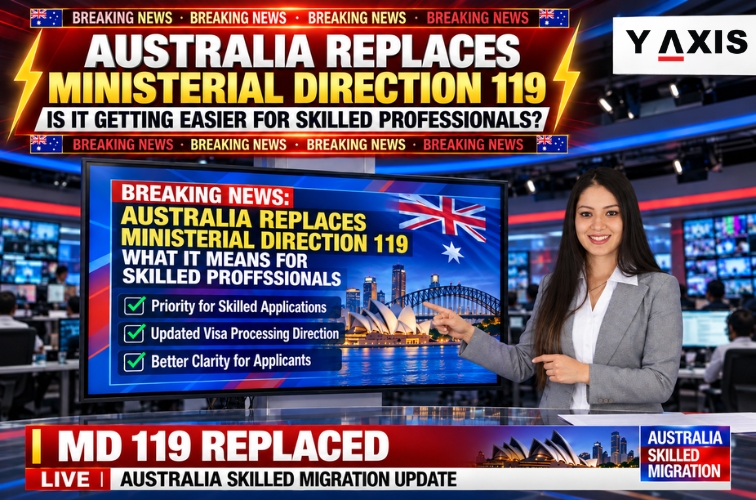
Australia Replaces Ministerial Direction 119: Is It Getting Easier for Skilled Professionals?
Highlights: Australia Replaces MD 119 With New Skilled Visa Priorities: What Has Changed?
- Yes, Australia has introduced new skilled visa processing priorities under Ministerial Directions 121 and 122 from 19 September 2026.
- MD 121 will replace MD 119 for temporary skilled visas, including the Skills in Demand Subclass 482 visa.
- MD 122 has set new processing priorities for several permanent and provisional skilled visas, including Subclasses 186, 189 and 190.
- Foreign professionals across construction, healthcare, teaching, agriculture, aquaculture, fishing and resources occupations will receive the highest processing priority.
- The new priorities also apply to eligible applications already lodged but not finally decided before 19 September 2026.
*Interested to work in Australia? Let Y-Axis guide you with the process.
Australia Replaces MD 119 With New Skilled Visa Processing Priorities Under MD 121 and MD 122
Australia has officially revised priority framework for certain skilled visa applications, with Ministerial Directions 121 and 122 coming into effect on 19 September 2026. The two new directions replace the processing priorities previously set under Ministerial Direction 119.
The priority-based system in Australia itself continues, but the order and categories have been rearranged. MD 121 covers temporary skilled visas, while MD 122 covers specified permanent and provisional skilled visas. The new directions determine how applications are prioritised for processing and do not change the underlying visa eligibility requirements.
MD 121 Sets Priorities for Temporary Skilled Visas
Ministerial Direction 121 applies to Subclass 482 Skills in Demand visa applications, including relevant remaining Temporary Skill Shortage applications. Applications connected with priority occupations and sectors are placed first, followed by Specialist Skills stream applications, onshore applicants and specified offshore applicants.
MD 122 Covers Permanent and Provisional Skilled Visas
Ministerial Direction 122 applies to Subclasses 186, Subclass 187, Subclass 189, Subclass 190, Subclass 191, Subclass 489, Subclass 491, Subclass 494, Subclass 887 and Subclass 888. Priority is first given to applications relating to specified priority sectors, followed by applicants who were in Australia when they lodged their applications and certain offshore applicants.
The table highlights the new skilled visa processing priority order:
|
Priority |
MD 121 – Temporary Skilled Visas |
MD 122 – Permanent & Provisional Skilled Visas |
|
1 |
Construction, healthcare, teaching, agriculture, aquaculture, fishing, resources, law enforcement and defence interests |
Construction, healthcare, teaching, agriculture, aquaculture, fishing, resources, law enforcement and defence interests |
|
2 |
Specialist Skills stream |
Applicants in Australia at lodgement |
|
3 |
Applicants in Australia at lodgement |
Certain offshore applicants who lodged independently |
|
4 |
Certain offshore applicants who lodged independently |
Other applications |
|
5 |
Other applications |
— |
Note: The priority order determines the sequence in which applications are considered; it does not guarantee faster processing or visa approval.
Read more...
Australia Updates Skilled Visa Processing Priorities for 2026. Check Your Eligibility!
Priority Occupations Under the New Framework in Australia
The first priority category includes foreign professionals from specified occupations connected with construction, healthcare, resources and teaching, among other sectors applying for Australia permanent residence (PR). The Department's framework uses defined occupation groups and codes rather than automatically covering every job within an industry.
Key occupation groups include:
- Construction: Construction Trades Workers, Construction and Mining Labourers, Construction Managers, Engineering Managers, Architects, Civil Engineering Professionals, Electricians and other specified construction-related occupations.
- Healthcare: Health Professionals, Health and Welfare Support Workers, Medical Scientists, Counsellors, Psychologists, Social Workers, Medical Technicians, Aged or Disabled Carers, Nursing Support Workers and Personal Care Assistants.
- Resources: Mining Engineers, Geologists, Geophysicists and Hydrogeologists, Drillers, Miners and Shot Firers, Production Managers (Mining), Surveyors, Metallurgists and specified fitters and machinists.
- Teaching: School Teachers, Child Care Centre Managers, School Principals, Faculty Heads, University Lecturers, Vocational Education Teachers and Child Care Workers.
Note: The new directions apply not only to applications lodged from 19 September 2026, but also to eligible applications that were already lodged and had not been finally determined on that date. These applications are therefore re-ordered under the new processing priorities.
Also, read...
How Australia’s Revised Priority Framework Affect Foreign Professionals
The revised Australian skilled visa processing framework provides greater clarity on which occupations and applicant categories receive processing priority. Foreign skilled professionals working in the specified priority occupations may benefit from being placed in the highest processing category, while eligible applicants in other categories can understand how their location and visa stream affect processing order.
- Priority for key occupations: Professionals working in eligible construction, healthcare, teaching and resources occupations can fall within the highest priority category.
- Specialist Skills pathway: Eligible Subclass 482 applicants in the Specialist Skills stream receive a separate priority under MD 121.
- Greater clarity for applicants: The new framework clearly separates temporary skilled visa priorities from permanent and provisional skilled visa priorities.
- Onshore applicants: Eligible applicants who were in Australia when they lodged their applications receive priority over certain offshore applications under the relevant directions.
- Existing applications included: Foreign applicants with eligible applications already in the queue may also have their processing order reassessed under the new framework.
- Multiple skilled visa pathways covered: The changes apply across Subclass 482 and several permanent and provisional skilled visa categories, including 186, 189 and 190.
*Are you looking for a step-by-step with Australian Immigration? Contact Y-Axis, the world’s No. 1 abroad immigration consultancy, for end-to-end support! For more updates on Australia, check out Y-Axis Australia Immigration Updates!
FAQs
What are Australia’s new Ministerial Directions 121 and 122?
Ministerial Directions 121 and 122 are Australia’s updated skilled visa processing priority directions, which replaced the previous framework under Ministerial Direction 119 from 19 September 2026. MD 121 applies to certain temporary skilled visas, including Subclass 482, while MD 122 covers several permanent and provisional skilled visas. The directions change the order in which eligible applications are processed based on specified priority categories.
What happened to Australia’s Ministerial Direction 119?
Ministerial Direction 119 has been replaced by Ministerial Directions 121 and 122. Australia has retained its priority-based approach to processing skilled visa applications, but the order and categories have been rearranged. The new directions apply from 19 September 2026 and also affect eligible applications that were already lodged but had not received a final decision when the new directions took effect.
Which visas are covered by MD 121?
MD 121 applies to certain temporary skilled visa applications, including the Subclass 482 Skills in Demand visa. Under the revised priority framework, applications associated with specified priority sectors are processed first, followed by eligible Specialist Skills stream applications, applicants who were in Australia when they lodged their application, certain offshore applicants and other applications.
Which visas are covered by MD 122?
MD 122 applies to several permanent and provisional skilled visa subclasses. These include Subclasses 186, 187, 189, 190, 191, 489, 491, 494, 887 and 888. Under the new framework, applications linked to specified priority sectors receive the highest priority, followed by eligible applicants who were in Australia when they lodged their applications and certain offshore applicants.
Which occupations receive priority under Australia’s new skilled visa rules?
The highest priority category includes specified occupations across construction, healthcare, teaching, agriculture, aquaculture, fishing and resources, along with Australia’s law enforcement and defence interests. Examples include construction managers, civil engineering professionals, electricians, health professionals, medical scientists, psychologists, social workers, mining engineers, geologists, school teachers and childcare workers.
Do the new Australian skilled visa priorities apply to existing applications?
Yes. The new processing directions are not limited to applications lodged after 19 September 2026. Eligible applications that had already been lodged but had not been finally determined when MD 121 and MD 122 commenced are also subject to the revised priority arrangements. This means existing applications can be re-ordered according to the new processing priorities.
Do MD 121 and MD 122 make Australian skilled visas easier to obtain?
The new directions change the processing order rather than the underlying eligibility requirements for the relevant visas. Applicants still need to meet the requirements of their particular visa subclass. However, professionals working in occupations included in the highest priority categories may receive priority in processing compared with applications placed in lower priority categories under the revised framework.
What is the Specialist Skills stream priority under MD 121?
Under MD 121, eligible Specialist Skills stream applications receive the second processing priority after applications connected with specified priority sectors. Applicants must meet the applicable Specialist Skills income threshold, which is AUD 146,576 according to the information provided for the new framework. This priority applies to relevant temporary skilled visa applications covered by MD 121.
How do the new priorities affect Indian skilled professionals?
Indian skilled professionals may be affected according to their occupation, visa subclass and location when the application was lodged. Those working in specified construction, healthcare, teaching, agriculture, aquaculture, fishing or resources occupations can fall within the highest priority category. Eligible applicants already in Australia at lodgement may also receive a higher processing priority under the relevant direction.
When did Australia’s new skilled visa processing priorities take effect?
Ministerial Directions 121 and 122 took effect on 19 September 2026, replacing the previous priority arrangements under MD 119. The revised framework applies to relevant applications lodged from that date as well as eligible applications already lodged and awaiting a final decision. Applicants should check the specific direction applicable to their visa subclass to understand the relevant processing priority.

Australia Updates Skilled Visa Processing Priorities for 2026. Check Your Eligibility!
Highlights: Australia Fast Tracks Priority Sectors Under New Skilled Visa Processing Rules
- Australia officially announced new skilled visa processing priorities under Ministerial Directions 121 and 122.
- Foreign candidates from construction, healthcare, teaching, agriculture and resources occupations in Australia will receive higher processing priority.
- Applications linked to Australia’s law enforcement and defence interests are also prioritised.
- The new visa framework covers temporary, permanent and provisional skilled visa applications.
- Priority processing changes the order of assessment but does not guarantee faster approval or visa grants.
*Want to apply for an Australia work visa? Let Y-Axis assist you with the process.
Australia Updates Skilled Visa Processing Priorities
Australia has introduced new processing priorities for several temporary, permanent and provisional skilled visas from September 19, 2026.
Ministerial Directions 121 and 122 have replaced the previous priorities under Ministerial Direction 119. The new framework prioritises applications connected with selected sectors, including construction, healthcare, teaching, agriculture, aquaculture, fishing and resources, along with Australia's law enforcement and defence interests.
The new priorities apply when the visa application is connected to an occupation or position within the specified sectors. Applicants outside these priority groups can still have their applications processed, although they may be considered after higher-priority applications.
Also, read...
New Processing Priorities for Skilled Visa Applicants
Under the updated visa framework in Australia, applications connected with the following sectors receive the highest priority:
- Construction
- Healthcare
- Teaching
- Agriculture
- Aquaculture and fishing
- Resources
- Law enforcement interests
- Defence interests
For Subclass 482 (Skills in Demand Visa) applications, the processing order also includes Specialist Skills stream applications and applications based on whether the applicant was inside or outside Australia when applying.
|
Priority Group |
Applications Covered |
|
Group 1 |
Priority sectors, law enforcement and defence interests |
|
Group 2 |
Specialist Skills stream under subclass 482 |
|
Group 3 |
Applicants in Australia when applying |
|
Group 4 |
Applicants outside Australia when applying |
|
Group 5 |
Other eligible applications |
For permanent and regional skilled visas covered by Ministerial Direction 122, the highest priority similarly goes to applications linked to the specified sectors and Australia's law enforcement and defence interests.
Also, read...
Australia to Welcome One Million Skilled Professionals by 2029. Check Your Eligibility Now!
How Australia Visa Rule Updation Affects Indian Applicants?
Indian skilled professionals working in Australia's priority sectors may benefit from the revised processing order when their occupations and applications meet the relevant requirements.
- Indian healthcare professionals may receive higher processing priority where their application falls within the eligible framework.
- Construction professionals may benefit from the increased priority given to construction-related applications.
- Teachers and education professionals may receive priority when their applications are connected to the specified teaching sector.
- Skilled workers in agriculture, aquaculture, fishing and resources may benefit from sector-based prioritisation.
- Indian applicants eligible for the Specialist Skills stream under subclass 482 have a separate processing priority.
- Applicants already in Australia may receive a higher priority than certain applicants applying from outside Australia.
- Eligible applicants can continue to apply under the relevant skilled visa pathways while meeting all visa, sponsorship, skills, health and character requirements.
*Are you looking for a step-by-step with Australian Immigration? Contact Y-Axis, the world’s No. 1 abroad immigration consultancy, for end-to-end support!
For more updates on Australia, check out Y-Axis Australia Immigration Updates!
FAQs
What are Australia’s new skilled visa processing priorities?
Australia has introduced new skilled visa processing priorities under Ministerial Directions 121 and 122 from September 19, 2026. The framework prioritises applications connected with sectors such as construction, healthcare, teaching, agriculture, aquaculture, fishing and resources. Applications linked to Australia’s law enforcement and defence interests also receive higher priority under the updated processing framework.
Which occupations receive priority under Australia’s new visa rules?
Applications connected with construction, healthcare, teaching, agriculture, aquaculture, fishing and resources receive the highest priority under the new framework. Applications associated with Australia’s law enforcement and defence interests are also prioritised. The priority applies when the visa application relates to an occupation or position connected with these sectors and meets the relevant visa requirements.
When did Australia’s new skilled visa processing priorities take effect?
Australia’s updated skilled visa processing priorities took effect on September 19, 2026. Ministerial Directions 121 and 122 replaced the processing priorities previously established under Ministerial Direction 119. Direction 121 applies to temporary skilled visas, while Direction 122 covers specified permanent and provisional skilled visa applications.
Does priority processing guarantee faster visa approval in Australia?
No. Priority processing does not guarantee faster visa approval or a specific processing timeframe. The new directions determine the order in which eligible applications are considered by the Department of Home Affairs. Applicants must still meet all requirements for their relevant visa, and the Department may request additional documents, conduct checks or take other steps before making a decision.
How are subclass 482 Skills in Demand applications prioritised?
Subclass 482 Skills in Demand applications are processed according to five priority groups. Applications connected with priority sectors, law enforcement and defence interests receive the highest priority. Specialist Skills stream applications form the second group, followed by applications from applicants in Australia and those outside Australia. Other eligible applications fall into the final processing group.
Can Indian applicants benefit from Australia’s new skilled visa priorities?
Indian applicants may benefit if their skilled visa application is connected with one of the sectors receiving priority and they meet the relevant visa requirements. Healthcare, construction, teaching, agriculture and resources professionals may fall within the prioritised sectors. However, nationality alone does not determine processing priority, and applicants must satisfy the applicable skills, sponsorship, health, character and other requirements.
Which permanent skilled visas are covered by the new processing direction?
Ministerial Direction 122 covers several provisional and permanent skilled visa applications. These include subclasses 186, 187, 189, 190, 191, 489, 491, 494, 887 and 888. Applications connected with the specified priority sectors, as well as Australia’s law enforcement and defence interests, receive the highest priority under the updated processing framework.
What happened to Australia’s Ministerial Direction 119?
Ministerial Directions 121 and 122 replaced the skilled visa processing priorities established under Ministerial Direction 119 from September 19, 2026. Direction 121 covers temporary skilled visa applications, while Direction 122 applies to specified provisional and permanent skilled visas. Applicants with pending or planned applications should consider which direction applies to their visa subclass.
Do applicants outside Australia receive lower processing priority?
The new framework includes separate processing groups based on whether an applicant was inside or outside Australia when the application was lodged. For several visa categories, applicants in Australia are placed ahead of certain applicants who were outside Australia at the time of application. However, sector-based priorities and other specified categories are considered before these location-based groups.
What should skilled visa applicants do after the new Australian priorities?
Applicants should check which Ministerial Direction applies to their visa subclass and whether their occupation or position falls within a priority sector. They should also ensure that their application meets all relevant eligibility, sponsorship, nomination, skills, health and character requirements. Applicants with pending applications should monitor Department of Home Affairs updates and respond promptly if additional information is requested.

Belarus Makes Travel Easier for Indians With New E-Visa Facility. Apply Now!
Highlights: New Belarus E-Visa Facility Brings Easier Travel Opportunities for Indians
- Belarus, an eastern European country known for its forests, historic cities and scenic landscapes, will offer Indian travellers a distinctive destination to explore in 2026.
- Belarus has added India to its e-visa eligible countries, simplifying entry procedures for Indian citizens.
- The new electronic visa facility in Belarus is expected to support business visits, B2B meetings, trade discussions and investment projects between India and Belarus.
- Belarus plans to improve connectivity with India through proposed direct flights from Minsk to Mumbai and Goa.
- The proposed Minsk-Mumbai and Minsk-Goa flights is yet to be launched and will support future tourism and business travel.
*Want to visit Europe? Sign-up with Y-Axis to assist you with the process.
Belarus Introduces E-Visa Facility for Indian Citizens in 2026
Belarus has added India to the list of countries eligible for its electronic visa, making it easier for Indian citizens to complete the visa process before travelling to the European country. The decision was approved by the Belarusian Council of Ministers following an initiative by the country’s Foreign Ministry.
The new e-visa facility is aimed at simplifying entry procedures and strengthening people-to-people connections between Belarus and India. It could also make travel more convenient for Indian visitors planning business and tourism-related trips.
The introduction of the e-visa is expected to reduce administrative barriers for Indian business travellers visiting Belarus. The facility could support B2B negotiations, joint investment discussions, trade projects and other business activities between companies from the two countries.
Belarus has described India as one of the world’s largest and most dynamic markets. The simplified online visa process is expected to make it easier for eligible Indian travellers to plan visits for business and other purposes.
|
Belarus E-Visa Update |
Details |
|
Newly eligible country |
India |
|
Visa type |
Electronic Visa |
|
Approval authority |
Council of Ministers of Belarus |
|
Initiated by |
Foreign Ministry of Belarus |
|
Key purpose |
Simplify entry procedures |
|
Business activities supported |
B2B negotiations, investment and trade discussions |
|
Proposed direct flight routes |
Minsk–Mumbai and Minsk–Goa |
|
Flight status |
Proposed; not yet launched |
Note: Belarus also plans to introduce direct flights between Minsk and Mumbai and Minsk and Goa as part of its future connectivity plans. If launched, these routes could make travel between India and Belarus more convenient and support both tourism and business exchanges.
Why is Belarus in Europe an Attractive Travel Desination for Indians?
The introduction of Belarus’s e-visa provides Indian travellers with a more convenient entry option while creating opportunities for tourism, business and stronger India-Belarus connections.
Here is why Indians are visiting Belarus in Europe in 2026:
- Simpler visa process: Indian citizens can use the electronic visa facility instead of relying solely on traditional visa procedures.
- Easier travel planning: The online visa process can help eligible travellers complete entry formalities before travelling.
- Tourism opportunities: Indians can explore Belarus’s historic cities, natural landscapes, forests and European cultural heritage.
- Business travel: The e-visa can facilitate visits for B2B meetings, business discussions and commercial activities.
- Investment opportunities: Indian businesses can use the simplified travel process for discussions related to potential joint investment projects.
- Trade connections: Easier entry could support meetings between Indian and Belarusian companies involved in trade activities.
- Potential improved connectivity: Proposed direct flights from Minsk to Mumbai and Goa could make future travel more convenient if launched.
- Stronger people-to-people links: The visa change is intended to encourage greater interaction and travel between India and Belarus.
*Are you looking for step-by-step assistance with overseas immigration? Contact Y-Axis, the world’s No. 1 overseas immigration consultancy!
For recent immigration updates, check out the Y-Axis News Page!
FAQs
Can Indian citizens apply for a Belarus e-visa?
Yes. Indian citizens are now included among the nationalities eligible to obtain an electronic visa for Belarus. The new facility is intended to simplify the entry process and reduce administrative requirements for eligible travellers. The e-visa is expected to support tourism, business visits, B2B meetings, investment discussions and trade-related travel between India and Belarus.
Why has Belarus introduced an e-visa facility for Indians?
Belarus introduced the e-visa facility for Indian citizens to make travel easier and strengthen people-to-people and economic connections between the two countries. The simplified online process is expected to reduce administrative barriers for travellers and encourage business visits, B2B negotiations, investment projects and trade cooperation between Indian and Belarusian businesses.
Is Belarus a good destination for Indian travellers?
Belarus offers Indian travellers opportunities to explore Eastern European landscapes, historic cities, forests and cultural attractions. Minsk, the capital, provides a gateway to the country's urban and historical experiences, while Belarus is also known for its natural scenery. The introduction of an e-visa facility could make planning a visit more convenient for eligible Indian travellers.
Will the Belarus e-visa make travel easier for Indians?
The electronic visa facility is designed to simplify the visa process by allowing eligible Indian citizens to complete visa-related procedures online. This can reduce some of the administrative steps traditionally associated with travel documentation. However, travellers should still check the applicable visa conditions, entry requirements and validity rules before making travel arrangements.
Can Indian business travellers use the Belarus e-visa?
The new e-visa facility is expected to support business travel between India and Belarus. It can facilitate visits for activities such as B2B negotiations, discussions related to joint investment projects and trade cooperation. Indian business travellers should confirm that their intended activities are permitted under the specific e-visa conditions before travelling.
Does Belarus plan direct flights from India?
Belarus has discussed plans for establishing direct air connectivity between India and Belarus, including proposed routes from Minsk to Mumbai and Goa. These are future plans and should not be treated as currently operational direct flights. Travellers should check the latest airline schedules and official announcements before planning their journey around these proposed routes.
What are the proposed India-Belarus flight routes?
The proposed direct flight plans include connections between Minsk, the capital of Belarus, and Mumbai and Goa in India. If implemented, these routes could provide more convenient air connectivity for travellers between the two countries. At present, however, the routes remain proposed plans, so travellers should verify whether services have officially commenced before booking.
How could the e-visa benefit India-Belarus trade?
The e-visa facility could make business travel more convenient for Indian and Belarusian professionals involved in trade, investment and commercial cooperation. Easier entry procedures may support B2B meetings, negotiations and visits connected with joint projects. Belarus has highlighted India's large and dynamic market as an important factor behind strengthening economic and people-to-people links.
Is Belarus located in Europe?
Yes. Belarus is a landlocked country in Eastern Europe. It shares borders with several European countries, including Poland, Lithuania, Latvia and Ukraine, as well as Russia. Its location makes it a geographically distinctive destination for travellers interested in exploring Eastern European cities, historical sites and natural landscapes.
What should Indians check before travelling to Belarus?
Indian travellers should check the latest Belarus visa requirements, e-visa conditions, passport validity requirements, permitted activities, entry rules and travel documentation before departure. They should also verify current flight availability because proposed direct services from Minsk to Mumbai and Goa may not yet be operational. Checking official information shortly before travel is recommended because immigration and travel requirements can change.