

Posted on November 04 2026
UK Announces New ILR Rules: Permanent Residency Wait May Increase to 10 Years

By , Editor & Director
Updated November 04 2026
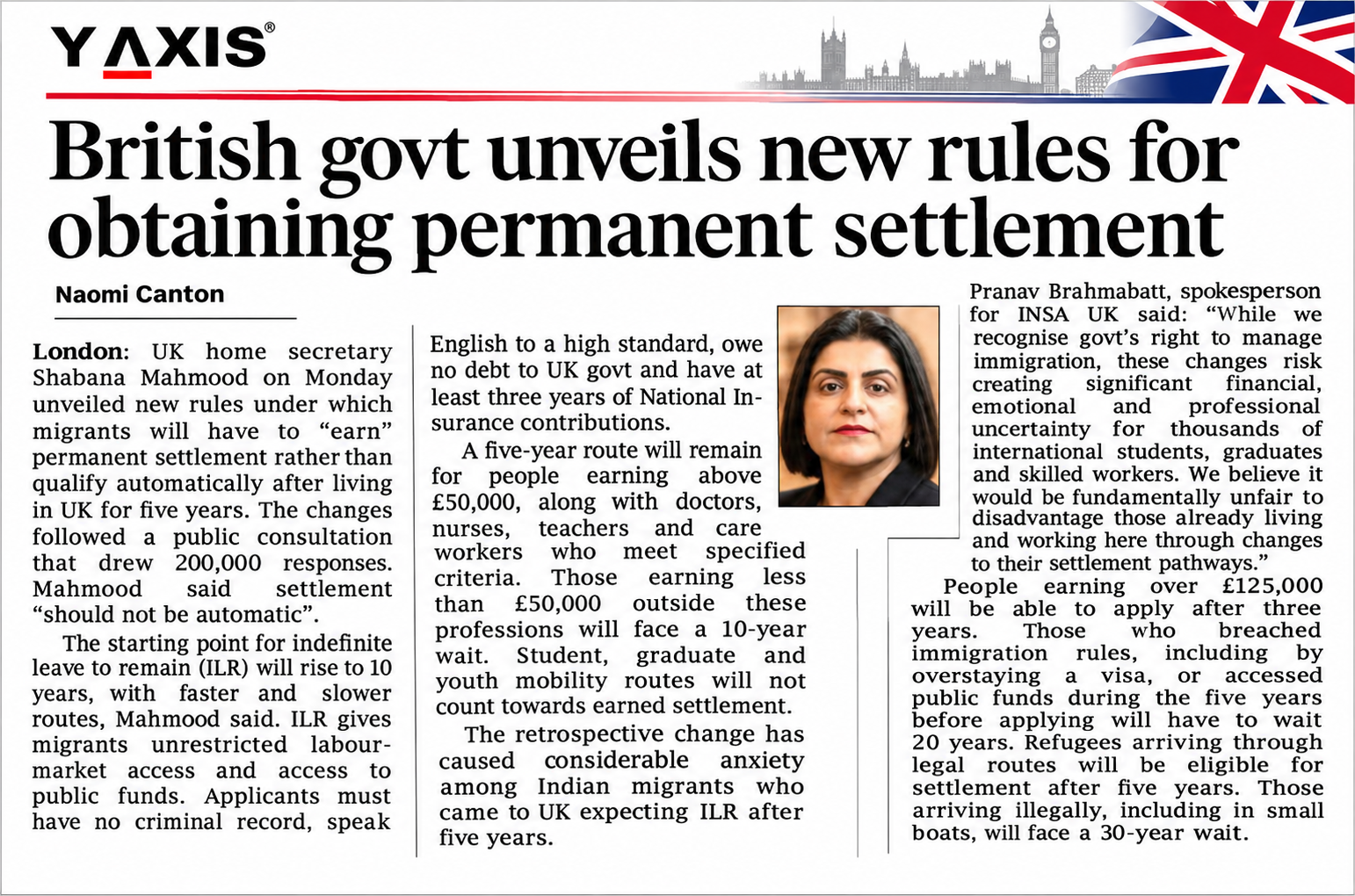
Highlights: UK Announces 10 Year Settlement Rules With Faster Routes for Caregivers and High Earners
- UK has announced new earned settlement rules, revising automatic permanent residence conversion after five years.
- Eligible overseas care workers keep their five-year route to settlement, and the proposed 15-year wait is dropped.
- The standard wait for Indefinite Leave to Remain rises to 10 years for most migrants.
- Earners above £50,271 get a five-year route, and those above £125,000 can apply after three years.
- All foreign applicants must meet four conditions covering criminal record, English, government debt and National Insurance contributions.
*Interested in UK Indefinite Leave to Remain? Let Y-Axis guide you with the process.
UK Retains 5-Year Settlement Route for Eligible Care Workers as it Introduces a 10-Year Standard Wait
UK has recently announced that eligible overseas care workers will keep the five-year route to Indefinite Leave to Remain (ILR) with decline of proposed extension to 15 years. Care workers must have complied with their visa conditions and earned at least £25,000 a year. Professionals can get a new five-year visa and apply for settlement after it ends. A similar approach applies to public service workers in healthcare and education who arrived in the same period.
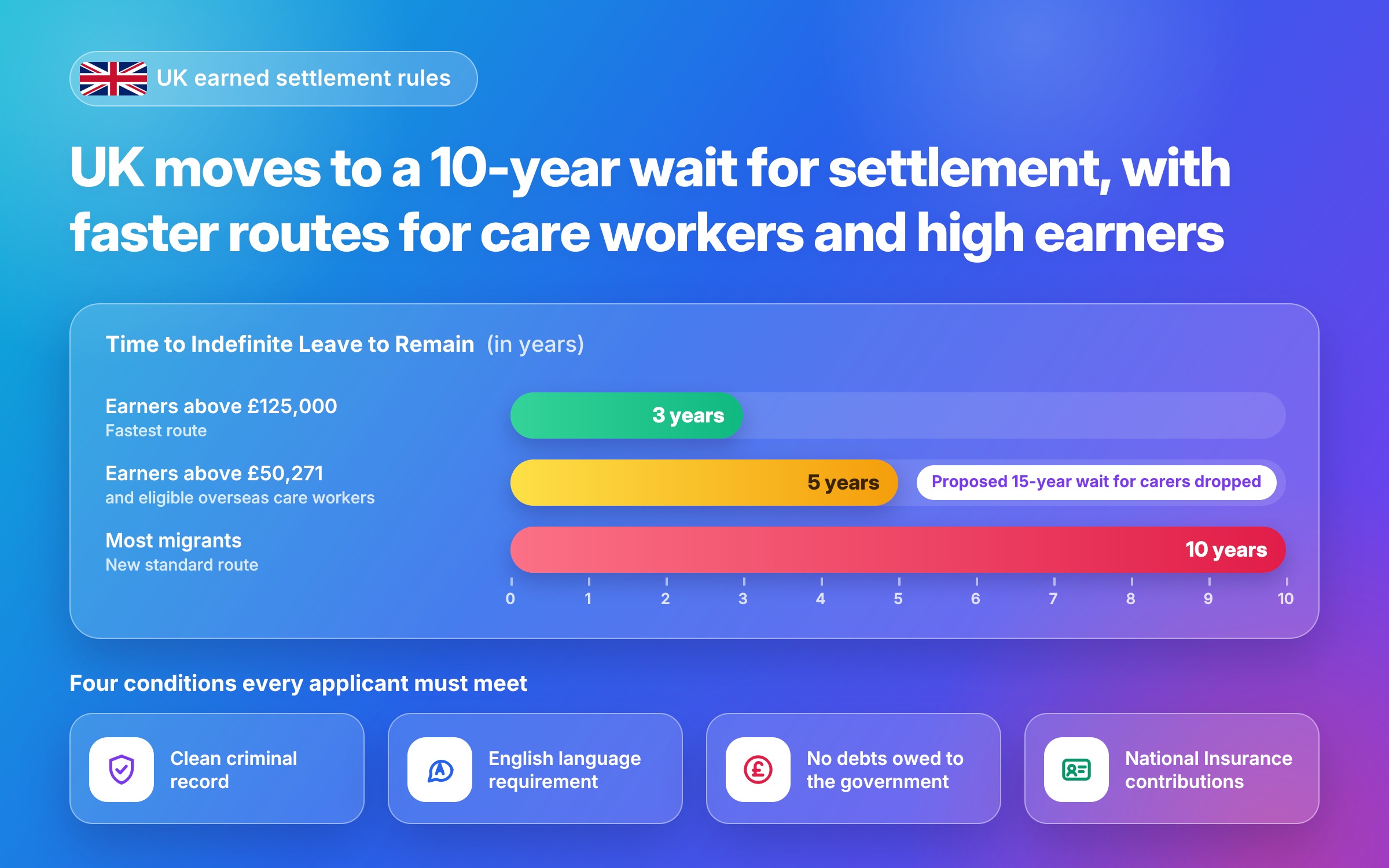
However for other foreign skilled workers, settlement will now depend on earnings, economic contribution and immigration record rather than years of residence alone. Student, graduate and youth mobility routes will not count towards earned settlement.
The new framework makes the 10-year wait the starting point for most migrants. Faster routes are open to higher earners and to doctors, nurses and teachers who meet specified criteria.
|
Category |
Wait for settlement |
|
People earning over £125,000 |
3 years |
|
Eligible care workers earning at least £25,000 |
5 years |
|
People earning over £50,271, and doctors, nurses and teachers meeting criteria |
5 years |
|
Most other migrants |
10 years |
|
Those who breached immigration rules, such as overstaying a visa |
20 years or more |
|
Refugees on approved safe and legal routes |
5 years |
|
Illegal arrivals who work or study |
10 years (after a 20-year default wait) |
|
Illegal arrivals, including small boat crossings |
Up to 30 years |
Four mandatory conditions for ILR in the UK are as follows:
- A clean criminal record, under stricter requirements than today.
- A high standard of English.
- No outstanding debts to the UK government.
- At least three years of National Insurance contributions.
Also, read...
How the New UK Permanent Residence Timeline Affect Foreign Skilled Professionals?
The new timeline for permanent residence in UK will affect foreign workers in the following ways:
- Eligible foreign care workers earning at least £25,000 keep a five-year path to ILR.
- Those who miss the criteria get a second chance through a new five-year visa.
- Foreign doctors, nurses and teachers meeting the criteria can settle after five years.
- Foreign professionals earning above £50,271 can settle after five years, and those earning over £125,000 after three.
- Affected workers will not be forced to leave the UK and can apply for further visas.
- The four clear conditions let applicants plan their records, English and contributions in advance.
*Are you looking for step-by-step assistance with UK immigration? Contact Y-Axis, the world’s No.1 overseas immigration consultancy!
For recent immigration updates on the UK, check out Y-Axis UK immigration News
FAQs
What are the UK’s new earned settlement rules?
The UK government has announced that permanent settlement will no longer be automatic after five years of living in the country. Migrants must now earn Indefinite Leave to Remain based on their earnings, economic contribution and immigration record. The standard wait rises to 10 years for most people, with faster routes for higher earners and certain public service workers. The changes followed a consultation that drew 200,000 responses.
Can care workers still settle after five years?
Yes, eligible overseas care workers keep the five-year route to Indefinite Leave to Remain. The government dropped a proposed extension that could have raised their wait to 15 years. Care workers must have complied with their visa conditions and earned at least £25,000 annually. Home Secretary Shabana Mahmood said workers who answered the country’s call during a difficult period should be recognised for their contribution.
What happens to care workers who do not meet the criteria?
The government estimates that around a quarter of care workers will not qualify for the five-year route. Those workers will get another opportunity through a new five-year visa. They can apply for settlement after completing that additional period, provided they meet the requirements by then. A similar approach applies to public service workers in healthcare and education who arrived during the same period.
How long will most migrants wait for ILR?
The new standard wait for Indefinite Leave to Remain is 10 years for most migrants. Faster routes exist for people earning above £50,271, who can apply after five years, and for those earning over £125,000, who can apply after three. Doctors, nurses and teachers meeting specified criteria also qualify for five years. The Home Office estimates about 500,000 people will wait longer than five years.
What are the four mandatory conditions for ILR?
Every ILR applicant must meet four conditions, regardless of when they arrived in the UK. These are a clean criminal record under stricter requirements than today, a high standard of English, no outstanding debts owed to the UK government, and a record of sustained National Insurance contributions. The newspaper report notes that at least three years of National Insurance contributions will be needed.
Which routes will not count towards earned settlement?
Student, graduate and youth mobility routes will not count towards earned settlement. This means time spent on these visas will not be added to the qualifying period for Indefinite Leave to Remain. The retrospective nature of the change has caused anxiety among migrants who expected ILR after five years, including many Indians. Groups such as INSA UK have warned that it creates significant uncertainty for students, graduates and skilled workers.
What is the penalty for breaching immigration rules?
Migrants who have breached immigration rules, including by overstaying a visa or accessing public funds during the five years before applying, face a wait of at least 20 years. Applicants should therefore keep to their visa conditions and avoid claiming public funds. The Home Office says people facing longer waits will not be forced to leave the UK and can apply for further visas.
How do the new rules treat refugees?
Refugees arriving through approved safe and legal routes can apply for settlement after five years. Those arriving illegally could face a 20-year wait, which is reduced to 10 years for individuals who work or study. People entering through small boats or other clandestine routes could face an additional 10 years, taking the total wait to as much as 30 years. These rules sit within a wider shift towards an earned settlement system based on contribution and compliance.
Why did the UK retain the care worker route?
Home Secretary Shabana Mahmood said care workers who came to Britain to support the health and social care sector after Covid should be recognised for their contribution. The decision followed a year-long public consultation. She also acknowledged that some rogue employers misused the visa route by sponsoring overseas workers for jobs that did not exist, and the concession applies only to workers who meet the revised requirements.
How many Indians are affected, and what should they do?
Indians accounted for the largest number of workers on the Health and Social Care visa, receiving 104,555 visa extensions in the year ending December 2025. Indian migrants should check which category applies to them, whether care work, public service, or higher earnings, and confirm they meet the income, English, debt and National Insurance conditions. Those in other occupations may need to reassess their long-term plans under the stricter framework.
Tags:
UK Indefinite Leave to Remain
migrate to UK
UK immigration news
permanent residence in the UK
foreign caregivers in the UK
work in UK
settle in UK
foreign skilled workers in the UK
Share
Options for you by Y-Axis

Get it on your mobile

Get News alerts

Contact Y-Axis
Latest Article
Related Post
Trending Article
Posted On November 04 2026
UK Announces New ILR Rules: Permanent Residency Wait May Increase to 10 Years