

EU Blue card
Down Arrow
Down Arrow
Down Arrow

I accept the Terms & Conditions

Don't know what to do
Don't know what to do ?

Get Free Counseling

Why apply for an EU Blue Card?

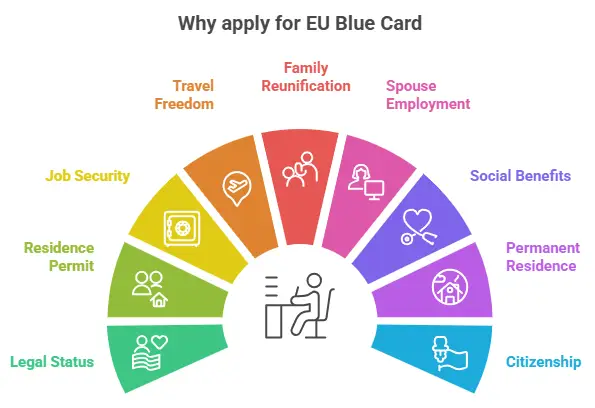
  • Live and work legally in an EU country as a skilled professional
  • Get a long-term residence permit for qualified non-EU workers
  • Earn a high salary with better job stability
  • Travel freely within the Schengen Area for short stays
  • Bring your spouse and dependent children with you
  • Your spouse can work without restrictions in most EU countries
  • Access public healthcare and social security benefits in the host country
  • Apply for permanent residence after a few years of legal employment
  • Become eligible for citizenship after meeting residency requirements
 

EU Blue Card


What is EU Blue Card?

An EU Blue Card is a residence permit for skilled non-EU foreign nationals to work in an EU country. It allows its holder to enter the EU country and remain in a particular place for employment. The EU Blue card facilitates the admission of non-EU highly skilled professionals into the EU. Its intention is to simplify the procedures and improve the legal status of those already in the EU. It allows the holder to enter, re-enter, and stay in the country where the card is issued. The holder can bring their spouse and family members. Both the card holder and their family can travel freely within the EU.

The EU Blue card holder enjoys the similar treatment with the nationals of the Member State where they have settled. But, they can only work in sectors they are only concerned about. If a third-country national holds an EU Blue Card, after regular employment of 18 months, they can move to another EU member state to take up employment. They must notify the authorities there within one month of their arrival. Ireland, Denmark and the United Kingdom are not included in this program.


Eligible Countries for the EU Blue Card

The EU Blue Card is available in most European Union member countries. It is valid in 25 out of the 27 EU countries. Denmark and Ireland do not issue the EU Blue Card.

EU Countries That Issue the EU Blue Card:

  • Austria
  • Belgium
  • Bulgaria
  • Croatia
  • Cyprus
  • Czech Republic (Czechia)
  • Estonia
  • Finland
  • France
  • Germany
  • Greece
  • Hungary
  • Italy
  • Latvia
  • Lithuania
  • Luxembourg
  • Malta
  • Netherlands
  • Poland
  • Portugal
  • Romania
  • Slovakia
  • Slovenia
  • Spain
  • Sweden


Eligibility for a Germany EU Blue Card

To apply for an EU Blue Card, you must meet the following conditions:

  • You must be a non-EU citizen
  • You should have a university degree (Bachelor’s or higher) or relevant professional experience
  • You must have at least 5 years of work experience in your field
  • You must have a valid job offer or work contract for highly skilled employment
  • The job contract should be for at least one year
  • Your salary must meet the minimum salary requirement set by the EU country
  • For regulated professions such as doctors or lawyers, you must meet the national licensing rules.


EU Blue Card Requirements

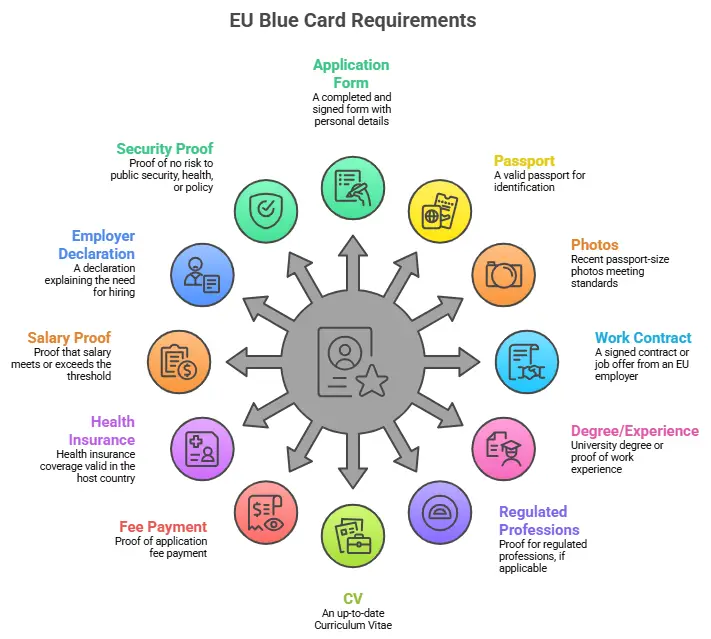
To apply for an EU Blue Card, you usually need the following documents:

  • A completed application form, filled correctly and signed
  • A valid passport
  • Recent passport-size photos as per required standards
  • A signed work contract or job offer from an employer in the EU country
  • University degree certificate or proof of required work experience
  • Proof for regulated professions, if applicable
  • An up-to-date CV
  • Proof of application fee payment
  • Health insurance coverage valid in the host country
  • Proof that your salary meets or exceeds the required threshold
  • A declaration from the employer explaining the need for hiring you
  • Proof that you do not pose a risk to public security, health, or policy
Europe Immigration

*Need guidance to work in Europe? Avail Y-Axis for complete assistance


Benefits of EU Blue Card

Benefits for Employees

The EU Blue Card helps skilled professionals find better job opportunities that match their education, skills, and career goals. It allows them to work in strong EU economies and gain international work experience.

EU Blue Card holders can work and live legally in an EU country and enjoy good salaries, stable jobs, and a high quality of life. The card also supports professional growth by encouraging knowledge sharing and innovation across EU countries.

In many EU countries, Blue Card holders can apply for permanent residence after 1 to 2 years of continuous employment. Over time, they may also become eligible for citizenship, depending on national rules.

Benefits for Employers

The EU Blue Card helps employers easily hire highly skilled workers from non-EU countries. It makes the hiring process simpler and reduces delays in getting work permits approved.

With the Blue Card system, employers can fill skill gaps faster and choose from a larger global talent pool. This helps companies stay competitive and meet workforce needs in different industries.

The EU Blue Card is often compared to the US Green Card, which makes it attractive to skilled professionals who want long-term career opportunities in Europe. This helps employers attract and keep qualified employees while following EU immigration rules.


Step-by-Step Application Process for an EU Blue Card

Step 1: Get a job offer or work contract from an employer in an EU country that meets the salary requirement.

Step 2: Check whether your educational qualification or work experience meets the EU Blue Card rules.

Step 3: Book an appointment at the EU country’s embassy or consulate in your home country.

Step 4: Submit the application form along with all required documents.

Step 5: Pay the EU Blue Card application fee.

Step 6: Attend an interview or provide biometrics if required.

Step 7: Wait for processing, which usually takes up to 90 days.

Step 8: Receive your EU Blue Card and start working after arrival.


EU Blue Card Application Processing Time

The processing time for an EU Blue Card is usually up to 90 days from the date you submit your complete application. This means the authorities may take around three months to review your documents and make a decision. The exact time can vary depending on the EU country, the number of applications received, and whether all documents are submitted correctly.


EU Blue Card Validity

The EU Blue Card is usually issued for a period of up to three years. This means you can live and work in the EU country legally during this time. If your employment contract is extended or you continue to meet the eligibility conditions, you can apply to renew your EU Blue Card and stay longer in the country.


EU Blue Card Fee

To apply for an EU Blue Card, you need to pay an application fee. The fee is usually around €140 when you apply for the first time. If you want to renew your EU Blue Card after it expires, the renewal fee is generally around €100. The exact amount may be slightly higher or lower depending on the EU country where you submit your application.


Can we get permanent residency through the EU Blue Card?

Yes. If an EU Blue Card holder work for 33 months in the hosting state or 21 months while also earning the B1 language certificate, they will be eligible for the permanent residency permit. Also, if you work in different EU member states and gather five years of work experience, you are a strong candidate for the permanent residency permit.


How Can Y-Axis Help You?

  • Free eligibility check for the Germany EU Blue Card
  • Expert guidance and counselling for Germany work visa and EU Blue Card
  • Complete support with document preparation and verification
  • Assistance in filling and submitting application forms
  • Resume writing support to meet German market standards and get relevant jobs
  • End-to-end guidance for the Germany EU Blue Card application process
Sign up for a free expert consultation
Down Arrow
Down Arrow
Down Arrow

I accept the Terms & Conditions

Don't know what to do
Don't know what to do ?

Get Free Counseling

Frequently Asked Questions

What is an EU Blue Card?
plus

An EU Blue Card is a residence and work permit for skilled professionals from non-EU countries who want to work in an EU member state. It allows you to live and work legally in the country that issues the card. The EU Blue Card is mainly designed for highly qualified workers such as engineers, IT professionals, doctors, and researchers. It also offers benefits like family reunification, access to healthcare, and a pathway to permanent residence and citizenship.

Who can apply for an EU Blue Card?
plus

Non-EU citizens who have a valid job offer from an employer in an EU country can apply for an EU Blue Card. Applicants should have a university degree or equivalent professional experience and must meet the minimum salary requirement set by the host country. The job must reduce skill shortages and be considered highly skilled employment. Each EU country may have slightly different eligibility rules.

What are the main benefits of an EU Blue Card?
plus

The main benefits of an EU Blue Card are listed below:

  • Legal residence and the right to work in an EU country
  • Access to high-paying jobs and better job security
  • Ability to bring spouse and dependent children
  • Spouse can work without restrictions in most EU countries
  • Access to public healthcare and social security benefits
  • Free travel within the Schengen Area for short stays
  • Opportunity to apply for permanent residence after a few years
  • Eligibility to apply for citizenship after meeting residency rules
Which EU countries issue the EU Blue Card?
plus

The EU Blue Card is issued by 25 EU member states. Denmark and Ireland do not participate in the EU Blue Card program. Countries such as Germany, France, Netherlands, Sweden, Spain, Italy, and many others issue the Blue Card. Each country sets its own salary thresholds, job requirements, and processing rules, but the core benefits remain similar across participating countries.

Is the EU Blue Card valid across all EU countries?
plus

The EU Blue Card is valid only in the country that issues it. However, it allows short-term travel across the Schengen Area. After working for at least 18 months, Blue Card holders may move to another participating EU country for work, provided they meet that country’s requirements and inform the authorities within one month of arrival.

What qualifications are required for an EU Blue Card?
plus

Applicants usually need a university degree such as a Bachelor’s or Master’s degree. In some cases, strong professional experience of at least five years in the relevant field may be accepted. For regulated professions like doctors or lawyers, additional licensing or approval from national authorities is required. Qualification recognition rules vary by country.

Is work experience mandatory for an EU Blue Card?
plus

Work experience is important for most EU Blue Card applications. Many EU countries require at least five years of professional experience if the applicant does not have a recognized university degree. Even with a degree, relevant work experience strengthens the application and helps meet employer and immigration requirements.

Can family members join an EU Blue Card holder?
plus

Yes, family members can join an EU Blue Card holder. The Blue Card allows you to bring your spouse and dependent children to the EU country where you work. Your family members can live with you legally and enjoy the same quality of life. In most EU countries, your spouse is allowed to work without any restrictions and does not need a separate work permit. Children can study in local schools. This family reunification benefit makes it easier to settle comfortably in Europe.

How long does it take to process an EU Blue Card?
plus

The processing time for an EU Blue Card is usually up to 90 days from the date of submitting a complete application. Processing times can vary based on the country, number of applications, and whether all documents are correctly submitted. Delays may occur if additional documents are requested.

What is the validity of an EU Blue Card?
plus

An EU Blue Card is generally issued for up to three years. If your work contract is extended and you continue to meet the eligibility requirements, you can renew the card. Renewal rules and duration depend on the host country.

Can an EU Blue Card be renewed?
plus

Yes, the EU Blue Card can be renewed if you continue to meet the eligibility rules. You must have a valid job contract, meet the salary requirement, and apply before your current card expires. Renewal fees apply and may differ slightly depending on the EU country where you live and work.

What is the EU Blue Card application fee?
plus

The EU Blue Card application fee is usually around €140 for first-time applicants. If you are renewing your EU Blue Card, the fee is generally around €100. The exact fee may vary slightly depending on the EU country where you submit your application.

Can EU Blue Card holders apply for permanent residence?
plus

Yes, EU Blue Card holders can apply for permanent residence. In many EU countries, this is possible after 33 months of continuous work. If you have a B1-level language certificate, you may apply earlier, usually after 21 months. Permanent residence allows you to live and work long term without job restrictions.

Can I move to another EU country with an EU Blue Card?
plus

Yes, after working for at least 18 months, you can move to another EU country that issues the EU Blue Card. You must meet the new country’s eligibility and salary requirements and inform local authorities within one month of arrival. Denmark and Ireland do not take part in the EU Blue Card program.

Can I apply for citizenship with an EU Blue Card?
plus

Yes, EU Blue Card holders can apply for citizenship after meeting residency, language, and integration requirements. The number of years required varies by country. In most cases, you must first obtain permanent residence before becoming eligible to apply for citizenship.

What documents are required for an EU Blue Card?
plus

To apply for an EU Blue Card, you need a valid passport, a job offer or work contract, proof of education or work experience, health insurance, an updated CV, application form, passport-size photos, salary proof, and an employer declaration. Some countries may ask for additional documents.

Is health insurance mandatory for an EU Blue Card?
plus

Yes, health insurance is mandatory for all EU Blue Card applicants. You must have valid health insurance that covers medical expenses in the host country. Some countries allow private health insurance at first and require public health insurance after you start working.

Can students apply for an EU Blue Card?
plus

Students cannot apply directly for an EU Blue Card while studying. However, after completing their studies and securing a job offer that meets EU Blue Card requirements, they can apply. Some EU countries allow students to switch from a student residence permit to an EU Blue Card after graduation.

Is the EU Blue Card the same as a work visa?
plus

No, the EU Blue Card is different from a regular work visa. It offers stronger benefits such as long-term residence rights, family reunification, easier movement within the EU, and a clear path to permanent residence and citizenship. Regular work visas usually do not provide these long-term benefits.

Does the EU Blue Card allow travel within Europe?
plus

Yes, the EU Blue Card allows you to travel within Europe. As an EU Blue Card holder, you can move freely within the Schengen Area for short trips such as tourism or business meetings. You do not need a separate visa for short stays in other Schengen countries. However, your right to work is limited to the EU country that issued your Blue Card. If you want to work in another EU country, you must officially transfer or apply for a new EU Blue Card in that country.