

Jobs in Japan
Down Arrow
Down Arrow
Down Arrow

I accept the Terms & Conditions

Don't know what to do
Don't know what to do ?

Get Free Counseling

Highest Paying Jobs in Japan

Japan offers excellent career opportunities for skilled professionals, with nearly 1.8 million job openings across different industries. Jobs in Japan for Indian professionals are mostly available in booming sectors like IT, engineering, healthcare, and finance. With a strong economy and increasing demand for global talent, Japan is a great place to find a good job that pays well and helps you grow in your career.

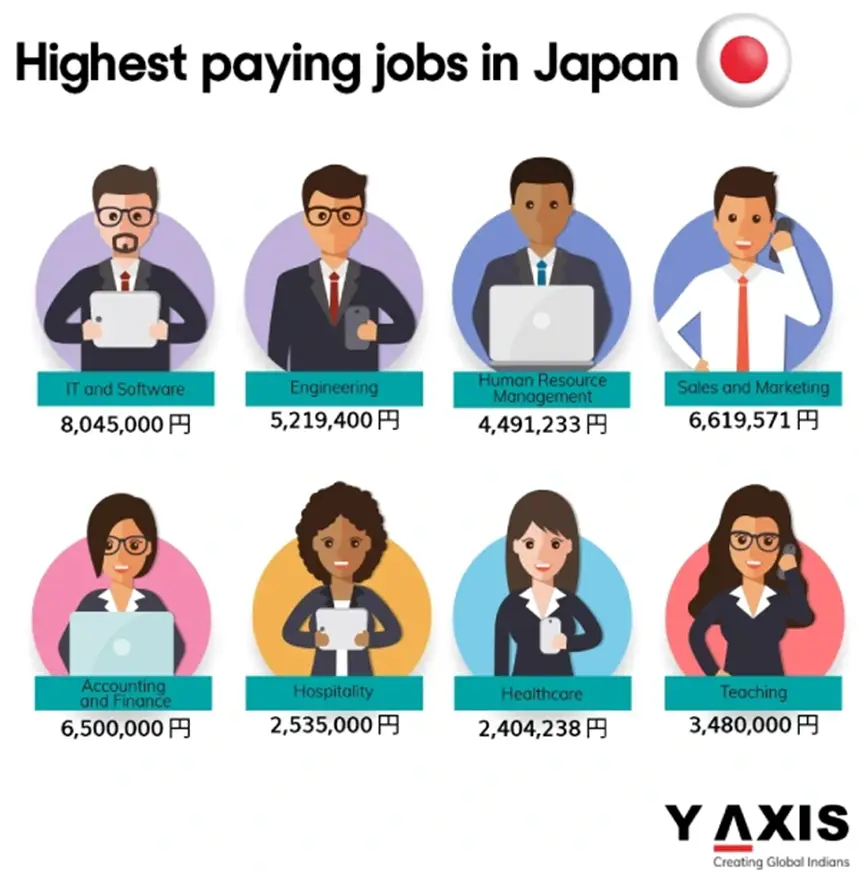
Some of the Highest paying job opportunities in Japan are listed below:

Occupation

Average annual salary(JPY)

IT and Software

8,045,000

Engineering

5,219,400

Accounting and Finance

6,500,000

Human Resource Management

4,491,233

Hospitality

2,535,000

Sales and Marketing

6,619,571

Healthcare

2,404,238

Teaching

3,480,000


Job Vacancy in Japan

Japan currently has around 1.8 million job openings across various industries, providing significant opportunities for skilled professionals. Sectors like IT, engineering, healthcare, finance, and teaching have high demand for international professionals. The number of estimated job vacancies in Japan by 2030 is listed below:

Occupation

Estimated Job Opportunities

Healthcare

510,000

Nursing

310,000

IT & Software

250,000

Hospitality

155,000

Engineering

130,000

Teaching

63,000

Accounting & Finance

53,000

Marketing & Sales

45,000

Human Resources & Management

22,000


Step-by-Step Guide for Job Search in Japan

Follow this step by step process to apply for jobs in Japan:

Step 1: Search for Jobs using online portals, company websites, or recruitment agencies.

Step 2: Make sure you meet the skills, experience, and visa needs.

Step 3: Create a clear CV in English or Japanese with your education and experience.

Step 4: Apply Jobs by submitting your CV and cover letter online.

Step 5: Attend Interviews online or phone interviews if called.

Step 6: Receive an official offer from the company.

Step 7: Apply for Work Visa at the Japanese embassy or consulate.


Top Careers in Japan

IT Jobs in Japan
Japan is focusing on digitalization and automation, called "Society 5.0," which is creating high demand for IT workers.

  • Jobs: Software engineers, data scientists, AI/ML specialists, cybersecurity experts, cloud architects.
  • Skills: Knowledge of programming languages like Python, Java, C++, and experience with cloud platforms like AWS or Azure.

Healthcare Jobs in Japan

Japan has an aging population, so healthcare and eldercare jobs are in high demand.

  • Jobs: Caregivers, nurses, certified care workers, medical specialists.
  • Skills: Patient care, medical knowledge, communication skills, and basic Japanese language ability.

Engineering Jobs in Japan

Japan is a global leader in engineering and manufacturing, creating opportunities for skilled engineers.

  • Jobs: Automotive engineers, robotics engineers, construction engineers, renewable energy specialists.
  • Skills: Experience in technical design, automation, and industrial machinery is valuable.

Education Jobs in Japan

There is steady demand for English teachers and other educators in Japan.

  • Jobs: English teachers in public schools (JET Programme), private language schools (eikaiwa), and international schools.
  • Other Opportunities: STEM teachers are also needed in universities and international schools.

Hospitality Jobs in Japan

With tourism recovering, Japan needs staff who can work with international visitors.

  • Jobs: Hotel staff, tour guides, restaurant workers, customer service representatives.
  • Opportunities: Many jobs provide on-the-job training and welcome those with basic Japanese skills.


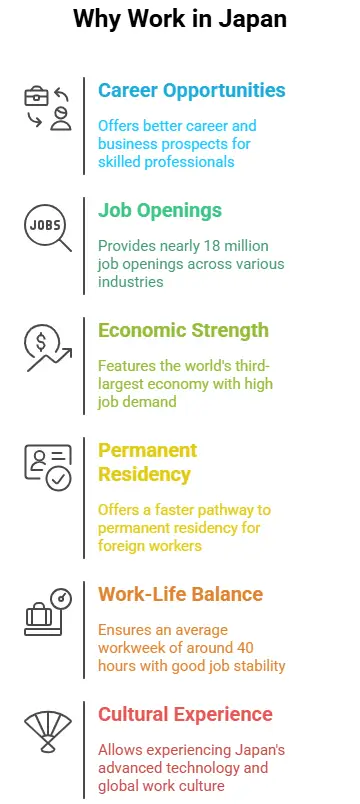
Why apply for Jobs in Japan?

  • Better career and business opportunities for skilled professionals
  • Nearly 18 million job openings across different industries
  • World’s third-largest economy with strong job demand
  • Faster pathway to permanent residency for foreign workers
  • Average workweek of around 40 hours with good job stability
  • Chance to experience Japan’s advanced technology and global work culture
 

Why apply for Jobs in Japan


Migrate with a Japan work visa

Japan is noted for its largest economy in the world. The highly developed technological design and smooth manufacturing designs are the highlights of Japan. Individuals who have relevant experience and high qualifications will always find a job in Japan. You might be a teacher or a specialist from one of the best technologies or holding any business role; Japan gives you that one best opportunity. With a Japan work visa, you can build a stable career and experience a high standard of living. It also opens pathways to long-term residence and global career growth.

Know more .....Why Japan offering more work visas?


Types of Japan Work Visa

Japan offers a variety of work and long-term stay visas for foreign nationals, depending on their profession, skills, and purpose of stay. These visas allow individuals to work, live, and even bring family members while gaining valuable international experience in one of the world’s most advanced economies. Below are the main categories of work-related visas in Japan:

1. Highly Skilled Professional Visa

  • Highly Skilled Professional (i)/(ii)/(iii): For individuals recognized as "highly-skilled human resources" within existing conditions.
  • Special Highly Skilled Professional: For highly skilled foreign professionals with certain educational backgrounds, work history, and annual income.
  • Highly Skilled Foreign Professional: For dependents of highly skilled foreign professionals.

2. Working Visa

  • Professor: For university professors, assistant professors, and assistants.
  • Artist: For composers, songwriters, artists, sculptors, craftspeople, photographers, etc.
  • Religious Activities: For religious individuals such as monks, bishops, missionaries, etc.
  • Journalist: For newspaper journalists, magazine journalists, editors, news cameramen, announcers, etc.
  • Business Manager: For company presidents, directors, etc.
  • Legal/Accounting Services: For attorneys, judicial scriveners, public accountants, tax accountants, etc., certified in Japan.
  • Medical Services: For physicians, dentists, pharmacists, nurses, etc., certified in Japan.
  • Researcher: For researchers, investigators, etc., at research institutes.
  • Instructor: For teachers at elementary schools, intermediate schools, and high schools.
  • Engineer/Specialist in Humanities/International Services: For scientific engineers, IT engineers, foreign language teachers, interpreters, copywriters, designers, etc.
  • Intra-company Transferee: For individuals transferred to a Japanese branch or head office of the same company.
  • Nursing Care: For certified care workers.
  • Entertainer: For musicians, actors, singers, dancers, sportspeople, models, etc.
  • Skilled Labor: For chefs specializing in foreign cuisine, animal trainers, pilots, sports trainers, sommeliers, etc.
  • Specified Skilled Worker: For work-ready foreign nationals with certain expertise and skills in specific industrial fields.
  • Technical Intern Training: For technical intern trainees.

3. General Visa

  • Cultural Activities: For individuals engaging in unpaid internships or studying cultural activities like the tea ceremony or Japanese flower arranging.
  • Student: For college students, pre-college students, etc.
  • Training: For trainees in local government or other institutions.
  • Dependent (Family Stays): For the spouse and children of foreign nationals with working visas.

4. Specified Visa

  • Spouse or Child of Japanese National
  • Spouse of Permanent Resident
  • Long-Term Resident
  • Designated Activities

5. Start-Up Visa

Start-Up: For entrepreneurs supported by municipalities in Japan and their spouse or children.

6. Diplomatic and Official Visas

  • Diplomatic
  • Official

*Searching for jobs in Japan? Find the right one with the help of Y-Axis resume marketing services.


Requirements for Japan Work Visa

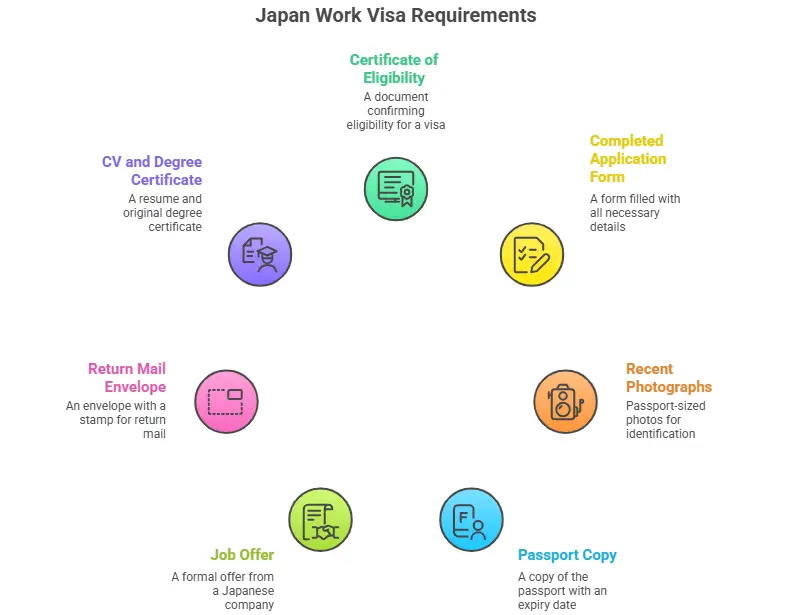
To obtain a work visa in Japan, the following requirements are needed:

  • Certificate of Eligibility (COE)
  • Visa application form that is completely filled
  • Recent Photographs (4cm * 3cm)
  • A copy of your passport with an expiry date
  • Job Offer from a Japan-based company
  • Provide a return mail envelope with a JPY 392 stamp
  • CV and Original degree certificate


Japan Work Visa Requirements


Looking to work overseas? Contact Y-Axis, the world’s No. 1 overseas consultant for assisted guidance.

Also Read……. Skilled workers can choose Japan for work opportunities


How to Apply for a Japan Work Visa

Step 1: Find a Job in Japan

Step 2: Make sure you meet the required qualifications, skills, and work visa requirements

Step 3: Receive an official employment offer from a company in Japan

Step 4: Apply for Certificate of Eligibility (COE)

Step 5: Submit Visa Application

Step 6: Attend Interview if required

Step 7: Once approved, you will get your work visa.

Step 8: Move to Japan and start your new job.


Work Permit in Japan

Japan welcomes more Immigrants every year. The Japan Work Visa is intended to fill all the vacant positions in the accommodation industry.

To apply for Japan work permit, you must meet the following requirements for eligibility:

  • Valid passport for at least 3 months from the time you have planned for the trip.
  • Invitation letter from company
  • List of visa applicants
  • Details of your company or organization
  • Itinerary in Japan
  • Letter of guarantee


How can Y-Axis help you?

Y-Axis has been providing unbiased and personalized immigration-related assistance for more than 25 years. Our team of experienced immigration experts is here to provide end-to-end support to help you migrate to Japan. Our services include:

  • Identify and collect all your documents
  • Complete the visa documents checklist
  • Y-Axis resume marketing service to help you get job in Japan
  • Create your application package
  • Fill out the various forms and applications accurately
  • Updates & follow-up
  • Interview Preparation
Sign up for a free expert consultation
Down Arrow
Down Arrow
Down Arrow

I accept the Terms & Conditions

Don't know what to do
Don't know what to do ?

Get Free Counseling

Looking for Inspiration

Explore what Global Indians have to say about Y-Axis in shaping their future

Frequently Asked Questions

What are the highest paying jobs in Japan for Indians?
plus

The highest paying jobs in Japan for Indians are in sectors like IT, engineering, finance, and healthcare. IT professionals such as software developers and data scientists can earn between ¥6 to ¥10 million per year, depending on experience. Engineers in robotics, electronics, and automotive industries earn around ¥5 to ¥8 million annually. Finance and accounting experts earn about ¥6 to ¥9 million, while healthcare professionals like doctors and nurses make ¥4 to ¥7 million. With strong skills and experience, Indians can build a high-paying and rewarding career in Japan.

Which sectors offer the best salaries in Japan?
plus

The best-paying sectors in Japan include IT, engineering, finance, healthcare, and management. The IT field offers many roles such as software engineers, AI developers, and cybersecurity specialists, as Japan is focusing on digital transformation. Engineering jobs in robotics, construction, and manufacturing are also in high demand. Finance and accounting professionals are needed to manage Japan’s growing global trade. Healthcare jobs like nurses and caregivers are rising due to an aging population. These sectors offer strong career growth, job security, and competitive salaries for skilled workers.

How many job vacancies are there in Japan currently?
plus

Japan has around 1.8 million job openings across various sectors. The demand is high in industries like IT, engineering, healthcare, education, and hospitality, where both local and foreign professionals are needed. With Japan’s aging population and ongoing digital transformation, skilled workers such as software engineers, nurses, and teachers have strong job prospects. The government is also supporting foreign talent through easier visa pathways, making Japan an attractive destination for professionals seeking stable and rewarding careers.

How can Indian professionals apply for jobs in Japan?
plus

Follow this step-by-step process to apply for Jobs in Japan:

Step 1: Search for jobs on online portals like LinkedIn, Indeed Japan, or company websites.
Step 2: Check if you meet the job and visa requirements.
Step 3: Create a simple and clear CV in English or Japanese.
Step 4: Apply for the job by sending your CV and cover letter.
Step 5: Attend online or phone interviews.
Step 6: Once you get a job offer, ask your employer for a Certificate of Eligibility (COE).
Step 7: Apply for a Japan Work Visa at the Japanese Embassy in India.

What are the top IT jobs in Japan?
plus

Some of the top IT jobs in Japan include software engineers, data scientists, AI and machine learning specialists, cybersecurity experts, and cloud architects. Japan is growing fast in digital technology and automation, known as Society 5.0, which creates high demand for IT professionals. Skilled workers with knowledge of Python, Java, C++, and cloud tools like AWS or Azure have good job opportunities. Many global and Japanese tech companies in cities like Tokyo, Osaka, and Yokohama hire skilled foreign IT professionals.

Which healthcare jobs are in demand in Japan?
plus

In Japan, healthcare jobs are in high demand due to the country’s aging population. The most needed roles include caregivers, nurses, certified care workers, and medical specialists. There is a strong demand for professionals who can provide care and support for the elderly in hospitals and nursing homes. Foreign workers with basic Japanese language skills, medical training, and patient care experience have good chances of getting jobs through programs like the Specified Skilled Worker (SSW) visa. These jobs also offer stable income and long-term career growth.

What is the average salary of engineers in Japan?
plus

On average, engineers in Japan earn between ¥5 million to ¥8 million per year, depending on their experience and field. Automotive, robotics, construction, and electronics engineers are in high demand, so experienced professionals can earn more. Entry-level engineers may earn slightly less, while those with specialized skills or international experience can command higher salaries. In addition to good pay, engineering jobs in Japan often provide benefits like health insurance, paid leave, and opportunities for career growth. Skilled engineers can enjoy a stable and rewarding career while gaining international work experience.

Is Japanese language proficiency necessary for working in Japan?
plus

Japanese language proficiency is not always required, but it is highly preferred for many jobs in Japan. Companies in IT, engineering, and international firms often hire English-speaking professionals, especially in cities like Tokyo, Osaka, and Yokohama. However, having basic Japanese skills can improve communication, increase job opportunities, and help with daily life. For roles in healthcare, teaching, and customer service, knowing Japanese is usually essential. Learning the language also helps in career growth and makes it easier to integrate into Japanese work culture.

What is the process to apply for a Japan work visa from India?
plus

Follow this step-by-step process to apply for Japan work visa from India:

Step 1: Find a Job in Japan

Step 2: Check Eligibility

Step 3: Get a Job Offer

Step 4: Apply for Certificate of Eligibility (COE)

Step 5: Submit Visa Application

Step 6: Attend Interview if required

Step 7: Receive Work Visa

Step 8: Move to Japan and begin your job.

Can Indian teachers work in Japan?
plus

Yes, Indian teachers can work in Japan. There is a steady demand for English teachers in public schools through programs like the JET Programme, private language schools (eikaiwa), and international schools. Teachers with strong English skills, relevant qualifications, and some knowledge of Japanese have better opportunities. In addition to English teaching, there is also growing demand for educators in STEM subjects at international schools and universities. Eligible teachers can apply for a work visa to live and work legally in Japan.

What job opportunities are available in Japan’s hospitality and tourism industry?
plus

Japan’s hospitality and tourism sector offers many job opportunities, especially after the growth of international travel. Jobs include hotel staff, tour guides, chefs, and customer service representatives. Many positions provide on-the-job training and welcome candidates with basic Japanese language skills. Multilingual professionals are in demand to serve international tourists. With Japan’s growing tourism industry, these roles offer stable employment, a chance to interact with people from around the world, and opportunities to gain experience in customer service and hospitality management.

How can foreign professionals get permanent residency in Japan?
plus

Foreign professionals can get permanent residency in Japan by meeting certain work experience, income, and residency requirements. Typically, you need to live and work in Japan for 5 to 10 years, hold a valid work visa, and maintain a stable income. Those with Highly Skilled Professional visas may qualify for permanent residency within 1 to 3 years. Applicants must also demonstrate good conduct, pay taxes, and contribute to Japanese society. The application is submitted to the Immigration Bureau of Japan, which reviews your employment history, financial stability, and overall eligibility.

Are there job opportunities for nursing professionals in Japan?
plus

Yes, there are many job opportunities for nursing professionals in Japan. Due to the country’s aging population, hospitals, clinics, and elderly care facilities have a high demand for nurses and certified care workers. Foreign nurses can apply through programs like the Specified Skilled Worker (SSW) visa, which may include language training and support with housing. Skilled nurses with experience and basic Japanese language ability have good chances of securing stable jobs, earning competitive salaries, and building long-term careers in Japan’s healthcare sector.

Which engineering fields are most in demand in Japan?
plus

The most in-demand engineering fields in Japan include automotive engineering, robotics, electronics, construction, and renewable energy. Japan’s strong focus on technology, automation, and advanced manufacturing creates high demand for skilled engineers. Professionals with experience in technical design, industrial machinery, and automation systems have better job opportunities. Additionally, engineers with international experience or knowledge of emerging technologies like AI, robotics, and green energy are highly sought after. These fields offer good salaries, career growth, and opportunities to work on projects in Japan.

What are the average working hours in Japan?
plus

In Japan, the average working hours are around 40 hours per week, typically 8 hours a day, five days a week. Many companies also have overtime, which is common in Japanese work culture, though regulations limit excessive work. Some industries, like IT and engineering, may offer more flexible schedules or remote work options. Overall, Japan provides a balance of structured working hours with opportunities for career growth and professional development.

Are family members allowed to move to Japan with a working professional?
plus

Yes, family members are allowed to move to Japan with a working professional. Spouses and children can apply for a Dependent Visa, which lets them live in Japan while the primary visa holder works. Dependent visa holders can usually study or engage in limited work depending on their visa status. This makes it easier for professionals to relocate with their family and settle comfortably while pursuing their career in Japan.

What is the Certificate of Eligibility (COE) for Japan work visa?
plus

The Certificate of Eligibility (COE) is an official document issued by the Japanese Immigration Bureau that confirms a foreign national meets the requirements to work or live in Japan. It is usually obtained before applying for a work visa and is submitted along with the visa application at the Japanese embassy or consulate. The COE is typically arranged by the employer in Japan and helps speed up the visa process. Once approved, it allows the applicant to enter Japan and start working legally.

What is the cost of living in Japan for foreign professionals?
plus

The cost of living in Japan varies depending on the city and lifestyle. Major cities like Tokyo and Osaka are more expensive, while smaller cities cost less. On average, a foreign professional may spend around ¥150,000–¥250,000 per month on rent, food, transportation, and utilities. Rent for a one-bedroom apartment in Tokyo can range from ¥70,000 to ¥120,000 per month, while groceries and daily expenses cost about ¥40,000–¥60,000. Healthcare, public transport, and other services are of high quality but should also be factored in. Many companies provide housing allowance or transport benefits, which helps manage costs.

What documents are required to get a Japan work visa?
plus

To apply for a Japan work visa, you typically need the following documents:

  • Valid Passport
  • Certificate of Eligibility (COE)
  • Visa Application Form
  • Recent Photographs
  • Job Offer Letter
  • Educational Certificates
  • Work experience and qualifications documents
Which are the best cities to work in Japan for foreign professionals?
plus

The best cities to work in Japan include:

  • Tokyo: The business and tech hub, offering the highest number of job opportunities and competitive salaries.
  • Osaka: Known for manufacturing, IT, and commerce jobs.
  • Yokohama: Close to Tokyo, with opportunities in tech, finance, and international companies.
  • Nagoya: Strong in automotive and engineering sectors.
  • Kyoto: Opportunities in education, tourism, and technology.