




News
Oct 9th, 2026
Ontario Boosts Medical Licensing Support for 200 Internationally Trained Doctors.Check Your Eligibility!





Don' know what to do?
Get Free CounselingTrending News
Latest Article
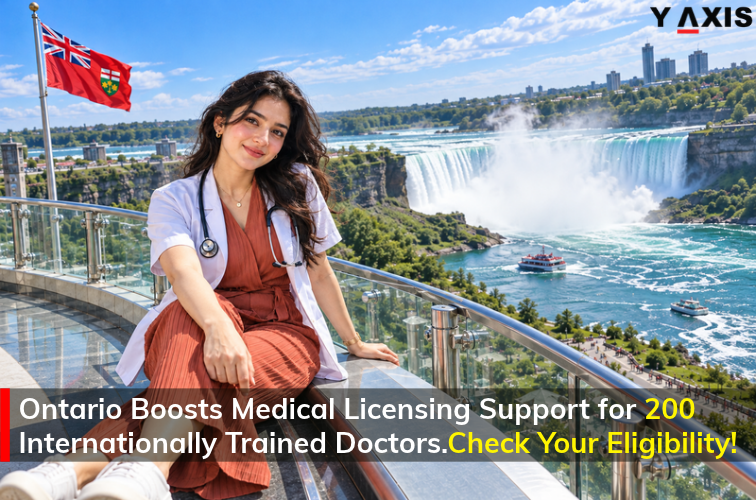
Ontario Boosts Medical Licensing Support for 200 Internationally Trained Doctors.Check Your Eligibility!
Highlights: Canada Fast-tracks Licensing Opportunities for 200 Internationally Trained Physicians
- Canada announces $20 million to fast-track licensing for 200 internationally trained physicians through Ontario’s Practice Ready Ontario program.
- The funding was extended through an official announcement made on October 7, 2026 creating 50 additional positions annually over four years.
- Eligible physicians including a dedicated stream for French-speaking physicians can qualify for Ontario family medicine licensing in under a year through a 12-week clinical field assessment.
- Participants for the program must be Canadian permanent residents or citizens and commit to three years of supervised practice in Ontario.
- Canada aims to help participants begin practising by 2028–2029, addressing physician shortages in rural, northern and Francophone communities.
*Interested to migrate to Ontario as a physician? Avail Y-Axis Immigration Points Calculator to assess your profile.
Ontario Invests $20 Million to Fast-Track Licensing for Internationally Physicians
Canada has announced $20 million in federal funding to expand Ontario’s Practice Ready Ontario (PRO) program, creating a faster licensing route for internationally trained physicians (ITPs). The official announcement was made by Health Canada on October 7, 2026, to help 200 additional physicians enter family medicine practice through an expanded assessment-based pathway.
The PRO program allows eligible physicians with relevant experience to complete a 12-week clinical field assessment instead of undertaking the traditional two-year residency route. According to the announcement, experienced physicians may become licensed in under a year, compared with the typical three to five years required through other licensing pathways.
Also, read...
Major highlights of Ontario’s Practice Ready Ontario Program
The funding will support additional training and assessment positions over four years, with the aim of enabling all participating physicians to practise in Ontario by 2028–2029. A dedicated stream will also support French-speaking internationally trained physicians.
Physicians interested to work in Canada must meet the program’s eligibility requirements, administered by the Touchstone Institute in collaboration with the Ontario government and the College of Physicians and Surgeons of Ontario (CPSO). Participants practise under supervision during their three-year return of service commitment. Full independent practice requires completion of the service agreement and satisfaction of the applicable certification requirements.
The table below highlights Ontario’s Practice Ready Ontario (PRO) program details for international physicians:
|
Program detail |
Information |
|
Federal funding |
$20 million |
|
Target group |
200 additional internationally trained physicians |
|
Program |
Practice Ready Ontario (PRO) |
|
Assessment period |
12-week clinical field assessment |
|
Additional positions |
50 per year over four years |
|
Eligibility |
Canadian citizens or permanent residents who meet education, work experience and language requirements |
|
Service commitment |
Three-year return of service agreement |
|
Target timeline |
Participants able to practise by 2028–2029 |
|
Priority communities |
Rural, northern and Francophone communities in Ontario |
Also, read...
Canada Extends LMIA-Exempt Work Permit Pilot for High-Skilled Workers. Check Your Eligibility Now!
How Indian Physicians Can Benefit from Practice Ready Ontario in 2027
Canada’s expanded licensing initiative could create opportunities for Indian-trained physicians who have already obtained Canada permanent residence (PR) or citizenship and meet Ontario’s professional requirements.
Here is how the Practice Ready Ontario (PRO) program will open new opportunities for Indian physicians:
- Faster route to practice: Eligible, experienced Indian-trained physicians may qualify for family medicine licensing in under a year through the assessment-based pathway.
- Reduced residency requirements: The 12-week clinical field assessment offers an alternative to the traditional two-year residency route for eligible candidates.
- More licensing opportunities: The creation of 50 additional positions annually could expand access to the program.
- Opportunities in underserved communities: Physicians willing to work in rural and northern Ontario may find additional opportunities to practise.
- French-speaking physician pathway: A dedicated stream could benefit eligible Indian-trained physicians with the required French-language proficiency.
- Potential long-term career development: Completing the required service commitment and certification requirements can support progression to independent family medicine practice in Ontario.
*Are you looking for step-by-step assistance with Canada immigration? Contact Y-Axis, the world's No. 1 overseas immigration consultancy.
For recent Canadian immigration updates, check out the Y-Axis Canada Immigration News Page.
FAQs
What is Canada’s latest update on licensing internationally trained physicians?
On October 7, 2026, Health Canada announced $20 million in funding to expand Ontario’s Practice Ready Ontario (PRO) program. The initiative aims to create 200 additional opportunities for internationally trained physicians to qualify for family medicine practice. It is designed to address physician shortages, particularly in rural and northern communities and Francophone areas of Ontario, by offering an assessment-based alternative to the traditional residency route.
How many internationally trained physicians will benefit from the new funding?
The funding is intended to support 200 additional internationally trained physicians through the expanded Practice Ready Ontario program. The initiative will create 50 additional positions per year over four years. The government aims to have all participants able to practise in Ontario by 2028–2029. The expansion is expected to improve access to primary care in underserved communities while helping qualified physicians enter the provincial healthcare workforce.
What is Ontario’s Practice Ready Ontario program?
Practice Ready Ontario is a licensing pathway for eligible internationally trained physicians who want to practise family medicine in Ontario. Instead of completing the traditional two-year residency route, qualified candidates undertake a 12-week clinical field assessment. The program is administered by the Touchstone Institute in collaboration with the Ontario government and the College of Physicians and Surgeons of Ontario. Applicants must meet the program’s education, work experience and language requirements.
Can Indian physicians apply for the Practice Ready Ontario program?
Indian-trained physicians may be eligible if they are Canadian citizens or permanent residents and meet all the program’s professional and language requirements. Physicians residing in India who do not have Canadian citizenship or permanent residence cannot qualify under the stated eligibility criteria. Interested candidates should review the official Practice Ready Ontario requirements to confirm whether their education, clinical experience and other credentials meet the program’s standards before beginning the application process.
How long does it take to get licensed through Practice Ready Ontario?
An experienced internationally trained physician may complete the Practice Ready Ontario route and become licensed in under a year, depending on their circumstances and completion of the required steps. The program includes a 12-week clinical field assessment, offering an alternative to the traditional two-year residency route. The exact timeline can vary based on eligibility verification, assessment outcomes and licensing requirements, so applicants should consult the program’s official guidance.
What are the eligibility requirements for Practice Ready Ontario?
Applicants must be Canadian citizens or permanent residents and satisfy the program’s minimum requirements for education, clinical work experience and language proficiency. They must also meet the applicable assessment and licensing criteria. Because eligibility depends on individual qualifications and professional experience, internationally trained physicians should check the requirements maintained by the Touchstone Institute and confirm any additional documentation or conditions before applying to the program.
Do physicians selected through Practice Ready Ontario have to work in Ontario?
Yes. Physicians who obtain a licence through Practice Ready Ontario must sign a three-year return of service agreement, committing to practise in Ontario. During this period, they work under supervised practice arrangements. After completing the service commitment, they must also satisfy the applicable certification requirements to become fully licensed for independent practice. Candidates should review the agreement carefully to understand their professional obligations and the conditions attached to their participation.
Why is Canada expanding licensing opportunities for internationally trained physicians?
Canada is expanding these opportunities to help address healthcare workforce shortages and improve access to primary care. Ontario’s initiative specifically targets underserved northern and rural regions, as well as Francophone communities. By creating additional assessment-based positions, the government aims to help qualified physicians enter practice more quickly while directing healthcare professionals towards communities where access to medical services can be limited.
Will the new funding provide Canadian permanent residence to Indian physicians?
No. The $20 million announcement supports Ontario’s physician licensing pathway; it does not itself grant permanent residence. Practice Ready Ontario requires applicants to already be Canadian citizens or permanent residents. Canada has separately introduced a dedicated permanent residence pathway for physicians with Canadian work experience. Indian physicians interested in immigrating should assess the eligibility criteria for the relevant immigration program separately from provincial medical licensing requirements.
Where can Indian-trained physicians find official Practice Ready Ontario requirements?
Indian-trained physicians can consult the Practice Ready Ontario information maintained by the Touchstone Institute, which administers the program with the Ontario government and the College of Physicians and Surgeons of Ontario. The official guidance should be used to verify eligibility, required qualifications, clinical experience, language proficiency, assessment procedures and return of service obligations. Applicants should rely on these requirements rather than assuming that an overseas medical qualification alone guarantees eligibility.
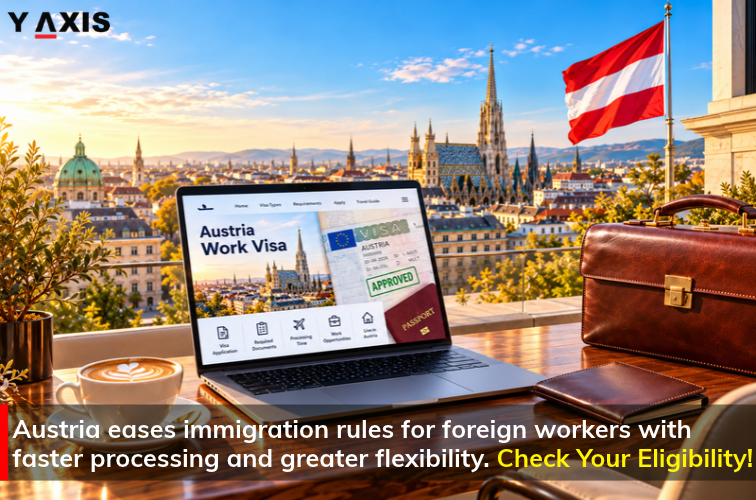
Austria eases immigration rules for foreign workers with faster processing and greater flexibility. Check Your Eligibility!
Highlights: Austria Reduces Immigration Processing Time to 90 days for Foreign Workers
- Austria eases immigration rules for foreign workers from August 7, 2026, simplifying employer changes and unemployment provisions.
- The country has reduced standard immigration processing times to 90 days for visa applications.
- Foreign workers with single permits can change employers after receiving approval from Austrian authorities.
- Applicants can start working for a new employer if no decision is issued within 45 days of a complete application.
- Eligible foreign workers can now retain their work permits for up to six months after becoming unemployed.
*Want to work in Austria? Let Y-Axis guide you with the steps.
Austria Eases Immigration Rules for Foreign Workers From August 2026
Austria has introduced several changes to its immigration rules for foreign workers, effective August 7, 2026. The reforms cover employer changes, unemployment protection and processing times for immigration applications.
The changes also bring parts of Austria’s national immigration legislation in line with the revised EU Single Permit Directive. This is set to provide foreign workers with greater flexibility when their employment circumstances change.
Under the revised rules, holders of eligible single permits can change employers after obtaining approval from the relevant authorities. A major change is that if authorities do not issue a decision within 45 days of receiving the application, the worker can begin employment with the new employer.
The existing rules governing employer changes for EU Blue Card holders will remain unchanged.
However, Austria has also expanded protection for foreign nationals who lose their jobs. Eligible workers can now retain their work permits for up to six months after becoming unemployed, whereas the earlier provision was generally available only to EU Blue Card holders.
The table below summarises the Austria immigration policy changes introduced in August, 2026:
|
Immigration change |
New provision |
|
Employer change |
Eligible single permit holders can change employers with authority approval |
|
45-day provision |
Workers may start with the new employer if no decision is issued within 45 days |
|
Unemployment protection |
Eligible workers can retain permits for up to 6 months after job loss |
|
Unemployment notification |
Workers must inform authorities when employment ends |
|
Standard processing time |
Most complete applications must be processed within 90 days |
|
Red-White-Red Card |
Existing shorter processing deadline remains |
|
EU Blue Card |
Existing shorter processing deadline remains |
|
ICT permits |
Excluded from certain new employer-change and unemployment provisions |
|
Posted workers |
Continue to have different rules, including longer processing periods in applicable cases |
Also, read...
What are the Eligibility Requirements for an Austria Work Visa?
Austria Aligns Immigration Rules With Revised EU Single Permit Framework
The Austria immigration reforms are partly intended to align Austria’s national legislation with the revised EU Single Permit Directive. The changes address situations that can create uncertainty for foreign workers, particularly when they change jobs or become unemployed.
Additionally, Austria has also shortened the standard processing period for immigration applications. With certain exceptions, authorities must now process applications within 90 days from the submission of a complete application.
Also, read...
Austria Opens Doors for Indian Engineering Students with New Student Visa Partnership
How Do Austria’s New Immigration Rules Benefit Foreign Workers?
The revised rules could provide greater flexibility for foreign professionals already working or planning to work in Austria, particularly those holding eligible single permits. The changes can reduce uncertainty around changing employers, provide a longer period to find new employment after job loss and establish clearer expectations around application processing.
- Greater job mobility: Eligible Indian workers with single permits can change employers after receiving the required approval.
- 45-day employer-change provision: If authorities do not issue a decision within 45 days, eligible applicants can begin working for the new employer.
- More protection after job loss: Eligible foreign workers can retain their work permits for up to six months after becoming unemployed.
- More time to find another job: The six-month period can give Indian workers additional time to secure suitable employment without immediately losing their work status.
- Clearer processing timelines: Most complete immigration applications now have a standard processing period of up to 90 days.
- Better planning: More defined processing timelines can help Indian professionals plan employment, relocation and other arrangements more effectively.
- EU-aligned framework: Changes aligning Austrian rules with the revised EU Single Permit Directive may provide a more consistent framework for eligible foreign workers.
- Opportunity for skilled professionals: Indian professionals considering Austria can factor the new employer-change and unemployment provisions into their long-term career planning.
*Are you looking for step-by-step assistance with Overseas Immigration? Contact Y-Axis, the world’s No. 1 overseas immigration consultancy, for end-to-end support!
For recent immigration updates on Austria, check out Y-Axis Schengen News!
FAQs
What immigration changes has Austria introduced for foreign workers?
Austria introduced several immigration reforms from August 7, 2026, affecting foreign workers and residence permit holders. The changes include greater flexibility for eligible single permit holders who want to change employers, a new six-month period of work permit protection after unemployment and shorter standard processing times. The reforms also partly align Austria’s national immigration framework with the revised EU Single Permit Directive.
Can foreign workers in Austria change employers under the new rules?
Yes. Eligible single permit holders can change employers after receiving approval from the Austrian authorities. A new provision also allows eligible applicants to start working for the new employer if the authorities do not issue a decision within 45 days of receiving the application. However, the provision does not apply to intracompany transfer permit holders, while existing EU Blue Card rules remain unchanged.
What happens if an Austrian authority does not decide an employer-change application within 45 days?
Under the revised rules, eligible single permit holders may begin working for their new employer if the authorities have not issued a decision within 45 days of receiving the relevant application. This provides greater flexibility for workers waiting for approval. However, applicants should confirm that their permit category is covered because the 45-day provision does not apply to intracompany transfer permit holders.
How long can eligible foreign workers remain unemployed in Austria?
Eligible foreign workers can now retain their work permits for up to six months after becoming unemployed. This represents an expansion of protection that was previously available only to EU Blue Card holders under the earlier framework. Workers must notify the relevant authorities when their employment ends. In limited circumstances, the six-month period may also be extended according to the applicable rules.
Do all foreign workers qualify for Austria’s six-month unemployment provision?
No. The six-month unemployment provision does not apply to every foreign worker or permit category. Certain groups, including intracompany transferees and posted workers, are excluded from the provision. Therefore, foreign nationals should identify the specific residence or work permit they hold before relying on the new unemployment protection. The applicable conditions can vary depending on the worker’s immigration status.
Has Austria reduced immigration application processing times?
Yes. Austria has introduced a standard processing period of 90 days for most immigration applications, calculated from the submission of a complete application. However, some categories have different deadlines. Existing shorter processing periods for permits such as Red-White-Red Cards and EU Blue Cards remain unchanged, while certain categories, including posted workers and self-employed applicants, can continue to have longer processing periods.
How do Austria’s new immigration rules benefit Indian workers?
Indian workers who qualify under the revised provisions may benefit from greater employment flexibility and additional protection after job loss. Eligible single permit holders can change employers through the revised process, while eligible unemployed workers may retain their permits for up to six months. The 90-day standard processing timeframe can also provide greater clarity when planning immigration applications, employment and relocation to Austria.
Do the new Austria immigration rules apply to EU Blue Card holders?
The new employer-change provision does not replace the existing rules for EU Blue Card holders. Austria has specifically stated that the existing change-of-employer rules for EU Blue Card holders remain unchanged. Similarly, the new six-month unemployment provision represents an expansion beyond the previous framework, under which this protection was available to EU Blue Card holders. Applicants should therefore check the rules specific to their permit.
Do the new rules apply to intracompany transfer permit holders?
No, certain new provisions specifically exclude intracompany transfer permit holders. The new 45-day employer-change provision does not apply to ICT permit holders, and they are also excluded from the six-month unemployment provision. This means ICT workers cannot automatically rely on the new flexibility available to eligible single permit holders. They should follow the immigration rules applicable specifically to intracompany transfers when changing employment circumstances.
Why has Austria changed its immigration rules for foreign workers?
The reforms include measures intended to make Austria’s immigration framework more flexible while aligning parts of national legislation with the revised EU Single Permit Directive. The changes address employer mobility, unemployment protection and application processing times. For foreign workers, the revised provisions can provide greater clarity around employment changes and periods of unemployment, although eligibility continues to depend on the specific permit category.
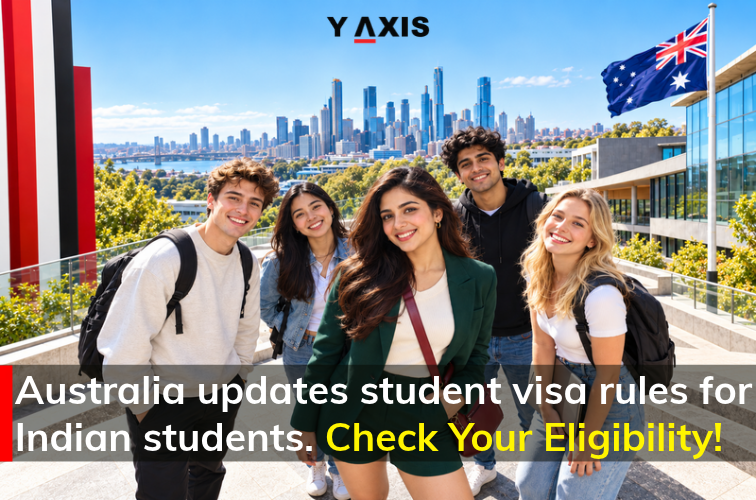
Australia updates student visa rules for Indian students. Check Your Eligibility!
Highlights: Australia Introduces New Student Visa Rules for Indian Students with Upcoming Academic Journey
- Australia has officially revised student and post-study visa rules from September 17, prompting Indian students to rethink long-term education plans.
- New dependant visa rules could have the biggest impact on married Indian students and those travelling with children to Australia
- Indian students are advised to choose Australian degrees for academic and career value rather than relying on future migration options.
- Bachelor’s students planning a master’s should build a clear academic pathway instead of treating course changes as a way to extend their stay.
- India-first and transnational education pathways could offer students greater financial flexibility and destination choices as visa rules evolve.
*Want to study in Australia? Let Y-Axis guide you with the process.
Australia’s Student Visa Changes Leverage Future Study Plans for Indian Aspirants
Australia’s recent student and post-study visa changes are prompting Indian students and families to rethink how they plan overseas education. The September 17 changes revised rules around dependants and target visa hopping, making long-term planning increasingly important for students considering bachelor’s or master’s programmes.
The impact may be particularly significant for married students and those with dependent children, while students focused primarily on education and career opportunities may continue to view Australia as an attractive destination. The bigger shift is that migration may need to become a later-stage consideration rather than the primary reason for choosing a course.
The changes also affect family members of graduates holding Temporary Graduate visas. This means married students and parents travelling with children may need to assess family arrangements much earlier.
Also, read...
Australia Introduces Faster Visa Processing for Students and Workers. Apply Now!
Indian Students must Strategize Bachelor’s-to-Master’s Path in Australia
The new immigration changes in Australia also make academic progression more important for students beginning with a bachelor’s degree. A three- or four-year programme should be selected based on the quality of the qualification, career relevance, total cost and future study options rather than an assumption that Australia's immigration settings will remain unchanged until graduation.
Progressing from a bachelor’s to a relevant master’s in Australia remains a legitimate academic pathway, while repeated course changes primarily intended to extend a stay are being targeted. Students should therefore approach undergraduate and postgraduate study as one coherent academic journey in the country.
The table below summarises what Indian students should consider before choosing Australia:
|
Factors |
What students should evaluate |
|
Degree value |
University quality, curriculum, skills and industry relevance |
|
Career prospects |
Employment opportunities in Australia, India and other global markets |
|
Total cost |
Tuition, accommodation, living expenses, insurance, travel and currency movements |
|
Family plans |
Whether spouse or children can accompany the student under applicable rules |
|
Further study |
Suitable master’s programmes and progression options after a bachelor’s |
|
Immigration policy |
Possibility that visa and post-study rules may change before graduation |
|
Course changes |
Whether a proposed change represents genuine academic progression |
|
Alternative destinations |
Other countries and regions offering relevant education and employment opportunities |
|
India-first pathways |
Options to begin studies in India and transition overseas later |
|
Return value |
Whether the qualification remains valuable if the student returns to India |
Also, read...
Australia Updates Skilled Visa Processing Priorities for 2026. Check Your Eligibility!
Australia to Chang Education Landscape for Indian Students
Indian students remain an important part of Australia's international education market. Aspirants from India accounted for 16% of Australia's international students in the first half of 2026, while bachelor's degrees represented 41% of international higher-education enrolments during the same period.
This makes the changes particularly relevant for Indian students entering three- or four-year undergraduate programmes. Since immigration settings can change substantially during such a period, students from India studying in Australia need to assess whether their chosen qualification will remain valuable across different countries and career scenarios.
Also, read...
Australia Replaces Ministerial Direction 119: Is It Getting Easier for Skilled Professionals?
How Australia Student Visa will Affect Indians in 2027?
The Australian immigration changes shall encourage Indian students and parents to make more informed and financially resilient education decisions. A stronger focus on degree value, career outcomes and flexibility can help students avoid making major decisions solely around today's immigration rules.
Here is how the updated foreign study policies in Australia will affect Indian students in 2027:
- Better course selection: Students are encouraged to prioritise degrees that provide strong skills and career opportunities.
- Stronger long-term planning: Bachelor’s students can map relevant master's options and career pathways before committing to an undergraduate programme.
- Greater awareness of family policies: Married students and parents can assess dependant arrangements before making an overseas education commitment.
- More financial awareness: Families are encouraged to calculate the complete cost of overseas education.
- Smarter course-change decisions: Students can distinguish genuine academic progression from course changes primarily intended to prolong their stay.
- Better risk management: Families can plan for possible changes in immigration policy during a three- or four-year degree.
Are you looking for a step-by-step with Australian Immigration? Contact Y-Axis, the world’s No. 1 abroad immigration consultancy, for end-to-end support!
For more updates on Australia, check out Y-Axis Australia Immigration Updates!
FAQs
How have Australia’s new student visa changes affected Indian students?
Australia’s recent student and post-study visa changes are prompting Indian students to reconsider how they plan their education journey. Tighter dependant rules and measures targeting visa hopping could particularly affect married students and those with children. Students are increasingly advised to choose Australian degrees based on academic quality, career relevance and overall value rather than relying primarily on future migration or post-study visa opportunities.
Can international students still bring their dependants to Australia?
Australia has tightened the rules governing dependants of most new international students. While certain exceptions remain, including for eligible PhD and research students, many students can no longer assume that their spouse or children can accompany them automatically. Married students and those with dependent children should therefore check the applicable dependant rules carefully and consider their family arrangements before committing to an Australian education programme.
Will the changes affect Indian students pursuing master’s degrees?
The changes could influence demand among Indian students considering coursework-based master’s programmes, particularly those whose primary motivation is migration. However, students choosing Australia for education quality, professional development and career opportunities may continue to consider it. Research-based master’s programmes are treated differently under the new dependant arrangements. Students should therefore evaluate the specific course, family situation and applicable visa conditions before making a decision.
Should Indian students still choose Australia for a bachelor’s degree?
Indian students can still consider Australia for a bachelor’s degree, but the decision should be based on more than immigration prospects. A bachelor’s programme represents a three- or four-year commitment during which visa policies may change. Students should evaluate university quality, curriculum, career relevance, total costs, employment opportunities and further-study options. The degree should retain value even if immigration settings are different when they graduate.
Can students progress from an Australian bachelor’s to a master’s?
Yes. Progression from a bachelor’s degree to a relevant master’s remains a legitimate academic pathway. However, students should plan this progression as part of a coherent educational journey rather than treating multiple course changes as a way to extend their stay. They should assess which master’s programmes align with their undergraduate qualification, the combined cost and whether the additional degree provides meaningful academic or career value.
What does Australia’s focus on visa hopping mean for students?
Australia’s focus on visa hopping means students should be more careful about changing courses or institutions primarily to prolong their stay. Genuine academic changes can still occur when circumstances require them, but students should not assume that course selection is easily reversible. Indian students are therefore encouraged to research their initial qualification, progression options, career outcomes and long-term academic plans before applying for an Australian student visa.
How should Indian parents calculate the cost of studying in Australia?
Families should calculate the complete investment rather than looking only at tuition fees. This includes accommodation, daily living expenses, health insurance, travel, currency fluctuations and potential costs of pursuing further education. Parents should also consider what happens if immigration rules change or the student eventually returns to India. Comparing the total cost with the degree’s likely career value can provide a more realistic assessment.
Could Indian students consider studying in India before moving abroad?
Yes. Students can consider structured transnational education pathways that allow them to begin their academic journey in India and transition overseas later. This approach may reduce initial financial exposure while giving students greater flexibility over their eventual destination. Families can compare this model with a full overseas degree by considering tuition, living costs, employability, post-study opportunities, currency movements and potential changes in immigration policies.
Are Indian students becoming less interested in studying in Australia?
The changing rules do not necessarily mean Indian students are becoming opposed to overseas education or Australia. Instead, students and parents are becoming more cautious and evaluating education through factors such as return on investment, career outcomes, total costs and policy risks. Students may also compare Australia with other destinations and consider more flexible education pathways rather than making an immediate, irreversible commitment to one country.
What should Indian students consider before choosing an Australian degree?
Indian students should assess the quality and career relevance of the degree, university reputation, total education and living costs, potential employment opportunities and suitable further-study pathways. They should also consider family arrangements and recognise that immigration policies may change during their studies. Most importantly, the qualification should have value beyond migration. A strong degree should provide useful skills and career opportunities in Australia, India and other global markets.
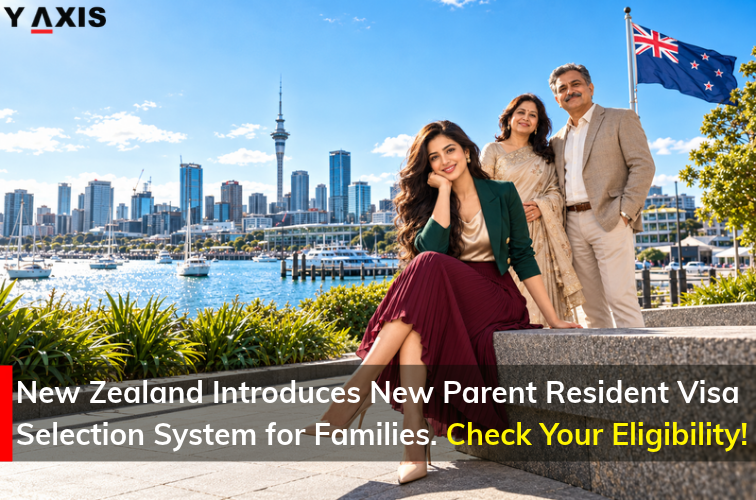
New Zealand Introduces New Parent Resident Visa Selection System for Families. Check Your Eligibility!
Highlights: New Zealand Brings Major Changes to Parent Resident Visa Selection from October
- New Zealand introduces a new hybrid selection system for Parent Resident Visa EOIs effective from October 6, 2026.
- Around 90% of valid EOIs will be selected by queue order, while 10% will enter a random ballot for NZ Parent Resident Visa
- Existing Indian applicants in NZ visa pool with valid EOIs do not need to submit a new expression of interest
- New Zealand’s first selection round under the hybrid system is scheduled for November 10, 2026.
- The annual Parent Resident Visa approval limit remains unchanged at 2,500 places for foreign applicants.
*Interested to migrate to New Zealand? Sign Up with Y-Axis for end-to-end assistance.
New Zealand Changes Parent Resident Visa Selection System for Foreign Parents
New Zealand has changed how Parent Resident Visa applications are selected, introducing a hybrid model that combines queue-based selection with a random ballot. The change affects parents, including Indian parents, who are waiting to join their children in New Zealand.
Under the new system, all valid expressions of interest (EOIs) have been moved into a single pool. Around 90% of EOIs will be selected according to their position in the queue, while the remaining 10% will be selected through a random ballot. The annual limit of 2,500 Parent Resident Visa approvals in principle remains unchanged.
Indian parents and other foreign applicants who had a valid EOI on October 6 do not need to submit a fresh EOI. Their existing EOIs have been transferred to the new parent category pool. Immigration New Zealand is still finalising queue positions and transitional arrangements and will contact eligible applicants once their positions are available.
The first selection round under the new system is scheduled for November 10, 2026. Applicants have been advised not to contact Immigration New Zealand to request their queue position because the positions are not yet available.
The table below highlights New Zealand Parent Resident Visa selection changes in 2026:
|
Change |
Details |
|
Selection model |
Hybrid queue and random ballot |
|
Queue selection |
Around 90% of EOIs |
|
Random ballot |
Around 10% of EOIs |
|
Existing valid EOIs |
Automatically moved to the new pool |
|
First selection round |
November 10, 2026 |
|
Annual approval limit |
2,500 |
|
New EOI required for existing applicants? |
No |
|
EOI validity |
No automatic expiry after two years |
|
Interest confirmation |
Required within six months of each two-year anniversary |
Also, read...
What Should Foreign Applicants Consider Under New Zealand's Parent Resident Visa Selection System?
Foreign parents waiting for New Zealand residence should carefully monitor their EOI status and ensure their contact information is current. While existing applicants do not need to submit a new EOI, they may need to take action to confirm their continued interest in the pool under the revised validity rules.
Applicants should also understand the transitional arrangements, particularly those who submitted a new EOI within 90 days of an earlier EOI expiring. Their queue position may potentially be based on the submission date of their earlier EOI.
- Check email regularly: Immigration New Zealand will use email to provide updates about queue positions and selection.
- Keep contact details updated: Applicants should ensure their email address and other contact information are current.
- Monitor spam folders: Important Immigration New Zealand communications could potentially be filtered into junk or spam folders.
- No fresh EOI required: Applicants with valid EOIs already in the pool do not need to submit another EOI because of the new selection system.
- Understand the new selection model: Applicants should be aware that around 90% of EOIs will be selected through the queue, while 10% will enter a random ballot.
- Confirm continued interest: EOIs will no longer automatically expire after two years, but applicants must confirm their interest within six months of each two-year anniversary.
- Check transitional provisions: Applicants who recently submitted a replacement EOI after an earlier EOI expired should review how the transitional rules may affect their queue position.
- Watch the first selection date: The first selection under the new hybrid model is scheduled for November 10, 2026.
- Do not request queue positions yet: Applicants should wait for Immigration New Zealand to finalise the ordering and contact them directly.
- Remember the annual cap: The Parent Resident Visa approval limit remains at 2,500 places, so the selection system change does not increase the annual number of approvals.
*Are you looking for step-by-step assistance with overseas immigration? Contact Y-Axis, the world’s No. 1 overseas immigration consultancy!
For recent immigration updates, check out the Y-Axis News Page!
FAQs
What has changed in New Zealand’s Parent Resident Visa selection process?
New Zealand has introduced a hybrid selection model for Parent Resident Visa expressions of interest (EOIs). Under the new system, all valid EOIs are placed into a single pool. Around 90% will be selected according to their queue position, while the remaining 10% will be selected through a random ballot. The annual limit of 2,500 Parent Resident Visa approvals remains unchanged.
Do Indian parents need to submit a new EOI?
No. Indian parents who had a valid Parent Resident Visa EOI on October 6, 2026, do not need to submit a new expression of interest. Their existing EOI has automatically moved into the new parent category pool. Immigration New Zealand is finalising queue positions and transitional arrangements and will contact eligible applicants once information about their position becomes available.
How will New Zealand select Parent Resident Visa EOIs?
Under the new hybrid model, approximately 90% of valid EOIs will be selected according to their position in the queue. The remaining 10% will be selected through a random ballot. This combines the previous date-based approach with a ballot mechanism, giving eligible applicants different selection routes while maintaining the existing annual limit of 2,500 Parent Resident Visa approvals.
When is the first selection round under the new system?
The first Parent Resident Visa selection round under New Zealand’s new hybrid system is scheduled for November 10, 2026. Immigration New Zealand will contact eligible EOI holders directly when their information and queue positions become available. Applicants have been advised not to contact the department to request their queue position because the final ordering and transitional arrangements are still being completed.
Has New Zealand increased the Parent Resident Visa annual limit?
No. The annual limit remains unchanged at 2,500 Parent Resident Visa approvals in principle. The major change is the method used to select EOIs rather than the number of visas available each year. Around 90% of EOIs will be selected through the queue, while approximately 10% will be selected through a random ballot under the new hybrid system.
Will existing Parent Resident Visa EOIs expire after two years?
EOIs will no longer automatically expire after two years under the revised system. However, applicants must confirm their interest in remaining in the pool within six months of each two-year anniversary. This means applicants need to monitor their EOI status and respond when required to ensure they continue to remain eligible for selection under the Parent Resident Visa process.
How will applicants know their Parent Resident Visa queue position?
Immigration New Zealand is still finalising the queue positions of existing EOI holders and the related transitional arrangements. Once this process is completed, eligible applicants will receive information about their position directly. Applicants do not need to contact Immigration New Zealand to request their queue position at this stage, as the positions are not yet available.
What should Indian applicants do after the Parent Resident Visa changes?
Indian applicants with valid EOIs should not submit a new EOI simply because the selection system has changed. Instead, they should ensure their contact details are current and regularly check their email, including junk or spam folders. They should also monitor communications from Immigration New Zealand regarding their queue position, continued interest requirements and the first selection round under the new system.
What happens to applicants who submitted a new EOI after an earlier one expired?
Applicants who submitted a new EOI within 90 days of their previous EOI expiring may benefit from transitional arrangements. In some cases, their position in the new queue may be based on the submission date of their earlier EOI rather than the newer one. Immigration New Zealand will provide relevant information once the final ordering and transitional arrangements have been completed.
Has the Parent Resident Visa application process itself changed?
The selection method has changed, but the Parent Resident Visa application process itself has not been changed by this announcement. Valid EOIs are now held in a single pool, with around 90% selected through queue order and 10% through a random ballot. Applicants should continue monitoring Immigration New Zealand communications and follow the applicable requirements when they are invited to apply.

Canada invites 1.9 Lakh+ Candidates in 9 months in 2026. You Can Be The Next One. Apply Now!
Highlights: Canada Reaches New Immigration Milestone With 1.9 Lakh+ Invitations in 2026
- Canada has issued 190,822 invitations to apply for permanent residence between January and September.
- Express Entry led with 129,715 invitations, about 68% of the total.
- Provincial programs and Quebec issued a combined 61,107 invitations.
- Quebec, Ontario and Alberta were the top provinces, with 15,065, 13,314 and 11,642 invitations.
- February was the busiest month, with 29,319 invitations across all programs.
*Interested to qualify for Canada immigration draws? Avail Y-AxisCanada Immigration Points Calculator to assess your profile.
Canada Issues 190,822 Invitations Through Express Entry and Provincial Draws in 2026
Canada has issued 190,822 invitations to skilled workers between January and September. These came through Express Entry, Provincial Nominee Programs (PNPs) and Quebec's immigration programs. Express Entry issued 129,715 invitations, while provinces and Quebec issued 61,107 for Canada permanent residence (PR).
Monthly totals for ITAs ( Invitations to Apply) changed through the year. February had the most invitations at 29,319, followed by March at 29,159 and April at 28,472. May had the fewest at 11,893. Express Entry's busiest month was March, with 20,982 invitations.
Ontario PNP issued 13,314 invitations, mostly in February, March and April. Alberta PNP and Manitoba PNP held draws every month, issuing 11,642 and 6,883 invitations. British Columbia(BCPNP), New Brunswick(NBPNP), Newfoundland and Labrador(NLPNP), Prince Edward Island (PEI PNP) and the Northwest Territories (NTNP) also invited candidates through their own programs.
The table below shows the invitations issued by each program and province:
|
Express Entry / Province |
Invitations (Jan–Sep) |
Highest Month |
|
Express Entry |
1,29,715 |
March (20,982) |
|
Quebec |
15,065 |
April (2,555) |
|
Ontario |
13,314 |
April (7,730) |
|
Alberta |
11,642 |
February (2,305) |
|
Manitoba |
6,883 |
July (2,989) |
|
British Columbia |
6,103 |
September (1,214) |
|
New Brunswick |
4,110 |
July (750) |
|
Newfoundland and Labrador |
2,695 |
March (690) |
|
Prince Edward Island |
1,230 |
July and September (195 each) |
|
Northwest Territories |
65 |
March (65) |
|
Total |
1,90,822 |
February (29,319) |
*Want to work in Canada? Let Y-Axis guide you with the steps.
Why Does Canada Keep Inviting Skilled Workers for Permanent Residence?
Canada relies on immigration to grow its workforce and support its economy. Regular draws through Express Entry, provincial programs and Quebec help the country bring in skilled workers where they are needed most.
- Labour shortages: Key sectors such as healthcare, construction, technology and trades still need skilled workers.
- Ageing population: Many workers are retiring, so Canada needs new talent to fill these roles.
- Immigration targets: Canada's Immigration Levels Plan sets yearly targets for economic immigrants, which draws help meet.
- Provincial needs: Each province uses its own Provincial Nominee Program to invite workers who match its local job market.
- French-speaking immigration: Quebec runs its own selection programs, and Canada also aims to increase French-speaking immigration in other provinces.
- Economic growth: New permanent residents add to the workforce, start businesses and help Canada's economy grow.
*Are you looking for step-by-step assistance with Canada immigration? Contact Y-Axis, the world's No. 1 overseas immigration consultancy.
For recent Canadian immigration updates, check out the Y-Axis Canada Immigration News Page.
FAQs
How many invitations has Canada issued between January and September?
Canada has issued 190,822 invitations to apply for permanent residence between January and September. Express Entry issued 129,715 of these invitations. Provincial Nominee Programs and Quebec's immigration programs issued the remaining 61,107. The invitations went to skilled workers across many occupations, helping Canada meet its economic immigration targets and fill labour shortages in key sectors. This shows steady demand for skilled immigrants across Canada.
How many invitations were issued through Express Entry?
Express Entry issued 129,715 invitations between January and September, about 68% of all invitations. March was the busiest month, with 20,982 invitations. May had the fewest, with 8,214. Express Entry manages applications for the Federal Skilled Worker Program, the Canadian Experience Class and the Federal Skilled Trades Program, making it Canada's main route for skilled workers. Each draw invites candidates with the highest CRS scores in the pool.
Which province issued the most invitations?
Quebec issued the most invitations among the provinces, with 15,065 invitations through its own immigration programs. Ontario followed with 13,314 invitations, most of which came in February, March and April. Alberta was third with 11,642 invitations, issued through draws held every month. Manitoba and British Columbia also issued more than 6,000 invitations each during the period. New Brunswick and Newfoundland and Labrador also issued thousands of invitations.
Which month had the highest number of invitations?
February had the highest number of invitations, with 29,319 issued across Express Entry, provincial programs and Quebec. March followed closely with 29,159, and April had 28,472. May had the lowest total at 11,893. Monthly totals change based on the size of Express Entry draws and the timing of draws held by each province. This makes it important to keep your profile ready at all times.
What is a Provincial Nominee Program (PNP)?
A Provincial Nominee Program lets a Canadian province or territory nominate foreign workers who meet its local labour needs. Each province runs its own streams, with different eligibility rules. A nomination can lead to permanent residence. Candidates who receive a nomination linked to Express Entry get 600 additional CRS points, which almost guarantees an invitation to apply. Most PNP streams need a job offer, work experience or a connection to the province.
How does a provincial nomination help an Express Entry candidate?
A provincial nomination linked to Express Entry adds 600 points to your Comprehensive Ranking System (CRS) score. This places you well above the usual cut-off scores in most draws. As a result, you are very likely to receive an invitation to apply for permanent residence in the next Express Entry draw for provincial nominee candidates. You must still meet all the eligibility rules and submit a complete application on time.
Why does Canada keep inviting foreign workers?
Canada invites foreign workers to fill labour shortages in sectors such as healthcare, construction, technology and trades. Many workers are retiring, and the country needs new talent to support its economy. Canada's Immigration Levels Plan sets yearly targets for economic immigrants. Regular draws through Express Entry, provincial programs and Quebec help the country meet these targets. Immigrants also help support public services and pay for an ageing population's needs.
How is Quebec's immigration system different from other provinces?
Quebec selects its own economic immigrants instead of using a regular Provincial Nominee Program. Candidates apply through Quebec's own programs and, if selected, receive a Quebec Selection Certificate before applying for permanent residence. Quebec places strong importance on French language skills. It issued 15,065 invitations between January and September, the highest among the provinces. Candidates can check the Quebec immigration website for the latest draws and programs.
Which provinces held draws every month?
Alberta, Manitoba, British Columbia, Prince Edward Island and New Brunswick issued invitations in every month from January to September. Regular draws make these provinces a reliable option for candidates who match their streams. Some provinces, such as Ontario and the Northwest Territories, issued invitations in only a few months. Draw timing can change based on each province's priorities. Candidates should track each province's draw updates on its official website.
How can I improve my chances of receiving an invitation from Canada?
You can improve your chances by raising your CRS score. Improve your language test results, gain more skilled work experience, and get your education assessed. Learning French can also add points. Applying to a Provincial Nominee Program that matches your occupation can bring 600 extra points. Keep your Express Entry profile updated and accurate at all times. Always check the latest draw results and eligibility rules before you apply.