




News
Feb 21st, 2026
Japan surpasses 4 lakh international student enrolment target, achieves 2033 goal ahead of schedule



Don' know what to do?
Get Free CounselingTrending News
Latest Article

Japan surpasses 4 lakh international student enrolment target, achieves 2033 goal ahead of schedule
Highlights: Japan Crosses 4 Lakh International Students Milestone Ahead of 2033 Goal
- Japan has officially surpassed its 2033 international student enrolment target in 2025, reinforcing its position as a fast-growing global study destination.
- A total of 435,200 international students were enrolled across Japan as of June 2025, exceeding the 4 lakh target eight years ahead of schedule.
- The country recorded an 8.2% rise in enrolments compared to 2024, highlighting steady year-on-year growth in foreign student admissions.
- Around 180,000 first-time international students joined Japanese institutions in 2025 alone, marking a record intake.
- Japan is also home to 4 million foreign residents and over 866,000 highly skilled foreign workers, reflecting its broader strategy to attract and retain global talent.
*Want to apply for a Japan student visa? Let Y-Axis guide you with the process.
Japan Surpasses 4 Lakh International Student Target 8 Years Early
Japan has officially exceeded its international student enrolment target of 4 lakh (400,000), reaching 435,200 international students by June 2025, nearly eight years ahead of its 2033 goal. The latest figures reflect an 8.2% increase over 2024, driven largely by a record 180,000 first-time international students. This milestone highlights Japan’s accelerated push to internationalise its higher education sector and strengthen its position as a leading study destination in Asia.
The growth is closely linked to Japan’s broader economic strategy to address its ageing population and shrinking workforce. By attracting more global talent, the country aims to build a skilled pipeline of graduates who can transition into long-term employment. Universities are expanding English-taught programs and increasing international intake capacity, making Japan more accessible to students worldwide, including those from India seeking quality education and strong post-study career opportunities.
Also, read…
Can Indian Students Work Part-Time While Studying in Japan?
Japan Expands English Programs & University Intake – A Big Boost for Indian Students
Japan is not only increasing international student numbers but also transforming its higher education system to attract global talent. With expanded English-taught programs, relaxed intake caps for top universities, and clearer career pathways, the country is positioning itself as a long-term academic and employment destination. These reforms are especially promising for Indian students seeking quality education, global exposure, and post-study work opportunities.
- Leading national universities such as Tohoku University, Hiroshima University, and the University of Tsukuba have been allowed to increase international student intake from 2026.
- More English-medium degree programs are being introduced, reducing language barriers for foreign students.
- Tuition caps for international students were lifted in 2024, allowing universities to revise fee structures while remaining competitive globally.
- Japan continues to encourage international graduates to join its workforce, supporting over 866,000 highly skilled foreign professionals currently employed in the country.
Also, read…
Japan plans to introduce new migration programme for foreign nationals. Check your eligibility!
Integration Reforms and Policy Shifts Shape Japan’s Next Phase of International Growth
As Japan welcomes record numbers of international students, policymakers are also focusing on integration and long-term sustainability. With foreign residents reaching 4 million in June 2025, public discussion around migration, residency rules, and social integration has intensified. The government has acknowledged the need to balance talent attraction with structured immigration management.
Authorities have announced enhanced Japanese language training and support systems to help incoming students and professionals adapt more effectively. At the same time, there are indications that the timeline for obtaining permanent residency may be revised, potentially extending the duration required before eligibility. These developments highlight Japan’s effort to build a stable, well-integrated international community while continuing to attract global academic talent.
For Indian students, this means understanding both the opportunities and evolving policies before making long-term plans. Japan remains open and competitive, but staying informed about visa regulations, residency pathways, and post-study options will be key to making the most of this growing opportunity.
*Are you looking for step-by-step assistance with overseas immigration? Contact Y-Axis, the world’s No. 1 overseas immigration consultancy!
For recent immigration updates, check out the Y-Axis News Page!
FAQs
What does it mean that Japan has surpassed 4 lakh international student enrolments ahead of its 2033 target?
Japan has officially crossed 400,000 international student enrolments, reaching approximately 435,200 students by mid-2025. This means the country has achieved its 2033 target nearly eight years early. The increase reflects Japan’s strategy to internationalise its higher education system and attract global talent to address labour shortages caused by its ageing population. For prospective students, this signals expanded academic opportunities, stronger institutional support for foreign learners, and a more welcoming environment for international applicants planning to study in Japan in the coming years.
Why is Japan encouraging more international students to study there?
Japan is facing a declining birth rate and a rapidly ageing population, leading to workforce shortages in several sectors. By attracting international students, the government aims to build a skilled talent pipeline that can transition into long-term employment in Japan after graduation. International students are viewed as potential contributors to innovation, research, and economic growth. This policy direction makes Japan an increasingly attractive destination for students who wish to combine quality education with future career opportunities in a stable and technologically advanced economy.
How many international students are currently studying in Japan?
As of June 2025, Japan recorded around 435,200 international students enrolled across universities and other institutions. This represents an 8.2% increase compared to the previous year. A significant portion of this growth came from approximately 180,000 first-time international students. These numbers highlight Japan’s growing popularity as a global study destination and demonstrate the country’s success in attracting overseas talent through policy reforms, expanded academic programs, and improved post-study employment prospects.
Are more English-taught programs being introduced in Japan?
Yes, many Japanese universities are expanding English-medium programs to attract a broader international audience. Since Japanese is considered a challenging language for many foreign students, offering courses in English makes higher education more accessible. Several institutions are strengthening their global competitiveness by introducing more English-based degrees, particularly at the master’s and research levels. However, students are still encouraged to learn basic Japanese to improve integration, employment opportunities, and overall daily life experiences while living in Japan.
Has Japan increased tuition fees for international students?
Some Japanese universities have been permitted to revise tuition structures for international students. In recent years, the cap limiting foreign student tuition to 1.2 times domestic fees was lifted. Certain national universities have announced higher annual tuition fees starting from upcoming academic intakes. Despite these increases, tuition fees in Japan remain comparatively lower than many major global study destinations such as the US or UK. Students should check specific university websites for the latest fee details and scholarship opportunities before applying.
Will international students be encouraged to work in Japan after graduation?
Yes, Japan views international graduates as an important talent pool for its economy. The government encourages skilled graduates to transition into the workforce, especially in sectors experiencing shortages. Many students can apply for post-study work opportunities by changing their visa status once they secure employment. Japan’s growing demand for highly skilled professionals, including in technology, engineering, and research fields, makes it a promising destination for students seeking long-term career prospects after completing their studies.
Are there any changes to permanent residency rules for foreign nationals in Japan?
Recent policy discussions indicate that Japan is reviewing certain immigration and residency regulations. Authorities have announced stronger language support measures for international students and workers to improve integration. At the same time, there have been indications that the time required to qualify for permanent residency may be adjusted. Students planning long-term settlement should stay updated through official Immigration Services Agency announcements to understand the latest eligibility requirements and timelines.
Which universities in Japan are increasing international student intake?
Japan’s Ministry of Education has allowed selected national universities to admit more international students beyond previous quota limits. Institutions such as Tohoku University, Hiroshima University, and the University of Tsukuba have received permission to expand their intake in selected programs. This flexibility allows universities to respond to global demand and strengthen their international presence. Prospective students should monitor official university admissions pages for updated program availability and intake numbers.
Is Japan still affordable compared to other popular study destinations?
Even with gradual tuition revisions at certain universities, Japan remains relatively affordable compared to countries like the United States, the United Kingdom, or Australia. In addition to moderate tuition costs, Japan offers various government and institutional scholarships to support international students. Living expenses vary by city, with Tokyo being more expensive than regional areas. Overall, Japan continues to balance affordability with high-quality education, advanced research facilities, and strong employment prospects.
What should students consider before applying to study in Japan?
Students should review program language requirements, tuition fees, scholarship availability, visa regulations, and post-study work options. Learning basic Japanese can significantly enhance daily life and career prospects. It is also important to understand university admission timelines and required documents, including academic transcripts and language proficiency scores. With Japan actively strengthening its international education framework, students who plan carefully and apply early can benefit from expanded opportunities in one of Asia’s leading academic and economic hubs.

Canada's Express Entry Adds 3 New Occupations for PR Visa. Check Your Eligibility Now!
Highlights: Canada Adds Three New Express Entry Categories for 2026
- Canada has updated its Express Entry System for 2026 by prioritizing new occupational categories and attracting foreign skilled workers to labor-shortage sectors.
- The professions prioritised under the revised Express Entry policies include researchers, healthcare specialists, aviation experts, and select military recruits.
- Targeted immigration streams for the Express Entry program now include highly skilled foreign military professionals, doctors, nurses, and pilots.
- The country has decided to increase its defense expenditure to 5% of GDP by 2035 to strengthen military security and expand workforce capacity.
- Total defense and research investment in Canada will rise by 85%, with up to 125,000 new defense-related jobs in the coming years.
*Want to check your eligibility for Canada? Try the FREE Y-Axis Canada CRS points calculator to get an instant score!
Canada’s Latest Reforms for the Express Entry System in 2026 Target Defence, Healthcare, and Aviation Talent
Canada has announced new Express Entry categories for 2026, prioritizing specific fields such as defense, healthcare, and aviation to meet workforce demand. The recent policies reflect the country’s strategy to align immigration selection with labour market demands while balancing Canada PR admissions at sustainable levels.
The revised Express Entry program mainly focuses on categories such as research, healthcare, aviation, and defence, outlining Canada’s intention to strengthen its defence sector. The country plans to increase its defense spending to 5% of GDP and research and development investment by 85%, by 2035. The updated policies also aim to create 125,000 new defence-related jobs over the next decade.
Occupations prioritised under Express Entry 2026:
- Researchers and senior managers
- Healthcare professionals, including foreign-trained medical doctors with Canadian experience
- Aviation professionals such as pilots and aircraft mechanics
- Highly skilled foreign military recruits, including military doctors, nurses, and pilots.
*Want to apply for Express Entry? Let Y-Axis guide you with the process.
List of New Occupations Added to the Express Entry System in 2026
Canada has announced new occupation-based categories for the Express Entry System in 2026. These additions reflect the country’s intention to prioritize professionals who can better support Canada’s economy and boost the workforce in critical sectors. The categories mainly include leadership roles, academic research, transport expertise, and specialized military talent.
According to recent policies, candidates must have at least 1 year of Canadian work experience within the last 3 years to be eligible to apply for the listed occupations under the category-based selection. The new categories will operate in parallel with existing priority streams, which are healthcare, French-language proficiency, and skilled trades.
The table below highlights the newly introduced categories in the Express Entry System for 2026:
|
Category |
Occupations |
NOC Code |
|
Senior Management |
Senior managers in construction, transportation, production and utilities |
NOC 00015 |
|
Senior managers in trade, broadcasting and other services |
NOC 00014 |
|
|
Senior managers in health, education, social and community services |
NOC 00013 |
|
|
Senior managers in financial, communications and business services |
NOC 00012 |
|
|
Research |
University professors and lecturers |
NOC 41200 |
|
Post-secondary teaching and research assistants |
NOC 41201 |
|
|
Military |
Commissioned officers of the Canadian Armed Forces |
NOC 40042 |
|
Specialized members of the Canadian Armed Forces |
NOC 42102 |
|
|
Operations members of the Canadian Armed Forces |
NOC 43204 |
|
|
Transport and Aviation |
Air pilots, flight engineers and flying instructors |
NOC 72600 |
|
Aircraft mechanics and inspectors |
NOC 72404 |
|
|
Automotive service technicians, truck and bus mechanics |
NOC 72410 |
|
|
Aircraft instrument, electrical and avionics mechanics and technicians |
NOC 22313 |
Also, read…
Canada launched New Express Entry Stream for Healthcare Doctors. Apply Now!
How will the Latest Express Entry Changes Affect Indian Applicants in 2026
Recent updates to the Express Entry System highlight Canada’s focus on skill-based immigration. While the total number of permanent residents in Canada is monitored to minimise pressure on housing and public services, the country continues to invite qualified immigrants to help stabilise the workforce. This is likely to create greater opportunity and urgency among Indian applicants for Canada PR. If your profession falls under the new categories or existing priority streams, this could significantly improve your chances of selection through category-based draws.
Things to keep in mind while applying:
- You must have at least 1 year of Canadian work experience in a qualifying profession in the last 3 years.
- You still need to qualify under programs like the Federal Skilled Worker Program, Canadian Experience Class, or Federal Skilled Trades Program.
- A high CRS score is integral for competitive category-based draws.
- Key sectors include Healthcare, French-language proficiency, skilled trades, with newly introduced leadership, research, defence, and aviation roles.
- Keep your IELTS scores, ECA, and other documents up to date to meet the eligibility criteria for the draws.
*Are you looking for step-by-step assistance for Canada immigration? Contact Y-Axis, the world’s No. 1 overseas immigration consultancy, for end-to-end support!
For recent immigration updates on Canada, check out Y-Axis Canada Immigration News page!
FAQs
What changes has Canada announced to the Express Entry system in 2026?
Canada has introduced new priority categories under the Express Entry system to attract skilled professionals in critical sectors such as research, healthcare, aviation, and defence. The updates also include certain highly skilled foreign military recruits, including doctors, nurses, and pilots joining the Canadian Armed Forces. These changes aim to better align immigration selection with Canada’s labour market needs while managing overall permanent resident admissions. The government has clarified that existing categories, such as healthcare, skilled trades, and French-language proficiency, will continue alongside the newly introduced targeted streams.
Why is Canada adding military and defence-related roles to Express Entry?
Canada’s decision to include military and defence-related roles under Express Entry aligns with its broader national strategy to strengthen defence capabilities and reduce reliance on external partners. By attracting highly skilled foreign military professionals, including medical personnel and aviation specialists, Canada aims to enhance its workforce readiness in critical sectors. The move supports long-term plans to increase defence research, investment, and job creation. These changes reflect Canada’s focus on building a self-reliant, skilled workforce that can contribute to national security, innovation, and essential public services from the first day of arrival.
Which occupations are included in the new Express Entry priority categories?
The newly introduced Express Entry categories include researchers, senior managers, aviation professionals such as pilots and aircraft mechanics, and foreign-trained medical doctors with Canadian work experience. In addition, highly skilled foreign military recruits, including military doctors, nurses, and pilots, are now part of the targeted selection. These occupations have been identified as critical to Canada’s economic growth and public service needs. By prioritizing these roles, the government aims to address labour shortages in essential industries while ensuring that newcomers possess the skills required to integrate quickly into the Canadian workforce.
Will Canada continue regular Express Entry draws after these changes?
Yes, Canada will continue conducting invitation rounds under existing Express Entry categories. Candidates with French-language proficiency, healthcare experience, and skilled trades backgrounds will still be considered in category-based and general draws. The newly introduced streams will operate alongside these existing categories rather than replacing them. This ensures that skilled workers across various sectors continue to have opportunities to receive Invitations to Apply for permanent residency. The government’s objective is to balance targeted recruitment in priority sectors with broader economic immigration goals while maintaining a structured and transparent selection process.
How do these changes impact overall Canada PR targets?
The government has indicated that the new Express Entry categories are part of a broader plan to restore immigration levels to more sustainable numbers. While Canada continues to welcome skilled professionals, it is also adjusting permanent resident targets to ease pressures on housing and social infrastructure. The focus is now on selecting candidates who can immediately contribute to critical sectors rather than increasing overall intake numbers. This means immigration remains a key pillar of economic growth, but with a stronger emphasis on workforce alignment, sector-specific needs, and long-term sustainability.
Are healthcare professionals still a priority under Express Entry?
Yes, healthcare professionals remain a key priority under Canada’s Express Entry system. In fact, the 2026 updates reinforce the importance of medical and health-related roles, including foreign-trained doctors with Canadian experience and military medical personnel. Canada continues to face labour shortages in healthcare across several provinces, making this sector vital for category-based draws. Candidates with relevant qualifications, work experience, and language proficiency may benefit from targeted selection rounds. Healthcare remains one of the most consistent and in-demand fields under Canada’s economic immigration strategy.
What does this mean for foreign workers planning to apply through Express Entry?
Foreign workers should carefully assess whether their occupation falls under the newly introduced priority categories or existing targeted streams. Those with experience in research, aviation, healthcare, or defence-related fields may see improved opportunities in category-based draws. However, meeting eligibility criteria under programs such as the Federal Skilled Worker Program, Canadian Experience Class, or Federal Skilled Trades Program remains essential. Applicants must still maintain competitive Comprehensive Ranking System scores and valid documentation. The changes highlight the importance of aligning one’s professional profile with Canada’s evolving labour market priorities.
How does Canada select candidates under category-based Express Entry draws?
Under category-based selection, Canada invites candidates who meet specific criteria linked to identified priority occupations or language abilities. Eligible candidates must first qualify under one of the federal economic programs managed by Express Entry and enter the candidate pool. The government then conducts targeted draws focusing on selected sectors, inviting those with relevant experience and competitive Comprehensive Ranking System scores. This approach allows Canada to address labour shortages more efficiently while maintaining transparency in the selection process. Category-based draws operate alongside general and program-specific invitation rounds.
Does this update affect French-language or skilled trades candidates?
The recent update does not remove or reduce opportunities for French-language candidates or skilled trades professionals. These categories continue to be part of Canada’s targeted Express Entry draws. French-speaking candidates remain especially important in supporting Canada’s Francophone immigration goals outside Quebec. Similarly, skilled trades workers continue to address workforce gaps in construction, manufacturing, and related industries. The addition of new categories simply expands the focus to include research, aviation, healthcare, and defence sectors, ensuring that immigration supports a broad range of economic priorities.
How can eligible candidates prepare for the new Express Entry categories?
Eligible candidates should begin by confirming their occupation classification and ensuring it aligns with Canada’s National Occupational Classification system. Gathering updated work experience letters, educational credentials, language test results, and other required documents is essential before creating an Express Entry profile. Those in priority sectors such as healthcare, research, aviation, or defence should highlight relevant Canadian or international experience. Maintaining a strong Comprehensive Ranking System score remains important. Staying informed about category-based draw announcements and policy updates will help candidates strategically plan their Canada PR application process.

France announces Visa Free Access to welcome 30,000 Indian Students. Modi-Macron Meet Updates.
Highlights: France Sets a 30,000-Student Target for Indians by 2030 in Major Education Boost
- France has announced a bold plan to significantly expand academic ties with India, aiming to position itself as a top European study destination for Indian students.
- The country plans to attract 30,000 Indian students annually by 2030, marking a major increase from current levels.
- Indian student enrolment in France has already crossed 10,000+ in recent years, showing steady growth in demand.
- France aims to nearly triple the number of Indian students within this decade through targeted outreach and policy support.
- The announcement follows strengthened bilateral cooperation after the Modi–Macron strategic meeting, reinforcing long-term education and mobility partnerships.
*Want to apply for a France student visa? Let Y-Axis guide you with the process.
France Aims to Welcome 30,000 Indian Students by 2030 – Major Boost after Modi-Macron Talks
France has announced an ambitious plan to welcome 30,000 Indian students every year by 2030, signalling a strong push to deepen education ties with India. The announcement came after high-level discussions between Prime Minister Narendra Modi and French President Emmanuel Macron, highlighting education, innovation, and youth mobility as key pillars of the India–France partnership.
For Indian students dreaming of studying in Europe, this is encouraging news. Currently, over 10,000 Indian students are pursuing higher education in France, and this number is steadily growing. By nearly tripling enrolments over the next few years, France is clearly positioning itself as a long-term and student-friendly destination.
The expansion is expected to bring more English-taught programs, streamlined visa processes, research collaborations, and stronger university partnerships between the two countries. France is also known for its globally ranked business schools, engineering institutions, and affordable public universities compared to many other Western destinations.
Beyond academics, the initiative focuses on creating smoother pathways for internships, research opportunities, and post-study work options. For Indian students seeking international exposure, European work experience, and globally recognised degrees, France is becoming an increasingly attractive alternative to traditional destinations.
*Looking to study in France? Sign up with Y-Axis for end-to-end support with the process.
France–India Education Partnership: New Pathways for Indian Students
France’s decision to significantly increase the number of Indian students is not just about numbers — it reflects a long-term strategy to build deeper academic, economic, and cultural ties with India.
India is one of the fastest-growing sources of international students globally. Recognising this potential, France is expanding its outreach efforts, university collaborations, and student mobility programs to make the country more accessible and attractive to Indian applicants.
Here’s what this means in practical terms:
- More English-taught programs: French universities and Grandes Écoles are increasing the number of Master’s programs offered fully in English, especially in business, engineering, AI, data science, and sustainability.
- Affordable education options: Compared to destinations like the US and UK, tuition fees at French public universities remain relatively affordable, making it a cost-effective European option.
- Post-study work pathways: International graduates can apply for temporary residence permits to stay back and look for jobs or start careers in France.
- Research and innovation partnerships: Both governments are encouraging joint research initiatives, student exchanges, and dual-degree programs between Indian and French institutions.
- Stronger diplomatic cooperation: Education has become a key pillar in the broader India–France strategic partnership, ensuring policy support and stability for future applicants.
Also, read…
How to Apply to Study in France
Study in France for Indian Students: What You Should Know Before Applying
France’s ambitious target to welcome 30,000 Indian students annually by 2030 creates exciting opportunities — but students must plan strategically to make the most of it. With growing university partnerships, visa facilitation, and English-taught programs, France is becoming more accessible than ever for Indian applicants.
If you are considering studying in France, here are the key things to keep in mind:
- Choose the right program and institution: France is known for globally ranked business schools, engineering institutions, AI and data science programs, hospitality, sustainability, and research-focused master’s degrees.
- Understand admission requirements: Most universities require academic transcripts, statement of purpose, recommendation letters, and proof of language proficiency (English or French, depending on the course).
- Apply for the long-stay student visa: After receiving admission, students must apply for a French student visa with proof of funds, accommodation, health insurance, and other required documentation.
- Explore post-study work options: Master’s graduates can apply for a temporary residence permit to stay and look for employment in France, opening doors to European career opportunities.
- Consider language advantages: While many programs are offered in English, learning basic French can significantly improve internship, networking, and job prospects.
With structured government support and a clear 2030 target, France is positioning itself as a stable and long-term study destination for Indian students.
*Are you looking for step-by-step assistance with overseas immigration? Contact Y-Axis, the world’s No. 1 overseas immigration consultancy!
For recent Schengen immigration updates, check out the Y-Axis Schengen News Page!
FAQs
What is France’s new target for Indian students by 2030?
France has announced an ambitious goal to attract 30,000 Indian students annually by the year 2030. This target reflects France’s commitment to strengthening educational ties with India and positioning itself as a preferred global study destination. The announcement was made as part of broader bilateral cooperation in education, research, and innovation. The initiative aims to increase academic exchanges, promote French universities among Indian students, and encourage long-term collaboration between institutions in both countries. This move is expected to significantly increase Indian student enrolment in French higher education institutions over the coming years.
Why is France focusing on attracting more Indian students?
France considers India a key strategic partner in education, technology, and innovation. Indian students represent one of the fastest-growing international student populations globally. By attracting more Indian students, France aims to strengthen cultural ties, enhance research collaboration, and build a skilled talent pipeline that contributes to both economies. The initiative also aligns with France’s internationalisation strategy for higher education. Increasing Indian student enrolment helps French institutions diversify campuses, promote English-taught programs, and support long-term diplomatic and economic partnerships between the two countries.
How many Indian students currently study in France?
The number of Indian students in France has grown steadily in recent years, crossing 10,000 enrollments according to recent estimates. France aims to nearly triple this figure to reach 30,000 Indian students per year by 2030. This growth reflects rising awareness among Indian students about France’s globally ranked universities, affordable tuition fees compared to other Western countries, and increasing availability of English-taught programs. The upward trend also indicates stronger educational cooperation and promotional efforts by French authorities in India.
What courses are popular for Indian students in France?
Indian students in France commonly pursue programs in business management, engineering, artificial intelligence, data science, luxury brand management, hospitality, and sustainable development. France is home to several globally ranked business schools and engineering institutions that offer English-medium master’s programs. Additionally, France is known for strong research programs in technology, design, fashion, and culinary arts. The country’s growing startup ecosystem and innovation-driven industries also make it an attractive destination for students seeking practical exposure and career opportunities after graduation.
Are there English-taught programs available in France?
Yes, France offers a wide range of English-taught programs, particularly at the master’s level. Many business schools, engineering institutions, and public universities provide programs fully taught in English to attract international students. This has significantly increased accessibility for Indian students who may not initially speak French. However, learning basic French is encouraged, as it improves daily life integration and enhances employment prospects in France. The availability of English programs has played a major role in France’s strategy to increase international student enrollment.
What visa support is available for Indian students planning to study in France?
France has streamlined student visa procedures to encourage more Indian applicants. The long-stay student visa allows students to reside in France for the duration of their academic program. Students must secure admission from a recognized French institution and complete the visa application process through the official system. France has also simplified certain documentation processes and enhanced cooperation with Indian authorities to make applications smoother. Additionally, post-study work opportunities are available, allowing graduates to gain international work experience.
Are there post-study work opportunities in France for Indian students?
Yes, France offers post-study work options for international students. Graduates of master’s programs can apply for a temporary residence permit that allows them to stay in France and look for employment or start a business. Once employed, students can transition to a work permit under French immigration regulations. These opportunities make France attractive for Indian students seeking international exposure and global career growth. The ability to gain European work experience enhances long-term career prospects both in Europe and globally.
Does France offer scholarships for Indian students?
France provides several scholarship opportunities for Indian students, including government-funded and institution-specific scholarships. Programs such as Eiffel Excellence Scholarships and other merit-based grants help reduce tuition and living expenses. Many French universities and business schools also offer partial tuition waivers and financial aid for outstanding international applicants. These scholarships are aimed at encouraging high-achieving students to pursue higher education in France and contribute to academic and research excellence.
How does France compare to other European countries for Indian students?
France is emerging as a competitive study destination in Europe due to its affordable public university tuition fees, globally ranked institutions, and growing number of English-taught programs. Compared to some other Western destinations, living costs in certain French cities can be moderate. France also offers strong post-study work pathways and access to the broader European job market. The government’s clear target of welcoming 30,000 Indian students annually demonstrates long-term commitment, providing reassurance and stability for prospective applicants.
How can Indian students apply to study in France?
Indian students must first choose a recognized French university or institution and secure an admission offer. After receiving acceptance, they must apply for a long-stay student visa through the official process. Applicants typically need academic transcripts, proof of financial resources, accommodation details, and health insurance. Early preparation is essential, as application timelines may vary depending on the intake. With France aiming to significantly increase Indian student numbers by 2030, prospective students are encouraged to plan ahead and explore suitable programs aligned with their career goals.
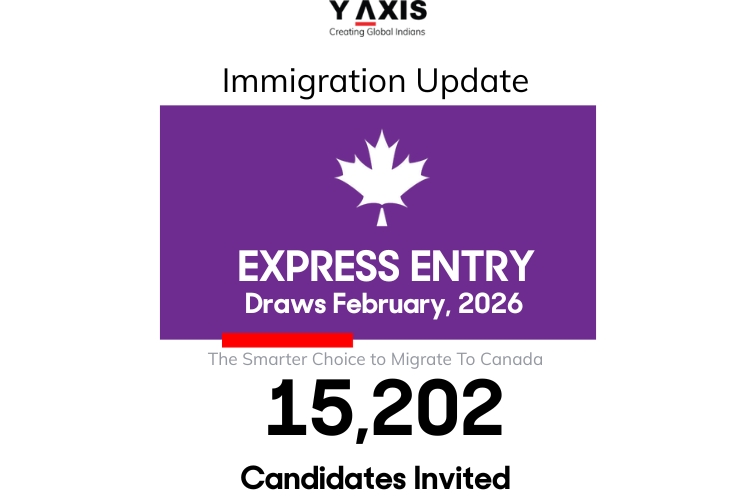
Canada Express Entry invites 15,202 PRs in February 2026. Register your EOI now!
Highlights: Latest Express Entry Draw issues 6,000 ITAs to CEC candidates
- The most recent Express Entry Draw #396 was held on February 17, 2026, issuing Invitations to Apply (ITAs) to 6,000 CEC candidates.
- The minimum CRS score required to qualify for the Express Entry Draw #396 was set at 508.
- A total of eight Express Entry Draws were held in 2026 so far, of which four draws were conducted in February.
- The four Express Entry Draws in February 2026 issued a total of 15,202 Invitations to Apply (ITAs) so far.
- Candidates were invited via the Canadian Experience Class, Provincial Nominee Program, and French-Language proficiency category-based selection draws.
*Want to check your eligibility to Canada? Try the FREE Y-Axis Canada Immigration points calculator for an instant score.
Four Express Entry Draws in February 2026 issue 15,202 ITAs
IRCC has held a total of 4 Express Entry Draws in February 2026 so far. The Express Entry Draws invited 15,202 candidates through the Canadian Experience Class, Provincial Nominee Program, and French-Language proficiency category-based selection draws. The latest Express Entry Draw #396 held on February 17, 2026, invited 6,000 CEC candidates with a minimum CRS score of 508.
The table below has complete details of the latest Express Entry Draws held in February 2026 so far:
| Draw no. | Date | Immigration program | Invitations issued |
|---|---|---|---|
| 396 | February 17, 2026 | Canadian Experience Class | 6,000 |
| 395 | February 16, 2026 | Provincial Nominee Program | 279 |
| 394 | February 06, 2026 | French language proficiency | 8,500 |
| 393 | February 03, 2026 | Provincial Nominee Program | 423 |
*Want to apply for Express Entry? Let Y-Axis guide you with the process.
IRCC Conducts Four Express Entry Draws in February 2026 so far
IRCC has held a total of four Express Entry Draws in February 2026, with high priority given to category-based and program-specific rounds. As per the new Canada Immigration Levels Plan, the country plans to prioritize economic pathways such as PNP and Express Entry, along with category-based selections.
Express Entry Draws were held in the first and third weeks of February 2026, inviting a total of 15,202 candidates to apply for Canada PR. Invitations were mainly issued through the Canadian Experience Class (CEC), French-language proficiency, and the Canadian Provincial Nominee Program (PNP). The highest number of ITAs issued in these four rounds of invitations was for French language proficiency candidates, with 8,500 ITAs. The overall CRS cut-off scores, however, remain competitive for the Express Entry Draws.
Also, read…
First Express Entry Draw of 2026 Invites 574 PNP Candidates. Register your EOI now!
Tips to improve your chances of getting selected in the Express Entry Draws
Here are some tips you can follow to improve the chances of your Express Entry profile getting selected:
- Improve your language proficiency by achieving higher scores in IELTS or CELPIP. A minimum of CLB 9 or higher can get you bonus additional skill transferability points.
- Gaining additional work experience, both foreign and Canadian, can significantly boost your CRS scores.
- Receive a provincial nomination, as it can add 600 additional points to your overall CRS score.
- Improving your French language proficiency by scoring well in TEF Canada or TCF Canada can increase your chances of getting selected through French-language proficiency category-based draws.
- Completing higher education, such as a Master’s degree or a postgraduate diploma, can boost your educational points.
Also, read…
Canada launched New Express Entry Stream for Healthcare Doctors. Apply Now!
Steps to Apply for Express Entry in 2026
You can follow the steps below to apply for the Canada Express Entry program:
Step 1: Check if you are eligible for Express Entry using the Y-Axis CRS points calculator
Step 2: Complete the language proficiency tests (English or French) and get an ECA.
Step 3: Create an Express Entry profile through the official IRCC account.
Step 4: Receive an ITA (invitation to Apply) upon selection.
Step 5: Submit your Canada PR application, along with the required documents and the fee payment.
Step 6: Obtain a Confirmation of Permanent Residence (COPR) and fly to Canada as a permanent resident.
*Are you looking for step-by-step assistance for Canada immigration? Contact Y-Axis, the world’s No. 1 overseas immigration consultancy, for end-to-end support!
For recent immigration updates on Canada, check out Y-Axis Canada Immigration News page!
FAQs
What happened in the latest Express Entry draw on February 17, 2026?
On February 17, 2026, Immigration, Refugees and Citizenship Canada (IRCC) conducted an Express Entry draw targeting candidates under the Canadian Experience Class (CEC). A total of 3,000 Invitations to Apply (ITAs) were issued to eligible candidates who met the minimum Comprehensive Ranking System (CRS) requirement. This draw focused on individuals with skilled Canadian work experience, reinforcing Canada’s commitment to retaining temporary workers and international graduates already contributing to its economy. The draw marked the fourth Express Entry round conducted in February 2026, reflecting consistent immigration activity and strong momentum in Canada’s economic immigration system.
What was the CRS cut-off score in the February 17, 2026 draw?
The minimum CRS score required in the February 17, 2026 Canadian Experience Class draw was 505. Candidates with a score of 505 or higher received Invitations to Apply for permanent residence. CRS scores are calculated based on factors such as age, education, work experience, and language proficiency. A score above 500 remains competitive, especially for CEC-specific draws. Candidates below this score may need to improve their language results, gain additional skilled work experience, or explore Provincial Nominee Programs to strengthen their profiles and increase their chances of selection in upcoming draws.
How many Express Entry draws were held in February 2026?
In February 2026, IRCC conducted four Express Entry draws. These included program-specific and category-based rounds, demonstrating Canada’s structured approach to meeting its immigration targets. The consistent frequency of draws within a single month indicates active selection from the Express Entry pool. Regular draws provide more opportunities for candidates to receive ITAs, particularly those with strong CRS scores or those qualifying under targeted categories such as CEC, PNP, or French-language proficiency. For Indian professionals planning Canada PR, multiple draws in one month signal stable immigration processing and continued demand for skilled talent.
How many total ITAs were issued in February 2026?
Across four Express Entry draws in February 2026, IRCC issued a total of 15,202 Invitations to Apply (ITAs). This significant number reflects Canada’s continued commitment to welcoming skilled immigrants under its economic immigration programs. The ITAs were distributed across various categories, including Canadian Experience Class, Provincial Nominee Program, and French-language proficiency category-based draws. A high number of invitations in a single month suggests steady progress toward annual immigration targets and creates strong opportunities for eligible candidates in the Express Entry pool to secure permanent residency.
Which programs were targeted in the February 2026 Express Entry draws?
The February 2026 Express Entry draws targeted candidates under the Canadian Experience Class (CEC), Provincial Nominee Program (PNP), and French-language proficiency category-based selections. CEC draws focused on candidates with Canadian work experience, while PNP draws invited candidates who had secured a provincial nomination. French-language category draws targeted candidates with strong French proficiency, supporting Canada’s goal of increasing Francophone immigration outside Quebec. These varied selection categories indicate that IRCC is strategically addressing labor market needs and regional demographic goals while maintaining balanced economic immigration intake.
What is the Canadian Experience Class (CEC)?
The Canadian Experience Class (CEC) is one of the three programs managed under the Express Entry system. It is designed for individuals who have gained at least one year of skilled work experience in Canada within the last three years and meet required language benchmarks. CEC is particularly popular among international students transitioning from Post-Graduation Work Permits and temporary foreign workers. Since candidates already have Canadian experience, they are often well-integrated into the labor market, making CEC a streamlined pathway to permanent residency for those already living and working in Canada.
Does a Provincial Nominee guarantee selection in Express Entry?
Receiving a Provincial Nomination significantly increases your chances of selection. A nomination under the Provincial Nominee Program (PNP) adds 600 additional CRS points to your Express Entry profile. Since recent CRS cut-offs are typically around 500, an additional 600 points virtually guarantees an Invitation to Apply in the next Express Entry draw. Provinces nominate candidates based on local labor shortages and economic priorities. For candidates with lower CRS scores, applying through a PNP stream can be one of the most effective strategies to secure Canada PR.
How can I improve my CRS score after the February draws?
Candidates can improve their CRS scores by retaking language tests to achieve higher IELTS or CELPIP bands, especially aiming for CLB 9 or above. Gaining additional skilled work experience, either in Canada or abroad, also increases points. Applying for a Provincial Nomination adds 600 points, significantly boosting chances of selection. Learning French and achieving qualifying scores in TEF or TCF exams can provide additional bilingual points. Updating Educational Credential Assessments for multiple qualifications can further strengthen profiles. Strategic improvements can enhance competitiveness for upcoming Express Entry draws.
Are Express Entry draws conducted every month?
Express Entry draws are generally conducted regularly, often every two weeks, although frequency can vary depending on immigration targets and category-based priorities. In February 2026 alone, four draws were held, demonstrating active selection from the pool. IRCC may conduct program-specific draws (CEC or PNP) or category-based draws focusing on occupations or language skills. While there is no fixed calendar published in advance, candidates can expect consistent rounds throughout the year. Monitoring draw trends helps applicants understand CRS movements and plan profile improvements accordingly.
What should I do if my CRS score is below 505?
If your CRS score is below 505, you should focus on improving key scoring factors. Retake your language test to achieve higher scores, especially aiming for CLB 9 or higher. Consider gaining additional skilled work experience or completing further education. Explore Provincial Nominee Program streams aligned with your occupation, as a nomination adds 600 points. You may also consider improving French proficiency for category-based draws. A strategic, step-by-step approach can significantly enhance your CRS score and increase your chances of receiving an ITA in future Express Entry rounds.
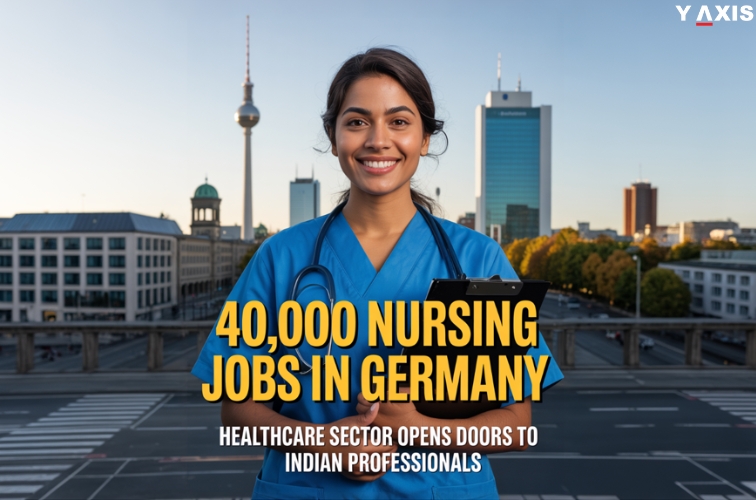
Germany Faces Shortage of 40,000 Nurses; Indians in Strong Demand. Apply now!
Highlights: Germany to Recruit 40,000 Nurses as Demand Rises – Indian Talent in Focus
- Germany is experiencing a critical nursing shortage, with hospitals and care facilities struggling to fill between 30,000 and 40,000 vacancies amid growing healthcare pressures.
- Indian nurses now rank 5th among all foreign nursing staff in Germany, reflecting the country’s increasing reliance on Indian healthcare professionals.
- As of June 2025, approximately 16,600 Indian nurses were employed across German healthcare institutions.
- Nurses in Germany earn an average salary of €4,000 per month (before tax and social contributions), making it significantly higher than salaries in several Asian countries.
- The broader Indian diaspora in Germany has grown steadily, reaching 277,455 residents as of December 2024, according to Germany’s Federal Statistical Office (Destatis).
*Want to apply for a German work visa? Let Y-Axis guide you with the process.
Rising Healthcare Demand in Germany Creates 40,000 Nursing Opportunities for Indians
Germany is currently addressing a significant demand for qualified nursing professionals, with an estimated 30,000 to 40,000 vacancies across hospitals and elderly care facilities. The shortage is largely driven by the country’s ageing population, which continues to increase the demand for long-term and acute healthcare services. In recent years, much of Germany’s healthcare employment growth has been supported by foreign professionals. However, with migration flows declining from traditional European source countries, Germany is now actively strengthening recruitment partnerships with nations like India.
Indian nurses have emerged as one of the most preferred talent groups due to their strong academic qualifications, English proficiency, and structured clinical training. As of June 2025, around 16,600 Indian nurses were employed in Germany, placing India among the top five source countries for foreign nursing staff. With competitive salaries averaging €4,000 per month before tax, employer-sponsored recruitment models, and structured language and integration programs up to B2 level, Germany is creating clear and regulated pathways for skilled Indian nurses seeking international career growth.
Also, read…
Germany to offer 90,000 work visas to Indian professionals. Apply now!
Why Germany Is Recruiting Indian Nurses
Germany’s healthcare employment growth in recent years has been largely driven by foreign professionals. Traditionally, the country relied on nurses from Eastern European nations such as Poland, Romania, Bosnia and Herzegovina, and Türkiye. However, with rising wages and improved living standards in those countries, migration flows have declined.
As a result, countries like India and Indonesia are emerging as key source markets.
Indian nurses are particularly valued for:
- Strong educational backgrounds and degree qualifications
- English language proficiency
- Young and skilled workforce (typically aged 24–27 in early career stages)
- Adaptability and willingness to undergo German language training
Recruitment firms report that employers in Germany follow the “employer pays” principle, meaning healthcare providers cover international hiring costs. These costs can range between €8,000 and €18,000 per nurse, covering recruitment, relocation, and integration support.
Additionally, Germany provides structured onboarding support, including:
- German language training up to B2 proficiency
- Cultural orientation programs
- Workplace integration assistance
- Clear documentation and patient care protocols
Indian nurses working in Germany have highlighted positive work environments, structured processes, and supportive colleagues as major benefits.
Also, read…
Highest paying Job Opportunities in Germany
India–Germany Global Skills Partnership Boosts Mobility Opportunities
The increasing demand for Indian nurses is part of a broader rise in Indian migration to Germany. According to Germany’s Federal Statistical Office (Destatis), 277,455 Indian nationals were living in Germany as of December 2024. India’s Ministry of External Affairs estimates that over 260,864 Indians, including NRIs and Persons of Indian Origin, reside in Germany, making it one of the largest Indian communities in continental Europe.
Migration and skills mobility were also discussed during recent bilateral talks between Prime Minister Narendra Modi and German Federal Chancellor Friedrich Merz. A new Global Skills Partnership aims to facilitate legal mobility, training, and workforce collaboration between the two nations.
*Want to migrate to Germany? Sign up with Y-Axis to guide you with the steps.
Germany’s 40,000 Nursing Openings: A Golden Opportunity for Indian Professionals
Germany’s expanding healthcare demand is creating long-term, structured opportunities for qualified Indian nurses. With thousands of vacancies driven by an ageing population and rising patient care needs, Germany is actively streamlining migration pathways, qualification recognition, and integration support for foreign-trained professionals. For Indian nurses planning an international career, this is more than a temporary hiring drive — it signals sustained demand and regulated mobility channels.
- High and stable demand: Germany currently requires 30,000–40,000 nurses, with continued long-term workforce needs.
- Competitive salaries: Average monthly earnings are around €4,000 before tax, along with social security and healthcare benefits.
- Structured recognition process: Indian nursing qualifications must go through Germany’s professional recognition (Anerkennung) system.
- Language requirement: German proficiency up to B2 level is typically required for full professional registration.
- Clear Germany work visa pathways: Recruitment is supported by employer sponsorship models and bilateral mobility agreements between India and Germany.
*Are you looking for step-by-step assistance with German immigration? Contact Y-Axis, the world’s No. 1 overseas immigration consultancy!
For recent Schengen updates, check out Y-Axis Schengen news page!
FAQs
What is the current demand for nurses in Germany?
Germany is currently facing a shortage of approximately 30,000 to 40,000 nurses across hospitals and elderly care facilities. The demand is primarily driven by the country’s ageing population and increasing healthcare needs. As more people require long-term and specialized medical care, healthcare institutions are expanding recruitment efforts. Foreign-trained nurses, particularly from India, are playing an important role in addressing this workforce gap. The demand is expected to continue in the coming years, making nursing one of the most in-demand professions in Germany’s skilled migration system.
Why are Indian nurses in high demand in Germany?
Indian nurses are highly regarded in Germany due to their strong educational qualifications, structured clinical training, and English language proficiency. India produces a large number of degree-qualified nursing professionals each year, creating a reliable talent pool. Additionally, many Indian nurses are young and adaptable, making them suitable for international integration programs. With declining migration from traditional European source countries, Germany has increasingly turned to India as a strategic partner for skilled healthcare recruitment under formal mobility and skills agreements.
How many Indian nurses are currently working in Germany?
As of June 2025, around 16,600 Indian nurses were employed in Germany’s healthcare system. This places India among the top five source countries for foreign nursing professionals in Germany. The number has grown steadily in recent years, reflecting stronger recruitment efforts and bilateral mobility cooperation between the two countries. The broader Indian community in Germany has also expanded, supporting better cultural integration and professional networking opportunities for new migrants entering the healthcare workforce.
What salary can nurses expect in Germany?
Nurses in Germany earn an average salary of approximately €4,000 per month before tax and social security contributions. Salaries may vary depending on experience, region, and type of healthcare facility. In addition to base pay, nurses benefit from Germany’s social security system, which includes health insurance, pension contributions, and unemployment benefits. Compared to several Asian countries, German nursing salaries are significantly higher, making it an attractive destination for skilled professionals seeking stable income and long-term career growth.
What are the language requirements for Indian nurses in Germany?
To work as a registered nurse in Germany, candidates typically need to demonstrate German language proficiency up to B2 level under the Common European Framework of Reference for Languages (CEFR). Language skills are essential for patient communication, documentation, and workplace integration. Many recruitment programs include structured language training before and after arrival. Achieving the required proficiency level is a crucial step in completing professional recognition and obtaining full registration to practice as a nurse in Germany.
How does the qualification recognition process work for Indian nurses?
Indian nursing qualifications must undergo a formal recognition process known as Anerkennung in Germany. Authorities assess whether the applicant’s education and training meet German standards. If there are substantial differences, candidates may need to complete adaptation training or pass a knowledge examination. The recognition process ensures that foreign-trained nurses are qualified to provide safe and effective patient care under German healthcare regulations. Completing this process is essential for obtaining a full license to practice.
What visa options are available for nurses moving to Germany?
Qualified nurses typically apply for a German work visa under skilled worker categories. Once an employment contract is secured and qualification recognition is initiated or completed, candidates can apply for a national visa for employment purposes. Germany also offers pathways under its Skilled Immigration Act, which facilitates entry for qualified professionals in shortage occupations. The process involves document verification, proof of language proficiency, and employer sponsorship in many cases.
Are recruitment costs covered by German employers?
Many German healthcare employers follow an “employer pays” model for international recruitment. Under this system, hospitals or care facilities cover costs related to recruitment, relocation support, and sometimes language training. Reported recruitment expenses can range between €8,000 and €18,000 per nurse. This structured approach reduces financial burden on candidates and ensures ethical hiring practices. However, terms may vary depending on the employer and recruitment agency involved.
How large is the Indian community in Germany?
According to Germany’s Federal Statistical Office, 277,455 Indian nationals were living in Germany as of December 2024. Estimates from India’s Ministry of External Affairs suggest that more than 260,864 Indians, including Non-Resident Indians and Persons of Indian Origin, reside in the country. The growing diaspora provides cultural familiarity, community networks, and social support for new migrants, making Germany an increasingly attractive destination for Indian professionals across healthcare and other sectors.
Is Germany a good long-term career option for Indian nurses?
Germany offers long-term career stability for qualified nurses due to sustained demographic demand and strong labour protections. The country provides structured employment contracts, social security benefits, and potential pathways to permanent residence after meeting eligibility requirements. With ongoing workforce shortages and government-level mobility agreements between India and Germany, healthcare professionals can expect continued demand. For Indian nurses willing to meet language and recognition requirements, Germany presents a regulated and growth-oriented international career pathway.