




News
Sep 15th, 2026
Newfoundland and Labrador boosts immigration quota by 54% with 1,000 additional spaces. Apply Now!





Don' know what to do?
Get Free CounselingTrending News
Latest Article

Newfoundland and Labrador boosts immigration quota by 54% with 1,000 additional spaces. Apply Now!
Highlights: Canada’s Newfoundland and Labrador expands provincial immigration by 54% for 2026
- Newfoundland and Labrador receives 1,000 additional provincial nomination spaces for 2026, increasing its NLPNP quota to 2,379.
- The province’s total 2026 allocation across the NLPNP and Atlantic Immigration Program rises to 2,854 spaces.
- The additional spaces will support workforce and demographic needs, particularly in healthcare, education, social services and rural communities.
- As of September 10, Newfoundland and Labrador has invited 2,198 NLPNP candidates and 394 AIP candidates in 2026.
- The current PR processing time is 13 months for Base PNP, 7 months for Enhanced PNP and 26 months for the AIP.
*Want to check your eligibility for Newfoundland and Labrador Provincial Nomination Program? Avail Y-Axis Canada Skilled Immigration Points Calculator to assess your profile.
Newfoundland and Labrador Increases Provincial Immigration Allocation by 54%
Newfoundland and Labrador has received 1,000 additional spaces for its Provincial Nominee Program (NLPNP), bringing the province’s annual NLPNP allocation for 2026 to 2,379. The increase was approved by the Canadian federal government in August.
The additional nomination spaces are intended to help Newfoundland and Labrador respond to workforce and demographic needs, particularly in healthcare, education, social support services and rural communities.
*Want to assess your profile for NLPNP and AIP? Avail Canada CRS Points Calculator to evaluate your profile.
Newfoundland and Labrador Gets 1,000 Additional PNP Spaces in 2026
The additional allocation applies specifically to the NLPNP, while the province’s allocation under the Atlantic Immigration Program (AIP) remains unchanged at 475 spaces. This brings the combined provincial immigration allocation for Newfoundland and Labrador to 2,854 spaces in 2026.
Foreign nationals nominated through the NLPNP can apply to the federal government for Canadian permanent residence. Following submission of a PR application, eligible base PNP applicants may also be able to apply for a Bridging Open Work Permit under the current temporary federal measure.
|
Immigration Program |
2025 Allocation |
2026 Allocation |
Increase |
|
NLPNP |
1,379 |
2,379 |
1,000 |
|
Atlantic Immigration Program |
475 |
475 |
No change |
|
Total |
1,854 |
2,854 |
1,000 |
Also, read...
Canada Issues 2,000 PR Invitations in Latest Express Entry Draw. Check Your Eligibility!
Provincial Immigration Draws and Canada PR Processing Timeline
As of September 10, Newfoundland and Labrador had invited 2,198 NLPNP candidates to apply for provincial nomination and 394 AIP candidates to apply for endorsement during 2026. The province may adjust its selection priorities throughout the year based on labour-market needs and available allocations.
Candidates seeking provincial immigration generally need to meet the requirements of a relevant pathway, create an Expression of Interest profile, receive an invitation and submit a complete nomination or endorsement application within 60 days.
|
Application Type |
Processing Time |
|
Base PNP |
13 months |
|
Enhanced PNP |
7 months |
|
Atlantic Immigration Program |
26 months |
Also, read...
How the Enhanced NLPNP Allocation Benefits Foreign Immigrants
The increased allocation gives eligible foreign workers more opportunities to pursue Canada permanent residence (PR) through Newfoundland and Labrador’s provincial immigration pathways, particularly where their skills match the province’s labour-market needs.
- More PR opportunities: An additional 1,000 NLPNP spaces increase the province’s capacity to nominate eligible foreign workers for permanent residence.
- Greater demand for skilled workers: The additional allocation will support workforce needs in sectors such as healthcare, education and social services.
- Opportunities in rural communities: Foreign workers may benefit from the province’s focus on addressing labour shortages in rural areas.
- More provincial nomination capacity: The NLPNP’s 2026 quota has increased to 2,379 spaces, creating greater nomination capacity compared with 2025.
- Pathway to Canada PR: Successful provincial nominees can proceed with an application for permanent residence to the federal government.
- Potential work permit support: Eligible base PNP applicants may be able to access a Bridging Open Work Permit while their PR application is being processed.
- Multiple immigration options: Foreign nationals can explore the NLPNP as well as the Atlantic Immigration Program, subject to their eligibility.
- EOI profile remains active for 12 months: Candidates who are not invited during this period can re-enter the pool for future consideration.
*Are you looking for step-by-step assistance with Canada immigration? Contact Y-Axis, the world's No. 1 overseas immigration consultancy.
For recent Canadian immigration updates, check out the Y-Axis Canada Immigration News Page.
FAQs
How many additional PNP spaces did Newfoundland and Labrador receive in 2026?
Newfoundland and Labrador received 1,000 additional provincial nomination spaces for 2026. The increase raises the province’s annual Newfoundland and Labrador Provincial Nominee Program quota to 2,379. The additional spaces were approved by the Canadian federal government in August. The province said the increase will help address workforce and demographic needs, particularly in rural communities and sectors such as healthcare, education and social support services.
What is Newfoundland and Labrador’s total immigration allocation for 2026?
Newfoundland and Labrador has a total allocation of 2,854 spaces across its two provincial immigration programs in 2026. The NLPNP received 2,379 spaces, while the Atlantic Immigration Program retained its allocation of 475 spaces. The combined allocation represents an increase of 329 spaces compared with the province’s 2025 allocation of 2,525 spaces, providing additional capacity for provincial immigration.
How does the increased NLPNP allocation benefit foreign immigrants?
The additional NLPNP spaces create more opportunities for eligible foreign workers to receive a provincial nomination and pursue Canadian permanent residence. The increased allocation is particularly focused on addressing labour and demographic needs in Newfoundland and Labrador. Foreign workers with skills relevant to healthcare, education, social services and rural communities may benefit from the province’s increased capacity to select candidates.
How many NLPNP candidates has Newfoundland and Labrador invited in 2026?
As of September 10, 2026, Newfoundland and Labrador had invited 2,198 candidates to apply for provincial nomination through the NLPNP. The province had also invited 394 candidates to apply for endorsement through the Atlantic Immigration Program. These invitation figures are separate from the annual allocation, which represents the number of nomination or endorsement certificates the province is permitted to issue.
Does Newfoundland and Labrador’s increased allocation apply to the AIP?
No. The additional 1,000 spaces have been allocated specifically to the Newfoundland and Labrador Provincial Nominee Program. The province’s Atlantic Immigration Program allocation remains unchanged at 475 spaces for 2026. Therefore, the total increase in provincial immigration capacity comes entirely from the expanded NLPNP allocation, which has risen from 1,379 spaces in 2025 to 2,379 spaces in 2026.
Can foreign workers nominated through the NLPNP apply for Canada PR?
Yes. Foreign nationals who receive a provincial nomination through the NLPNP can apply to the Canadian federal government for permanent residence. Candidates must first meet the requirements of an eligible provincial immigration pathway, submit an Expression of Interest profile where required, receive an invitation and complete the nomination process. After receiving a nomination certificate, they can proceed with their federal permanent residence application.
What are the current Newfoundland and Labrador PNP processing times?
As of September 4, the reported processing time for Base PNP applications was 13 months, while Enhanced PNP applications had a processing time of seven months. Applications through the Atlantic Immigration Program had a reported processing time of 26 months. Processing times can change over time, so applicants should check the latest information before making immigration plans or submitting an application.
How long does a Newfoundland and Labrador EOI profile remain active?
An Expression of Interest profile in Newfoundland and Labrador’s candidate pool remains active for 12 months. Candidates who do not receive an invitation during this period must enter the pool again to remain eligible for future consideration. The province may adjust its selection priorities during the year based on evolving labour-market requirements, demographic needs and the number of nomination spaces available.
Can NLPNP applicants apply for a Bridging Open Work Permit?
Eligible base PNP applicants may be able to apply for a Bridging Open Work Permit after submitting their permanent residence application. Since June 9, 2026, a temporary federal measure has allowed base PNP applicants to apply for a BOWP without first receiving an Acknowledgment of Receipt for their PR application. Applicants must still meet the applicable work permit requirements to qualify.
What sectors are Newfoundland and Labrador targeting through provincial immigration?
Newfoundland and Labrador has highlighted workforce and demographic needs, particularly in healthcare, education and social support activities. The province is also focused on addressing labour requirements in rural communities. Its selection priorities can change throughout the year according to labour-market conditions and annual immigration allocations. However, the province does not generally provide draw-specific breakdowns showing which NLPNP streams or employment sectors were targeted in each invitation round.

New Zealand expands post-study work opportunities for graduates with new visa eligibility from November 16. Apply Now!
Highlights: New Zealand Expands Post-study Work Opportunities for Graduates from November 2026
- New Zealand is set to expand post-study work visa eligibility for certain Level 7 graduate diploma graduates from November 16, 2026.
- Foreign students with an eligible Level 7 graduate diploma and a bachelor’s degree will be able to qualify for the work visa.
- An overseas bachelor’s degree can meet the requirement, with no restriction on when it was awarded.
- Eligible international graduates can now receive a post-study work visa for their study period, up to a maximum of one year.
- Graduates with both qualifications may receive open work conditions, while applicants without a bachelor’s degree face occupation-based eligibility requirements in New Zealand.
*Want to apply for New Zealand work visa? Let Y-Axis guide you with the process.
New Zealand Streamlines Post-Study Work Visa Eligibility for Level 7 Graduates
New Zealand will introduce expanded post-study work visa eligibility from November 16, 2026, creating a new opportunity for international students who complete certain Level 7 graduate diplomas and already hold a bachelor’s degree.
Under the revised rules, students must complete the eligible graduate diploma through full-time study in New Zealand for the entire duration of the programme. They must also complete the qualification without using cross-crediting or recognition of prior learning.
Indian students with a bachelor’s degree from outside New Zealand will also be able to meet the qualification requirement. Immigration New Zealand (INZ) confirmed that there is no restriction on how long ago the overseas bachelor’s degree was awarded.
An International Qualification Assessment (IQA) will not be required for the overseas bachelor’s degree. However, applicants must provide their degree certificate and official academic transcript, along with evidence that they completed the eligible graduate diploma.
|
Requirement |
Details |
|
New rules effective from |
November 16, 2026 |
|
Eligible qualification |
Certain Level 7 Graduate Diplomas |
|
Bachelor’s degree required |
Yes |
|
Bachelor’s degree location |
New Zealand or overseas |
|
Study requirement |
Full-time study in New Zealand |
|
Cross-crediting/RPL |
Not permitted for the graduate diploma |
|
Maximum work visa duration |
Up to 1 year |
|
Minimum study requirement |
30 weeks of full-time study |
|
Application platform |
Enhanced Immigration Online |
Also, read...
Post-Study Work Visa Duration in New Zealand Depends on Qualification
An eligible Level 7 graduate diploma can lead to a post-study Work Visa for the period spent studying the qualification in New Zealand, subject to a maximum of 1 year. Students must complete at least 30 weeks of full-time study in the qualification supporting their visa application.
Higher-level qualifications can provide longer post-study work opportunities. Eligible Level 8 postgraduate diploma graduates may qualify for a one-year visa, while eligible Level 9 Master’s graduates may qualify for up to three years.
Students should also carefully consider their study progression. Completing a postgraduate diploma before moving directly into a Master’s may allow a one-year visa based on the postgraduate diploma, while the Master’s qualification is assessed separately under the post-study work rules.
Also, read...
New Zealand revamps its Seasonal Worker Scheme with major reforms from 2027. Check your eligibility!
Benefits of Post-Study Work Permit in New Zealand for Indians
The changes could create an additional pathway for Indian students who already hold a bachelor’s degree and want to gain a New Zealand qualification before entering the local workforce.
- Overseas bachelor’s degrees accepted: Indian students do not need to hold a New Zealand bachelor’s degree to meet the new eligibility condition.
- No IQA requirement: INZ says an International Qualification Assessment will not be required for the overseas bachelor’s degree.
- New pathway through Level 7 study: Eligible graduate diplomas can provide Indian students with another route to post-study work opportunities in New Zealand.
- Open work conditions: Graduates who hold both an eligible Level 7 graduate diploma and a bachelor’s degree may receive open work conditions.
- Up to one year of work rights: Eligible graduates can receive a post-study Work Visa for their study period, subject to the one-year maximum.
- No restriction on bachelor’s degree age: An overseas bachelor’s degree can qualify regardless of how long ago it was awarded.
- Opportunity to gain local experience: The work visa can allow eligible graduates to gain professional experience in New Zealand after completing their studies.
- Partner and dependent support: Eligible post-study Work Visa holders may be able to support visa applications for their partners and dependent children, subject to the relevant requirements.
*Are you looking for step-by-step assistance with overseas immigration? Contact Y-Axis, the world’s No. 1 overseas immigration consultancy!
For recent immigration updates, check out the Y-Axis News Page!
FAQs
When will New Zealand’s new post-study work visa rules take effect?
New Zealand’s expanded post-study Work Visa eligibility rules will take effect on November 16, 2026. From this date, eligible international students who complete certain Level 7 graduate diplomas and already hold a bachelor’s degree may qualify for a post-study Work Visa. Applications under the updated rules can be submitted through New Zealand’s enhanced Immigration Online system from the same date.
Can Indian students get a post-study work visa after a Level 7 graduate diploma?
Yes, eligible Indian students may qualify for a post-study Work Visa after completing a qualifying Level 7 graduate diploma in New Zealand, provided they also hold a bachelor’s degree. The bachelor’s degree can be from India or another country. Students must complete the graduate diploma through full-time study in New Zealand for its entire duration and meet the other eligibility conditions.
Does the bachelor’s degree have to be from New Zealand?
No. Under the expanded rules, an overseas bachelor’s degree can satisfy the requirement for graduates seeking a post-study Work Visa after an eligible Level 7 graduate diploma. This is particularly relevant for Indian students who already hold a bachelor’s degree from India. There is also no restriction on how long ago the overseas bachelor’s degree was awarded, according to Immigration New Zealand.
Will an IQA be required for an overseas bachelor’s degree?
No, Immigration New Zealand says an International Qualification Assessment will not be required for an overseas bachelor’s degree under these rules. However, applicants must provide their bachelor’s degree certificate and official academic transcript. INZ may still verify whether the qualification is genuine. Applicants must also provide evidence showing that they successfully completed the eligible Level 7 graduate diploma in New Zealand.
How long is the post-study Work Visa valid after a Level 7 graduate diploma?
An eligible Level 7 graduate diploma can lead to a post-study Work Visa covering the period the student spent studying the qualification in New Zealand, subject to a maximum of one year. Students must complete at least 30 weeks of full-time study in the qualification on which their application is based. Higher-level eligible qualifications may provide longer post-study work periods.
What are the study requirements for the new post-study Work Visa?
Students must complete the eligible Level 7 graduate diploma through full-time study in New Zealand for the entire duration of the programme. They must remain enrolled in the qualification throughout the course and cannot use cross-crediting or recognition of prior learning to reduce the study required for the graduate diploma. Applicants must also complete at least 30 weeks of full-time study where applicable.
Can students use cross-crediting to qualify for the new visa?
No. Students seeking the expanded post-study Work Visa through an eligible Level 7 graduate diploma must complete the qualification without using cross-crediting or recognition of prior learning. These mechanisms allow previous education or experience to count toward a new qualification. The restriction means students must complete the required graduate diploma study in New Zealand rather than reducing the programme through previously earned credits.
Can graduates get an open work visa after completing a Level 7 graduate diploma?
Graduates who hold both an eligible Level 7 graduate diploma and a bachelor’s degree may receive a post-study Work Visa with open work conditions. Open conditions generally allow the visa holder to work without being restricted to a specific employer or occupation, subject to visa rules. Graduates without a bachelor’s degree may instead face occupation-specific work conditions depending on their qualification.
Can students get a post-study Work Visa more than once?
No. Immigration New Zealand states that an individual can be granted only one post-study Work Visa. A person who has already held a post-study Work Visa cannot receive another one after completing a further qualification, even if the new qualification is at the same or a higher level. Students should therefore carefully consider their qualification and post-study work plans before using their eligibility.
Can post-study Work Visa holders support their families?
Yes, eligible post-study Work Visa holders may be able to support visa applications for their partners and dependent children, provided the relevant immigration requirements are met. The expanded rules therefore provide more than a potential work opportunity for eligible international graduates. Indian students considering a Level 7 graduate diploma should separately check the applicable family visa requirements before making plans for their dependants.

Denmark Opens New Work Route for Indian Professionals with DKK 322,000/year Minimum Average Salary. Apply now!
Highlights: Denmark to Open a New Immigration Pathway for Indian Workers from 2027
- Denmark announces a new immigration pathway for foreign workers from January 1, 2027, including Indian nationals.
- Eligible Danish employers can hire workers from 16 selected countries under the Collective Agreement-Based Business Scheme.
- Employers must meet conditions including two years of operation, 10 full-time employees and collective agreement coverage.
- Workers hired through the new route will need to receive a minimum annual salary of DKK 322,000.
- Eligible employers must register with Danish immigration authorities and obtain certification before hiring through the scheme.
*Want to apply for a Denmark work visa? Let Y-Axis guide you with the process.
Denmark to Launch New Work Visa Pathway for Indians
Denmark will introduce a new immigration pathway effective from January 1, 2027, allowing eligible employers to recruit foreign nationals from 16 selected countries, including India. The Collective Agreement-Based Business Scheme is expected to give qualifying Danish companies another route to hire overseas workers.
The new pathway will not be open to every employer. Companies must meet specific requirements, including being covered by a relevant collective agreement, having operated for at least two years and employing at least 10 full-time workers in Denmark.
India Among 16 Countries Eligible Under New Denmark Work Route
Indian nationals will be among the foreign workers eligible for employment under the new scheme. The selected countries include Albania, Australia, Brazil, Canada, China, Japan, Malaysia, Moldova, Montenegro, North Macedonia, Serbia, Singapore, Ukraine, the UK, the US and India.
The minimum salary for workers hired through the pathway will be DKK 322,000 annually. According to Fragomen, this salary threshold is lower than the minimum salary applicable under some other common employment routes in Denmark.
|
Requirement |
Details |
|
Scheme |
Collective Agreement-Based Business Scheme |
|
Launch date |
January 1, 2027 |
|
Eligible countries |
16 countries, including India |
|
Minimum annual salary |
DKK 322,000 |
|
Employer operation requirement |
At least 2 years |
|
Minimum full-time employees |
10 employees in Denmark |
|
Collective agreement |
Required |
|
Employer certification |
Required from Danish immigration authorities |
Employers must register with the Danish immigration authority and obtain a certificate confirming that they meet the scheme's eligibility requirements before they can use the new recruitment pathway.
Also, read...
World needs 85 Million Skilled Workers. Indians are in High Demand. Apply now!
Benefits of Working in Denmark for Indians in 2026
Denmark's strong economy, skilled-worker demand and high living standards make it an attractive destination for Indian professionals exploring overseas career opportunities. The upcoming pathway could provide another option for eligible workers seeking employment in the country.
- New recruitment pathway: Indian nationals will be eligible under Denmark's new employer-based immigration route from January 2027.
- Competitive salaries: Denmark offers strong earning potential across skilled professions and specialised industries.
- High quality of life: Workers can benefit from Denmark's strong public infrastructure, work-life balance and social security system.
- Skilled employment opportunities: Indian professionals with experience in sectors facing talent shortages may find opportunities with eligible Danish employers.
- Clear employer requirements: The certification system provides a defined framework for employers seeking to recruit workers from overseas.
- Access to a European work environment: Working in Denmark can provide Indian professionals with international experience within the European labour market.
- Lower salary threshold than some routes: The DKK 322,000 minimum under the new scheme may be lower than salary requirements under certain other Danish employment pathways.
*Are you looking for step-by-step assistance with overseas immigration? Contact Y-Axis, the world’s No. 1 overseas immigration consultancy!
For recent immigration updates, check out Y-Axis News Page!
FAQs
When will Denmark’s new immigration pathway for Indians start?
Denmark’s new Collective Agreement-Based Business Scheme is scheduled to take effect on January 1, 2027. The pathway will allow eligible Danish employers to recruit foreign nationals from 16 selected countries, including India. Employers must meet specific eligibility requirements before they can use the scheme. The introduction of this route could provide Indian professionals with another opportunity to secure employment in Denmark through an approved employer.
Can Indians work in Denmark under the new immigration scheme?
Yes, Indian nationals will be among the workers eligible for employment under Denmark’s new Collective Agreement-Based Business Scheme. The scheme will cover nationals from 16 selected countries. However, Indian applicants will need to secure employment with an eligible Danish employer that meets the required conditions. The employer must also obtain the necessary certification from the Danish immigration authority before using this recruitment pathway.
What is the minimum salary under Denmark’s new work scheme?
The minimum annual salary for workers hired through Denmark’s new Collective Agreement-Based Business Scheme will be DKK 322,000. According to Fragomen, this threshold is lower than the salary requirements applicable under some other common employment routes in Denmark. Applicants should ensure that their employment contract meets the required salary threshold before proceeding through the new immigration pathway.
Which countries are included in Denmark’s new work pathway?
Denmark’s new scheme will allow eligible employers to recruit nationals from 16 selected countries. These include India, Albania, Australia, Brazil, Canada, China, Japan, Malaysia, Moldova, Montenegro, North Macedonia, Serbia, Singapore, Ukraine, the UK and the US. Indian nationals will therefore be among the workers eligible to seek employment through the new pathway once it takes effect on January 1, 2027.
What are the employer requirements for Denmark’s new scheme?
Danish employers must satisfy several conditions to use the Collective Agreement-Based Business Scheme. They must be covered by a relevant collective agreement, have operated for at least two years and employ at least 10 full-time workers in Denmark. Employers must also register with the Danish immigration authority and obtain a certificate confirming that they meet the scheme’s eligibility requirements before recruiting foreign workers.
Will all Danish employers be eligible to hire workers under this scheme?
No, the new pathway will not be available to all Danish employers. Companies must meet specific conditions before they can recruit foreign nationals through the Collective Agreement-Based Business Scheme. They must have operated for at least two years, employ at least 10 full-time workers and be covered by a relevant collective agreement. They must also receive certification from the Danish immigration authority.
How can the new Denmark work pathway benefit Indian professionals?
The new pathway could give Indian professionals another route to seek employment in Denmark through eligible Danish employers. The scheme will allow employers to recruit workers from India and other selected countries while offering a defined immigration framework. The DKK 322,000 minimum annual salary may also make the route attractive to skilled Indian professionals seeking international employment opportunities and European work experience.
What is the Collective Agreement-Based Business Scheme in Denmark?
The Collective Agreement-Based Business Scheme is a new Danish immigration pathway designed to allow eligible employers to recruit foreign workers from selected countries. It will operate under specific employer conditions, including collective agreement coverage and certification by the Danish immigration authority. The scheme is scheduled to begin on January 1, 2027, and India is among the countries whose nationals will be eligible.
What certification do Danish employers need under the new scheme?
Danish employers intending to recruit foreign workers through the new pathway must register with the Danish immigration authority. They must obtain a certificate confirming that they satisfy the eligibility conditions of the Collective Agreement-Based Business Scheme. This certification is required before employers can use the route to hire workers from the 16 participating countries, including India, under the new immigration framework.
When can Indian workers apply through Denmark’s new work route?
Indian workers can seek employment through Denmark’s new Collective Agreement-Based Business Scheme once it takes effect on January 1, 2027. The route is employer-driven, meaning applicants would need employment with a Danish company that qualifies to participate. The employer must satisfy the scheme’s requirements and obtain certification before recruiting eligible foreign nationals, including workers from India.
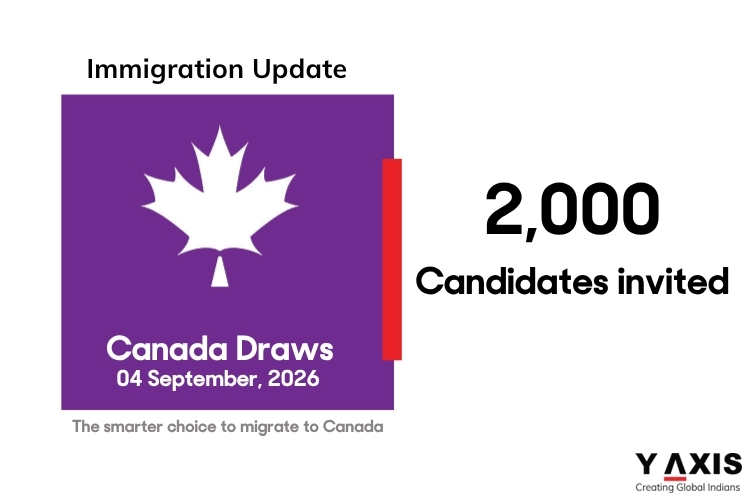
Canada Issues 2,000 PR Invitations in Latest Express Entry Draw. Check Your Eligibility!
Highlights: Canada Boosts PR Opportunities with 2,000 New Express Entry Invitations
- Canada has invited 2,000 skilled workers through the latest Express Entry Canadian Experience Class (CEC) draw.
- The Express Entry draw on September 1 draw marked the 15th CEC invitation round conducted by IRCC in 2026.
- CEC candidates needed a minimum CRS score of 521 to receive an Invitation to Apply for permanent residence in Canada.
- A total of 51,250 invitations were received by CEC candidates so far in 2026, making it the highest among Express Entry categories.
- Candidates with ITAs have 60 days to submit their complete permanent residence applications.
*Want to work in Canada? Let Y-Axis guide you with the process.
Canada Invites 2,000 Skilled Workers Through Latest CEC Express Entry Draw
Canada has issued 2,000 Invitations to Apply (ITAs) for permanent residence in its latest Express Entry draw under the Canadian Experience Class (CEC) dated September 01, 2026.
The Express Entry draw required a minimum Comprehensive Ranking System (CRS) score of 521. Candidates also needed to have created their Express Entry profile before 3:24 a.m. UTC on August 18, 2026, to receive an invitation.
The latest draw highlights Canada's continued focus on selecting skilled workers with qualifying Canadian work experience. For Indian professionals already living and working in Canada, the CEC remains an important pathway for Canada permanent residence(PR).
|
Express Entry Draw Details |
September 1, 2026 CEC Draw |
|
Number of ITAs issued |
2,000 |
|
Express Entry category |
Canadian Experience Class |
|
Minimum CRS score |
521 |
|
Profile submission deadline |
August 18, 2026, before 3:24 a.m. UTC |
|
CEC draw number in 2026 |
15th |
|
Application submission period |
60 days |
Also, read...
What Should Indian Applicants Do After Receiving an Express Entry Invitation?
Indian candidates who received an ITA should begin preparing their permanent residence application immediately, while those still in the Express Entry pool can continue improving their CRS profile for future draws.
Given below are the steps to follow upon receiving an ITA for Indians with Canadian job
Step 1: Check your Invitation to Apply details
Candidates who received an ITA should carefully review their Express Entry account and confirm the deadline for submitting their permanent residence application.
Step 2: Gather all required documents
Prepare documents such as proof of Canadian work experience, educational credentials, language test results, identity documents and other records required for the application.
Step 3: Verify your work experience details
Ensure that employment records, job duties, work duration and other information accurately match the details claimed in your Express Entry profile.
Step 4: Submit your PR application within 60 days
Candidates invited in the September 1 draw must submit a complete permanent residence application within the 60-day deadline.
Step 5: Keep your Express Entry profile updated if you were not invited
Candidates still in the pool should ensure their work experience, language scores and other profile details remain accurate and up to date.
Step 6: Explore ways to improve your CRS score
Improving language test results, gaining additional eligible work experience or strengthening other CRS factors may help candidates become more competitive in future Express Entry draws.
*Are you looking for step-by-step assistance with Canada immigration? Contact Y-Axis, the world's No. 1 overseas immigration consultancy.
For recent Canadian immigration updates, check out the Y-Axis Canada Immigration News Page.
FAQs
How many candidates were invited in Canada’s latest CEC Express Entry draw?
Canada invited 2,000 skilled workers to apply for permanent residence through the latest Canadian Experience Class Express Entry draw held on September 1, 2026. Candidates needed a minimum Comprehensive Ranking System score of 521 to receive an Invitation to Apply. The draw focused on candidates with qualifying skilled work experience in Canada who met the eligibility requirements under the Canadian Experience Class.
What was the CRS cut-off for the September 1, 2026 CEC draw?
The minimum Comprehensive Ranking System score required in the September 1, 2026 Canadian Experience Class draw was 521. Candidates also needed to have submitted their Express Entry profile before 3:24 a.m. UTC on August 18, 2026. The CRS score required for future Express Entry draws may change depending on the number of invitations issued and the composition of candidates in the Express Entry pool.
What is the Canadian Experience Class under Express Entry?
The Canadian Experience Class is an immigration pathway under Canada's Express Entry system for skilled workers with qualifying work experience in Canada. It is particularly relevant for temporary foreign workers who want to transition to permanent residence. Eligible candidates must meet requirements related to Canadian work experience, language ability and other criteria before creating an Express Entry profile and entering the candidate pool.
How does Canadian work experience help Indian applicants get Canada PR?
Canadian work experience can help Indian professionals become eligible for the Canadian Experience Class and improve their Comprehensive Ranking System score. Eligible skilled work experience gained in Canada is considered under the Express Entry system. Candidates with stronger language scores, education, age factors and additional qualifying work experience may also improve their overall CRS score and increase their chances of receiving an Invitation to Apply.
How long do invited candidates have to apply for Canada PR?
Candidates who receive an Invitation to Apply through Express Entry generally have 60 days to submit their complete permanent residence application to Immigration, Refugees and Citizenship Canada. Applicants should begin collecting and reviewing their documents as soon as they receive an invitation. Required records may include proof of work experience, education documents, language test results, identity records and other supporting documents required by IRCC.
What should I do if I did not receive an ITA in the latest CEC draw?
Candidates who were not invited can remain in the Express Entry pool if their profile remains valid and they continue to meet eligibility requirements. They should keep their profile updated and explore ways to improve their CRS score. Improving language test results, gaining additional eligible work experience or qualifying under another Express Entry category may strengthen their profile for future invitation rounds.
Why do CRS cut-off scores change in CEC Express Entry draws?
CRS cut-off scores can change based on the number of Invitations to Apply issued, the number of eligible candidates in the Express Entry pool and the type of draw conducted. Larger draws may sometimes result in lower CRS cut-offs, although this is not guaranteed. Candidates should therefore avoid assuming that future draws will follow the same score pattern and continue working to improve their CRS profile.
How many CEC invitations has Canada issued in 2026?
According to the latest Express Entry data cited in the news, Canadian Experience Class candidates have received 51,250 Invitations to Apply in 2026. This represents the largest share of invitations among the Express Entry categories mentioned in the data. The strong number of CEC invitations highlights Canada's continued focus on selecting skilled workers who already have qualifying work experience and integration experience in Canada.
Can Indian temporary workers in Canada apply through the Canadian Experience Class?
Indian temporary workers may be eligible for the Canadian Experience Class if they meet Canada's requirements for qualifying skilled work experience, language ability and other Express Entry criteria. Eligibility depends on the nature and duration of the applicant's Canadian work experience and their individual circumstances. Candidates should carefully review the current requirements before applying and ensure that the information provided in their Express Entry profile is accurate.
How can Indian applicants improve their CRS score for future Express Entry draws?
Indian applicants can improve their CRS score by focusing on factors such as stronger language test results, additional eligible work experience and other CRS-related qualifications. Candidates should also keep their Express Entry profile updated when they gain new work experience or improve their language scores. Exploring provincial nomination opportunities may also be useful, as eligible nominations can significantly strengthen a candidate's Express Entry profile.
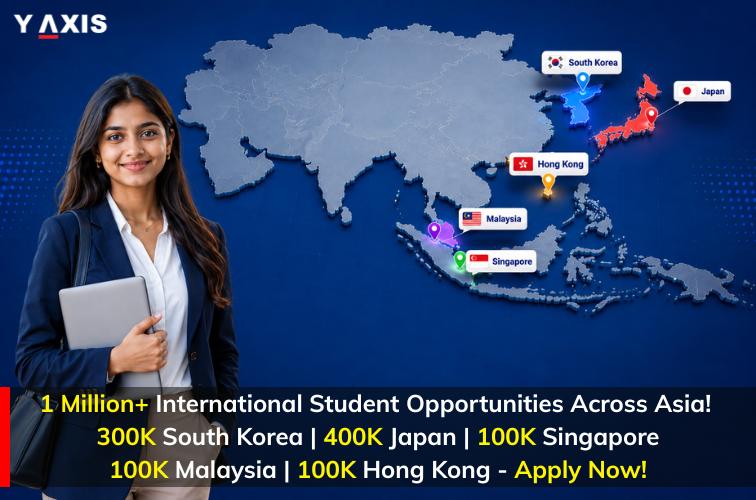
1 Million+ International Student Opportunities Across Asia! 300K South Korea | 400K Japan | 100K Singapore | 100K Malaysia | 100K Hong Kong - Apply Now!
Highlights: Asian Study Destinations Expand Opportunities as Global Education Trends Shift
- Asian countries are expanding international education opportunities as student flows decline comparatively in the US, UK, Canada and Australia.
- South Korea reached its target of 300,000 international students two years ahead of schedule, while Japan achieved its 2033 target eight years early.
- Hong Kong will raise the permitted share of international students from 40% to 50% of total enrolments from next year.
- Applications and enrolments from international students have declined across major Western destinations, including the US, UK, Canada and Australia.
- Lower costs, improving universities, scholarships and growing career opportunities are making Asia a stronger study-abroad destination.
*Want to study abroad? Let Y-Axis assist you with the process.
Asian Countries to Emerge as New Study-abroad Hubs in 2026
In a major shift in global higher education, Asian countries are stepping up efforts to attract international students as traditional study destinations such as the US, UK, Canada and Australia tighten their policies on overseas enrolments. China, Japan, South Korea and Hong Kong are expanding their international education ambitions as students increasingly look closer to home for affordable and high-quality education.
The shift comes as international student numbers and applications decline across several major English-speaking destinations.
Several Asian destinations are moving in the opposite direction by increasing international student targets, expanding university capacity and creating new pathways for overseas graduates.
|
Country/Region |
Key international education development |
|
Reached its target of 300,000 international students two years ahead of schedule |
|
|
Crossed its target of hosting 400,000 international students by 2033, eight years ahead of schedule |
|
|
Hong Kong |
Will increase the permitted share of international students from 40% to 50% of total enrolments |
|
China |
Hosted 380,000 international students from 191 countries and regions in 2024–25 |
|
China |
Asian students accounted for 61% of international enrolments, followed by African students at 16% |
The growing focus on international education is also linked to demographic challenges across Asia. Countries such as Japan, South Korea, Taiwan and Singapore are facing ageing populations and declining birth rates, increasing the need to attract young international students who could eventually contribute to their future workforce.
China, in particular, is emerging as an alternative destination for students who may previously have considered Western countries. Improving university quality, comparatively lower costs, scholarships and growing regional employment opportunities are making Asian destinations increasingly attractive to international students.
Also, read...
Singapore boosts finance careers with tax incentives and easier visas for fund managers. Apply now!
Why are International Students choosing Asian countries?
Asian countries are becoming more competitive by combining affordable education with improving academic standards, scholarships and opportunities to gain work experience after graduation. For students from India and other Asian countries, studying closer to home can also mean lower travel costs, cultural familiarity and easier access to growing regional job markets.
China has also introduced pathways involving internships, work permits and residence extensions for some international graduates, particularly those in STEM and other priority fields. However, Asian countries will need to improve graduate employment opportunities and long-term work pathways if they want to retain international talent after graduation.
The table below highlights the current study abroad trends in 2026:
|
Study destination |
Latest trend |
|
United States |
Indian student applications fell 15% in 2025–26 |
|
United Kingdom |
Sponsored study visa applications fell 11% in the year ending July 2026 |
|
Australia |
New international enrolments declined 15% |
|
Canada |
International enrolment estimated to have fallen nearly 30% in 2024–25 |
|
Japan |
International student target achieved eight years early |
|
South Korea |
International student target achieved two years early |
|
Hong Kong |
International student enrolment cap to increase from 40% to 50% |
Also, read...
World needs 85 Million Skilled Workers. Indians are in High Demand. Apply now!
What should International Students Consider before Choosing Asia?
Students considering an Asian study destination should look beyond university rankings and tuition fees. The long-term value of studying abroad will also depend on language requirements, post-study work options, career opportunities and the country's ability to retain international graduates.
Key factors to consider before choosing Asia as a study abroad destination are as follows:
- University and programme quality
- Tuition fees and living costs
- Scholarship availability
- Language of instruction
- Internship and practical training opportunities
- Post-study work options
- Work visa requirements
- Local language requirements for employment
- Career opportunities in the chosen field
- Long-term residence pathways
Also, read...
Thailand Remains Visa-Free for Indians with 30-Day Stays from September 15. Apply Now!
Benefits for Indian Students Planning to Study Abroad
The growing competition among Asian education hubs could create more affordable and accessible study-abroad options for Indian students. As countries such as China, Japan, South Korea and Hong Kong increase their international student intake, Indian students may benefit from a wider choice of universities, scholarships and career pathways closer to home.
Asian destinations can also offer Indian students an alternative at a time when visa policies and international student rules are becoming stricter in some traditional Western destinations. However, students should carefully compare course quality, language requirements and post-study employment prospects before choosing a programme.
- More study destinations: Indian students can explore a wider range of universities across Asia.
- Potentially lower costs: Several Asian destinations offer more affordable tuition and living costs compared with Western countries.
- More scholarships: Governments and universities are expanding scholarships and financial support for international students.
- Growing STEM opportunities: Students in science, technology, engineering and other priority fields may benefit from stronger graduate pathways.
- Closer to India: Shorter travel distances can reduce travel costs and make visits home easier.
- Improving university quality: Asian universities are investing heavily in research, infrastructure and international education.
- Growing regional job markets: Expanding economies across Asia could create new employment opportunities for graduates.
- Internship opportunities: Some countries are developing pathways for international students to gain practical work experience.
- Alternative to Western destinations: Students have more options as rules tighten in countries such as Canada, Australia, the UK and the US.
- Long-term talent opportunities: Countries facing ageing populations may increasingly seek to retain young international graduates.
*Are you looking for step-by-step assistance with overseas immigration? Contact Y-Axis, the world’s No. 1 overseas immigration consultancy!
For recent immigration updates, check out Y-Axis News Page!
FAQs
Why are Asian countries becoming popular study destinations for Indian students?
Asian countries are becoming increasingly attractive because they offer quality education, lower tuition costs and growing career opportunities closer to India. Countries such as Japan, South Korea, China, Singapore and Hong Kong are also expanding their international student recruitment efforts. As the US, UK, Canada and Australia tighten international student rules, Indian students are increasingly exploring Asian destinations as affordable alternatives.
Which Asian countries are attracting the most international students?
China, Japan, South Korea and Hong Kong are among the Asian destinations expanding their international education ambitions. South Korea has already reached its target of 300,000 international students ahead of schedule, while Japan has crossed its international student target years earlier. China and Hong Kong are also increasing efforts to attract overseas students through university expansion, scholarships and international recruitment policies.
Why are Indian students looking beyond the US, UK, Canada and Australia?
Indian students are exploring alternatives as several traditional study destinations introduce stricter international student policies. The report noted declines in applications and enrolments across major destinations. Factors such as higher costs, stricter visa rules and uncertainty around post-study opportunities are encouraging students to consider Asian countries that offer affordable education, regional connectivity and growing employment opportunities.
Is studying in Asia more affordable for Indian students?
Many Asian study destinations can offer lower tuition and living costs compared with countries such as the US, UK, Canada and Australia. China, Japan and South Korea also provide scholarships and financial support for eligible international students. However, costs vary depending on the university, programme and city. Indian students should compare tuition fees, accommodation expenses and scholarship opportunities before choosing a destination.
What opportunities does China offer international students?
China is emerging as an alternative destination for international students because of improving academic standards, relatively lower costs and expanding regional job opportunities. The country also offers scholarships and subsidies for international students. In some priority sectors, including STEM fields, international graduates may access opportunities involving internships, work permits and residence extensions after completing their studies.
Why is Japan attracting more international students?
Japan is attracting international students through its expanding higher education sector, strong technology and research ecosystem and growing need for young skilled workers. The country has reached its target of hosting 400,000 international students significantly ahead of schedule. Japan's ageing population and labour shortages are also encouraging efforts to attract overseas students and potentially retain skilled international graduates.
What challenges could Indian students face while studying in Asian countries?
Language barriers can be a major challenge, particularly in countries where local language skills are important for employment. International graduates may also face difficulties navigating work visa rules and local job markets. Students should therefore research whether their chosen programme is taught in English, the availability of post-study work opportunities and whether learning the local language could improve career prospects.
Are Asian countries offering scholarships to international students?
Yes, several Asian countries offer scholarships, tuition support and other financial assistance to international students. China, for example, provides scholarships and subsidies to eligible overseas students. Universities and governments in countries such as Japan, South Korea, Singapore and Hong Kong also offer various funding opportunities. Eligibility, funding amounts and application requirements vary depending on the programme and institution.
Can international students work in Asian countries after graduation?
Post-study work opportunities depend on the country and its immigration policies. Some Asian destinations are developing pathways that allow international graduates to access work permits, internships or residence extensions. However, employment opportunities may depend on language skills, qualifications and labour market demand. Students should check the latest visa and employment rules before choosing a university or planning their post-study career.
How should Indian students choose an Asian country for higher education?
Indian students should compare universities, course quality, tuition fees, scholarships, language requirements and post-study employment opportunities. They should also consider whether their qualification will be recognised internationally and whether the destination offers a clear pathway to gain work experience after graduation. Choosing a country should involve evaluating long-term career opportunities rather than focusing only on lower education costs.