

Posted on July 13 2026
Top 10 Countries for Physiotherapists to Work Abroad: Salary, Demand & PR Opportunities Compared

By , Editor & Director
Updated August 10 2026
Demand for skilled Physiotherapists is rising fast across ageing, injury-prone, and increasingly active populations worldwide. Countries across Europe, North America, Oceania, Asia, and the Gulf are actively recruiting registered physiotherapists to fill hospital, aged-care, sports medicine, and community rehabilitation roles. The global physiotherapy services market is valued at approximately USD 61.6 billion in 2026 and is projected to reach USD 90.8 billion by 2033 (Coherent Market Insights), driven by ageing populations and rising chronic disease burden. Indian Physiotherapists with a BPT or MPT qualification are increasingly sought after by hospitals, rehabilitation centres, and private clinics abroad. With the right registration pathway, Indian Physiotherapists can access competitive salaries, sponsored work visas, and clear permanent residency routes across ten of the world's strongest physiotherapy job markets.
This blog is for you if you are a:
- Qualified Indian Physiotherapist (BPT/MPT) with at least 1–3 years of post-qualification clinical experience in a hospital, clinic, or rehabilitation setting
- Physiotherapist with specialisation in musculoskeletal, sports, neurological, or paediatric rehabilitation seeking international roles and higher salaries
- Physiotherapist targeting countries with strong registration pathways and clear PR routes rather than short-term contracts
- Senior physiotherapist or clinic lead targeting maximum salary, career growth, and long-term settlement abroad
| Feature | Details |
|---|---|
| Global physiotherapy market | USD 61.6 billion in 2026, projected to reach USD 90.8 billion by 2033 (Coherent Market Insights) — driven by ageing populations and rising chronic disease and injury rates |
| Highest gross salary market | Switzerland — CHF 70,000–95,000/year, though strict non-EU quotas make entry highly competitive |
| Fastest PR in Europe | Ireland — Critical Skills Employment Permit leads to Stamp 4 (permanent residence equivalent) in 2 years |
| Fastest PR pathway overall | Canada — Express Entry PR achievable in 1–3 years via provincial college registration and the PCE exam |
| Strongest shortage-driven demand | UK — Physiotherapists are recruited under the Health and Care Worker Visa with reduced salary thresholds |
| Best points-based PR route | Australia — Physiotherapist is CSOL-listed with direct access to Subclass 189/190 and employer-sponsored PR |
| Fast-growing residence pathway | New Zealand — Green List Tier 2 occupation; Work to Residence after 24 months |
| Best tax-free earning market | UAE — fully tax-free salaries, though PR is limited to the Golden Visa route for high earners |
| Asia's allied health hub | Singapore — AHPC registration; Employment Pass; PR consideration after 2–3 years |
| Key qualification note | Almost every country on this list requires mandatory local registration before independent practice — unlike some other professions, a physiotherapy degree alone is never sufficient; registration bodies include HCPC (UK), CORU (Ireland), AHPRA (Australia), and provincial colleges (Canada) |
*Want to find Physiotherapist jobs abroad? Sign up with Y-Axis for end-to-end assistance.
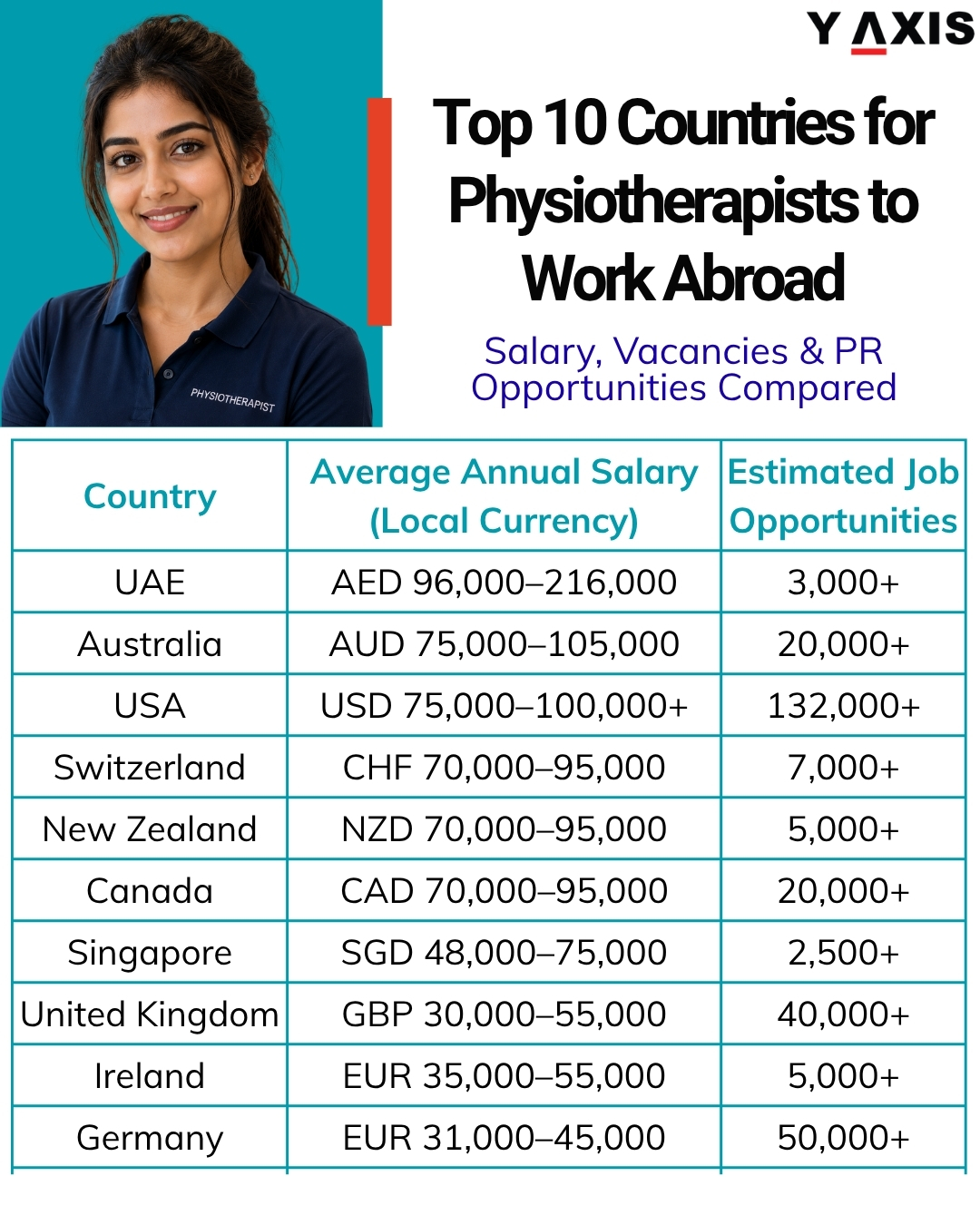
Top 10 Countries for Physiotherapists: Quick Comparison
Physiotherapists with clinical experience in musculoskeletal, neurological, sports, or paediatric rehabilitation are in demand across hospitals, aged-care facilities, and private clinics worldwide. Ageing populations in Europe and East Asia, combined with rising sports and lifestyle-related injuries, are driving sustained hiring of internationally qualified physiotherapists. Countries including the UK, Ireland, Australia, and Canada have registration-based pathways that, once cleared, open a direct route to sponsored work visas and permanent residency.
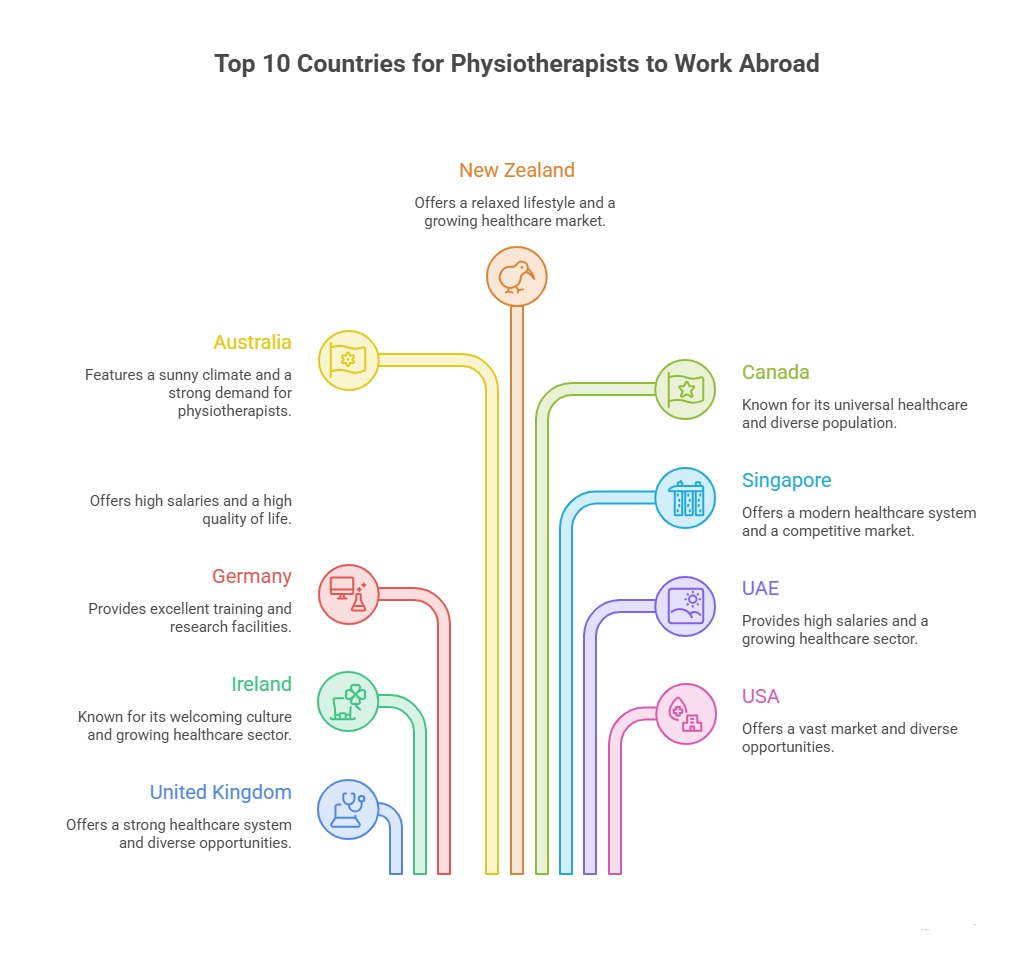
The table below highlights average annual salary and immigration pathways across the top 10 countries for Physiotherapists.
| Country | Avg Annual Salary | Work Visa / Route | PR Pathway |
|---|---|---|---|
| United Kingdom | GBP 30,000–55,000 | Health and Care Worker Visa (SOC 2221) | ILR after 5 years |
| Ireland | EUR 35,000–55,000 | Critical Skills / General Employment Permit | Stamp 4 after 2 years — fastest PR in Europe |
| Germany | EUR 31,000–45,000 | Skilled Worker Visa (Fachkräfteeinwanderungsgesetz) | Settlement permit after 4–5 years |
| Switzerland | CHF 70,000–95,000 | Swiss work permit (quota-based, employer-sponsored) | Permit C after 10 years |
| Australia | AUD 75,000–105,000 | Skills in Demand Visa (Subclass 482) / Points-Test | Subclass 186 / 189 / 190 — CSOL-listed |
| New Zealand | NZD 70,000–95,000 | Accredited Employer Work Visa (AEWV) | Green List Tier 2 — Work to Residence after 24 months |
| Canada | CAD 70,000–95,000 | LMIA Work Permit / Express Entry | Express Entry (NOC 31202) — 1–3 years |
| Singapore | SGD 48,000–75,000 | Employment Pass (EP) | PR consideration after 2–3 years via MOM |
| UAE | AED 96,000–216,000 (tax-free) | Employer-sponsored UAE work permit | Golden Visa (10-year) for high earners; no standard PR route |
| USA | USD 75,000–100,000+ | H-1B Visa / Direct EB-2/EB-3 Green Card | Schedule A green card route; India faces significant per-country backlog |
Which Country Is Best for You: Physiotherapists' Decision Table
The ideal destination to migrate abroad as a Physiotherapist depends on your specialisation, salary expectations, PR timeline, and readiness to pursue local registration. The table below helps you assess the best country based on your individual priorities.
| Your Goal | Best Country | Why |
|---|---|---|
| Highest gross salary globally | Switzerland | CHF 70,000–95,000/year in Zurich, Geneva, and Basel; strong private clinic and sports rehabilitation demand, though non-EU quotas are strict |
| Fastest PR in Europe | Ireland | Critical Skills Employment Permit leads to Stamp 4 in 2 years; CORU registration and an English-speaking healthcare system ease the transition |
| Fastest PR globally | Canada | Express Entry under NOC 31202; PR achievable in 1–3 years once provincial college registration and the PCE exam are cleared |
| Best shortage-driven demand | UK | Physiotherapists are recruited under the Health and Care Worker Visa with a reduced salary threshold and IHS exemption; large NHS vacancy base |
| Best points-based PR pathway | Australia | Physiotherapist is CSOL-listed; direct access to Subclass 189/190 points-tested visas and employer-sponsored Subclass 186 |
| Best tax-free earning potential | UAE | Fully tax-free salaries; strong private healthcare and home-care physiotherapy demand in Dubai and Abu Dhabi |
| Best fast-growing residence route | New Zealand | Green List Tier 2 status gives a clear Work to Residence pathway after 24 months with an accredited employer |
| Best Asia-based allied health career | Singapore | AHPC registration; Employment Pass; roles concentrated in major hospital clusters (SingHealth, NHG, NUHS) |
| Deepest job market and highest ceiling | USA | World's largest physiotherapy market; Schedule A status speeds up the paperwork stage of the green card, though Indian nationals should plan for a long per-country wait |
| Strong demand with EU access | Germany | Europe's largest ageing population is driving strong physiotherapy hiring; EU-wide mobility once settled |
*Want to work abroad as a Physiotherapist? Let Y-Axis guide you with the process.
1. United Kingdom — NHS Shortage Support with HCPC Registration
The United Kingdom remains one of the largest employers of internationally trained Physiotherapists, driven by persistent NHS staffing shortages. High-paying jobs in the UK for Physiotherapists are available in London, Manchester, Birmingham, Leeds, and Bristol, across musculoskeletal, neurological, and respiratory rehabilitation. The UK job market for physiotherapists benefits from the Health and Care Worker Visa, which offers a reduced salary threshold and exemption from the Immigration Health Surcharge — though HCPC registration must be completed before you can start practising.
| Feature | Details |
|---|---|
| Avg Annual Salary | GBP 30,000–55,000/year (NHS Band 5 entry: ~£30,000; Band 6 mid-career: £37,000–£45,000; Band 7 specialist/senior: £46,000–£55,000+) |
| Top Cities | London, Manchester, Birmingham, Leeds, Bristol |
| In-Demand Specialisations | Musculoskeletal (MSK) rehabilitation, neurological rehabilitation, respiratory and cardiorespiratory physiotherapy, paediatric and sports physiotherapy |
| Work Visa | Health and Care Worker Visa (SOC 2221) — salary threshold GBP 25,000 or the going rate, whichever is higher; exempt from the Immigration Health Surcharge |
| UK PR Pathway | Indefinite Leave to Remain (ILR) after 5 years of continuous residence on the Health and Care Worker Visa |
| Qualification Note | HCPC registration is mandatory before practising — scrutiny fee approximately £678 plus an annual renewal of £123. Some Indian-trained applicants may need to complete an HCPC-approved adaptation period. English proficiency via IELTS, OET, or an approved SELT is required. |
*Want to apply for a United Kingdom work visa? Let Y-Axis guide you with the process.
2. Ireland — CORU-Regulated Pathway with Europe's Fastest PR Track
Ireland offers Physiotherapists one of the most accessible entry points into European healthcare, backed by a growing HSE and private clinic sector. High-paying jobs in Ireland for Physiotherapists are available in Dublin, Cork, Galway, and Limerick, across outpatient MSK care, older-person rehabilitation, and disability services. The Ireland job market for physiotherapists benefits from an entirely English-speaking healthcare system, and critically, the Critical Skills Employment Permit leads to Stamp 4 (Ireland's permanent residence equivalent) in just two years — the fastest PR track in Europe.
| Feature | Details |
|---|---|
| Avg Annual Salary | EUR 35,000–55,000/year (entry: €35,000–€42,000; senior/specialist: €45,000–€55,000+) |
| Top Cities | Dublin, Cork, Galway, Limerick |
| In-Demand Specialisations | Musculoskeletal outpatient care, older-person rehabilitation, disability services, paediatric physiotherapy |
| Work Visa | Critical Skills Employment Permit or General Employment Permit, sponsored by the HSE or a private clinic employer |
| Ireland PR Pathway | Stamp 4 after 2 years on the Critical Skills Employment Permit — the fastest permanent residence equivalent pathway in Europe |
| Qualification Note | Mandatory registration with CORU (the Physiotherapists Registration Board) is required before independent practice. Ireland's healthcare sector operates entirely in English, easing the transition for Indian-trained physiotherapists. |
*Want to apply for an Ireland work visa? Let Y-Axis guide you with the process.
3. Germany — Aging Population Driving the EU's Largest Physiotherapy Job Market
Germany has Europe's largest ageing population, and this demographic reality translates directly into sustained demand for Physiotherapists across hospitals, rehabilitation clinics, and home-visit (ambulante) practices. High-paying jobs in Germany for Physiotherapists are available in Berlin, Munich, Hamburg, Frankfurt, and Cologne, across geriatric, orthopaedic, and neurological rehabilitation. The Germany job market for physiotherapists is anchored by the Skilled Worker Visa, though qualification recognition and German language proficiency are essential first steps before registration.
| Feature | Details |
|---|---|
| Avg Annual Salary | EUR 31,000–45,000/year (approximately €2,600–€3,800/month gross) |
| Top Cities | Berlin, Munich, Hamburg, Frankfurt, Cologne |
| In-Demand Specialisations | Geriatric rehabilitation, orthopaedic and musculoskeletal physiotherapy, neurological physiotherapy, home-visit (ambulante) physiotherapy |
| Work Visa | Skilled Worker Visa under the Fachkräfteeinwanderungsgesetz, tied to state recognition of the physiotherapy qualification (Anerkennung) |
| Germany PR Pathway | A settlement permit is generally available after 4 years for recognised skilled workers, or via the standard 5-year residence route |
| Qualification Note | German B2 language proficiency is generally required for patient-facing roles. Qualification recognition is assessed by the relevant state authority (Bezirksregierung/Landesamt) and may require an adaptation period or an aptitude test depending on how closely your training matches German standards. |
*Want to apply for a Germany work visa? Let Y-Axis guide you with the process.
4. Switzerland — Highest Salaries in a Strictly Quota-Controlled Market
Switzerland offers the highest physiotherapist salaries on this list, anchored by a well-funded private clinic sector and strong demand for sports and orthopaedic rehabilitation. High-paying jobs in Switzerland for Physiotherapists are concentrated in Zurich, Geneva, Basel, and Bern. The Switzerland job market for physiotherapists is lucrative but tightly controlled — non-EU applicants face strict annual quotas, and every foreign qualification must pass a formal recognition process before registration is possible.
| Feature | Details |
|---|---|
| Avg Annual Salary | AUD 75,000–105,000/year |
| Top Cities | Sydney, Melbourne, Brisbane, Perth, Adelaide (plus incentivised rural and remote postings) |
| In-Demand Specialisations | Aged care rehabilitation, musculoskeletal and sports physiotherapy, paediatric and neurological physiotherapy |
| Work Visa | Skills in Demand Visa (Subclass 482) or points-tested Subclass 189 / Subclass 190; Physiotherapist is listed on the Core Skills Occupation List (CSOL) |
| Australia PR Pathway | Subclass 186 (Employer Nomination Scheme), or points-tested Subclass 189/190 for CSOL-listed occupations |
| Qualification Note | Requires an Australian Physiotherapy Council (APC) skills assessment and registration with the Physiotherapy Board of Australia via AHPRA before practising. Rural and remote roles often carry additional visa and financial incentives. |
*Want to apply for an Australia work visa? Let Y-Axis guide you with the process.
6. New Zealand — Green List Tier 2 Pathway to Residence
New Zealand offers Physiotherapists a clear, government-backed route to residency through its Green List programme, reflecting persistent workforce gaps in musculoskeletal, rural, and paediatric physiotherapy. High-paying jobs in New Zealand for Physiotherapists are available in Auckland, Wellington, Christchurch, and Hamilton, with strong demand in ACC-funded injury rehabilitation. The New Zealand job market for physiotherapists is regulated by the Physiotherapy Board of New Zealand, and Physiotherapist sits on Green List Tier 2 — a Work to Residence pathway rather than immediate residency.
| Feature | Details |
|---|---|
| Avg Annual Salary | NZD 70,000–95,000/year |
| Top Cities | Auckland, Wellington, Christchurch, Hamilton |
| In-Demand Specialisations | Musculoskeletal and ACC-funded injury rehabilitation, sports physiotherapy, paediatric and rural community physiotherapy |
| Work Visa | Accredited Employer Work Visa (AEWV) — Physiotherapist is a Green List Tier 2 occupation (ANZSCO 252511) |
| New Zealand PR Pathway | Work to Residence after 24 months of full-time qualifying employment with an accredited employer under the Green List Tier 2 pathway |
| Qualification Note | Registration with the Physiotherapy Board of New Zealand must be underway or complete before starting work — employers routinely extend conditional offers during assessment. Familiarity with the ACC (Accident Compensation Corporation) system is valued, as it funds most injury-related treatment in New Zealand. |
*Want to apply for a New Zealand work visa? Let Y-Axis guide you with the process.
7. Canada — Express Entry PR with Provincial Regulatory Registration
Canada offers Physiotherapists a strong combination of steady demand and one of the fastest employer-independent permanent residency pathways in the world. High-paying jobs in Canada for Physiotherapists are available in Toronto, Vancouver, Calgary, Ottawa, and Montreal, across orthopaedic, sports, and geriatric rehabilitation. The Canada job market for physiotherapists is regulated province by province, with registration and the Physiotherapy Competency Examination (PCE) forming the essential first steps before qualifying for Express Entry.
| Feature | Details |
|---|---|
| Avg Annual Salary | CAD 70,000–95,000/year |
| Top Cities | Toronto (Ontario), Vancouver (BC), Calgary (Alberta), Ottawa (Ontario), Montreal (Quebec) |
| In-Demand Specialisations | Orthopaedic and sports physiotherapy, geriatric and home-care rehabilitation, neurological physiotherapy |
| Work Visa | LMIA-backed Work Permit or Express Entry Federal Skilled Worker Program (FSWP) under NOC 31202 |
| Canada PR Pathway | Express Entry (Federal Skilled Worker Program) or a Provincial Nominee Program; PR achievable in 1–3 years |
| Qualification Note | Requires registration with the relevant provincial regulatory college and a passing score on the Physiotherapy Competency Examination (PCE), administered by the Alliance. Credential assessment and exam preparation typically add several months to the overall timeline. |
*Want to apply for a Canada work visa? Let Y-Axis guide you with the process.
8. Singapore — Asia's Allied Health Hub with AHPC Registration
Singapore is Asia-Pacific's leading hub for internationally qualified allied health professionals, anchored by its major public hospital clusters. High-paying jobs in Singapore for Physiotherapists are concentrated around acute hospital rehabilitation, geriatric care, and sports physiotherapy. The Singapore job market for physiotherapists benefits from the country's role as a regional healthcare gateway, with SingHealth, the National Healthcare Group (NHG), and the National University Health System (NUHS) actively recruiting international physiotherapists.
| Feature | Details |
|---|---|
| Avg Annual Salary | SGD 48,000–75,000/year |
| Top Cities | Singapore (city-state; roles concentrated around major hospital clusters) |
| In-Demand Specialisations | Acute hospital rehabilitation, geriatric and community physiotherapy, sports physiotherapy |
| Work Visa | Employment Pass (EP) — minimum qualifying salary of SGD 5,600/month (2026) |
| Singapore PR Pathway | Permanent residency applications are typically considered after 2–3 years of Employment Pass holding, via Singapore's Ministry of Manpower discretionary PR scheme |
| Qualification Note | Registration with the Allied Health Professions Council (AHPC) is mandatory before practising. SingHealth, NHG, and NUHS are the primary recruiters of international physiotherapists in Singapore. |
*Want to apply for a Singapore work visa? Let Y-Axis guide you with the process.
9. UAE — Tax-Free Salaries Driving Gulf Healthcare Expansion
The UAE offers Physiotherapists fully tax-free salaries alongside rapidly expanding private healthcare and home-care rehabilitation services. High-paying jobs in the UAE for Physiotherapists are available in Dubai, Abu Dhabi, and Sharjah, across sports, orthopaedic, and paediatric rehabilitation. The UAE job market for physiotherapists is licensing-driven rather than points-based — every applicant must clear a Prometric exam and DataFlow verification before receiving a healthcare licence from the relevant emirate's authority.
| Feature | Details |
|---|---|
| Avg Annual Salary | AED 96,000–216,000/year (approximately USD 26,000–58,000), fully tax-free |
| Top Cities | Dubai, Abu Dhabi, Sharjah |
| In-Demand Specialisations | Sports and orthopaedic rehabilitation, home healthcare physiotherapy, paediatric physiotherapy |
| Work Visa | Employer-sponsored UAE work visa/permit, tied to healthcare licensing in the relevant emirate |
| PR Pathway | No standard PR route for most employees; the Golden Visa (10-year renewable residency) is available to high-earning or highly qualified professionals meeting salary or investment criteria |
| Qualification Note | Requires passing a Prometric licensing exam and DataFlow primary source verification of your qualifications, plus licensing from DHA (Dubai), MOH, or DOH (Abu Dhabi) depending on the emirate of employment. |
10. USA — Schedule A Green Card Route with the World's Largest Market
The United States is the world's largest physiotherapy market and offers a distinctive immigration advantage: Physical Therapist is officially designated a Department of Labor 'Schedule A' occupation. High-paying jobs in the USA for Physiotherapists are available in Los Angeles, New York, Houston, Chicago, and Dallas, across orthopaedic, sports, and home health rehabilitation. The USA job market for physiotherapists is the deepest on this list, though Indian applicants should plan realistically around per-country green card backlogs even with the Schedule A advantage.
| Feature | Details |
|---|---|
| Avg Annual Salary | USD 75,000–100,000+/year |
| Top Cities | Los Angeles, New York, Houston, Chicago, Dallas |
| In-Demand Specialisations | Orthopaedic and sports rehabilitation, home health and geriatric physiotherapy, paediatric physiotherapy |
| Work Visa | H-1B (employer-sponsored, annual lottery) for temporary work; direct EB-2/EB-3 green card sponsorship is also common |
| PR Pathway | Physical Therapist is a Department of Labor "Schedule A" occupation, letting employers skip the lengthy PERM labour certification step — but Indian applicants still face significant per-country visa bulletin backlogs, often several years, even with this advantage. |
| Qualification Note | Requires passing the National Physical Therapy Examination (NPTE), obtaining a state licence, and securing an FCCPT-issued VisaScreen certificate confirming your education, licensure, and English proficiency meet U.S. standards. |
*Want to apply for a USA work visa? Let Y-Axis guide you with the process.
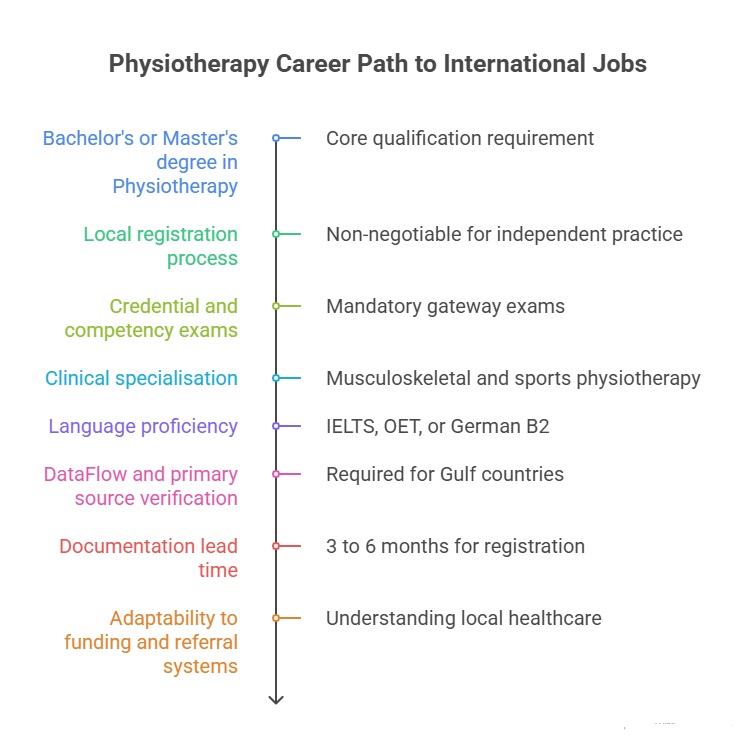
Key Qualifications and Skills Physiotherapists Need to Land Jobs Abroad
International employers, healthcare regulators, and immigration authorities consistently look for the following qualifications, registrations, and skills when hiring Physiotherapists from overseas.
Here are the key qualifications and skills to build before applying for overseas physiotherapy roles:
- Core qualification: A Bachelor's (BPT) or Master's (MPT) degree in Physiotherapy is the standard entry requirement across all 10 countries; a Master's or specialised certification strengthens applications for senior and specialist roles
- Local registration is non-negotiable: Unlike many other professions, a physiotherapy degree alone never permits independent practice abroad — HCPC (UK), CORU (Ireland), AHPRA (Australia), the Physiotherapy Board of New Zealand, and provincial colleges (Canada) all require separate registration before you can treat patients
- Credential and competency exams: The Physiotherapy Competency Examination (PCE) for Canada, the APC skills assessment for Australia, and the NPTE for the USA are mandatory gateway exams that should be started well before you plan to relocate
- Clinical specialisation: Musculoskeletal (MSK) and sports physiotherapy are the most universally transferable specialisations, while geriatric and neurological rehabilitation are increasingly valuable given ageing populations in Europe and East Asia
- Language proficiency: IELTS or OET for the UK, Ireland, Australia, Canada, and New Zealand; German B2 proficiency for patient-facing roles in Germany; English is sufficient for the UAE and Singapore in most private healthcare settings
- DataFlow and primary source verification: Gulf countries (UAE, and other GCC states) require DataFlow verification of your degree, licence, and experience letters before you can sit the Prometric licensing exam
- Documentation lead time: Registration processes for HCPC, CORU, AHPRA, and provincial colleges typically take 3 to 6 months from submission to approval — start this process as early as possible, ideally before you begin actively job-hunting
- Adaptability to funding and referral systems: Understanding how each country funds physiotherapy — the NHS in the UK, ACC in New Zealand, workers' compensation and Medicare in Australia, insurance-based billing in the USA — helps you frame your experience appropriately in interviews
Which Country Is Right for Your Physiotherapist Career?
The right country to migrate abroad as a Physiotherapist depends on your specialisation, salary expectations, and PR goals. The table below helps you identify the best country based on your specific priorities:
| Your Priority | Best Country Option |
|---|---|
| Highest gross salary globally | Switzerland — CHF 70,000–95,000/year, though non-EU quotas are strict and competitive |
| Fastest PR in Europe | Ireland — Stamp 4 in 2 years on the Critical Skills Employment Permit; English-speaking healthcare system |
| Fastest PR globally | Canada — Express Entry under NOC 31202; PR achievable in 1–3 years once registration and the PCE are cleared |
| Best shortage-driven demand | UK — Health and Care Worker Visa with a reduced salary threshold; large NHS vacancy base |
| Best points-based PR route | Australia — CSOL-listed occupation; Subclass 189/190 and Subclass 186 employer sponsorship |
| Best tax-free earning potential | UAE — fully tax-free salaries with strong private and home-care physiotherapy demand |
| Best fast-growing residence route | New Zealand — Green List Tier 2; Work to Residence after 24 months |
| Best Asia-based allied health career | Singapore — AHPC registration; Employment Pass; major hospital cluster recruitment |
| Deepest job market and highest ceiling | USA — Schedule A green card route and the world's largest physiotherapy job market |
| Strong demand with EU-wide access | Germany — Europe's largest ageing population driving sustained physiotherapy hiring |
Want to get your Physiotherapist profile assessed? Try Y-Axis Free Eligibility Assessment to evaluate your profile. Call +91-7670800001.
Watch: Top Countries Offering Work Permits and PR Pathways in 2026
The global physiotherapy job market is evolving rapidly. Countries are expanding shortage occupation lists, launching new visa fast-tracks, and competing for experienced Physiotherapists from India.
Watch the Y-Axis Podcast to explore the latest overseas physiotherapy career opportunities, high-demand roles, work visa pathways, salary benchmarks, and permanent residence options in the world's strongest physiotherapy job markets.
Watch To Know More: Want to Work, Study, or Settle Abroad? Watch This First!
Planning to work, study, or settle abroad? Watch this informative video to explore global opportunities, visa pathways, eligibility requirements, and expert guidance to help you choose the right destination for your international journey.
How to Migrate Abroad as a Physiotherapist?
Migrating abroad as a Physiotherapist from India starts with identifying your target registration pathway alongside your work visa route and PR strategy. Indian Physiotherapists can target countries via the Employer-Sponsored route (work visa with PR pathway) or the Independent Points-Based route depending on the country selected.
The steps to migrate abroad as a Physiotherapist from India are as follows:
Step 1: Identify your target country based on your clinical specialisation, salary expectations, PR timeline, and registration pathway readiness using the comparison tables above.
Step 2: Choose and begin your target country's registration process early — HCPC, CORU, AHPRA, provincial college, or Prometric/DataFlow, depending on the country.
Step 3: Complete any mandatory competency exam as early as possible (PCE for Canada, APC assessment for Australia, NPTE for the USA).
Step 4: Complete your English proficiency test such as IELTS or OET, or German B2 certification if targeting Germany.
Step 5: Build a strong international profile by updating your resume and LinkedIn to reflect your clinical specialisation, patient caseload experience, and any specific rehabilitation protocols you're trained in.
Step 6: Apply for physiotherapy roles through LinkedIn, specialist healthcare recruiters, and country-specific hospital and clinic career portals.
Step 7: Secure a job offer meeting the visa salary threshold for your target country.
Step 8: Submit your work visa or work permit application with all required documents such as passport, physiotherapy qualification certificates, registration confirmation, employment contract, and health insurance.
Step 9: Complete biometrics and any country-specific pre-departure requirements, including police clearance certificates.
Step 10: Upon visa approval, migrate to your preferred country and begin your international physiotherapy career.
Common Mistakes Physiotherapists Make When Applying for Jobs Abroad
Indian Physiotherapists are in demand across the UK, Ireland, Australia, Canada, and the Gulf. Understanding common mistakes around registration timelines, credential recognition, and visa requirements can significantly improve your chances.
Here are some common mistakes to avoid when applying for overseas physiotherapy roles:
| Common Mistake | Practical Solution |
|---|---|
| Assuming a physiotherapy degree alone is enough to practise abroad | Every country on this list requires separate local registration (HCPC, CORU, AHPRA, provincial colleges, or Prometric licensing) before you can treat patients — start this process months before you plan to relocate. |
| Underestimating registration and exam timelines | HCPC, CORU, and AHPRA registration typically take 3–6 months; Canada's PCE and Australia's APC assessment require dedicated preparation time — factor this into your overall relocation timeline, not just the visa stage. |
| Targeting Switzerland without understanding non-EU quotas | Switzerland's non-EU work permit quotas are strict and competitive. Get your diploma recognised by the Swiss Red Cross early, and target employers experienced in sponsoring non-EU physiotherapists. |
| Overlooking New Zealand's Tier 2 (not Tier 1) status | Physiotherapist is a Green List Tier 2 occupation, meaning residency requires 24 months of qualifying employment first — this is a Work to Residence pathway, not an immediate straight-to-residence route. |
| Assuming Schedule A guarantees a fast US green card for Indians | Schedule A skips the PERM labour certification step, saving 10–18 months of paperwork — but Indian applicants still face the same per-country visa bulletin backlog as other employment categories, often several years. |
| Ignoring language requirements for Germany | German B2 proficiency is generally required for patient-facing roles — begin language study well before applying, as this is often the longest lead-time item in a Germany application. |
Are you looking for step-by-step assistance with overseas immigration? Contact Y-Axis, the world's No. 1 overseas immigration consultancy, for end-to-end assistance! Call +91-7670800001.
FAQs
Which are the top 10 countries for Physiotherapists to work abroad?
The top 10 countries are the UK, Ireland, Germany, Switzerland, Australia, New Zealand, Canada, Singapore, the UAE, and the USA. Ireland and Canada offer the fastest PR pathways. Switzerland pays the highest salaries but has strict quotas. The UK and Germany offer the deepest job markets in Europe. The UAE offers tax-free income, and the USA offers the Schedule A green card advantage, though with a significant backlog for Indian applicants.
Do Indian Physiotherapists need local registration to work abroad?
Yes, in every country on this list. Unlike some professions, a BPT or MPT degree alone never permits independent practice abroad. You must register with the relevant body — HCPC (UK), CORU (Ireland), AHPRA (Australia), the Physiotherapy Board of New Zealand, or a provincial college (Canada) — before treating patients. Gulf countries require Prometric licensing and DataFlow verification instead of a registration board.
Which country offers the fastest PR for Physiotherapists?
Ireland offers the fastest PR pathway in Europe — the Critical Skills Employment Permit leads to Stamp 4 in just two years. Canada offers the fastest points-based PR globally through Express Entry under NOC 31202, with PR achievable in 1 to 3 years once provincial registration and the PCE exam are cleared. Australia offers a comparable 2 to 4 year timeline through CSOL-listed PR routes.
What is the average salary for Physiotherapists in Switzerland?
Physiotherapists in Switzerland earn among the highest salaries globally, ranging from CHF 70,000 to CHF 95,000 per year. Salaries are strongest in private clinics in Zurich, Geneva, and Basel, driven by sports and orthopaedic rehabilitation demand. However, non-EU applicants face strict annual work permit quotas and must have their diploma recognised by the Swiss Red Cross before they can register to practise.
Is the UK a good destination for Physiotherapists?
Yes. The UK has persistent NHS staffing shortages, and physiotherapists are recruited under the Health and Care Worker Visa, which offers a reduced salary threshold and exemption from the Immigration Health Surcharge. HCPC registration is mandatory before practising, with a scrutiny fee of around £678. Salaries range from £30,000 for entry-level NHS Band 5 roles to £55,000 or more for specialist Band 7 positions.
What is HCPC registration and why does it matter for the UK?
HCPC (Health and Care Professions Council) registration is the UK's mandatory licensing requirement for all physiotherapists, including internationally trained ones. Without it, you cannot legally practise or receive a Certificate of Sponsorship from an NHS trust or private employer. The process includes a scrutiny fee of about £678, an annual renewal of £123, and sometimes an adaptation period, and can take 3 to 5 months to complete.
Can Indian Physiotherapists qualify for Australia's CSOL and access direct PR?
Yes. Physiotherapist is listed on Australia's Core Skills Occupation List (CSOL), giving access to Subclass 189 and 190 points-tested visas as well as Subclass 186 employer-sponsored PR. An Australian Physiotherapy Council (APC) skills assessment and registration with the Physiotherapy Board of Australia via AHPRA are required first. Rural and remote roles often carry additional visa and financial incentives.
What is the Green List status for Physiotherapists in New Zealand?
Physiotherapist sits on Tier 2 of New Zealand's Green List, meaning it follows a Work to Residence pathway rather than immediate residency. After securing a job offer from an accredited employer and completing 24 months of full-time qualifying employment, you become eligible to apply for residence. Registration with the Physiotherapy Board of New Zealand must be underway or complete before you start work.
What is the Physiotherapy Competency Examination (PCE) for Canada?
The PCE is a mandatory competency exam administered by the Alliance, required for physiotherapists seeking registration with a Canadian provincial regulatory college. It has a written component and a clinical component, and passing it is essential before you can practise independently in Canada or count your employment toward Express Entry PR under NOC 31202. Preparation typically adds several months to your relocation timeline.
Is the USA a good option for Indian Physiotherapists?
The USA offers the world's largest physiotherapy job market and salaries of USD 75,000 to 100,000 or more. Physical Therapist is a Department of Labor 'Schedule A' occupation, letting employers skip the lengthy PERM labour certification step. However, Indian applicants still face a significant per-country green card backlog, often several years, even with this advantage — plan realistically around this timeline.
What is a Schedule A occupation and how does it help Physiotherapists?
Schedule A is a US Department of Labor list of occupations with a certified nationwide shortage. Physical Therapist is one of only two Group I Schedule A occupations, alongside registered nurses. This lets an employer skip the PERM labour certification step and file the green card petition directly with USCIS, saving roughly 10 to 18 months of processing — though per-country visa bulletin waits still apply.
What documents are required for a Physiotherapist visa application abroad?
Typical requirements include a valid passport, physiotherapy degree certificates, proof of local registration or licensing (HCPC, CORU, AHPRA, or Prometric), an employment contract, police clearance certificates, English or local language proficiency test results, and health insurance. Gulf countries additionally require DataFlow primary source verification. Requirements vary by country, so confirm the exact checklist with your target country's immigration and registration authorities.
Which country offers tax-free income for Physiotherapists?
The UAE offers fully tax-free salaries for physiotherapists, ranging from AED 96,000 to AED 216,000 per year (approximately USD 26,000 to 58,000), driven by growing private healthcare and home-care rehabilitation demand in Dubai and Abu Dhabi. However, there is no standard PR route for most employees — long-term residency is limited to the Golden Visa, available to high earners or highly qualified professionals.
How long does physiotherapy registration typically take in most countries?
Registration processes generally take 3 to 6 months from submission to approval, though this varies by country and by how closely your qualification matches local standards. HCPC (UK) and CORU (Ireland) registration can be faster if your documents are complete and no adaptation period is required. Start the registration process as early as possible, ideally before you begin actively applying for jobs.
Can I bring my family when I move abroad as a Physiotherapist?
In most countries on this list — the UK, Ireland, Australia, Canada, and New Zealand — skilled worker and employer-sponsored visas allow you to include your spouse and dependent children. Family inclusion rules for the UAE and Singapore typically require you to meet a minimum salary threshold. Always confirm the specific family sponsorship conditions attached to your particular visa category before applying.
Which specialisation is most in demand for Physiotherapists abroad?
Musculoskeletal (MSK) and sports physiotherapy are the most universally transferable specialisations across all 10 countries. Geriatric and neurological rehabilitation are increasingly valuable given ageing populations in the UK, Germany, and Japan-adjacent Asian markets. Paediatric physiotherapy is consistently in demand in New Zealand and Australia. Building documented experience in one or two specialisations strengthens your profile significantly more than generalist experience alone.
Do I need to learn a new language to work as a Physiotherapist abroad?
It depends on the country. The UK, Ireland, Australia, Canada, New Zealand, Singapore, and the UAE operate primarily in English, so IELTS or OET is usually sufficient. Germany is the exception on this list — B2-level German proficiency is generally required for patient-facing roles, since clear communication with patients is essential to safe physiotherapy practice, making language preparation an early priority for that market.
What is DataFlow verification and when is it required?
DataFlow is a primary source verification service used by Gulf countries, including the UAE, to confirm that your degree, licence, and experience letters are authentic and directly issued by your university, regulatory body, and previous employers. It's a mandatory step before you can sit the Prometric licensing exam required for a healthcare licence in the UAE, Saudi Arabia, and other GCC countries.
What are the top recruitment platforms for physiotherapy jobs abroad?
Useful platforms include LinkedIn for direct employer applications, NHS Jobs and Physio First for the UK, Seek for Australia and New Zealand, Indeed and provincial college job boards for Canada, and DataFlow-linked Gulf hospital career portals for the UAE. Specialist healthcare recruiters that focus specifically on international physiotherapist placement can also help navigate registration and visa sponsorship simultaneously.
How does Y-Axis help Indian Physiotherapists work abroad?
Y-Axis provides end-to-end support for Indian Physiotherapists: a free eligibility assessment to identify the best country and visa route based on your specialisation and PR goals; guidance on registration pathways such as HCPC, CORU, AHPRA, and provincial colleges; support with visa applications and documentation; and resume marketing to connect your profile with international hospitals, clinics, and rehabilitation centres actively hiring overseas talent.
Tags:
physiotherapy jobs abroad
physiotherapist jobs overseas
physiotherapist salary abroad
physiotherapist work visa
physiotherapist PR pathway
migrate as a physiotherapist
overseas physiotherapy careers
physiotherapist immigration India
allied health
Share
Y - Axis services

Get it on your mobile

Get News Alerts

Contact Y-Axis
Latest Article
Popular Post
Trending Article
Posted On October 01 2026
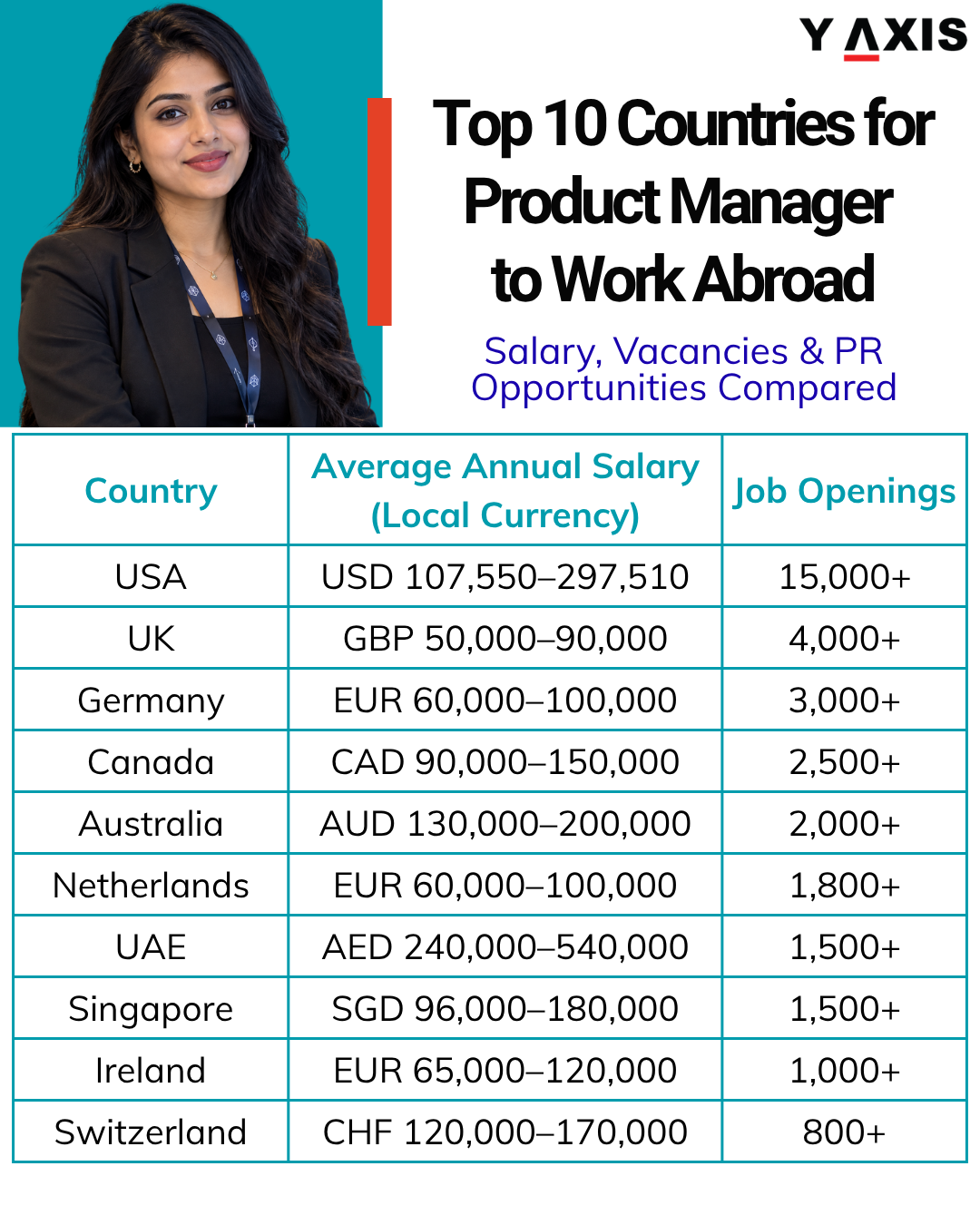
Top 10 Countries to Work Abroad as a Product Manager