


Posted on May 13 2026
Hospitality and Tourism Management in Spain: Is It a Serious Career Choice for Indian Students?

By , Editor & Director
Updated May 17 2026
Spain is one of the most visited countries in the world. Every year, millions of tourists from across the globe visit Spain for its culture, food, beaches, and history. This makes Spain one of the best places in the world to study Hospitality and Tourism Management. Spain's tourism industry is among the largest in the world and contributes a major share to its economy. As a result, the demand for trained hospitality and tourism professionals in Spain and across Europe is very high.
For Indian students who want to build a strong career in the hospitality and tourism industry, studying in Spain can be a smart decision. Spain offers world-class universities and hospitality schools, affordable fees compared to the UK or USA, a growing job market, and the opportunity to experience European hospitality standards firsthand.
This guide covers everything you need to know about studying Hospitality and Tourism Management in Spain as an Indian student, including the best universities, fees, eligibility, career options, salaries, and how to apply.
Is Hospitality and Tourism Management in Spain a Good Career Choice for Indian Students?
*Want to study abroad? Sign-up with Y-Axis for expert guidance
Why Study Hospitality and Tourism Management in Spain?
Spain is not only a famous tourist destination but also one of the world’s leading countries for tourism and hospitality. Studying Hospitality and Tourism Management in Spain can give students quality education, international exposure, and good career opportunities.
Here are some important reasons why Spain is a good choice for international students:
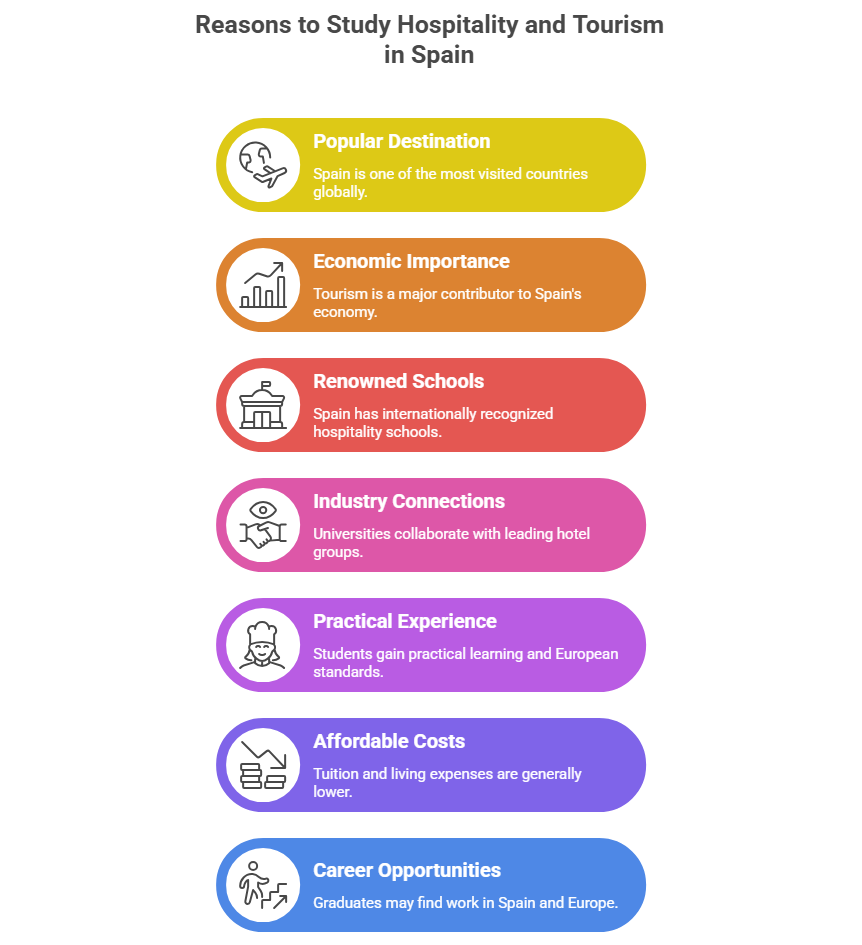
- Spain is one of the most visited countries in the world, attracting millions of tourists every year
- Tourism is one of the biggest industries in Spain and contributes a large part to the country’s economy
- Spain has many well-known hospitality and hotel management schools that are recognised internationally
- Several universities and hospitality schools work closely with leading hotel groups such as Meliá Hotels International, NH Hotels, and Barceló Hotel Group
- Students get practical learning experience and exposure to European hospitality standards
- Tuition fees and living expenses in Spain are generally more affordable compared to countries such as the UK, Switzerland, and the USA
- After graduation, students may also find work opportunities in Spain and other European countries
Top Universities for Hospitality and Tourism Management in Spain
Here is a list of some of the best universities and hospitality schools in Spain where Indian students can study:
EUHT StPOL (Centre for Tourism Studies)
EUHT StPOL is one of the oldest and most respected hospitality and tourism schools in Spain. It is located near Barcelona and is affiliated with the University of Girona. The school offers Bachelor's and Master's programs in hotel management and tourism.
- Location: Sant Pol de Mar, near Barcelona
- Programs: Bachelor in Hotel and Tourism Management, Master in Hotel Management
- Language: English
- Highlights: Strong industry connections, practical training, internship placements with top hotels
Les Roches Marbella
Les Roches is a globally recognised hospitality school with a campus in Marbella, Spain. It is part of the Les Roches International School of Hotel Management group and is consistently ranked among the top hospitality schools in the world.
- Location: Marbella, Spain
- Programs: Bachelor in Hotel Management, MBA in Hospitality Management
- Language: English
- Highlights: International student community, strong alumni network, global career placement support
Universidad de Alicante
The University of Alicante is a public university that offers an official Bachelor's Degree in Tourism. It is one of the most affordable options for Indian students who want to study tourism management in Spain.
- Location: Alicante, Spain
- Programs: Bachelor in Tourism
- Language: Spanish (some modules in English)
- Highlights: Affordable fees, public university degree, strong research focus
Basque Culinary Center
The Basque Culinary Center in San Sebastian is a unique institution that combines gastronomy, hospitality, and culinary arts. It is part of Mondragon University and is well known for its innovation in food and hospitality education.
- Location: San Sebastian, Spain
- Programs: Bachelor in Gastronomy and Culinary Arts, Master in Culinary Leadership
- Language: Spanish and English
- Highlights: Unique blend of culinary and hospitality management, strong industry placements
EAE Business School
EAE Business School in Madrid and Barcelona offers an MBA and Master programs in hospitality and tourism management. It is a well-known private business school with strong ties to the business community in Spain.
- Location: Madrid and Barcelona, Spain
- Programs: MBA in Tourism and Hospitality Management, Master in Hospitality Management
- Language: English and Spanish
- Highlights: Strong MBA program, practical business focus, good placement support
|
University / School |
Program |
Duration |
Approximate Fees (per year) |
|
EUHT StPOL |
Bachelor in Hotel & Tourism Management |
4 Years |
EUR 10,000 – 14,000 |
|
Les Roches Marbella |
Bachelor in Hotel Management |
3.5 Years |
EUR 22,000 – 28,000 |
|
Universidad de Alicante |
Bachelor in Tourism |
4 Years |
EUR 1,500 – 3,000 |
|
Basque Culinary Center |
Bachelor in Gastronomy & Culinary Arts |
4 Years |
EUR 9,000 – 12,000 |
|
EAE Business School |
MBA in Tourism & Hospitality Management |
1 Year |
EUR 12,000 – 18,000 |
|
Universidad Rey Juan Carlos |
Bachelor in Tourism |
4 Years |
EUR 2,000 – 4,000 |
|
OSTELEA (EAE) |
Master in Hotel Management |
1 Year |
EUR 13,000 – 16,000 |
Eligibility Requirements for Indian Students to Study Hospitality and Tourism in Spain
Each university has its own specific requirements. However, most Hospitality and Tourism Management programs in Spain have the following general eligibility criteria for Indian students:
For Bachelor's Programs
- Completion of 10+2 (Class 12) from a recognised Indian board such as CBSE, ICSE, or State Board
- Minimum percentage of 50 to 60 percent in Class 12, depending on the university
- English language proficiency: IELTS score of 5.5 to 6.5, or TOEFL score of 70 to 90, depending on the university
- Some universities may require Spanish language proficiency for Spanish-taught programs
- Statement of Purpose (SOP) and Letters of Recommendation (LORs)
For Master's and MBA Programs
- A Bachelor's degree in any relevant field such as hospitality, tourism, business, hotel management, or related areas
- Some programs may also accept graduates from non-related fields
- Work experience of 1 to 3 years may be preferred, though some programs accept fresh graduates
- IELTS score of 6.0 to 6.5, or equivalent TOEFL score
- GMAT or GRE scores may be required by some MBA programs
- SOP, LORs, updated CV, academic transcripts, and passport copy
Step to apply for Hospitality and Tourism Management in Spain
Step 1: Choose Your Course Decide if you want a Bachelor's, Master's, or MBA in Hospitality and Tourism Management.
Step 2: Shortlist Universities Research universities like EUHT StPOL, Les Roches Marbella, or EAE Business School. Compare fees, language, and placements.
Step 3: Check Eligibility For Bachelor's — you need Class 12 with 50–60% marks. For Master's, you need a Bachelor's degree.
Step 4: Take Language Tests Give IELTS (5.5 to 6.5 score) for English-taught programs. For Spanish-taught programs, give the DELE exam at B2 level.
Step 5: Get Your Documents Ready Collect your marksheets, certificates, SOP, LORs, CV, and passport. Get all academic documents apostilled from MEA India and translated into Spanish.
Step 6: Apply to Universities Submit your application on the university's official website. Upload all documents and pay the application fee.
Step 7: Attend the Interview Most hospitality schools will call you for an online or in-person interview. Be ready to talk about your goals and why you chose Spain.
Step 8: Accept the Offer Letter Once selected, accept the offer and pay the admission deposit to confirm your seat.
Step 9: Arrange Money and Insurance Show bank proof of at least EUR 600 per month for your stay. Also buy health insurance valid in Spain.
Step 10: Book Accommodation Arrange where you will stay in Spain. You need accommodation proof for the visa application.
Step 11: Apply for Spain Student Visa (Type D) Visit the Spanish Consulate in New Delhi, Mumbai, or Chennai. Submit all documents including admission letter, bank proof, insurance, and accommodation proof.
Step 12: Wait for Visa Approval Visa processing usually takes 4 to 8 weeks. The approval rate is around 97% if documents are correct.
Step 13: Book Your Flight and Travel to Spain
Step 14: Register in Spain Within 30 Days After arriving, register at the local Town Hall and apply for your NIE (foreigner ID number) and TIE (residence card). These are required to stay, study, and work legally in Spain.
*Want to pursue MBA in Spain? Contact Y-Axis for end-to-end support
Course Fees and Living Costs in Spain for Indian Students
Spain is significantly more affordable than the UK, USA, or Switzerland when it comes to tuition fees and living expenses. Here is a general overview:
Tuition Fees
|
Type of University |
Annual Tuition Fees (Approximate) |
|
Public Universities (Bachelor's) |
EUR 1,500 to EUR 4,000 per year |
|
Private Hospitality Schools (Bachelor's) |
EUR 9,000 to EUR 28,000 per year |
|
MBA / Master's Programs |
EUR 10,000 to EUR 20,000 for full program |
Living Costs
|
Expense |
Approximate Monthly Cost (EUR) |
|
Accommodation (shared flat) |
EUR 400 – 700 |
|
Food and groceries |
EUR 200 – 350 |
|
Transportation |
EUR 40 – 80 |
|
Other personal expenses |
EUR 100 – 200 |
|
Total estimated monthly cost |
EUR 740 – 1,330 |
Overall, Indian students can expect to spend between EUR 800 to EUR 1,500 per month on living expenses in Spain, depending on the city. Cities like Madrid and Barcelona are slightly more expensive than smaller cities like Alicante or San Sebastian.
*Read more...
Study in Spain for free
Career Opportunities After Hospitality and Tourism Management in Spain
Spain's tourism and hospitality sector employs millions of people and offers a wide range of job opportunities for graduates. After completing a Hospitality and Tourism Management degree in Spain, Indian students can pursue careers in various sectors:
|
Job Role |
Industry / Sector |
|
Hotel Manager / General Manager |
Hotels and Resorts |
|
Front Office Manager |
Hotels, Resorts, and Serviced Apartments |
|
Food and Beverage Manager |
Hotels, Restaurants, Catering |
|
Tourism Operations Manager |
Travel Agencies, Tour Operators |
|
Event Manager |
Hospitality, Corporate Events, Weddings |
|
Revenue Manager |
Hotels, Airlines, OTAs |
|
Sales and Marketing Manager |
Hotels, Tourism Boards, Travel Companies |
|
Guest Experience Manager |
Luxury Hotels and Resorts |
|
Travel Consultant |
Travel Agencies, Online Platforms |
|
Destination Manager |
Tourism Boards, Government Tourism Departments |
Graduates from top schools such as Les Roches Marbella and EUHT StPOL often find placements with leading international hotel groups such as Marriott, Hilton, Melia Hotels, Hyatt, and NH Hotels. Opportunities are also available in luxury resorts, cruise lines, airlines, event management companies, and tourism boards across Spain and Europe.
*Know more about job opportunities in Spain.....
Salary Expectations After Graduating in Spain
Salaries in Spain's hospitality and tourism sector depend on the job role, experience, and the type of employer. Here is a general idea of expected salaries:
|
Experience Level |
Average Annual Salary (Approximate) |
|
Entry-Level (0–2 years) |
EUR 18,000 – 25,000 |
|
Mid-Level (3–5 years) |
EUR 28,000 – 45,000 |
|
Senior Manager / Department Head |
EUR 50,000 – 80,000 |
|
General Manager (Large Hotels) |
EUR 80,000 – 120,000+ |
Post-Study Work Opportunities in Spain for Hospitality and Tourism Students
After completing a Hospitality and Tourism Management degree in Spain, Indian students may have opportunities to stay and work in the country. Spain has a strong tourism and hospitality industry, which creates demand for skilled professionals in hotels, resorts, restaurants, travel companies, and event management businesses.
Here are some post-study work options for international students in Spain:
- International students can apply for a post-study stay option that allows them extra time to search for jobs after graduation
- Students who receive a job offer from a Spanish employer can apply for a work permit and continue working in Spain
- Graduates may find opportunities in hotels, tourism companies, cruise services, travel agencies, luxury resorts, and event management firms
- Spain’s tourism industry offers jobs in areas such as hotel operations, guest relations, tourism marketing, hospitality management, and customer service
- Students with international hospitality experience and language skills may also explore career opportunities in other European countries
- A degree from Spain can help students apply for jobs across Europe because many Spanish qualifications are recognised within the European Union
Is Hospitality and Tourism Management in Spain a Good Career Choice for Indian Students?
Yes, for the right student, studying Hospitality and Tourism Management in Spain can be a genuinely rewarding career move. Here is an honest assessment:
Advantages
- Spain is a real-world classroom for hospitality and tourism students, given its massive tourism industry
- Degrees from top Spanish hospitality schools are recognised internationally
- Fees and living costs are lower than many other popular study destinations
- Strong opportunities for internships and placements with leading hotel groups during the course
- Exposure to European hospitality standards, which are valued globally
- After gaining experience in Spain, graduates can move to higher-paying markets such as UAE, UK, Singapore, or Australia
Things to Consider
- The Spanish job market may have lower starting salaries compared to the UK, UAE, or USA
- Spanish language skills are very helpful and sometimes essential, especially outside of international hospitality schools
- Entry-level salaries in Spain may be modest, but they improve significantly with 3 to 5 years of experience
- Students should choose their university carefully, as the quality and industry connections vary between institutions
Overall, if you are passionate about hospitality and tourism, Spain is a strong choice for gaining quality education, practical experience, and an international career foundation.
Tips for Indian Students Planning to Study in Spain
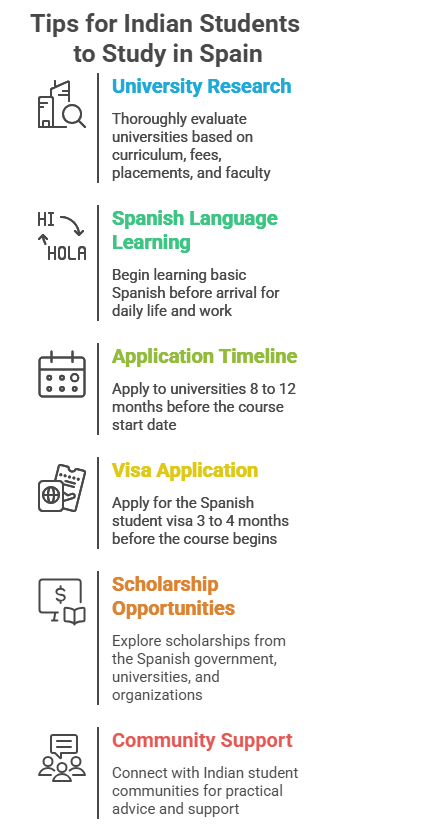
- Research universities thoroughly and shortlist programs based on curriculum, fees, placements, and faculty
- Start learning basic Spanish before arriving, as it will help in daily life and work
- Apply to universities at least 8 to 12 months before the course start date
- Apply for the Spanish student visa well in advance, at least 3 to 4 months before your course begins
- Look for scholarships offered by the Spanish government, universities, and organizations such as the Fundacion Carolina
- Connect with Indian student communities in Spain through social media groups and university networks for practical advice and support
*Planning to study in Spain? Y-Axis, world’s number one immigration consultancy can guide you step-by-step from choosing the right university to getting your Spain student visa. Speak to our experts today.
FAQs
Is Spain a good country to study Hospitality and Tourism Management?
Yes, Spain is one of the best countries in the world to study Hospitality and Tourism Management. Spain is the second most visited country in the world and has a huge tourism industry. Students get real-world exposure, internship opportunities, and access to some of Europe's top hospitality schools.
Which are the best universities for Hospitality Management in Spain for Indian students?
Some of the top options include EUHT StPOL near Barcelona, Les Roches Marbella, Universidad de Alicante, Basque Culinary Center in San Sebastian, and EAE Business School in Madrid and Barcelona. The right choice depends on your budget, program level, and career goals.
What is the tuition fee for Hospitality Management in Spain?
Fees vary depending on the university. Public universities charge around EUR 1,500 to EUR 4,000 per year. Private hospitality schools like Les Roches charge EUR 22,000 to EUR 28,000 per year. Master's and MBA programs range from EUR 10,000 to EUR 20,000 for the full program.
What are the eligibility requirements for Indian students to study in Spain?
For Bachelor's programs, you need Class 12 completion with at least 50 to 60 percent marks and an IELTS score of 5.5 to 6.5. For Master's programs, you need a relevant Bachelor's degree and an IELTS score of 6.0 or above. Some programs may also ask for work experience and GMAT scores.
Do I need to know Spanish to study Hospitality Management in Spain?
Not always. Many top hospitality schools like Les Roches Marbella and EUHT StPOL offer programs fully in English. However, learning basic Spanish is strongly recommended as it helps in daily life, internships, and job searches in Spain.
What is the duration of Hospitality Management courses in Spain?
Bachelor's programs are usually 3 to 4 years long. Master's programs are typically 1 to 1.5 years. MBA programs can range from 1 to 2 years. The duration also depends on whether the program includes mandatory internship periods.
Are degrees from Spanish hospitality schools recognised internationally?
Yes. Degrees from accredited Spanish universities are officially recognised within the European Union and are also valued internationally. Schools like Les Roches have global recognition. It is important to choose a university that is accredited by Spanish or European education authorities.
What are the career options after Hospitality Management in Spain?
Graduates can work as hotel managers, front office managers, food and beverage managers, event managers, tourism operations managers, revenue managers, travel consultants, and more. Opportunities exist in hotels, resorts, travel agencies, airlines, cruise lines, and tourism boards.
What salary can I expect after studying Hospitality Management in Spain?
Entry-level salaries in Spain are around EUR 18,000 to EUR 25,000 per year. With 3 to 5 years of experience, salaries grow to EUR 28,000 to EUR 45,000. Senior managers can earn EUR 50,000 to EUR 80,000 or more. Salaries are higher in international markets like UAE, UK, or Singapore.
Can I get a job in Spain after completing my Hospitality Management degree?
Yes, but it depends on your language skills, experience, and employer. Spain allows graduates to apply for a job seeker extension after studies. Spanish language proficiency greatly improves your chances. Many students also use their Spanish experience to get jobs in other European or international markets.
Is there an age limit for Indian students applying to Hospitality Management programs in Spain?
Most universities do not have a strict upper age limit for applications. Bachelor's programs are generally open to students aged 17 and above after completing Class 12. Master's and MBA programs also accept mature students. Always check the specific age requirements of each university.
What is the difference between Hospitality Management and Tourism Management?
Hospitality Management focuses on hotels, restaurants, resorts, and guest services. Tourism Management covers travel agencies, tour operations, destination management, and tourism planning. Many programs combine both disciplines to give students a broad understanding of the travel and hospitality industry.
Are there scholarships available for Indian students studying in Spain?
Yes. Some scholarships and financial aid options include the Fundacion Carolina scholarships, university-specific scholarships, and the Spanish Government scholarships offered through MAEC-AECID. Indian students can also check for state government scholarships that support overseas education.
What is the application process for Hospitality Management courses in Spain?
The general process includes researching universities, checking eligibility, preparing documents like SOP, LORs, transcripts, and IELTS scores, submitting the online application, attending an interview if required, receiving an offer letter, and then applying for the student visa. Start the process at least 8 to 12 months in advance.
Is IELTS mandatory to study Hospitality Management in Spain?
For English-taught programs, an IELTS score of around 5.5 to 6.5 is usually required. Some universities also accept TOEFL. For Spanish-taught programs, a Spanish language test like DELE may be required instead. Always check the specific language requirements of the university you are applying to.
What is the living cost in Barcelona vs Madrid for students?
Barcelona and Madrid are the two most expensive cities in Spain for students. Monthly costs in these cities can range from EUR 1,000 to EUR 1,500. Smaller cities like Alicante, Seville, or Valencia are more affordable, with monthly costs typically between EUR 700 to EUR 1,000.
Can I study Hospitality Management in Spain in English?
Yes. Many top hospitality schools in Spain offer full programs in English, including Les Roches Marbella, EUHT StPOL, and several MBA programs at private business schools. However, some public university programs are only in Spanish. Always confirm the language of instruction before applying.
How is the placement support at Spanish hospitality schools?
Top hospitality schools in Spain like Les Roches Marbella and EUHT StPOL have dedicated career services that help students secure internships and jobs. These schools have strong networks with international hotel groups. Public universities may have more limited placement support, so check this before applying.
What documents are needed for the Spain student visa application from India?
Key documents include a valid passport, university admission letter, completed visa application form, passport-size photographs, proof of financial means, health insurance covering Spain, proof of accommodation, and academic certificates. Requirements can change, so always verify on the official Spanish Embassy website.
Is Spain safe for Indian students?
Yes, Spain is generally considered a safe country for international students. Major cities like Madrid, Barcelona, Marbella, and Alicante have active student communities and are welcoming to foreign students. Like any city, students should take general precautions and be aware of their surroundings, especially in tourist-heavy areas.
What is the post-study work visa option in Spain for Indian students?
Spain has introduced a Job Seeker Visa that allows graduates to remain in the country for a period after completing their studies to look for employment. Spain's Startups Law also creates new opportunities for internationally trained graduates. Immigration rules change, so always check the latest guidelines from official Spanish government sources.
How does studying Hospitality Management in Spain compare to studying in Switzerland or the UK?
Spain offers lower tuition fees and living costs compared to Switzerland and the UK. Spain's hospitality schools are strong, but Swiss schools like EHL and Les Roches Switzerland have slightly higher global rankings. The UK offers more English-language options and potentially higher starting salaries. Spain is a great choice for students seeking quality education at a more affordable cost.
📞 Call: +91-7670800000
📩 Email: info@y-axis.com
🌐 Visit: https://www.y-axis.com
Tags:
hospitality and tourism management in Spain
study hospitality in Spain for Indian students
tourism management Spain
Spain hospitality courses
hotel management Spain
study abroad Spain
Spain student visa Indian students
top hospitality universities
Share
Options for you by Y-Axis

Get it on your mobile

Get News alerts

Contact Y-Axis
Latest Article
Popular Post
Trending Article
Posted On September 25 2026
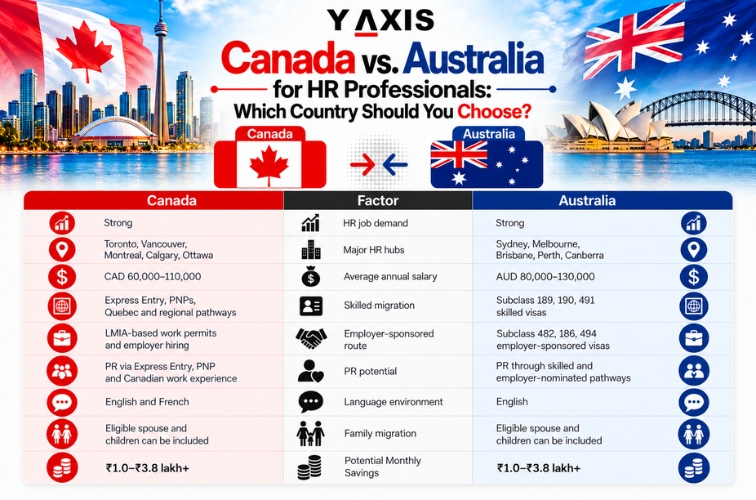
Canada vs. Australia for HR Professionals: Which Country Should You Choose?