

Posted on August 14 2026
Life in France for Immigrants: Jobs, Visas, Cost of Living & PR

By , Editor & Director
Updated August 18 2026
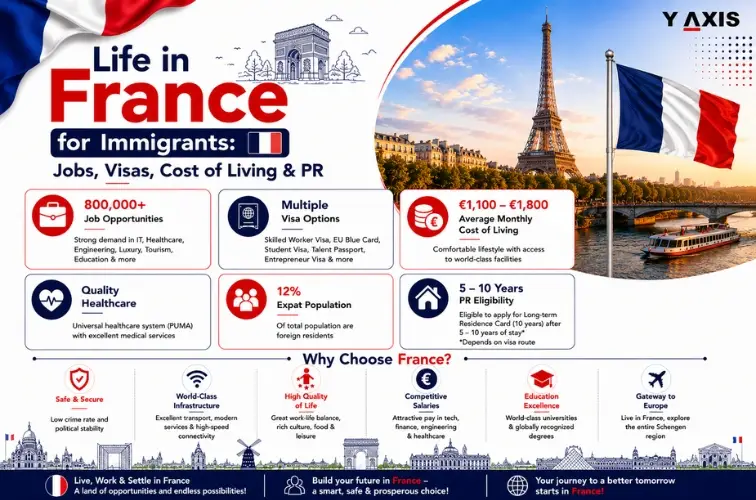
Life for immigrants in France is shaped by one of Europe's largest economies, a Talent Passport visa system, and clear routes to long-term settlement. The Talent Passport's Qualified Employee salary threshold stands at EUR 39,582 per year, with the EU Blue Card requiring EUR 59,373. Paris, Lyon, and Toulouse offer the strongest job markets in finance, technology, and aerospace, while the standard “salarié” work permit covers roles below the Talent Passport thresholds. France suits immigrants who want strong worker protections, universal healthcare through PUMA, and an established path to a 10-year residence card and citizenship.
Some quick facts about France are as follows:
| Quick Facts | Details |
|---|---|
| Population | Approximately 68.6 million (2025-26) |
| Capital | Paris |
| Official Language | French |
| Currency | Euro (EUR) |
| Popular Immigrant Hubs | Paris, Lyon, Toulouse, Bordeaux, Marseille |
| Economy | Unemployment around 7.7%; over 500,000 IT job openings; strong shortage in engineering, healthcare, and IT |
| Typical Route to Long Stay | Talent Passport (Passeport Talent) or EU Blue Card; standard “salarié” work permit for other roles |
| Permanent Residence | Carte de résident (10-year) generally after 5 years of continuous residence; French citizenship by naturalisation also possible after 5 years |
*Want to settle in France? Sign up with Y-Axis for end-to-end assistance.
Why Choose France to Migrate Abroad?
France runs one of Europe's largest economies, facing ongoing shortages of skilled workers across IT, engineering, healthcare, and aerospace.
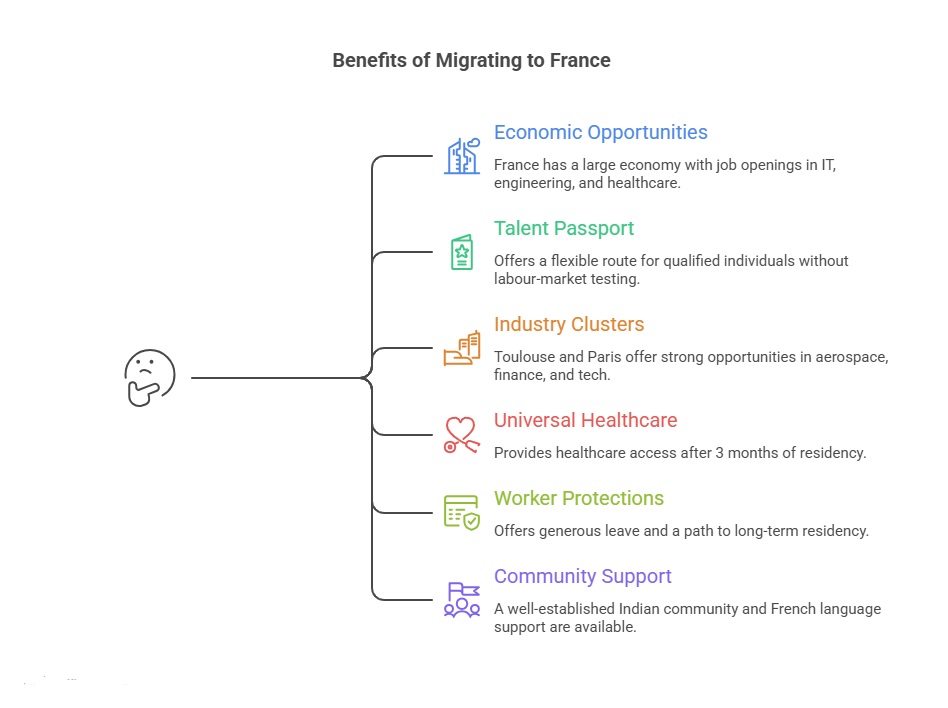
Here is why you should choose a life in France:
- One of Europe's largest economies, with over 500,000 IT job openings and a structural shortfall of engineering graduates.
- The Talent Passport offers a flexible route for qualified employees, researchers, investors, and business creators, without labour-market testing.
- Toulouse's aerospace cluster, built around Airbus and its suppliers, and Paris's finance and tech sectors offer strong opportunities for skilled professionals.
- Universal healthcare through PUMA (Protection Universelle Maladie) once you've been a resident for 3 months.
- Strong worker protections, generous statutory paid leave, and an established path to a 10-year residence card.
- A well-established Indian professional community across Paris and other major cities, alongside strong support for learning French.
*Want to work in France? Let Y-Axis assist you with the process.
Can I Move to France as an Indian Immigrant?
Most Indian nationals move to France through the Talent Passport (Passeport Talent), which covers qualified employees, researchers, investors, and business creators. Skilled employees below the Talent Passport threshold typically use the standard “salarié” work permit, while senior hires with EU-wide mobility plans can use the EU Blue Card.
Here is what you need to do to migrate to France:
Step 1: Get your qualifications assessed, if required, and confirm your eligibility for your chosen visa route
Step 2: Confirm your route, such as the Talent Passport (Qualified Employee), Talent Passport (EU Blue Card), or the standard “salarié” work permit
Step 3: Secure a job offer and an employment contract meeting the relevant salary threshold
Step 4: Apply for your long-stay visa (VLS-TS) online via France-Visas and pay the visa fee
Step 5: Complete your biometrics appointment at TLScontact India, which handles French visa applications from India
Step 6: Travel to France once your visa is approved, then validate it online within 3 months of arrival
Step 7: Register for PUMA (universal healthcare) and open a French bank account once you arrive
Also, read...
What are the most in-demand jobs in France for Indian professionals?
Best Visa Options to Live in France
France offers several routes depending on your qualifications, job offer status, and career stage. The table below shows the main options for skilled workers and their route to long-term residence.
| Visa Type | Best For | Duration | Long-Term Pathway |
|---|---|---|---|
| Talent Passport – Qualified Employee | Job offer + employment contract; EUR 39,582/year threshold (2026) | Up to 4 years | Carte de résident (10 years) generally after 5 years |
| Talent Passport – EU Blue Card | Senior hires with EU mobility plans; EUR 59,373/year threshold | Up to 4 years | Carte de résident generally after 5 years |
| Standard “Salarié” Work Permit | Job offer below Talent Passport thresholds | 1 year, renewable | Multi-year card after 1 year, then 10-year card after 5 years |
| Talent Passport – Business Creator / Investor | EUR 30,000+ investment or a viable business project | Up to 4 years | Carte de résident generally after 5 years |
Also, read...
Best Areas to Live in France
France's job market and living costs vary significantly by city. Choosing the right area can influence your career opportunities, cost of living, housing expenses, and overall quality of life.
The table below highlights the major French cities and their best qualities for settlement abroad:
| Area | Best For | Sightseeing | Average Rent | Job Market | How Much You Can Save |
|---|---|---|---|---|---|
| Paris | Finance, tech & luxury goods | Eiffel Tower, Louvre Museum | EUR 1,200-1,900/mo (1BR) | Strongest overall, highest salaries | Lower, given highest cost of living |
| Lyon | Biotech, tech & gastronomy | Basilica of Fourvière, Vieux Lyon | EUR 650-1,200/mo (1BR) | Strong, growing tech and biotech scene | Good savings potential |
| Toulouse | Aerospace & engineering | Capitole de Toulouse, Cité de l'Espace | EUR 600-1,000/mo (1BR) | Strong, France's aerospace hub (Airbus) | Good savings potential |
| Bordeaux | Wine industry, tech & finance | Place de la Bourse, Cité du Vin | EUR 680-1,150/mo (1BR) | Strong, growing tech scene | Good savings potential |
| Marseille | Logistics, shipping & tech | Old Port, Notre-Dame de la Garde | EUR 640-1,100/mo (1BR) | Strong, major Mediterranean port hub | Moderate savings potential |
Also, read...
France Plans to Welcome 30,000 Indian Students by 2030 – Modi-Macron Education Boost
Cost of Living in France
France's cost of living changes significantly by city. Paris costs the most by a wide margin, while cities like Lyon, Toulouse, and Bordeaux remain considerably more affordable.
Below is a breakdown of average monthly expenses for a single adult in a mid-sized French city (outside Paris):
| Factors | Avg. Expense |
| Rent (1BR apartment, city centre) | EUR 600-1,200/month |
| Utilities (electricity, heating, water) | EUR 100-160/month |
| Groceries | EUR 250-350/month |
| Public Transport | EUR 50-75/month for a monthly pass |
| Healthcare (PUMA + mutuelle) | Mutuelle approx. EUR 40-130/month; PUMA reimburses 70-80% of standard costs |
| Dining Out (per meal) | EUR 15-25 |
| Mobile & Internet | EUR 25-45/month |
| Entertainment & Leisure | EUR 100-200/month |
Also, read...
What are the Eligibility Requirements for a France Work Visa?
Is France Expensive Compared to Germany or the UK?
France is broadly comparable to Germany once you look outside Paris, and generally more affordable than the UK for equivalent housing outside London, while still offering strong salaries in finance, IT, and aerospace.
Salaries for skilled foreign professionals in France are proportionally strong against the local cost of living outside Paris, so many immigrants build meaningful savings, particularly in cities like Lyon, Toulouse, and Bordeaux.
Paris remains in a league of its own for cost, comparable to central London or Munich for rent. This makes France a strong choice for immigrants who want a flexible Talent Passport route to settlement, alongside a lower cost of living than Paris itself once you move to a smaller city.
Also, read...
Work in France
France's job market runs on aerospace and engineering, IT and software, finance and banking, and healthcare, supported by a large base of multinational employers and a fast-growing digital technology sector.
The table below shows some of the most in-demand jobs in France for immigrants.
| Occupation | Average Annual Salary | Demand Level | Average Savings |
| IT & Software Development | EUR 40,000-70,000 | Very High | EUR 6,000-12,000/year |
| Aerospace & Engineering | EUR 42,000-68,000 | Very High | EUR 7,000-13,000/year |
| Finance & Banking | EUR 45,000-85,000 | High | EUR 8,000-15,000/year |
| Healthcare (Nurses & Doctors) | EUR 30,000-70,000 | Very High | EUR 5,000-11,000/year |
| Luxury Goods & Fashion | EUR 35,000-60,000 | Moderate | EUR 5,000-9,000/year |
| Academia & Research | EUR 35,000-55,000 | Moderate | EUR 5,000-8,000/year |
Also, read...
France Eases EU Blue Card Rules for Skilled Workers. Check Your Eligibility!
Settling in France
Once you arrive in France, you need to register for healthcare, open a bank account, enrol children in school, and set up your day-to-day essentials.
Here is a quick overview of what to expect during your first weeks in the country:
| Housing | Healthcare | Education for Children | Banking & Financial Essentials |
| Search via SeLoger or Leboncoin; competitive rental market in Paris and Lyon | PUMA access granted after 3 months of residence; register with a “médecin traitant” (primary doctor) | Free public schools and international schools available in major cities | Open an account with BNP Paribas, Société Générale, or a digital bank like N26 or Boursorama |
| Landlords typically require a French guarantor (garant) and proof of income around 3x the rent | A mutuelle (supplementary insurance) is recommended to cover the 20-30% PUMA doesn't reimburse | Public school enrolment is managed by the local mairie (town hall); international schools have limited seats | Proof of address and a valid residence permit are usually required before opening an account |
| Allow several weeks to secure a rental in Paris, given demand and guarantor requirements | Register for PUMA and a médecin traitant within the first few weeks of arrival | Apply for school places as early as possible, especially for popular international schools | Basic accounts can typically be opened within a few days once documents are ready |
Also, read...
France Opens Visiteur Visa for Indians with No Language Test 2026. Apply Now!
Permanent Residence in France
Permanent residence in France, in the form of the carte de résident (10-year residence card), generally follows a 5-year timeline on most work routes, while the Talent Passport offers one of the more flexible routes for eligible professionals and their families.
Important 2026 update: From January 1, 2026, France requires B1-level French for the 10-year carte de résident (up from A2 previously) and B2-level French for citizenship by naturalisation. A mandatory civic exam, covering French history, values, and institutions, now also applies to first-time multi-year permits, the 10-year card, and naturalisation applications. Confirm the latest requirements at diplomatie.gouv.fr or service-public.fr before planning your timeline.
The table below shows the main routes and their approximate timelines:
| Main Immigration Routes | Approximate Timeline |
| Talent Passport Holder | Continuous employment and a contract meeting the salary threshold → carte de résident generally after 5 years |
| Standard Work Permit Holder | Continuous employment, with multi-year card renewal → carte de résident generally after 5 years |
| Carte de Résident (10-Year) | Habitual and continuous residence, B1-level French (from Jan 2026), civic exam → renewable 10-year card |
| French Citizenship | 5 years of residence (2 years if higher education was completed in France), B2-level French, civic exam → naturalisation via decree |
Dependent Benefits for Immigrants in France
France allows eligible visa holders to bring immediate family members, with strong work and study rights attached in most cases.
Here are the benefits of securing a France dependant visa:
- Spouses of Talent Passport holders receive a “Talent – Family” permit and can work in France without a separate work permit
- Dependent children can enrol in France's free public schools
- Family members get PUMA healthcare access once registered as residents
- EU Blue Card dependants also receive simplified family reunification rights
- Dependants generally follow the same route to the 10-year carte de résident as the main applicant, subject to their own continuous residence
*Want to apply for a France dependent visa? Let Y-Axis assist you with the steps.
Practical Settlement Checklist for Indians Moving to France
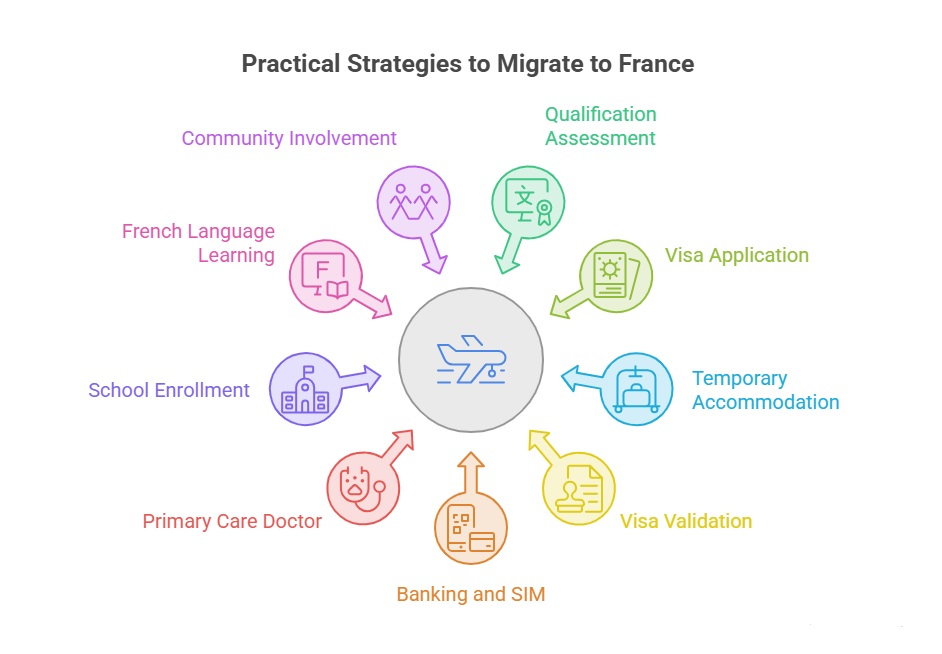
Moving to France involves a few key steps. Complete them in order to avoid delays.
Follow the steps below for a smooth move to France:
Step 1: Get your qualifications assessed before applying, if required
Step 2: Apply for your France long-stay visa online via France-Visas and complete biometrics at TLScontact India
Step 3: Book temporary accommodation for your first few weeks after arrival
Step 4: Validate your visa online (OFII) within 3 months of arrival and register for PUMA
Step 5: Open a French bank account and get a French mobile SIM
Step 6: Register with a “médecin traitant” (primary care doctor)
Step 7: Enrol children in school as early as possible
Step 8: Start learning French — B1 is required for the 10-year residence card from 2026
Step 9: Join local Indian community associations for support and networking
*Are you looking for step-by-step assistance with overseas immigration? Contact Y-Axis, the world's No. 1 overseas immigration consultancy!
FAQs
What is the easiest way for Indians to move to France?
Most Indians move through the Talent Passport (Passeport Talent), which covers qualified employees, researchers, investors, and business creators, or the standard “salarié” work permit for roles below the Talent Passport threshold. Both generally require a job offer and an employment contract meeting the relevant salary threshold.
What is the current Talent Passport salary threshold in France?
The Qualified Employee threshold for the Talent Passport is EUR 39,582 per year (2026 reference figure). The EU Blue Card variant requires a higher threshold of EUR 59,373 per year, aimed at senior hires with EU-wide mobility plans.
Can I move to France without a job offer?
Yes, through the Talent Passport's business creator or investor categories, which require a viable business project or an investment of at least EUR 30,000. Most other Talent Passport categories, including Qualified Employee and EU Blue Card, require a job offer and an employment contract.
Is healthcare free for immigrants in France?
France has a universal healthcare system called PUMA (Protection Universelle Maladie), which most residents can join after 3 months of legal residence. PUMA reimburses approximately 70-80% of standard medical costs, and most residents also pay for a mutuelle (supplementary insurance) to cover the remainder.
What is the average salary for skilled workers in France?
Salaries vary by sector and city. IT and aerospace professionals typically earn EUR 40,000-70,000/year, finance professionals earn EUR 45,000-85,000/year, and healthcare professionals earn EUR 30,000-70,000/year. Paris offers the highest salaries but also the highest cost of living.
Can I bring my family to France on a work visa?
Yes. Spouses of Talent Passport holders receive a “Talent – Family” permit and can generally work without a separate work permit, and dependent children can enrol in France's free public schools. Family members also get PUMA healthcare access once registered as residents.
Which city in France is best for Indian immigrants?
Paris offers the strongest job market and largest Indian community, though it comes with the highest cost of living. Toulouse suits aerospace and engineering professionals, Lyon offers strong tech and biotech opportunities at a lower cost, and Bordeaux suits professionals in wine, tech, and finance.
How much does it cost to live in France?
France's cost of living varies significantly by city. In Paris, a single person can expect to pay EUR 1,200-1,900 for a one-bedroom apartment, while cities like Lyon and Toulouse cost EUR 600-1,200 for similar housing. Utilities, groceries, and transport add several hundred euros a month on top.
Is France's language requirement for residency changing in 2026?
Yes. From January 1, 2026, France raised the French language requirement for the 10-year carte de résident from A2 to B1, and for citizenship by naturalisation from B1 to B2. A mandatory civic exam on French history, values, and institutions now also applies to these applications.
How can I get French citizenship?
French citizenship by naturalisation is generally possible after 5 years of habitual residence in France (reduced to 2 years if you completed higher education there), provided you meet B2-level French language requirements, pass the mandatory civic exam, and demonstrate stable income and good character.
Y-Axis snapshot
1M
Successful applicants
1500+
Experienced counselors
25Y+
Expertise
50+
Offices
Tags:
France immigration
France work visa
France permanent residency
Living in France
Cost of living in France
Best areas in France
Jobs in France for Indians
Healthcare in France
Housing in France
Settle in France
Share
Options for you by Y-Axis

Get it on your mobile

Get News alerts

Contact Y-Axis
Latest Article
Popular Post
Trending Article
Posted On September 28 2026
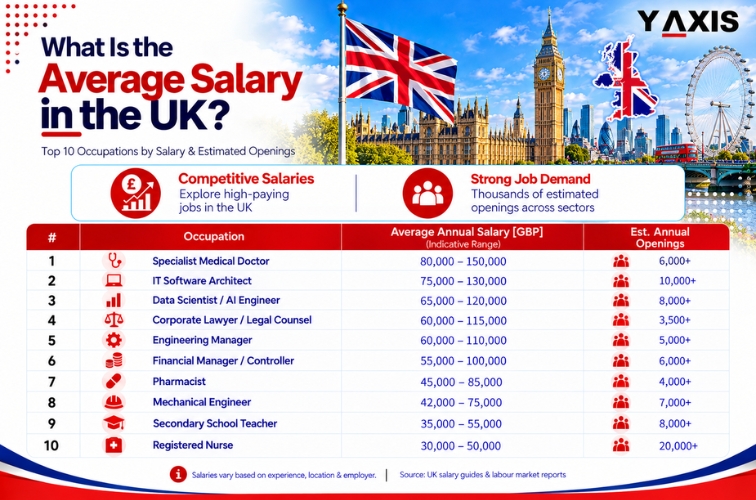
What Is the Average Salary in the UK?