

Posted on September 28 2026
What Is the Average Salary in the UK?

By , Editor & Director
Updated October 02 2026
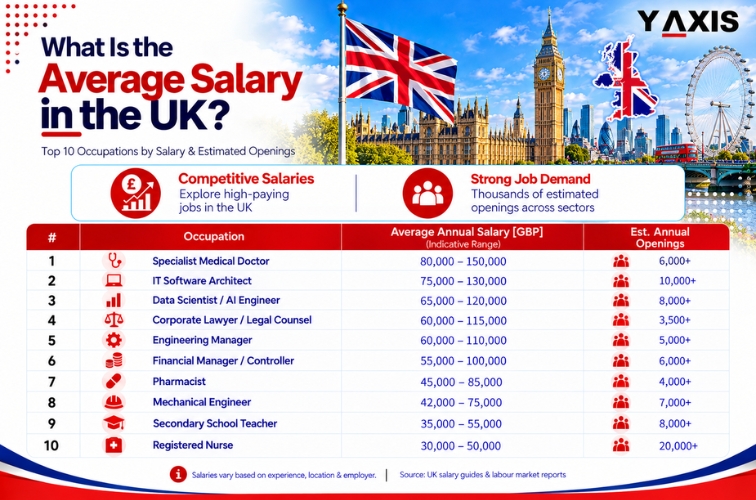
The average salary in the UK is about £39,039 (roughly ₹50 lakh) per year for full-time employees. It comes to about £3,253 (₹4.16 lakh approx.) per month, or £766.60 per week, before taxes are applied. Median hourly pay for full-time employees is £19.67, excluding overtime for many professionals in UK. Skilled professionals in medicine, law, finance, and IT often earn £60,000 to £150,000 or more per annum. The salary in the UK for foreign skilled workers will further vary based on aspects like region, city, and sector. London and the South East pay more than other regions, while cities such as Edinburgh, Cambridge, and Manchester also offer competitive salaries.
*Want to work in the UK? Let Y-Axis guide you through the process.
Top 10 Highest-Paying Occupations in the UK
UK job market mainly comprises sectors such as finance, IT, healthcare, law, and engineering. Salaries for professionals in the UK vary widely by sector and region. Many high-demand roles face ongoing skill shortages. This keeps pay competitive, especially in healthcare, IT, and engineering.
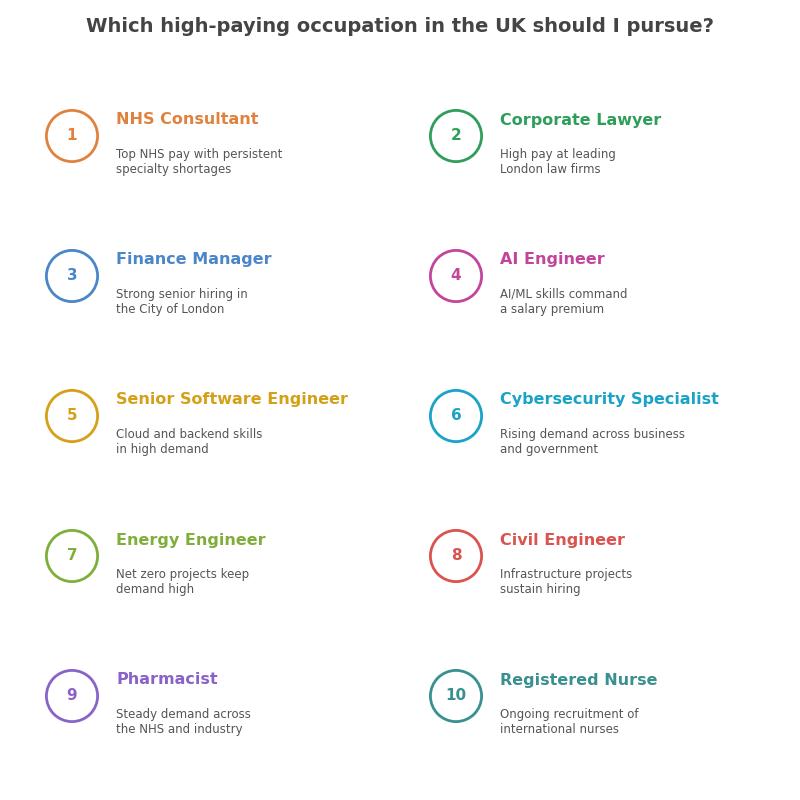
The table below highlights 10 occupations with strong salaries and steady hiring demand in the UK:
|
Occupation |
Average Annual Salary (GBP) |
Est. Annual Salary (INR) |
Demand Outlook |
|
NHS Consultant / Specialist Doctor |
£105,000-145,000+ |
₹1.34-1.86 crore+ |
NHS consultant pay rises with experience; shortages persist in many specialties |
|
Corporate Lawyer / Solicitor |
£65,000-150,000 |
₹83.2 lakh-1.92 crore+ |
Top London law firms pay solicitors well above the national median |
|
Investment Banker / Finance Manager |
£70,000-150,000 |
₹89.6 lakh-1.92 crore+ |
The City of London and Canary Wharf sustain steady senior hiring |
|
AI Engineer / Data Scientist |
£60,000-100,000 |
₹76.8 lakh-1.28 crore+ |
Strong demand across finance, technology, and the public sector; AI/ML skills command a premium |
|
Senior Software Engineer |
£60,000-95,000 |
₹76.8 lakh-1.22 crore+ |
Cloud, backend, and automation skills drive hiring in London, Manchester, and Edinburgh |
|
IT Security / Cybersecurity Specialist |
£55,000-90,000 |
₹70.4 lakh-1.15 crore+ |
Rising demand as businesses and government bodies strengthen digital security |
|
Electrical / Energy Engineer |
£45,000-75,000 |
₹57.6-96 lakh+ |
Net zero, grid upgrade, and renewable energy projects keep demand high |
|
Civil / Structural Engineer |
£40,000-65,000 |
₹51.2-83.2 lakh+ |
Infrastructure, transport, and housing projects sustain steady hiring |
|
Pharmacist |
£40,000-60,000 |
₹51.2-76.8 lakh+ |
Steady demand across the NHS, community pharmacies, and the pharma industry |
|
Registered Nurse |
£31,000-47,000 |
₹39.7-60.2 lakh+ |
NHS Band 5 and Band 6 roles with ongoing recruitment of international nurses |
Also, read...
Highest Paying Job Opportunities in UK
Average Lifestyle Expenses in the UK
The UK offers strong salaries, but living costs vary widely by city. Housing is the largest expense, followed by council tax, groceries, utilities, and transport. Knowing these costs in advance helps you judge whether a salary offer in the UK is truly competitive.
- Rent (1-bed apartment, city centre, London): £1,900-2,800 per month
- Rent (1-bed apartment, other major cities, e.g. Manchester, Birmingham): £950-1,400 per month
- Groceries (single person): £200-300 per month
- Utilities (energy and water, 1-2 bed flat): £130-220 per month
- Council tax (varies by council and property band): £100-200 per month
- Public transport (London Zones 1-2 monthly Travelcard): £170-185 per month
- Mobile and broadband plan: £35-60 per month combined
- TV licence (per household): about £15 per month
- Dining out (mid-range meal for two): £50-80
- Overall monthly budget, single person, excluding rent: £850-1,250
- Overall monthly budget, single person, including rent (comfortable baseline, London): £2,900-3,800
Note: Many professionals reduce costs by living in commuter towns, such as Reading or Watford near London. Cities such as Manchester, Leeds, Birmingham, and Glasgow also offer competitive salaries with much lower rent and daily costs.
Also, read...
How to Get Permanent Residency (ILR) in the UK?
Salary Structure and Take-Home Pay in the UK
The UK applies a progressive income tax, which employers deduct monthly through the PAYE (Pay As You Earn) system. In England, Wales, and Northern Ireland, the first £12,570 of income each year is tax-free. This is called the Personal Allowance. The basic rate of 20% applies to income from £12,571 to £50,270. The higher rate of 40% applies from £50,271 to £125,140. The additional rate of 45% applies above £125,140. The Personal Allowance falls by £1 for every £2 earned above £100,000. Scotland sets its own income tax rates, which range from 19% to 48%. On top of income tax, employees pay National Insurance (NI) contributions. The rate is 8% on earnings between £12,570 and £50,270 a year, and 2% above that. Most employees are also auto-enrolled into a workplace pension, with a minimum employee contribution of 5% of qualifying earnings.
The table below shows illustrative gross monthly salary and approximate take-home pay for a single employee in England, Wales, or Northern Ireland, on the standard tax code, with no pension contributions or student loan. Figures are indicative only; actual take-home pay depends on your tax code, pension contributions, student loan, and personal situation:
|
Gross Monthly Salary |
Mandatory Deductions (Income Tax + National Insurance) |
Approx. Take-Home Pay |
|
£2,500 (~£30,000/year) |
~£407 (~16%) |
~£2,093 (~84%) |
|
£3,253 (~£39,039/year, UK median) |
~£618 (~19%) |
~£2,636 (~81%) |
|
£4,167 (~£50,000/year) |
~£873 (~21%) |
~£3,293 (~79%) |
|
£5,833 (~£70,000/year) |
~£1,570 (~27%) |
~£4,263 (~73%) |
|
£8,333 (~£100,000/year) |
~£2,620 (~31%) |
~£5,713 (~69%) |
Also, read...
What are the eligibility requirements for a UK work visa?
How the UK's Average Salary Compares to Other Countries
The UK pays more than many European countries. Its median full-time salary is about £39,000 a year (roughly €45,000). This is lower than Germany's median full-time salary of about €54,000. Ireland, the Netherlands, and Switzerland also generally pay more. France, Spain, Italy, and Portugal generally pay less for similar roles. The USA pays more in many professions, but healthcare and living costs there can also be higher. When comparing job offers, look at net income after tax, rent, and living costs. This gives a more realistic view of how far your income will go.
The UK is especially attractive for professionals in finance, IT, healthcare, law, and engineering. London is one of the world's leading financial centres. English is the working language, which makes it easier for Indian professionals to settle and grow their careers. Salaries can also vary significantly by region, city, experience, qualifications, and industry.
*Are you looking for step-by-step assistance with UK immigration? Contact Y-Axis, the world's No. 1 overseas immigration consultancy, for end-to-end assistance!
FAQs
What is the average salary in the UK?
The average (median) gross salary for full-time employees in the UK is £39,039 per year. This covers employees who have been in the same job for at least a year. It works out to about £3,253 per month, or £766.60 per week. These figures come from the Office for National Statistics (ONS) Annual Survey of Hours and Earnings. The mean salary is higher, as a small group of high earners in finance, law, and senior management pulls it upward.
What is the difference between average and median salary in the UK?
The mean salary adds up all earnings and divides the total by the number of workers. A small group of very high earners pulls this figure upward. The median is the middle value, so half of all workers earn more and half earn less. The ONS uses the median as its headline measure because it gives a more realistic picture of typical pay. The UK median for full-time employees is £39,039 per year.
Which jobs pay the highest salaries in the UK?
The highest-paying roles in the UK include NHS consultants, corporate lawyers, investment bankers, and finance managers. These professionals often earn £65,000 to £150,000 or more per year. AI engineers, senior software engineers, and cybersecurity specialists also earn well above the national median. Pay is highest in London and the South East, which host major finance, legal, and technology employers.
Is there a minimum wage in the UK?
Yes. The UK has a statutory National Living Wage of £12.71 gross per hour for workers aged 21 and over. Workers aged 18 to 20 receive at least £10.85 per hour. Workers aged 16 to 17 and apprentices receive at least £8.00 per hour. A full-time employee working 37.5 hours a week earns about £2,065 gross per month at the National Living Wage. The rates are reviewed every April.
How much tax do I pay on my salary in the UK?
The UK levies a progressive income tax, which employers deduct monthly through PAYE. In England, Wales, and Northern Ireland, the first £12,570 of income is tax-free. Rates then rise from 20% to 40%, and a top rate of 45% applies above £125,140. Scotland has its own rates, from 19% to 48%. Employees also pay National Insurance at 8% on earnings between £12,570 and £50,270, and 2% above that.
Is the average salary in the UK enough to live comfortably?
Yes, for most single people outside London. The median full-time salary leaves about £2,636 per month after income tax and National Insurance. This covers rent, bills, groceries, transport, and some savings in cities such as Manchester, Leeds, or Glasgow. In London, rent takes a much larger share of income. Choosing shared accommodation or a commuter town helps an average salary go considerably further.
Do foreign workers earn the same as local workers in the UK?
Yes. UK law requires equal pay for equal work, regardless of nationality. For the Skilled Worker visa, employers must pay at least £41,700 per year or the going rate for the occupation, whichever is higher. This means sponsored foreign professionals often earn above the national median. Pay still depends on qualifications, experience, the employer, and the city.
What is a good salary in the UK for a single person?
A good salary for a single person in London is about £45,000 or more gross per year. This covers rent, living costs, and regular savings. In other cities, such as Manchester, Birmingham, or Leeds, £32,000 to £35,000 or more per year is a realistic threshold, as rent and daily costs are lower. A gross salary above £60,000 per year places you well above the national median.
How does the UK's average salary compare to other countries?
The UK pays more than many European countries. Its median full-time salary of about £39,000 (roughly €45,000) is lower than Germany's median of about €54,000. Ireland, the Netherlands, and Switzerland also generally pay more. France, Spain, Italy, and Portugal generally pay less for similar roles. Comparing net income after tax and rent gives the most accurate picture.
What salary do I need for a UK Skilled Worker visa?
Most Skilled Worker visa applicants must be paid at least £41,700 per year, or the going rate for their occupation, whichever is higher. Lower salary thresholds apply to some applicants, such as new entrants to the labour market and certain PhD holders. The job must also be at an eligible skill level with a licensed sponsor. Salary rules are updated regularly, so always check the latest GOV.UK guidance.
What is the standard working week in the UK?
Most full-time employees in the UK work 35 to 40 hours per week over five days. The Working Time Regulations limit average working time to 48 hours per week, unless the employee chooses to opt out. Full-time workers are entitled to 5.6 weeks of paid holiday a year, which equals 28 days on a five-day week. Employers can include the eight bank holidays in this total.
Do UK employers pay a 13th month salary or bonus?
A 13th month salary is not common in the UK and is not required by law. Salaries are usually paid in 12 equal monthly instalments. Many employers pay performance-based bonuses, especially in finance, law, and sales. Always check whether a quoted salary includes a bonus, overtime, or allowances such as London weighting, or is simply the base pay.
Why do salaries vary so much between UK regions?
Salaries vary by region mainly due to industry concentration and cost of living. London and the South East offer the highest pay. These regions host major finance, legal, technology, and consulting employers. Regions such as the North East, Wales, and Northern Ireland generally report lower wages. Rent and living costs in these regions are also lower, so the gap in spending power is smaller.
Is healthcare included in my UK salary?
Healthcare in the UK is provided by the National Health Service (NHS), funded through general taxation. Visa applicants usually pay the Immigration Health Surcharge of £1,035 per year upfront to access the NHS. This is not deducted from your salary. Some employers offer private medical insurance as an extra benefit, so check your job offer for health cover and whether the employer reimburses the surcharge.
What work visas can Indian professionals use to work in the UK?
Indian professionals can work in the UK through several routes. The Skilled Worker visa suits candidates with a job offer from a licensed sponsor. The Health and Care Worker visa covers eligible healthcare roles. The Global Talent visa suits leaders in fields such as research, digital technology, and the arts. The India Young Professionals Scheme lets eligible Indian nationals aged 18 to 30 live and work in the UK for up to two years.
How much does a software engineer earn in the UK?
A software engineer in the UK typically earns £40,000 to £65,000 per year. Senior software engineers often earn £60,000 to £95,000 or more. Pay depends on experience, technical skills, employer size, and city. London, Manchester, Edinburgh, and Cambridge offer the strongest demand. Cloud, AI, and cybersecurity skills often command an additional salary premium.
What are the mandatory deductions from a UK salary?
UK employees see three main deductions on their payslip. Income tax is deducted through PAYE at 20%, 40%, or 45%, depending on income. National Insurance is 8% on earnings between £12,570 and £50,270, and 2% above that. Workplace pension contributions are usually at least 5% of qualifying earnings, with the employer adding at least 3%. Student loan repayments may also apply if you studied in the UK.
Which UK city offers the best salary-to-cost-of-living ratio?
Manchester, Leeds, Birmingham, and Glasgow offer a strong salary-to-cost-of-living ratio. They combine good pay in finance, technology, and professional services with much lower rent than London. Edinburgh and Cambridge offer higher salaries, but housing costs there are also higher. London pays the most in absolute terms but also has the highest rents in the country.
Do salaries in the UK increase with experience?
Yes. Salaries in the UK rise steadily with experience, especially in finance, IT, law, and engineering. ONS data shows that median pay is highest for full-time employees aged 40 to 49. Senior specialists and managers can earn two to three times more than entry-level staff in the same field. Professional qualifications, such as chartered status or a master's degree, can also add a salary premium.
What should I check before negotiating a UK job offer?
Before negotiating a UK job offer, research salary data for your role, city, and experience level. Confirm whether the quoted figure is gross or net, and whether it includes a bonus or London weighting. Check the employer's pension contribution and other benefits. If you need a visa, confirm that the employer is a licensed sponsor. Finally, compare your net pay with rent and living costs in your city.
Tags:
average salary in the UK
UK salary guide
cost of living in the UK
UK income tax
highest paying jobs in the UK
work in the UK
UK job market
take-home pay UK
Share
Options for you by Y-Axis

Get it on your mobile

Get News alerts

Contact Y-Axis
Latest Article
Popular Post
Trending Article
Posted On October 01 2026
The Borderless Indian