

Posted on October 08 2026
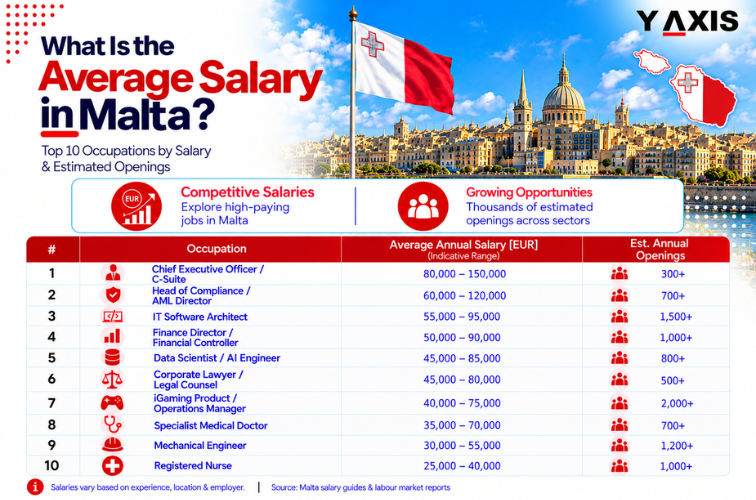
What Is the Average Salary in Malta?

By , Editor & Director
Updated October 08 2026
The average salary in Malta is about €27,240 (roughly ₹30 lakh) per year. This equals an average basic salary of €2,270 (₹2.5 lakh approx.) gross per month for all employees. Basic salary does not include overtime, allowances, or bonuses, so actual pay is often higher upon such inclusions. Managers earn an average of €3,628 per month, while workers in elementary occupations earn €1,410. Financial and insurance services pay the most, at an average of €3,105 per month. Skilled professionals in iGaming, finance, IT, and healthcare often earn €45,000 to €100,000 or more per year.
*Want to work in Malta? Let Y-Axis guide you through the process.
Top 10 Highest-Paying Occupations in Malta
Malta job market mainly comprises sectors such as financial services, iGaming, IT, healthcare, and tourism. Salaries vary widely by sector and experience. Many skilled roles face ongoing talent shortages. This keeps pay competitive, especially in iGaming, finance, and technology.
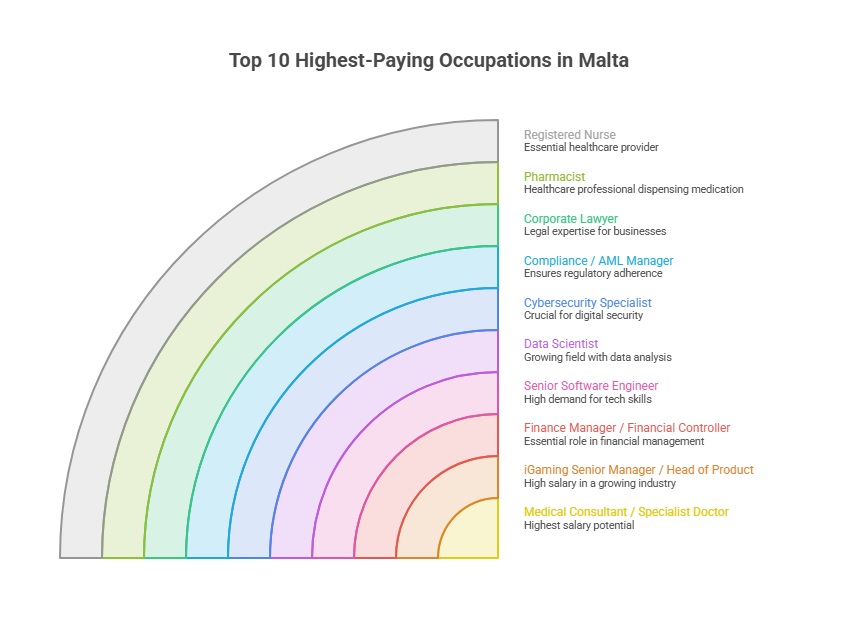
The table below highlights 10 occupations with strong salaries and steady hiring demand in Malta:
|
Occupation |
Average Annual Salary (EUR) |
Est. Annual Salary (INR) |
Demand Outlook |
|
Medical Consultant / Specialist Doctor |
€70,000-120,000 |
₹77 lakh-1.32 crore |
Steady demand in public hospitals and the growing private healthcare sector |
|
iGaming Senior Manager / Head of Product |
€70,000-110,000 |
₹77 lakh-1.21 crore |
Malta remains a leading hub for licensed online gaming companies |
|
Finance Manager / Financial Controller |
€55,000-90,000 |
₹60.5-99 lakh |
Strong hiring in banking, funds, insurance, and corporate finance |
|
Senior Software Engineer |
€50,000-80,000 |
₹55-88 lakh |
High demand across iGaming, fintech, and software firms |
|
Data Scientist |
€45,000-75,000 |
₹49.5-82.5 lakh |
Growing demand in iGaming, finance, and analytics teams |
|
Cybersecurity Specialist |
€45,000-75,000 |
₹49.5-82.5 lakh |
Rising demand as financial and gaming firms strengthen security |
|
Compliance / AML Manager |
€45,000-75,000 |
₹49.5-82.5 lakh |
Strict regulation in finance and gaming keeps compliance roles in demand |
|
Corporate Lawyer |
€45,000-85,000 |
₹49.5-93.5 lakh |
Steady demand in financial services, gaming, and corporate law firms |
|
Pharmacist |
€35,000-50,000 |
₹38.5-55 lakh |
Steady demand across community pharmacies, hospitals, and pharma companies |
|
Registered Nurse |
€25,000-38,000 |
₹27.5-41.8 lakh |
Hospitals and care homes continue to recruit nurses from abroad |
Also, read...
Highest Paying Job Opportunities in Malta
Average Lifestyle Expenses in Malta
Malta offers good salaries in skilled sectors, but living costs vary by area. Rent is the largest expense, especially in Sliema, St Julian's, and Gżira. Knowing these costs in advance helps you judge whether a salary offer in Malta is truly competitive.
- Rent (1-bed apartment, Sliema or St Julian's): €1,000-1,400 per month
- Rent (1-bed apartment, other areas, e.g. Birkirkara, Mosta): €700-950 per month
- Groceries (single person): €250-350 per month
- Utilities (electricity and water, 1-2 bed flat): €70-130 per month
- Private health insurance (optional): €40-100 per month
- Public transport (buses): Free for residents with a personalised Tallinja card
- Mobile and broadband plan: €30-50 per month combined
- Gym membership: €35-60 per month
- Dining out (mid-range meal for two): €50-80
- Overall monthly budget, single person, excluding rent: €700-1,000
- Overall monthly budget, single person, including rent (comfortable baseline, Sliema or St Julian's): €1,800-2,400
Note: Many professionals reduce costs by living in towns such as Birkirkara, Msida, Mosta, or on the island of Gozo. These areas offer much lower rent while staying within easy reach of major employers.
Also, read...
Life in Malta for Immigrants: Jobs, Housing, Healthcare & PR
Salary Structure and Take-Home Pay in Malta
Malta deducts two main amounts from your salary. The first is social security, at 10% of your basic weekly wage, up to a cap of €55.93 per week. It funds pensions, public healthcare, and other benefits. Income tax is then withheld monthly by the employer through the Final Settlement System (FSS). For single taxpayers, income up to €12,000 a year is tax-free. The rate of 15% applies from €12,001 to €16,000. The rate of 25% applies from €16,001 to €60,000. The top rate of 35% applies above €60,000. Married couples and parents pay less, as their tax-free bands start higher, at €15,000 and €13,000. Employees also receive statutory bonuses of about €512 a year, paid in March, June, September, and December.
The table below shows illustrative gross monthly salary and approximate take-home pay for a single employee using the single tax rates. Figures are indicative only; actual take-home pay depends on your tax status, bonuses, and other income:
|
Gross Monthly Salary |
Mandatory Deductions (Social Security + Income Tax) |
Approx. Take-Home Pay |
|
€1,500 (~€18,000/year) |
~€242 (~16%) |
~€1,258 (~84%) |
|
€2,270 (~€27,240/year, Malta average) |
~€511 (~23%) |
~€1,759 (~77%) |
|
€3,000 (~€36,000/year) |
~€709 (~24%) |
~€2,291 (~76%) |
|
€4,500 (~€54,000/year) |
~€1,084 (~24%) |
~€3,416 (~76%) |
|
€6,000 (~€72,000/year) |
~€1,559 (~26%) |
~€4,441 (~74%) |
Also, read...
What are the Eligibility Requirements for a Malta Work Visa?
How Malta's Average Salary Compares to Other Countries
Malta's average basic salary is about €27,240 a year. This is similar to Spain and higher than Portugal and Greece. It is lower than France, where the average full-time salary is about €43,200 a year. Germany, the Netherlands, and Ireland also generally pay more. However, Malta's tax rates are moderate, and social security is capped for higher earners. When comparing job offers, assess the net income after tax, rent, and living costs. This gives a more realistic view of how far your income will go.
Malta is especially attractive for professionals in iGaming, financial services, IT, and healthcare. English is an official language, which makes it easy for Indian professionals to settle and work. Malta is an EU member with a low unemployment rate of about 3.5%. Salaries can vary significantly by sector, experience, qualifications, and employer.
*Are you looking for step-by-step assistance with Malta immigration? Contact Y-Axis, the world's No. 1 overseas immigration consultancy, for end-to-end assistance!
FAQs
What is the average salary in Malta?
The average monthly basic salary for all employees in Malta is about €2,270, or roughly €27,240 per year. This figure comes from the Labour Force Survey of the National Statistics Office (NSO). Basic salary is measured before tax and social security. It does not include overtime, allowances, or bonuses, so many employees take home more than the basic figure suggests.
What is the difference between basic salary and total pay in Malta?
Basic salary is the fixed contractual wage paid for normal working hours. Total pay also includes overtime, allowances, commissions, performance bonuses, and statutory bonuses. Official NSO averages use basic salary only. When you compare a job offer with national averages, separate the basic salary from bonuses and allowances. This gives you a fair and accurate comparison.
Which jobs pay the highest salaries in Malta?
The highest-paying roles in Malta include medical consultants, senior iGaming managers, finance managers, and senior software engineers. These professionals often earn €50,000 to €110,000 or more per year. Data scientists, cybersecurity specialists, and compliance managers also earn well above the national average. By sector, financial and insurance activities pay the highest average basic salary, at about €3,105 per month.
Is there a minimum wage in Malta?
Yes. Malta's national minimum wage for full-time employees aged 18 and over is €229.44 per week. This equals about €994 per month, or about €11,931 per year. Lower rates apply to workers under 18. The minimum wage is revised every January. Some sectors set higher minimum rates through Wage Regulation Orders, which employers must follow.
How much tax do I pay on my salary in Malta?
Malta first deducts social security at 10% of your basic weekly wage, up to €55.93 per week. Income tax is then withheld monthly through the Final Settlement System. For single taxpayers, income up to €12,000 is tax-free. Rates then rise to 15% and 25%, and a top rate of 35% applies above €60,000. Married couples and parents pay less.
Is the average salary in Malta enough to live comfortably?
Yes, for most single people who choose their area carefully. The average salary leaves about €1,759 per month after social security and income tax. This covers rent, bills, groceries, and some savings in towns such as Birkirkara or Mosta. In Sliema and St Julian's, rent takes a much larger share. Shared housing helps an average salary go further.
Do foreign workers earn the same as local workers in Malta?
Yes. Maltese law requires equal treatment at work, regardless of nationality. Foreign workers must receive at least the national minimum wage and any higher rates set for their sector. Indian professionals in skilled roles, such as IT, finance, and iGaming, often earn above the national average. Their pay depends on experience, qualifications, and the employer.
What is a good salary in Malta for a single person?
A good salary for a single person in Malta is about €30,000 or more gross per year. This covers rent outside the main business areas, living costs, and regular savings. If you want to live in Sliema or St Julian's, €35,000 or more is a more realistic target. A gross salary above €50,000 per year places you well above the national average.
How does Malta's average salary compare to other countries?
Malta's average basic salary of about €27,240 a year is similar to Spain and higher than Portugal and Greece. It is lower than France, Germany, the Netherlands, and Ireland. However, Malta's tax rates are moderate, and social security is capped for higher earners. Comparing net income after tax and rent gives the most accurate picture of your spending power.
What do I need to get a work permit in Malta?
Indian nationals usually need a Single Permit, which combines a work and residence permit. You need a job offer from a Maltese employer, who applies for the permit through Identità. Highly skilled professionals may use the Key Employee Initiative for faster processing. Third-country nationals must also complete certain courses and certifications, including English proficiency, before and after they relocate.
What is the standard working week in Malta?
The standard full-time working week in Malta is 40 hours. Average working time must not exceed 48 hours a week, including overtime, unless the employee agrees otherwise. Overtime is usually paid at one and a half times the normal hourly rate. Full-time employees on a 40-hour week receive 216 hours of paid annual leave, plus public holidays.
Do Maltese employers pay bonuses?
Yes. All employees in Malta receive statutory bonuses and allowances by law. These are two bonuses of €135.10, paid in June and December, and two weekly allowances of €121.16, paid in March and September. Together, they add up to about €512 a year. Many employers also pay performance bonuses, especially in iGaming, finance, and technology.
Which sector pays the most in Malta?
Financial and insurance activities pay the highest average basic salary in Malta, at about €3,105 per month. This sector includes banking, insurance, investment funds, and payment services. iGaming and information technology also pay well, especially for experienced professionals. Hospitality, retail, and elementary occupations pay less, with elementary roles averaging about €1,410 per month.
Is healthcare included in my Maltese salary?
Yes, in part. Your social security contributions give you access to Malta's public healthcare system. This covers hospital care, doctor visits at health centres, and many treatments. Many employers in iGaming, finance, and technology also offer private health insurance as an extra benefit. Check your job offer to see whether private cover is included for you and your family.
What work visas can Indian professionals use to work in Malta?
Indian professionals can work in Malta through several routes. The Single Permit is the main work and residence permit for employees with a Maltese job offer. The Key Employee Initiative offers faster processing for highly skilled roles. The EU Blue Card suits highly qualified professionals with higher salaries. The Nomad Residence Permit allows remote work for employers outside Malta.
How much does a software engineer earn in Malta?
A software engineer in Malta typically earns €35,000 to €55,000 gross per year. Senior software engineers often earn €50,000 to €80,000 or more. Pay depends on experience, technical skills, and the employer. iGaming and fintech companies usually offer the highest salaries, along with benefits such as bonuses, private health insurance, and flexible working.
What are the mandatory deductions from a Maltese salary?
Maltese employees see two main deductions on their payslip. Social security contributions are 10% of the basic weekly wage, up to a cap of €55.93 per week. Income tax is withheld monthly through the Final Settlement System, based on your tax status. Together, these usually reduce gross pay by about 16% to 26%, depending on your salary.
Which areas in Malta offer the best salary-to-cost-of-living balance?
Towns such as Birkirkara, Msida, Mosta, and Qormi offer a good balance of rent and access to jobs. They are close to major business areas but have lower rent than Sliema and St Julian's. The island of Gozo offers even lower living costs. Free public buses for residents also help professionals save money on daily travel.
Do salaries in Malta increase with experience?
Yes. Salaries in Malta rise steadily with experience, especially in technical and management roles. Managers earn an average basic salary of about €3,628 per month, compared with about €2,270 across all employees. Average basic salaries have also grown by about 9% to 10% over the past year. Moving into senior or specialist roles brings the largest pay rises.
What should I check before negotiating a Maltese job offer?
Before negotiating a job offer in Malta, research salary data for your role and sector. Check whether the salary quoted is basic pay or a full package. Review bonuses, statutory allowances, private health insurance, and relocation support. Also check your working hours, annual leave, probation period, and whether the employer will apply for your Single Permit.
Tags:
Average salary in Malta
Malta salary guide
cost of living in Malta
Malta income tax
highest paying jobs in Malta
work in Malta
Malta job market
take-home pay Malta
Share
Options for you by Y-Axis

Get it on your mobile

Get News alerts

Contact Y-Axis
Latest Article
Popular Post
Trending Article

Posted On October 08 2026
The Things Indians Abroad Export That Never Appear on a Customs Form