

Posted on July 22 2026
Life in Malta for Immigrants: Jobs, Housing, Healthcare & PR

By , Editor & Director
Updated July 25 2026
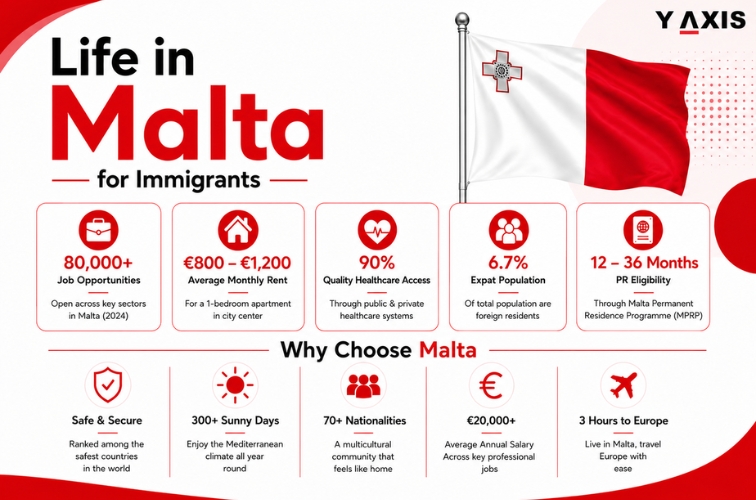
Life for immigrants in Malta is shaped by a compact island lifestyle, an economy built on foreign talent, and full access to the EU and Schengen Area. Malta faces persistent labour shortages, and foreign nationals already make up over 31% of the population. Sliema and St Julian's offer the strongest job market in iGaming, finance, and IT, while Valletta, Gzira, and Gozo offer lower costs of living with growing demand in hospitality, construction, and tourism. Malta suits immigrants who want EU residency, an English-speaking environment, and a realistic path toward long-term settlement.
Quick Facts About Malta
|
Population |
Approximately 580,000 |
|
Capital |
Valletta |
|
Official Language |
Maltese and English (English widely used in business) |
|
Currency |
Euro (EUR) |
|
Popular Immigrant Hubs |
Sliema, St Julian's, Gzira, Valletta, Birkirkara, Victoria (Gozo) |
|
Economy |
Over 9,700 job vacancies; strong in iGaming, financial services, tourism, IT, and construction |
|
Typical Route to Long Stay |
Employer-sponsored Single Permit, a combined work and residence permit valid for 1 year, renewable |
|
Permanent Residence |
EU long-term resident status after 5 years of continuous legal residence; citizenship by naturalisation after 5 years, with a further character and integration review |
*Want to settle in Malta? Sign up with Y-Axis for end-to-end assistance.
Why Choose Malta?
Malta relies heavily on foreign workers to run its economy. Foreign nationals now make up over 31% of Malta's population. The country offers steady demand in iGaming, financial services, tourism, and IT, plus one of the fastest work permit routes in the EU.
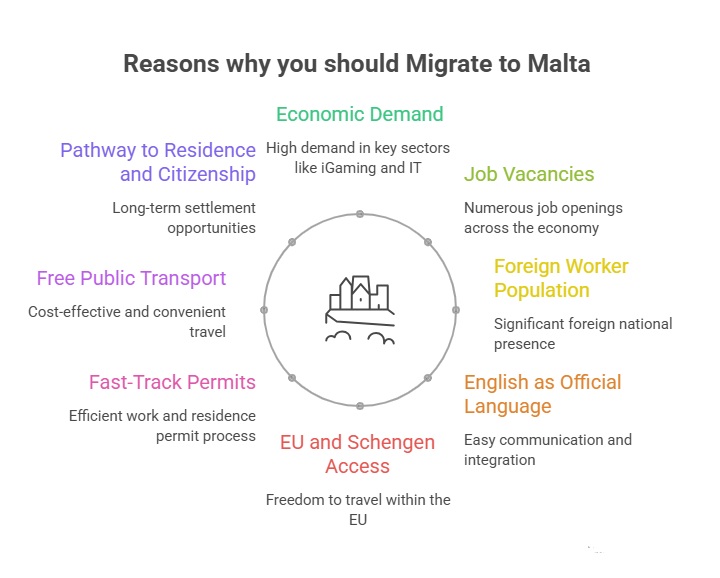
Here is why you should choose a life in Malta:
- Over 9,700 job vacancies across the economy, with a job vacancy rate among the highest in the EU
- Foreign nationals already make up more than 31% of Malta's population, so employers are used to hiring abroad
- English is an official language, used in business, government, and daily life
- Full EU and Schengen Area access once you hold a valid Maltese residence permit
- A fast-track Key Employee Initiative that can issue a work and residence permit within 5 to 10 working days
- Free public transport for all residents holding a personalised Tallinja Card
- A clear pathway to EU long-term residence and eventual citizenship through ordinary residence
*Want to work in Malta? Let Y-Axis assist you with the process.
Can I Move to Malta as an Indian Immigrant?
Most Indian nationals move to Malta through employer-sponsored work permits, investment, or family routes. You must meet the requirements set by Identità, Malta's immigration authority, including a valid job offer and proof of relevant qualifications.
Here is what you need to do to migrate to Malta:
- Secure a valid job offer or signed employment contract from a Malta-based employer
- Your employer must submit a Single Permit application through Identità
- Complete the mandatory pre-departure Skills Pass course before your first application
- Hold recognised qualifications or relevant work experience for the position
- Apply for your visa at a Maltese consulate or visa centre in India before travelling
- Hold a valid passport, health insurance covering at least EUR 30,000, and a clean police clearance certificate
- Explore family reunification for your spouse and children once your permit is granted
Best Visa Options to Live in Malta
Malta offers several permits based on your job, investment, or personal circumstances. The table below shows the main visa options for skilled workers and their route to long-term residence.
|
Visa Type |
Best For |
Duration |
Long-Term Pathway |
|
Single Permit |
Skilled and semi-skilled workers with a confirmed Malta employer job offer |
1 year (renewable, up to 2 years after the integration programme) |
Counts toward the 5-year EU long-term residence and citizenship eligibility |
|
Key Employee Initiative (KEI) |
Managerial or highly technical roles earning at least EUR 45,000/year |
1 year (renewable), issued in 5-10 working days |
Counts toward the same residence and citizenship milestones |
|
EU Blue Card |
Highly skilled professionals earning above approximately EUR 38,628/year |
Typically 2 years (renewable) |
Faster route toward long-term EU residence, with strong intra-EU mobility |
|
Nomad Residence Permit |
Remote workers and freelancers earning at least EUR 42,000/year from foreign sources |
1 year (renewable up to 3 years total) |
Does not lead directly to permanent residence |
|
Malta Permanent Residence Programme (MPRP) |
Investors with assets from EUR 500,000, including qualifying property |
Lifelong (residence card renewed every 5 years) |
Immediate permanent residence; does not automatically convert to citizenship |
|
Startup Residence Programme |
Founders and key staff of approved Malta startups |
3 years (renewable up to 5 more years) |
Does not lead directly to permanent residence or citizenship |
Also, read...
Best Areas to Live in Malta
Malta's job market and living conditions vary across its towns, even though the island is small. Choosing the right area can influence your career opportunities, cost of living, housing expenses, and overall quality of life.
The table below highlights the major Maltese areas and their best qualities for settlement abroad:
|
Area |
Best For |
Sightseeing Attractions |
Average Rent |
Job Market |
How Much You Can Save |
|
Sliema |
Finance, iGaming & corporate HQs |
Seafront promenade, Tigné Point, ferry to Valletta |
EUR 1,200-1,800/mo (1BR) |
Strongest, dense expat hub |
Moderate, higher cost of living |
|
St Julian's |
iGaming, hospitality & nightlife |
Spinola Bay, Portomaso Marina |
EUR 1,300-2,000/mo (1BR) |
Very strong, iGaming HQ cluster |
Moderate |
|
Valletta |
Government, culture & professional services |
St John's Co-Cathedral, Upper Barrakka Gardens |
EUR 900-1,500/mo (1BR) |
Strong, capital administrative hub |
Moderate |
|
Gzira/Msida |
IT, remote work & budget-conscious professionals |
Manoel Island, Msida Marina |
EUR 800-1,200/mo (1BR) |
Growing, close to Sliema jobs |
Good savings potential |
|
Birkirkara/Mosta |
Families, healthcare & education |
Mosta Rotunda, Ta' Qali Park |
EUR 700-1,100/mo (1BR) |
Steady, local business hub |
Good savings potential |
|
Victoria (Gozo) |
Tourism, agri-tech & slower-paced remote work |
The Citadel, Ġgantija Temples |
EUR 600-1,000/mo (1BR) |
Growing, seasonal tourism |
Very good savings potential |
Also, read...
Highest Paying Jobs in Malta for Indians
Cost of Living in Malta
Malta's cost of living changes by area. Sliema and St Julian's cost the most, but Malta overall still costs less than most major Western European capitals.
Below is a breakdown of average monthly expenses for a single adult in Sliema or St Julian's:
|
Rent (1BR apartment, city centre) |
EUR 1,200-1,800/month |
|
Utilities (electricity, water, heating) |
EUR 80-150/month |
|
Groceries |
EUR 220-350/month |
|
Public Transport |
Free with a personalised Tallinja Card (EUR 25 one-time registration fee) |
|
Private Health Insurance (optional supplement) |
EUR 300-1,200/year |
|
Dining Out (per meal) |
EUR 12-25 |
|
Mobile & Internet |
EUR 30-50/month |
|
Entertainment & Leisure |
EUR 100-200/month |
Is Malta Expensive Compared to Other EU Nations?
No, Malta's overall cost of living is lower than the United Kingdom and most Northern European countries, though it costs more than Greece or Eastern Europe. Rent in Sliema and St Julian's is comparable to mid-tier UK cities, but far below London.
Salaries for skilled foreign professionals in Malta are moderate by Western European standards, but combined with free public transport and manageable daily costs, this still allows many immigrants to build reasonable savings, particularly outside Sliema and St Julian's.
Areas like Birkirkara, Mosta, and Gozo cost even less than Sliema. This makes Malta a strong choice for immigrants who want EU residency and an English-speaking lifestyle while building savings in a labour-short economy.
Also, read...
What are the most in-demand jobs in Malta for the next 10 years?
Work in Malta
Malta's job market runs on iGaming, financial services, tourism and hospitality, construction, and a growing IT sector. The country has more than 9,700 job vacancies, and employers rely heavily on foreign workers to fill them.
The table below shows some of the most in-demand jobs in Malta for immigrants.
|
Occupation |
Average Annual Salary |
Demand Level |
Average Savings |
|
iGaming Compliance / Operations |
EUR 22,000-50,000 |
Very High |
EUR 4,000-10,000/year |
|
IT / Software Developer |
EUR 30,000-60,000 |
High |
EUR 6,000-15,000/year |
|
Financial Services / Fintech Professional |
EUR 28,000-65,000 |
High |
EUR 5,000-14,000/year |
|
Hospitality & Tourism Staff |
EUR 15,000-28,000 |
Very High (seasonal) |
EUR 2,000-6,000/year |
|
Healthcare Professional (Nurse/Doctor) |
EUR 22,000-55,000 |
High |
EUR 4,000-12,000/year |
|
Construction / Skilled Trades |
EUR 18,000-32,000 |
High |
EUR 3,000-8,000/year |
Settling in Malta
Once you arrive in Malta, you need to find housing, register for healthcare, enrol children in school, and set up banking.
Here is a quick overview of what to expect during your first weeks in the country:
|
Housing |
Healthcare |
Education for Children |
Banking & Financial Essentials |
|
Search via Frank Salt, RE/MAX Malta, or Dhalia; competitive rental market in Sliema and St Julian's |
Register for social security through your employer (10% combined contribution) |
Enrol in free state schools, or international schools in Sliema, Swieqi, or Attard |
Open an account with Bank of Valletta (BOV), HSBC Malta, or APS Bank |
|
Landlords typically ask for 1 to 2 months' deposit plus advance rent |
Mater Dei Hospital and local health centres provide free care once you are registered |
International schools charge EUR 7,000-13,000/year; state schools are free but taught mainly in Maltese and English |
A valid residence permit and proof of address are usually required to open an account |
|
Allow 2 to 4 weeks to secure a rental in Sliema or St Julian's |
Register for social security soon after you start work to activate coverage |
Apply for school places early; popular international schools have limited seats |
Basic accounts can typically be opened within a few days once documents are ready |
Watch To Know More: Work in Malta | High Demand Jobs & Visa Requirements
Discover career opportunities in Malta for skilled professionals. Learn about high-demand jobs, salary expectations, work visa requirements, eligibility criteria, and the application process to start your career in Malta.
Permanent Residence in Malta
Permanent residence in Malta follows a defined, time-based route for most workers, alongside a faster investment-based track. Legal residence on a Single Permit, KEI, or EU Blue Card all count toward the same milestones, provided you genuinely live in Malta.
The table below shows the average timeline for the main routes to Maltese permanent residence and citizenship:
|
Stage |
Requirement |
Approx. Timeline |
|
Work Permit Holder |
Hold a valid Single Permit, KEI, or EU Blue Card and reside legally; renewable while employed |
Ongoing, renewable |
|
EU Long-Term Resident Status (Permanent Residence) |
5 years of continuous legal residence; no more than 6 consecutive months or 10 months total absence |
5 years |
|
Malta Citizenship (Naturalisation) |
12 months of continuous residence immediately before applying, plus 4 more years within the previous 6 years; good character and basic English or Maltese |
5 years, plus 1-2 years processing |
|
MPRP (Investment) Track |
Maintain qualifying assets (from EUR 500,000) and a qualifying property commitment |
Immediate lifelong permanent residence; card renewed every 5 years |
|
Marriage to a Maltese Citizen |
Valid, subsisting marriage or cohabitation with a Maltese citizen |
5 years |
Dependent Benefits for Immigrants in Malta
Malta allows eligible visa holders to bring immediate family members. This applies once dependent visa rules are met.
Here are the benefits of securing a Malta dependent visa:
- Spouses and children of Single Permit or KEI holders can apply for family reunification once the principal applicant secures stable employment and income
- Family members registered under social security once employed can access public healthcare through Mater Dei Hospital and local health centres
- Children of visa holders have the right to attend free state schools
- Family members can open local bank accounts once they hold a valid residence permit
- MPRP investors can include their spouse, children, and both sets of parents in the same application
Also, read...
What are the eligibility requirements for a Malta work visa?
Practical Settlement Checklist for Indians Moving to Malta
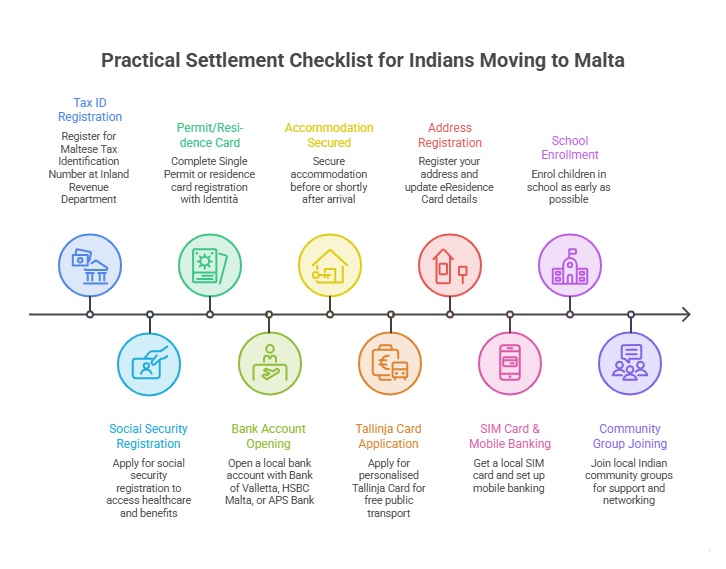
Moving to Malta involves a few key steps. Complete them in order to avoid delays.
Follow the steps below for a smooth move to Malta:
Step 1: Register for your Maltese Tax Identification Number at the Inland Revenue Department soon after arrival
Step 2: Apply for social security registration to access healthcare and other benefits
Step 3: Complete your Single Permit or residence card registration with Identità within the required timeframe
Step 4: Open a local bank account with Bank of Valletta, HSBC Malta, or APS Bank
Step 5: Secure accommodation before or shortly after arrival
Step 6: Apply for your personalised Tallinja Card for free public transport
Step 7: Register your address and update your eResidence Card details
Step 8: Get a local SIM card and set up mobile banking
Step 9: Enrol children in school as early as possible
Step 10: Join local Indian community groups for support and networking
*Are you looking for step-by-step assistance with overseas immigration? Contact Y-Axis, the world's No. 1 overseas immigration consultancy!
FAQs
What is the easiest way for Indians to move to Malta?
For most Indian professionals, the easiest route is the Single Permit, supported by your employer's application through Identità. This covers most skilled and semi-skilled roles in iGaming, IT, hospitality, and construction. The Key Employee Initiative (KEI) is a faster option for managerial or highly technical roles earning at least EUR 45,000 per year, with permits typically issued in 5–10 working days.
How long does it take to get permanent residency in Malta?
Permanent residency in Malta follows a structured timeline. After 5 years of continuous legal residence on a valid work permit, you may become eligible for EU long-term resident status. Malta citizenship by naturalisation also generally requires 5 years of legal residence, including the final 12 months immediately before applying, along with good character and basic knowledge of English or Maltese. Investors under the Malta Permanent Residence Programme (MPRP) receive permanent residence immediately without waiting five years.
Is healthcare free for immigrants in Malta?
Malta has a public healthcare system funded through social security contributions shared between employers and employees. Once registered and contributing, workers and their eligible dependants can access free treatment at Mater Dei Hospital and government health centres. However, Nomad Residence Permit and MPRP holders must maintain private health insurance.
What is the average salary for skilled workers in Malta?
Average salaries vary depending on profession and experience.
| Industry | Average Annual Salary |
|---|---|
| iGaming | EUR 22,000–50,000+ |
| IT & Software Development | EUR 30,000–60,000 |
| Financial Services | EUR 28,000–65,000 |
Sliema and St Julian's generally offer the highest salaries but also have the highest living costs.
Can I bring my family to Malta on a work visa?
Yes. Most Single Permit and KEI holders can apply for family reunification for their spouse and dependent children after securing stable employment. Family members registered under Malta's social security system can access public healthcare. Children may attend free state schools or private international schools. MPRP applicants can also include their spouse, children, and both sets of parents in the same application.
Which area in Malta is best for Indian immigrants?
Sliema is one of the most popular areas for Indian professionals because of its strong finance and iGaming job market, large expatriate community, and convenient access to Valletta. St Julian's is ideal for hospitality and iGaming professionals, while Gzira and Birkirkara offer more affordable housing. The best location depends on your employment, budget, and lifestyle preferences.
How much does it cost to live in Malta?
Living costs in Malta vary by location. A single person living in Sliema or St Julian's typically spends:
| Expense | Estimated Monthly Cost |
|---|---|
| One-bedroom apartment | EUR 1,200–1,800 |
| Utilities | EUR 80–150 |
| Groceries | EUR 220–350 |
Locations such as Birkirkara, Mosta, and Gozo generally have lower living costs.
What is the Key Employee Initiative in Malta?
The Key Employee Initiative (KEI) is a fast-track work and residence permit for highly skilled non-EU professionals employed in managerial or technical positions earning at least EUR 45,000 annually. Many roles do not require formal qualification recognition through MQRIC, and applications are generally processed within 5–10 working days.
Do I need to speak Maltese to live in Malta?
No. English is an official language of Malta and is widely used in business, education, and government. Most international professionals live comfortably using English alone. However, learning basic Maltese may help with everyday interactions outside major urban centres. Citizenship by naturalisation requires basic knowledge of either English or Maltese.
Can I apply for Malta citizenship after getting permanent residence?
Yes. After obtaining permanent residence, eligible applicants may apply for Malta citizenship by naturalisation after completing 5 years of legal residence, including the final 12 consecutive months immediately before applying. Applicants must demonstrate good character and basic knowledge of English or Maltese. Malta permits dual citizenship in most cases.
Tags:
Malta immigration
Malta work visa
Malta permanent residency
Living in Malta
Cost of living in Malta
Best areas in Malta
Jobs in Malta for Indians
Healthcare in Malta
Housing in Malta
Settle in Malta
Share
Options for you by Y-Axis

Get it on your mobile

Get News alerts

Contact Y-Axis
Latest Article
Popular Post
Trending Article
Posted On September 28 2026
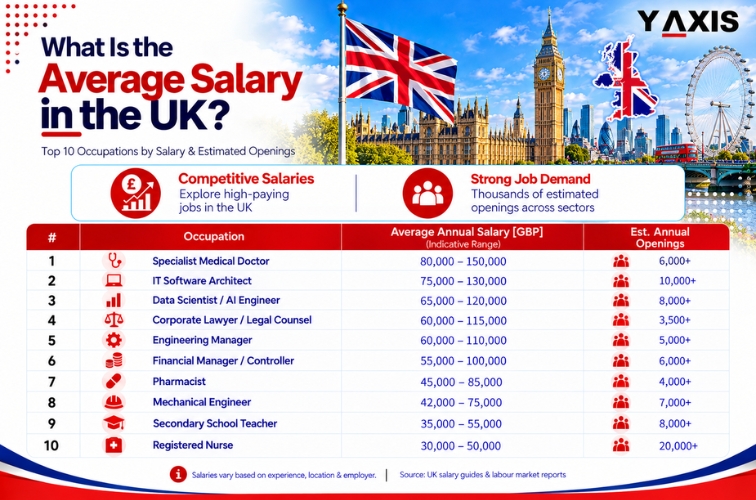
What Is the Average Salary in the UK?