


Posted on February 02 2026
Canada Fast-Tracks Work Permits for Key Occupations. Check if you are on the list!

By , Editor
Updated February 05 2026
Highlights: Canada Officially Announces Fast-Track Work Permit Processing for Key Occupations
- Canada has announced priority processing for employer-specific work permits to address labour shortages in essential sectors.
- The fast-track processing mainly applies to healthcare and agriculture roles, including nurses, doctors, farm workers, and agri-food professionals.
- LMIA-based permits, Francophone Mobility Work Permits, and International Experience Canada (IEC) permits are eligible under this initiative.
- Applicants must ensure the correct National Occupation Classification (NOC) code is mentioned in the job offer and application to automatically trigger priority processing.
- Workers in eligible occupations may also benefit from faster pathways to permanent residence through Express Entry with lower CRS cut-offs.
*Want to work in Canada? Let Y-Axis guide you with the steps.
Canada Fast-Tracks Work Permits for Key Occupations to Deal with Labour Shortages
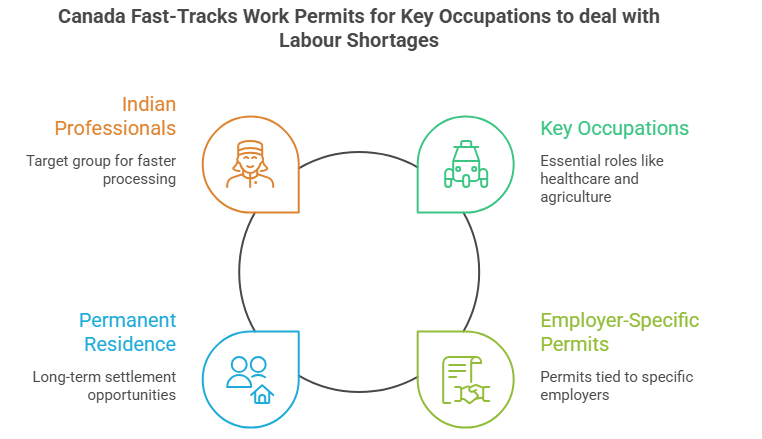
Canada has announced priority processing for work permits in key occupations such as healthcare and agriculture, aiming to urgently fill labour shortages across the country. Immigration, Refugees and Citizenship Canada (IRCC) confirmed that employer-specific work permits in selected essential roles will now be processed faster, creating quicker pathways to jobs and even Canada permanent residence (PR) for eligible foreign workers.
For Indian professionals and workers planning to work in Canada, this update opens doors to faster visa approvals, stable employment, and long-term settlement opportunities.
Also, read…
What are the fast-track hiring options in Canada for Skilled Professionals?
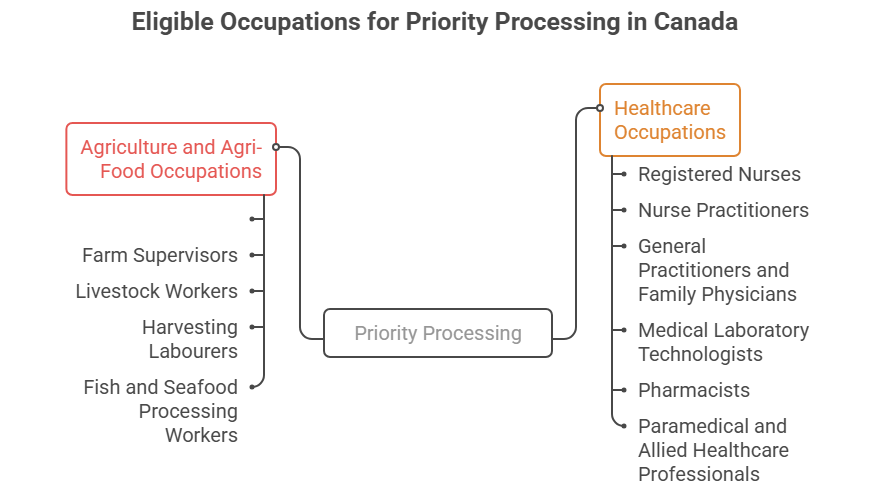
Which Occupations Are Eligible for Priority Processing?
IRCC has identified occupations critical to Canada’s workforce needs. These roles must be matched with the correct National Occupation Classification (NOC) code on the work permit application.
Healthcare occupations include:
- Registered Nurses
- Nurse Practitioners
- General Practitioners and Family Physicians
- Medical Laboratory Technologists
- Pharmacists
- Paramedical and allied healthcare professionals
Agriculture and agri-food occupations include:
- Butchers and retail meat cutters
- Farm supervisors
- Livestock workers
- Harvesting labourers
- Fish and seafood processing workers
These sectors are facing long-term shortages due to an ageing population and declining domestic workforce participation. According to Canadian labour projections, Canada will have over 2 million job vacancies are expected in the coming decade, with healthcare consistently ranking among the most in-demand sectors.
Important note: Open work permits, including Post-Graduation Work Permits (PGWP), are not eligible for priority processing since they are not employer-linked.
*Want to apply for jobs in Canada? Consult Y-Axis for end-to-end support.
How Indian Applicants Can Benefit from This Move
Priority processing is automatically applied when candidates submit an employer-specific work permit application in an eligible occupation. To benefit:
- The job offer or LMIA must clearly mention the correct NOC code
- Job descriptions, contracts, and documents must be consistent
- Applications must be complete and accurate to avoid delays
Beyond faster work permits, this initiative also strengthens PR prospects. Workers with at least six months of Canadian work experience in eligible occupations may receive Invitations to Apply (ITAs) under Express Entry at lower CRS scores, especially under category-based draws for healthcare.
While most healthcare roles align with Express Entry categories, only select agriculture roles, such as retail butchers, are currently eligible for category-based selection.
*Are you looking for step-by-step assistance with Canada immigration? Contact Y-Axis, the world's No. 1 overseas immigration consultancy.
For recent Canadian immigration updates, check out the Y-Axis Canada Immigration News Page.
FAQs
What is Canada’s fast-track work permit initiative for key occupations?
Canada’s fast-track work permit initiative is a priority processing measure introduced by Immigration, Refugees and Citizenship Canada (IRCC) to address critical labour shortages. Under this initiative, employer-specific work permits linked to essential occupations—mainly in healthcare and agriculture—are processed faster than regular applications. The goal is to help employers quickly hire foreign workers for roles vital to Canada’s economy and public services. Priority processing is applied automatically when eligible applicants submit complete applications with correct occupation details and NOC codes.
Which occupations are eligible for fast-track work permit processing in Canada?
Fast-track processing primarily applies to healthcare and agriculture or agri-food occupations. Eligible healthcare roles include registered nurses, nurse practitioners, general practitioners, medical laboratory technologists, pharmacists, and paramedical professionals. In agriculture and agri-food, eligible roles include farm supervisors, livestock workers, harvesting labourers, butchers, meat cutters, and fish and seafood processing workers. Each role must match the correct National Occupation Classification (NOC) code.
Which types of Canadian work permits qualify for priority processing?
Priority processing applies only to employer-specific work permits. These include LMIA-based work permits, Francophone Mobility Work Permits, and certain International Experience Canada (IEC) permits tied to a specific employer. Open work permits, such as the Post-Graduation Work Permit (PGWP), are not eligible because they are not linked to a particular job or employer.
How does priority processing get triggered for eligible applicants?
Priority processing is triggered automatically by IRCC when an applicant submits an employer-specific work permit application for an eligible occupation. There is no separate request required. Applicants must ensure the correct NOC code is used, job duties match the NOC description, and all supporting documents—such as the job offer, LMIA, and employment contract—are consistent. Errors or mismatches may result in standard processing.
How does this fast-track work permit help with Canada PR pathways?
Workers in priority occupations may also benefit from improved pathways to permanent residence (PR). Many healthcare roles are included in Express Entry’s category-based selection, allowing candidates to receive Invitations to Apply (ITAs) at lower CRS scores. Canadian work experience gained through fast-track permits can strengthen eligibility under Express Entry or Provincial Nominee Programs (PNPs).
Why has Canada introduced fast-track processing for healthcare and agriculture jobs?
Canada faces long-term labour shortages due to an ageing population, increased healthcare demand, and limited domestic workforce participation in agriculture. Healthcare consistently ranks among the sectors with the highest job vacancies, while agriculture and food processing are essential for food security. Fast-track processing ensures continuity of essential services and supports economic stability.
Can Indian professionals benefit from Canada’s fast-track work permits?
Yes, Indian professionals—especially nurses, healthcare workers, and agri-food workers—can significantly benefit. India is one of Canada’s largest source countries for skilled foreign workers. Faster processing means reduced waiting times, quicker workforce entry, and better chances of transitioning from temporary work permits to permanent residence.
Is a Labour Market Impact Assessment (LMIA) mandatory for fast-track work permits?
In most cases, yes. Many employer-specific work permits under this initiative are LMIA-based. However, some permits—such as Francophone Mobility permits and certain IEC permits—are LMIA-exempt. The requirement depends on the specific work permit stream and occupation, so applicants should verify this before applying.
What happens if the wrong NOC code is used in the application?
Using the wrong NOC code can disqualify an application from priority processing. IRCC relies on NOC codes to determine eligibility. If job duties, title, or codes do not match, the application may be processed under standard timelines or refused. Accuracy across all documents is critical.
How can applicants improve their chances of faster approval under this initiative?
Applicants should ensure their application is complete, accurate, and employer-specific. Correct NOC codes, aligned job descriptions, and properly submitted documents are essential. Working with experienced immigration professionals can help avoid errors and maximize the benefits of automatic priority processing.
Tags:
Canada immigration news
Canada immigration
Migrate to Canada
Canada PR
Work in Canada
fast track work permits in Canada
in-demand sectors in Canada
in-demand occupations in Canada
high demand occupations in Canada
International Experience Canada
Share
Options for you by Y-Axis

Get it on your mobile

Get News alerts

Contact Y-Axis
Latest Article
Related Post
Trending Article

Posted On March 18 2026
Greece launches Tech Talent Visa and relaxes EU Blue Card rules – Apply Now!