


Posted on January 20 2026
Canada Announces 5,000 Extra PR Spots for French-Speaking Applicants - Apply Early!

By , Editor
Updated January 20 2026
Highlights: Canada to Offer 5000 Additional PR spaces to French-speaking Immigrants
- Canada announces a major Francophone expansion, adding 5,000 PR spaces to admit French-speaking applicants outside Quebec.
- The newly announced PR spaces will be reserved for federal selection quotas contributing to the existing Provincial Nominee Programs (PNPs) and immigration pilot streams.
- Canada achieved a Francophone immigration target of 8.9%, exceeding the total goal of 8.5%, by admitting French-speaking newcomers in 2025.
- IRCC has announced higher PR admission goals outside Quebec of 9% in 2026, 9.5% in 2027, and 10.5% in 2028 to maintain steady growth.
- The federal government aims to achieve a 12% PR admission rate for French-speaking candidates by 2029, reflecting its interest in linguistic diversity.
*Want to apply for Canada PR? Let Y-Axis guide you with the process.
Canada Announces Francophone Immigration Expansion with 5000 New PR Admisssion Spaces
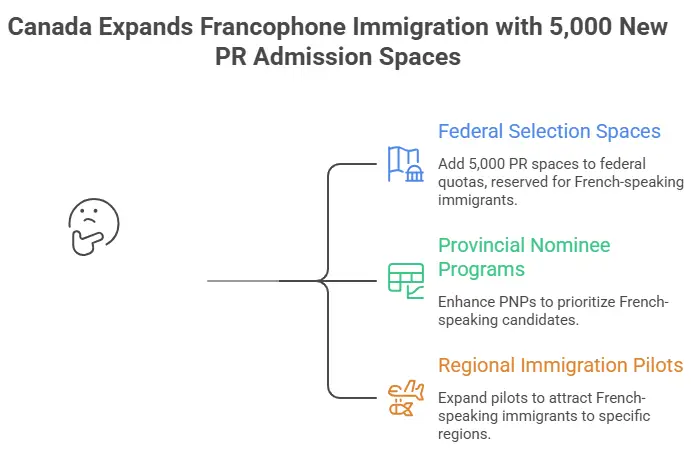
Canada has decided to significantly expand Francophone Immigration by introducing 5,000 additional PR spaces for French-speaking applicants. The announcement of additional PR spaces was made on January 19, 2026, by Immigration Minister Lena Metlege Diab at a press conference in Moncton, New Brunswick. The additional PR spaces for French-speaking immigrants will be reserved from the federal selection quota and included in the existing Provincial Nominee Programs (PNPs) for different territories and provinces.
The introduction of 5,000 additional spaces for Canadian permanent residence is a strategy to promote Francophone immigration outside Quebec and long-term settlement of the French-speaking community. By offering alternatives to conventional immigration pathways, such as Express Entry, the provincial government is favouring French-speaking candidates in its nomination program for linguistic growth. The latest Francophone expansion is expected to create greater opportunities for skilled French-speaking immigrants in the upcoming years.
*Want to migrate to Canada? Sign up with Y-Axis to guide you with the process.
How will the latest Francophone Expansion affect PNP and Express Entry candidates
With the introduction of additional PR spaces for candidates beyond Express Entry, the federal government aims to promote alternative provincial and regional immigration pathways.
Indian skilled professionals with French language proficiency, the announcement of Francophone expansion will bring significant advantages in the following ways:
- More frequent PNP invitations granted to French-affluent candidates.
- Introduction of alternate provincial pathways specifically catering to French speakers.
- Dedicated nomination space for Francophone immigration.
The federal government is yet to decide how it will distribute the extra 5000 PR spaces among different territories; however, it is confirmed that 2026 will see higher Francophone selections via provincial routes, lifting the complete dependence on federal programs exclusively.
Also read…
When is the Next Canada PR Draw?
Canada Focuses on Promoting Francophone Immigration in 2026
Canada has shown consistent interest in promoting Francophone immigration, surpassing its PR target for French-speaking permanent residents outside Quebec in four consecutive years.
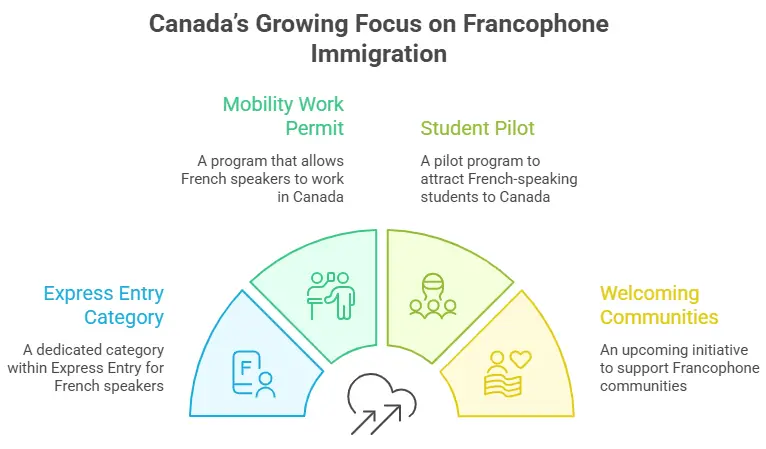
To meet future goals, IRCC has taken the following initiatives for French-speaking immigrants:
- Dedicated category in Express Entry reserved for French speakers.
- The Francophone Mobility Work Permit Program.
- The Francophone Minority Community Student Pilot.
- The upcoming Welcoming Francophone Communities initiative.
Collectively, these measures by the federal government aim to achieve the target of 12% Francophone PR admissions outside Quebec by 2029.
Also, read…
Canada Ranks Among the World’s Top 10 Most Powerful Passports for 2026
How will Canada’s Francophone Immigration Expansion affect Indian applicants?
Indian applicants, like students, professionals, and skilled workers with French language proficiency, should update their skills to gain a competitive edge in Canada’s PR programs. Becoming proficient in French will benefit you in your Canadian immigration and PR journey in the following ways:
- Higher scope for PNP nomination.
- Streamlined PR pathway with faster processing.
- Higher weightage under Express Entry and regional programs.
*Are you looking for step-by-step assistance with Canada immigration? Contact Y-Axis, the world's No. 1 overseas immigration consultancy.
For recent Canadian immigration updates, check out the Y-Axis Canada Immigration News Page.
FAQs
What is the latest announcement about French-speaking immigrants to Canada?
Canada has announced the addition of 5,000 new permanent residence selection spaces specifically for French-speaking immigrants. These spaces are being allocated to provinces and territories so they can nominate more Francophone candidates through their immigration programs. The decision reflects Canada’s long-term commitment to strengthening French-speaking minority communities outside Quebec. By increasing PR spaces, the government aims to improve demographic balance, support economic growth in Francophone regions, and meet national bilingualism objectives under the Official Languages Act.
Why is Canada prioritising French-speaking immigrants now?
Canada is prioritising French-speaking immigrants to protect and grow Francophone communities outside Quebec, where French-language populations have been declining. Immigration plays a key role in sustaining these communities economically, culturally, and socially. French-speaking newcomers also help fill labour shortages in healthcare, education, skilled trades, and STEM sectors. This initiative aligns with Canada’s federal targets to increase the share of French-speaking permanent residents outside Quebec and reinforces bilingualism as a national value.
How will the additional 5,000 PR spaces be distributed?
The 5,000 additional PR selection spaces will be distributed among provinces and territories, allowing them to nominate more French-speaking candidates under Provincial Nominee Programs and regional immigration streams. Each province can decide how to allocate these spaces based on local labour market needs and settlement priorities. This flexibility helps provinces attract Francophone talent to smaller cities and rural areas where population growth and workforce availability are critical for economic sustainability.
Does this announcement affect Express Entry applicants?
Yes, the announcement indirectly benefits Express Entry candidates who are French speakers. While the new spaces are allocated mainly to provinces, they complement Express Entry’s existing category-based draws for French-language proficiency. Candidates with strong French skills may receive Invitations to Apply through federal draws or gain a provincial nomination, which adds significant CRS points. As a result, French-speaking Express Entry applicants are likely to see improved chances of receiving PR invitations.
What are Canada’s Francophone immigration targets for coming years?
Canada has set ambitious targets to increase French-speaking immigration outside Quebec. The government aims for French-speaking immigrants to represent about 9% of PR admissions outside Quebec in 2026, increasing to 9.5% in 2027 and 10.5% in 2028. The addition of 5,000 PR spaces supports these goals and ensures provinces have sufficient capacity to nominate qualified French-speaking candidates who can integrate into local Francophone communities.
Do the additional PR spaces guarantee permanent residence?
No, the additional PR spaces do not guarantee permanent residence automatically. Candidates must still meet eligibility criteria set by provinces or federal programs, including language proficiency, education, work experience, and settlement intent. The announcement increases the number of available opportunities but does not remove standard assessment procedures. Applicants must submit complete applications and compete with other qualified candidates within the French-speaking streams to secure a nomination or PR invitation.
What level of French language proficiency is required?
French-speaking immigration pathways usually require applicants to demonstrate intermediate to advanced French proficiency, commonly proven through TEF Canada or TCF Canada test results. Many programs expect a minimum Canadian Language Benchmark level of CLB 7 in French, though requirements vary by program. Higher French scores significantly improve competitiveness, especially in Express Entry and provincial nominations. Some streams may accept basic English proficiency as a secondary language but prioritise strong French ability.
Do bilingual candidates have an advantage under this policy?
Yes, bilingual candidates with strong French and English skills have a major advantage. In Express Entry, bilingual applicants can earn additional CRS points for French proficiency combined with English ability. Provinces also prefer bilingual candidates because they can integrate more easily into the labour market and broader society. Bilingualism increases employability, expands job opportunities, and strengthens settlement outcomes, making such candidates highly attractive under both federal and provincial immigration programs.
Does this initiative apply to Quebec as well?
No, this initiative mainly applies to immigration outside Quebec. Quebec manages its own immigration system and already prioritises French-language ability through its provincial selection criteria. The federal government’s additional 5,000 PR spaces are designed to support Francophone minority communities in other provinces and territories, such as Ontario, New Brunswick, Manitoba, and Alberta. The goal is to balance French-speaking population growth across Canada rather than concentrating it solely in Quebec.
Which immigration pathways will benefit most from this announcement?
Provincial Nominee Programs, regional pilot programs, and Express Entry French-language category draws will benefit the most. Provinces can design or expand French-speaking streams to attract skilled workers, international graduates, and essential workers. Programs like the Francophone Mobility Program also complement PR pathways by allowing employers to hire French-speaking workers without an LMIA. Together, these options create clearer, faster pathways to permanent residence for Francophone candidates.
Tags:
Canada PR
Canada immigration
Canada immigration news
Express Entry
Canada PNP
Canada PR draws
Express Entry Draws
Canada visas
Francophone immigration
Canada Permanent Residence (PR) admissions
Share
Options for you by Y-Axis

Get it on your mobile

Get News alerts

Contact Y-Axis
Latest Article
Related Post
Trending Article

Posted On April 10 2026
Singapore Plans to Welcome 30,000 Foreigners Every Year as New Citizens. Apply Now!