


Posted on May 14 2026
Australia to Welcome One Million Skilled Professionals by 2029. Check Your Eligibility Now!

By , Editor & Director
Updated May 14 2026
Highlights: Australia to Expand Migration Opportunities to One Million Skilled Professionals by 2029
- Australia will welcome nearly 1 million skilled foreign workers by July 2029 as part of its latest immigration strategies.
- Australia has increased its migration projections by 55,000 for the current and upcoming financial years.
- As per the latest estimates, Australia expects net overseas migration of 295,000 people in 2025-26 and 245,000 in 2026-27.
- Around 2028-29, the migration rate is expected to remain constant at 225,000 annually.
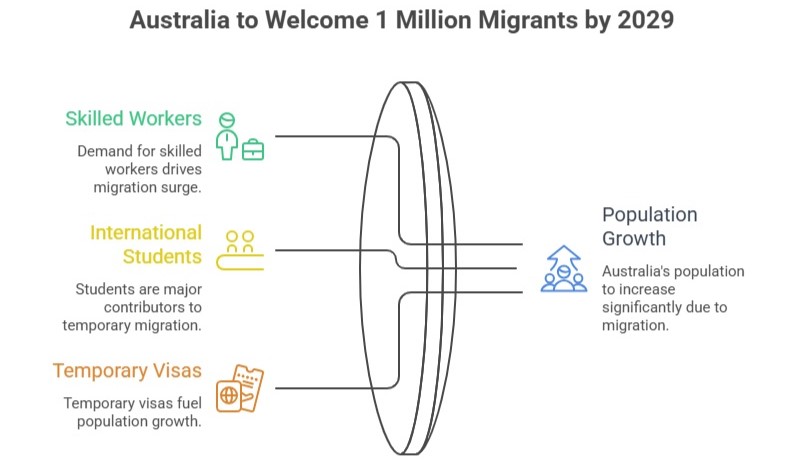
- Temporary visa holders, such as international students, will be the largest migrant group contributing to Australia's population growth.
*Want to migrate to Australia? Sign up with Y-Axis for end-to-end assistance.
Australia Set to Welcome Over 1 Million Migrants in the Next Four Years
Australia has estimated a surge in migration rate over the next four years, contributing to population growth. Nearly one million net overseas migrants are expected to settle in Australia by July 2029, according to updated federal budget estimates. The revised figures show migration projections for the current and upcoming financial years have increased by 55,000. This reflects ongoing demand for overseas talent, mainly foreign aspirants on Australian student visas.
The migration surge rate also highlights expanding opportunities for skilled professionals looking to work in Australia. Additionally, international students will remain the largest contributor to temporary migration and population growth in Australia.
The highlights of the latest migration surge in Australia are as follows:
- Australia expects net overseas migration to approach 1 million by July 2029.
- Migration forecasts for the current and next financial years increased by 55,000.
- International students remain the largest migrant group in Australia.
- Temporary visa holders continue to drive population growth in the country.
- Australia continues to see strong demand for skilled workers and international students.
Also, read...
Australia Introduces Faster Visa Processing for Students and Workers. Apply Now!
What are the benefits of migrating to Australia in 2026-29?
Australia continues to attract foreign talent, such as skilled professionals and international students, through its streamlined immigration pathways. The country is further expanding migration opportunities through skilled visas, student pathways, and permanent residency programs in the upcoming years.
The benefits of migrating to Australia in 2026-29 are as follows:
- Strong demand for skilled workers across healthcare, IT, engineering, construction, and trades
- High average salaries and better work-life balance
- Multiple pathways to permanent residency for eligible candidates
- Access to world-class healthcare and education systems
- Growing job opportunities for international graduates
- Opportunity to bring family members through dependent visa pathways
- Increasing regional migration opportunities with added PR benefits
- Globally recognized universities and post-study work options for students
- Strong economy and stable long-term career prospects
- High standard of living with modern infrastructure and public services
International recognition through work in Australia.
*Are you looking for a step-by-step with Australian Immigration? Contact Y-Axis, the world’s No. 1 abroad immigration consultancy, for end-to-end support!
For more updates on Australia, check out Y-Axis Australia Immigration Updates!
FAQs
Why is Australia expecting nearly one million migrants by 2029?
Australia is expecting close to one million migrants by July 2029 due to rising demand for skilled workers, international students, and temporary visa holders. The country is facing workforce shortages in sectors such as healthcare, IT, engineering, construction, and education. Updated federal budget estimates also indicate that temporary migrants are staying longer in Australia, contributing to higher migration numbers. The Australian government continues to support migration to boost economic growth, address labor shortages, and strengthen regional development. This trend is creating more opportunities for skilled professionals, students, and families planning to migrate to Australia in the coming years.
What types of visas are contributing most to Australia’s migration growth?
Temporary visas, especially student visas and skilled work visas, are contributing the most to Australia’s migration growth. International students remain the largest group among temporary migrants, while skilled professionals continue to enter Australia through employer-sponsored and skilled migration pathways. Graduate visas, regional visas, and temporary work permits are also supporting population growth. Many migrants later transition from temporary visas to permanent residency pathways. Australia’s immigration system is designed to attract talent that can contribute to the economy and fill skill shortages across multiple industries, making these visa categories highly important between 2026 and 2029.
How can skilled professionals benefit from Australia’s migration plans?
Skilled professionals can benefit from Australia’s migration plans through better job opportunities, competitive salaries, and pathways to permanent residency. Australia continues to face shortages in industries such as healthcare, aged care, IT, engineering, mining, and construction. Skilled migrants may gain access to employer-sponsored visas, state nomination programs, and regional migration pathways. Many occupations are listed on Australia’s skilled occupation lists, increasing opportunities for eligible foreign workers. Migrating during 2026-2029 may provide better chances of securing long-term employment, family sponsorship opportunities, and eventual Australian citizenship for qualified professionals looking to build a stable future abroad.
Why are international students important to Australia’s migration system?
International students play a major role in Australia’s migration and economic growth. They contribute to universities, local businesses, housing demand, and the workforce through part-time and post-study employment. Many students later transition into skilled workers through post-study work visas and permanent residency pathways. Australia remains attractive due to its globally ranked universities, multicultural society, and strong career opportunities after graduation. Students also help address labor shortages in sectors experiencing workforce gaps. Because of these factors, international students continue to form the largest group of temporary migrants contributing to Australia’s growing population between 2026 and 2029.
What are the top benefits of moving to Australia between 2026 and 2029?
Migrating to Australia between 2026 and 2029 can offer several benefits, including strong employment opportunities, high salaries, excellent healthcare, and a high standard of living. Skilled workers may find better career growth in sectors facing labor shortages, while students can benefit from quality education and post-study work rights. Australia also offers pathways to permanent residency and citizenship for eligible migrants. Families can access good public infrastructure, safe cities, and multicultural communities. Regional migration programs may provide additional advantages such as priority processing and easier PR options, making Australia one of the most preferred migration destinations globally.
Will Australia increase skilled migration opportunities in the coming years?
Australia is expected to continue supporting skilled migration due to ongoing labor shortages and economic needs. Industries such as healthcare, technology, engineering, construction, hospitality, and education are projected to require more skilled workers over the next few years. The government regularly updates occupation lists and migration targets to meet workforce demands. Skilled migration programs may include employer-sponsored visas, regional pathways, and independent skilled visas. Increased migration projections suggest that Australia will continue welcoming foreign professionals who can contribute to economic growth. This could create more opportunities for eligible migrants planning to work and settle in Australia between 2026 and 2029.
How does migration impact Australia’s economy?
Migration plays an important role in supporting Australia’s economy by helping businesses fill labor shortages and boosting consumer demand. Skilled migrants contribute to industries that struggle to find local workers, while international students support the education sector and local economy. Migrants also contribute through taxes, spending, and entrepreneurship. Population growth generated through migration can strengthen long-term economic productivity and regional development. However, rising migration levels have also increased discussions around housing supply, healthcare services, and infrastructure planning. Despite these debates, migration remains a major factor supporting Australia’s workforce and economic stability in the coming years.
What jobs are in demand in Australia for migrants?
Australia currently has high demand for workers in healthcare, nursing, aged care, information technology, engineering, construction, teaching, hospitality, and skilled trades. Regional areas are also seeking professionals in agriculture, mining, logistics, and manufacturing. Many of these occupations appear on Australia’s skilled occupation lists, improving visa opportunities for foreign applicants. Demand is expected to continue rising between 2026 and 2029 due to economic growth and an aging population. Skilled migrants with relevant qualifications, work experience, and English language proficiency may find better opportunities to secure employment, employer sponsorship, and permanent residency pathways in Australia.
Can international students stay and work in Australia after graduation?
Yes, many international students can stay and work in Australia after graduation through post-study work visa programs. Graduates from eligible Australian institutions may receive temporary work rights that allow them to gain local experience and improve their chances of permanent residency. Australia encourages international graduates to contribute to industries facing labor shortages, especially in healthcare, IT, engineering, and regional sectors. Students who gain skilled work experience may later qualify for employer-sponsored visas or skilled migration programs. These opportunities make Australia a popular destination for students seeking long-term career and settlement options after completing their education.
Is Australia still a good country for immigration in 2026?
Australia remains one of the top countries for immigration in 2026 due to its strong economy, quality healthcare, excellent education system, and high living standards. The country continues to attract skilled professionals, students, and families through multiple visa pathways and long-term settlement opportunities. Australia’s multicultural environment and worker protections make it appealing for migrants from around the world. Growing migration targets and labor shortages are expected to create more opportunities for eligible applicants. Although discussions around housing and infrastructure continue, Australia still offers strong career prospects and pathways to permanent residency for qualified migrants.
📞 Call: +91-7670800000
📩 Email: info@y-axis.com
🌐 Visit: https://www.y-axis.com
Tags:
Skilled professionals in Australia
Australia immigration
migrate to Australia
work in Australia
Australian student visas
Australia visas
temporary visa holders in Australia
Australia immigration news
Australia work visa
Share
Options for you by Y-Axis

Get it on your mobile

Get News alerts

Contact Y-Axis
Latest Article
Related Post
Trending Article

Posted On September 23 2026
Australia Updates Skilled Visa Processing Priorities for 2026. Check Your Eligibility!