




News
Feb 10th, 2026
UK Opens India Young Professionals Visa Ballot on Feb 17. Get Ready to Apply!


Don' know what to do?
Get Free CounselingTrending News
Latest Article
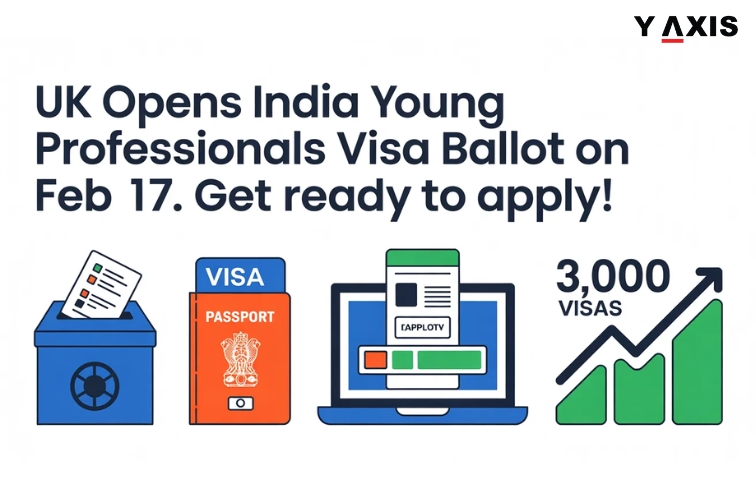
UK Opens India Young Professionals Visa Ballot on Feb 17. Get Ready to Apply!
Highlights: UK Announces India Young Professionals Visa Ballot for 2026
- The UK has released official details regarding the Indian Young Professionals Scheme ballot for 2026.
- The visa ballot will be open from February 17, 2026, at 2:30 PM IST until February 19, 2026, at 2:30 PM IST.
- The UK government has allocated 3,000 visa spots for Indian applicants under the India Young Professionals Scheme in 2026.
- A majority of the visas will be issued in the February 2026 ballot, with the remaining offered later this year.
- The Young Professionals Scheme visa ballot is free to enter, and selections are random. Upon success, you will be given around 90 days to apply for the visa.
*Want to work in the UK? Let Y-Axis guide you with the steps.
UK Opens Indian Young Professionals Visa Ballot for 2026 in February
The UK has officially announced the ballot dates for the India Young Professionals Scheme (IYPS) visa for 2026. This ballot will remain open from Feb 17, 2026, starting 2:30 PM IST, and will close on Feb 19, 2026, at 2:30 PM IST.
| UK India Young Professionals Visa Ballot 2026 | |
| Start Date | 17 February 2026 [2:30 PM IST] |
| End Date | 19 February 2026 [2:30 PM IST] |
Eligible Indians can check their eligibility and submit their entry online. Through the Young Professionals Visa Ballot, young Indian citizens can apply to reside and work in the UK for up to 2 years without employer sponsorship.
The Young Professionals Scheme visa is one of the flexible visa options for recent Indian graduates looking to work in the UK.
For 2026, the UK has allotted 3,000 visa spots, of which a majority will be issued in the February ballot, leaving the remaining for the rest of the year.
Indian applicants must ensure they check their eligibility and keep their documents ready to avoid complications, as there will be high demand due to limited slots.
Also, read…
UK to Raise Minimum PhD Stipend to £21,805 from October 2026 – Check Your Eligibility
UK Indian Young Professionals Visa 2026: Who can apply and how does the Ballot process work?
Indians who wish to apply for the UK India Young Professionals Scheme visa must enter the ballot as the first step in the process. The visa ballot is open only to eligible Indian citizens; if selected, they can proceed with the visa application.
There is no fee to enter the ballot; however, it is recommended that candidates check their eligibility before submitting their details. Candidates must submit personal information, including name, passport information, Date of birth, contact details, and a copy of their original passport. Applicants are allowed only one entry per ballot, and submitting multiple times can even lead to automatic disqualification.
Given below is a simple step-by-step overview of how to enter the UK India Young Professionals Scheme visa ballot:
Step 1: Check if you meet the eligibility requirements for the India Young Professionals Scheme visa.
Step 2: Gather the required information (passport, basic personal details) before you can enter the ballot.
Step 3: Submit your entry online anytime between the available dates (17–19 February 2026, 2:30 PM IST).
Step 4: Await the ballot results, which will be declared via email within 2 weeks of closure.
Step 5: You can apply for the visa within 90 days of getting selected in the ballot. You will be required to complete the fee payment and the biometric process.
Step 6: If you do not get selected in the ballot, you can retry in the upcoming ballots, provided you meet the required eligibility criteria.
*Need assistance with the Young Professionals Scheme visa process? Sign up with Y-Axis for complete guidance.
Got selected in the India Young Professionals Scheme Ballot? Here’s how to proceed further!
Candidates selected via the India Young Professionals Scheme 2026 ballot will receive an official email invitation from the UK authorities confirming their selection. You will be given a maximum of 90 days from the date of receiving an invitation to complete the visa process, which includes an online visa application, payment of the £319 visa fee, the Health Surcharge, and biometric submission.
Candidates who are selected on the ballot but do not proceed with the visa application can walk out without affecting their eligibility for future ballots. In such cases, the visa slot will automatically be reassigned for the upcoming ballots.
The Indian Young Professionals Scheme Visa is specifically for Indian citizens aged 18-30, allowing them to reside and work in the UK for 2 years.
The Scheme remains one of the most popular visa options amongst Indians, as it provides international work experience, access to the UK Job market, and the promise of long-term career growth.
*Are you looking for step-by-step assistance with UK immigration? Contact Y-Axis, the world’s No.1 overseas immigration consultancy!
For recent immigration updates on the UK, check out Y-Axis UK immigration News!
FAQs
What is the UK India Young Professionals Scheme visa?
The UK India Young Professionals Scheme visa is a special work and travel visa for Indian citizens aged 18 to 30. It allows successful applicants to live and work in the UK for up to two years without needing a job offer or employer sponsorship. The visa is issued through a ballot system due to high demand and limited slots. It is part of a bilateral agreement between India and the UK and is ideal for young graduates and professionals seeking international exposure and career growth.
When does the India Young Professionals Scheme 2026 ballot open?
The 2026 ballot for the UK India Young Professionals Scheme visa will open on 17 February 2026 at 2:30 PM India Standard Time and close on 19 February 2026 at 2:30 PM IST. Applicants can submit their entry at any time during this window. Results will be communicated by email within two weeks after the ballot closes, and only selected candidates can proceed with the visa application.
How many visas are available under the scheme in 2026?
For 2026, the UK government has allocated a total of 3,000 visa places for Indian citizens under the India Young Professionals Scheme. Most of these places will be released during the first ballot in February, with the remaining slots offered in a second and final ballot later in the year. Due to the limited number of places and high demand, applicants are encouraged to prepare in advance and enter the ballot as soon as it opens.
Is the ballot entry free for Indian applicants?
Yes, entering the ballot for the UK India Young Professionals Scheme visa is completely free of charge. However, applicants should only enter if they genuinely plan to apply for the visa if selected. If chosen, candidates must pay the visa application fee of £319 along with the Immigration Health Surcharge during the visa application stage. Entering the ballot without intending to apply could result in a missed opportunity for other eligible applicants.
What documents are required to enter the ballot?
To enter the ballot, applicants need only basic personal and passport details. This includes a valid Indian passport, a clear scan or photo of the passport, full name, date of birth, phone number, and email address. No educational certificates or financial documents are required at the ballot stage. However, selected candidates will need to meet all eligibility requirements and submit supporting documents during the visa application process.
How are candidates selected in the ballot?
Ballot entries for the India Young Professionals Scheme visa are selected entirely at random. There is no ranking system, points score, or preference given based on education or work experience at this stage. Each eligible applicant has an equal chance of being selected, provided they submit a valid entry. Results are final and cannot be appealed. Applicants who are unsuccessful may enter future ballots if they continue to meet the eligibility criteria.
What happens if I am selected in the ballot?
If selected, you will receive an official email invitation to apply for the visa. From the date of this email, you have 90 days to submit the online visa application, pay the visa and health surcharge fees, and provide biometric information. Applicants must also demonstrate that they meet the scheme’s eligibility conditions, such as holding an eligible qualification and having sufficient funds to support themselves in the UK.
Can I apply again if I am not selected in the ballot?
Yes, applicants who are not selected in the February ballot can enter future ballots, provided they still meet the eligibility criteria. There is no penalty or negative impact on future applications if you are unsuccessful. The UK government plans to hold a second and final ballot later in 2026 to allocate any remaining visa places under the scheme.
Does not applying after selection affect future eligibility?
No, if you are selected in the ballot but choose not to apply for the visa, it will not affect your eligibility for future ballots. You are not required to inform authorities if you decide not to proceed. The unused visa slot will simply be reallocated. However, given the limited number of places, applicants are encouraged to enter the ballot only if they are confident about applying.
What are the benefits of the India Young Professionals Scheme visa for Indians?
The India Young Professionals Scheme visa offers Indian citizens a unique opportunity to live and work in the UK for up to two years without employer sponsorship. It provides international work experience, exposure to the UK job market, and the chance to build a global professional network. The visa also allows flexibility to switch jobs, travel within the UK, and gain valuable skills that can enhance long-term career prospects, both in the UK and globally.

UK to Raise Minimum PhD Stipend to £21,805 from October 2026 – Check Your Eligibility
Highlights: UK to hike minimum PhD Stipend to £21,805
- The UK has announced major news about increased funding for PhD students for the upcoming academic year.
- The minimum annual stipend for PhD students in the UK will increase from £20,780 to £21,805 from October 2026.
- PhD students in London can now avail a higher minimum stipend of £23,805, marking a 4.5% increase.
- The National Research Funders have also announced that they will raise the minimum fee paid to universities for each UKRI-funded student by 4.6%, to £5,238.
- UK Research and Innovation (UKRI) raised the minimum stipends to provide improved financial support for doctoral studies.
*Want to apply for a UK student visa? Let Y-Axis guide you with the process.
UK Increases PhD Stipend from October 2026
The UK is set to raise the minimum PhD stipend for doctoral students. The new stipend for PhD students will take effect on October 1, 2026, and aims to provide extended financial support for doctoral researchers. Given the increase in overall living costs in the UK, UKRI plans to raise stipends to reduce the financial burden on students.
International students, including Indians planning to pursue PhD programmes in the UK, can benefit from this announcement. With a higher stipend, international researchers will now face reduced financial barriers and greater affordability, making the UK a top choice for doctoral education.
Also, read…
What are the new UK Visa Rules in 2026?
UK Extends PhD Funding and Welfare Assistance for PhD holders starting in 2026
The UK Research and Innovation (UKRI) has voluntarily announced an increase in PhD stipends to address ongoing issues related to accessibility and affordability of doctoral education in the UK. The high cost of living in top cities like London has made it difficult for PhD students.
Some of the main pointers announced along with the increase in stipends are as follows:
- UKRI will now offer above-inflation increases in funding to ensure that the updated stipends keep pace with the national living wage and help cover daily expenses.
- Doctoral researchers based in London will now receive additional support through higher stipends, given the city's high living costs.
- The universities in the UK will receive a 4.6% increase in per-student funding, which will improve the quality and sustainability of their research.
- The updated student welfare policies will now allow for a maximum of 28 weeks of medical leave to further support disabled doctoral researchers.
- The UK government has recognized the current financial obstacles and announced that it will remain committed to actively reviewing and examining international students' participation and access in the country.
Also, read…
How will the UK’s PhD Stipend Increase affect Indians planning for Doctoral Studies?
Indians looking to pursue a PhD in the UK can benefit from the updated stipend and funding assistance. These changes will offer financial security and cut down on cost-related difficulties, providing a more accessible pathway to doctoral studies in the UK.
Here are the top 5 ways Indian students can benefit from the UK’s PhD stipend hike:
- Higher stipends will help students adjust to the increasing living costs and expenses in the UK, allowing them to focus more on their research rather than finances.
- London-based PhD students will get additional support as the city is known for its high cost of living.
- Increased funding for universities in the UK will directly impact the quality of research facilities and the academic support offered to Indian students.
- The extended medical leave policy will offer a more secure and supportive environment for Indian students.
- The updated policies also aim to offer long-term benefits to international students, including Indian doctoral aspirants.
*Are you looking for step-by-step assistance with UK immigration? Contact Y-Axis, the world’s No.1 overseas immigration consultancy!
For recent immigration updates on the UK, check out Y-Axis UK immigration News!
FAQs
Who announced the increase in the UK PhD stipend, and when will it take effect?
The increase in the UK PhD stipend was announced by UK Research and Innovation (UKRI), the national body responsible for funding research and innovation in the UK. The revised stipend rates will take effect from 1 October 2026, aligning with the start of the new academic year. The decision follows sustained feedback from universities and doctoral researchers seeking improved financial support.
What is the new minimum PhD stipend in the UK from October 2026?
From October 2026, the minimum annual PhD stipend funded by UKRI will increase to £21,805, up from £20,780. The stipend is tax-free and aims to help doctoral students better manage living expenses. This increase is above inflation and brings PhD funding closer to the UK national living wage.
How much will PhD students in London receive under the new stipend rules?
PhD students based in London will receive a higher minimum stipend of £23,805 per year from October 2026. This represents a 4.5% increase compared to the previous London-weighted rate and reflects the higher cost of living in the capital, including accommodation and transport.
Does the stipend increase apply to international and Indian PhD students?
Yes. The revised stipend rates apply to all PhD students funded under UKRI schemes, including international students such as those from India. While not all PhD programmes are UKRI-funded, many universities align their stipends with UKRI benchmarks, meaning the increase may influence funding levels across the UK.
Are UK universities also receiving increased funding under this update?
Yes. UKRI has increased the minimum fee paid to universities per funded PhD student by 4.6%, from £5,006 to £5,238. This additional funding helps universities manage rising costs related to supervision, research infrastructure, and academic resources.
Why did UKRI decide to increase the PhD stipend now?
UKRI made this decision in response to rising living costs and growing concern that PhD study was becoming financially inaccessible. Student unions and universities warned that inadequate funding could limit access to doctoral education, especially in high-cost cities like London. The increase aims to improve affordability and protect diversity in research.
How does this increase compare with previous PhD stipend rises in the UK?
This follows a previous 8% real-terms increase in PhD stipends, one of the largest single-year rises in recent years. The October 2026 increase continues a trend of above-inflation adjustments, signalling a long-term commitment to improving doctoral funding.
What additional welfare measures support PhD students in the UK?
UKRI has introduced welfare reforms allowing up to 28 weeks of medical leave for doctoral researchers. This enables students to pause and extend their studies due to health or personal challenges, creating a more inclusive and supportive research environment.
What has the UK government said about access to PhD education?
The UK government has acknowledged that financial barriers to PhD education remain high. In its Skills White Paper, it committed to reviewing access to doctoral study, particularly for students from disadvantaged backgrounds, while recognising the vital role international students play in the UK’s research ecosystem.
Why is this update important for Indian students planning a PhD in the UK?
For Indian students, higher and predictable funding reduces financial pressure when studying abroad. Combined with improved welfare policies and strong research infrastructure, the UK’s updated PhD funding framework makes doctoral study more accessible and financially viable.

Malaysia to Launch Direct Hiring Platform for Foreign Workers – Check If You’re Eligible!
Highlights: Malaysia’s New Hiring Platform to Safeguard Foreign Workers and Cut Recruitment Cost
- Malaysia plans to launch a new digital hiring platform to recruit foreign workers directly, without intermediaries.
- Foreign professionals are currently required to pay a recruitment fee of US$5,000–US$8,000 (₹4–6.5 lakh approx.) in Malaysia.
- Unregulated recruitment procedures have led to high relocation costs and a lack of transparent immigration.
- The new recruitment platform will include features such as direct virtual interviews with employers and AI-powered real-time translation, eliminating the language barrier.
- The latest move to launch a direct-hiring platform reflects the country's intention to become an ASEAN ethical recruitment hub by 2028.
*Want to apply for a Malaysia work permit? Let Y-Axis guide you with the steps.
New Hiring System in Malaysia to Reform the Recruitment Process for Overseas Workers
Malaysia is all set to launch a new hiring platform for foreign workers that offers direct recruitment, eliminating the need for mediators. The country’s decision to create the direct hiring system is a strategic move to reduce recruitment costs and safeguard foreign workers from exploitation. The latest initiative is to restructure the pathway for hiring foreign workers, especially from countries such as India, Bangladesh, and Nepal.
The transparent digital platform will allow employers to directly connect with job seekers through virtual meetings that are end-to-end translated, removing language barriers. Upon Cabinet approval, the hiring platform is scheduled to go live in 2026, aligning with Malaysia’s goal to become an ASEAN ethical recruitment hub by 2028.
Also, read…
What are the Malaysia Work Visa requirements?
What is Influencing Malaysia’s Decision to Launch a Direct Hiring System for Foreign Workers?
Malaysia is reconsidering the structure of its hiring process for foreign workers amid concerns about high recruitment costs, job mismatches, and worker exploitation. According to Human Resources Minister Datuk Seri Ramanan Ramakrishnan, Malaysia has a high reliance on the foreign workforce but faces a significant lack of transparency in its recruitment process.
To address these long-standing issues, the Malaysian government has decided to develop a direct employer-employee interaction platform to reduce reliance on third parties.
The reasons affecting Malaysia’s decision to launch a direct hiring platform are as follows:
- Reduction of high upfront recruitment fee to minimise debt bondage on workers.
- Minimise job misalignment for foreign workers who are promised a particular role but are offered a different job upon arrival.
- Provide clear employment agreement terms to workers before they join.
- Promote stringent evaluation by the parliament and international labour authorities.
- The latest structure of the direct hiring platform is under consideration and will be assessed by the Home Ministry, key stakeholders, and labour-source countries before Cabinet approval.
Also, read…
Highest paying Jobs in Malaysia
How will Malaysia’s New Direct Hiring Platform Affect the Recruitment of Indians?
Malaysia’s new hiring system aims to ensure that job offers, wages, and working conditions are discussed directly between employers and foreign workers, using technology rather than third-party agents.
Here is how the platform will operate:
- Direct matching of job roles with salary requirements between the Malaysian companies and foreign employees.
- Virtual interviews are a way to communicate without being physically present in the country.
- AI-powered real-time translation to remove the language barrier between the Malaysian employer and foreign workers.
- Reduced dependency on third-party agents, enhancing transparent recruitment initiatives.
- Clear discussion about job roles, salary expectations, and work agreement.
How will Indian workers benefit from Malaysia’s direct recruitment initiatives?
- Lower recruitment costs and financial burden of international immigration.
- Reduced risk of job role change upon arrival.
- Protection against unfair recruitment practices.
- An ethical recruitment pathway outlining clear job contracts.
- Safer overseas work opportunities for Indian professionals interested in migrating to Malaysia.
*Are you looking for step-by-step assistance with overseas immigration? Contact Y-Axis, the world’s No. 1 immigration consultancy!
For recent immigration updates, check out the Y-Axis News Page!
FAQs
What is Malaysia’s new direct hiring platform for foreign workers?
Malaysia’s proposed direct hiring platform is a government-led digital system that allows employers to recruit foreign workers without relying on third-party agents. The platform enables direct communication between employers and workers, ensuring transparency in job roles, wages, and employment conditions. It aims to reduce recruitment costs, prevent worker exploitation, and eliminate unethical practices linked to middlemen. The system is currently being finalised and will be presented to the Cabinet for approval before launch.
Why is Malaysia introducing a direct hiring system for foreign workers?
Malaysia is introducing this system to address issues such as excessive recruitment fees, debt bondage, job mismatches, and exploitation of migrant workers. According to the Human Resources Ministry, reliance on labour agents has made it difficult to ensure workers fully understand and consent to employment terms. The new platform improves transparency, protects workers, and aligns recruitment practices with international labour standards.
How will the new platform reduce recruitment costs for foreign workers?
The platform eliminates intermediaries who often charge high recruitment fees. Reports show that foreign workers currently pay between US$5,000 and US$8,000 before arriving in Malaysia. By enabling direct employer–worker connections, unnecessary fees are removed, reducing financial burden. This approach aligns with ILO guidelines, which state that recruitment fees should not exceed one month’s wages.
Will Indian workers benefit from Malaysia’s new hiring platform?
Yes. Indian workers are expected to benefit through lower recruitment costs, clearer job contracts, and reduced risk of job mismatches after arrival. Direct hiring supports ethical recruitment, providing safer, more transparent, and affordable access to overseas employment opportunities in Malaysia.
What role will technology play in Malaysia’s direct hiring platform?
Technology will play a central role. The platform will support virtual interviews, reducing the need for physical travel during recruitment. Artificial intelligence (AI) will be used for real-time translation, allowing employers to communicate in Bahasa Malaysia while workers receive translations in their native languages, improving clarity and understanding of job terms.
When is Malaysia expected to launch the direct hiring platform?
The Malaysian government has indicated that the platform is expected to be ready later this year, subject to Cabinet approval. Consultations will be held with the Home Ministry, stakeholders, and labour-source countries before launch. The rollout will be phased to ensure system sustainability and compliance with international standards.
How does this initiative support ethical recruitment practices?
The initiative promotes ethical recruitment by removing middlemen, ensuring informed worker consent, and reducing exploitative practices such as excessive fees and debt bondage. Malaysia aims to become an ASEAN ethical recruitment hub by 2028, and this platform is a major step toward that goal.
Will recruitment agents be completely removed under the new system?
While the system aims to reduce dependence on recruitment agents, their complete removal will depend on final policy decisions. The focus is on direct employer–worker communication and transparency. Any remaining intermediaries are expected to operate under stricter oversight and ethical guidelines.
What protections will foreign workers have under the new platform?
Foreign workers will receive clearer job terms, verified employer details, transparent recruitment processes, and reduced financial exploitation. Direct communication ensures workers fully understand their roles, wages, and conditions before travel. Authorities can also better track recruitment activities, improving accountability.
How does Malaysia’s plan impact overseas job seekers in Asia?
Malaysia’s move reflects a broader shift in Asia toward ethical, technology-driven labour recruitment. For job seekers from India, Bangladesh, Nepal, and other countries, it sets a positive precedent for safer migration pathways. If successful, the model could inspire similar reforms across the region.

New Zealand Minimum Wages to Hit ~$24/Hour from April 2026. Apply now!
Highlights: New Zealand Revises Minimum Wages from April, 2026
- New Zealand has officially confirmed a hike in the minimum wage as part of its annual wage review.
- The minimum wage will increase from $23.50 to $23.95 per hour effective April 1, 2026.
- The revised minimum wage reflects a 45-cent-per-hour increase, amounting to an approximate 1.9% increase.
- New Zealand’s updated wage rate will affect more than 122,500 foreign workers worldwide.
- The government will also revise the training and starting-out wages proportionally by $19.16 per hour.
*Want to apply for a New Zealand work visa? Let Y-Axis guide you with the process.
New Zealand’s Minimum Wage Hike Will Be Effective from April 1, 2026
New Zealand's minimum wage will increase to $23.95 per hour from April 1, 2026, benefiting Indians and other overseas workers across diverse sectors such as hospitality, retail, agriculture, and caregiving. Another advantage is that the New Zealand Minimum Wages Law applies to all professionals, whether overseas or local. Employers in the country must pay the minimum wage, irrespective of the worker's job role or nationality, to protect against underpayment.
According to the annual wages review, there will also be an increase in training and starting-out wages to $19.16 per hour to support freshers across all industries in the country. While the immigration rules remain unchanged, the latest minimum wage hike makes job offers more attractive and reliable for foreign workers.
Also, read…
New Zealand Processes 1 Million+ Visas in 2025 with Faster Approvals – Apply Now!
How does the Recent Minimum Wage Update in New Zealand Affect Indians Workers in New Zealand?
New Zealand’s decision to raise the minimum wage to $23.95 per hour from April 1, 2026, will significantly affect Indians planning to work in the country. The updated minimum wage requirement reinforces the country’s commitment to fair pay and provides reliable employment opportunities not only for local workers but also for the overseas workforce.
The minimum wage update can affect Indian workers in New Zealand in the following ways:
- Indian workers are actively engaged in hospitality, caregiving, agriculture, construction, logistics, and customer support, where minimum wage plays a significant role in sustaining overall income.
- Higher wages will increase monthly income, helping maintain financial stability and cover lifestyle costs.
- Migrant workers are eligible for equal income hikes under the revised minimum wage laws, encouraging equal pay protection.
- Employers must comply with the hiked minimum wage, creating reliable, financially stable job offers.
- While work visa rules for Indians migrating to New Zealand remain unchanged, the higher wage assurance will boost employment confidence.
Additional benefits under the revised minimum wages law:
- Increased training and starting-out wages to encourage freshers and trainees to work in New Zealand.
- A predictable annual wage review system to plan long-term career goals in the country.
- Reinstating New Zealand’s status as a worker-friendly destination for immigrants.
Also, read…
Top in-demand occupations in New Zealand
How Can Job Seekers Plan Their Next Move to Work in New Zealand
With New Zealand introducing its newly hiked minimum wage of $23.95 per hour, it is a good time for international job seekers to migrate to the country. The revised wages indicate New Zealand’s stable labour market, transparent employment policies, and continued high demand for foreign professionals across multiple sectors.
For overseas workers, including Indians already in New Zealand, the latest rate hikes will ensure greater financial stability and an improved lifestyle. Those planning to relocate can consider the job market in New Zealand, which values fair pay and worker rights.
If you are planning to work in New Zealand, it is vital to stay updated about:
- Job opportunities in high-demand sectors.
- Job offers that meet wage and visa requirements.
*Are you looking for step-by-step assistance with overseas immigration? Contact Y-Axis, the world’s No. 1 overseas immigration consultancy!
For recent immigration updates, check out the Y-Axis News Page!
FAQs
What is the new minimum wage announced by New Zealand?
New Zealand has announced an increase in its adult minimum wage following the government’s annual wage review. From April 1, 2026, the adult minimum wage will rise to $23.95 per hour, up from the current rate of $23.50 per hour. This change represents a 45-cent hourly increase, aimed at supporting workers amid rising living costs while maintaining economic balance. The revised wage will apply nationwide and cover all eligible workers across sectors. The announcement reinforces New Zealand’s commitment to fair pay, predictable wage growth, and strong labour protections for both local and migrant workers.
Who announced the minimum wage increase in New Zealand?
The minimum wage increase was announced by New Zealand’s Workplace Relations and Safety Minister as part of the government’s annual minimum wage review process. This review considers multiple factors, including inflation, cost-of-living pressures, business sustainability, and overall economic conditions. The government uses this annual assessment to ensure wages remain fair and aligned with economic realities. The announcement reflects New Zealand’s long-standing policy of regularly reviewing and adjusting minimum wages to protect workers while ensuring employers can continue to operate sustainably in a changing labour market.
How much is the minimum wage increase in percentage terms?
The newly announced increase of 45 cents per hour represents an approximate 1.9% rise from the current minimum wage of $23.50 per hour. While the increase is modest, it provides a steady improvement in earnings for minimum wage workers. The government has taken a balanced approach to ensure the increase supports low-income earners without placing excessive pressure on businesses. Percentage-based increases are reviewed annually to keep wages aligned with inflation and broader economic trends, ensuring gradual but consistent income growth for workers.
Who will benefit from the minimum wage hike?
Approximately 122,500 workers across New Zealand are expected to benefit directly from the minimum wage increase. These workers are primarily employed in sectors where minimum wage roles are common, such as hospitality, retail, cleaning services, agriculture, caregiving, and entry-level service positions. Many young workers, part-time employees, and migrant workers fall within this group. The wage hike is intended to provide better income stability for these workers and help them cope with rising living expenses while reinforcing fair pay standards across the labour market.
When will the new minimum wage come into effect?
The revised adult minimum wage of $23.95 per hour will officially come into effect on April 1, 2026. From this date, all employers in New Zealand must ensure eligible workers are paid at least the updated minimum wage. The timing aligns with New Zealand’s standard annual wage adjustment cycle, giving employers sufficient time to prepare for the change. Workers can expect the new rate to reflect in their wages from April 2026 onwards, provided they are covered under minimum wage regulations.
Will training and starting-out wages also increase?
Yes, training and starting-out wages will also increase proportionally in line with the adult minimum wage. From April 2026, these wages will rise to $19.16 per hour, maintaining the existing percentage relationship with the adult minimum wage. Training and starting-out wages typically apply to younger workers or those entering structured training programmes. The proportional increase ensures fairness, supports skill development, and helps new entrants to the workforce earn better wages while gaining experience and qualifications.
Does the minimum wage increase apply to migrant workers in New Zealand?
Yes, the minimum wage increase applies equally to migrant workers, including those holding valid New Zealand work visas. Labour laws in New Zealand require employers to pay migrant workers at least the same minimum wage as citizens and residents. From April 2026, migrant workers must be paid no less than $23.95 per hour, or the wage specified in their employment contract, whichever is higher. This ensures equal pay protection and prevents wage discrimination based on nationality or visa status.
How does this wage hike impact Indians planning to work in New Zealand?
For Indians planning to work in New Zealand, the minimum wage increase improves earning potential, particularly in entry-level and service-sector jobs. Higher wages can provide better financial stability, help cover living expenses, and improve overall quality of life. While the wage hike does not directly change immigration rules, stronger wage levels can enhance job offers used for work visa applications. This makes New Zealand an attractive destination for Indian workers seeking fair pay, transparent labour laws, and long-term overseas career opportunities.
Will this minimum wage increase affect work visa eligibility?
The minimum wage increase does not directly change New Zealand’s work visa eligibility criteria. However, it may indirectly benefit applicants by helping employers meet salary-related requirements for certain work visas. Higher wage levels strengthen job offers and ensure better compliance with immigration and labour regulations. For applicants, this can improve confidence in employment conditions and long-term financial sustainability while working in New Zealand, even though visa rules themselves remain unchanged.
Why does New Zealand review minimum wages annually?
New Zealand conducts annual minimum wage reviews to ensure wages remain aligned with inflation, cost-of-living changes, and economic conditions. The review process balances worker welfare with employer affordability, aiming to protect low-income earners while supporting business sustainability. Regular reviews provide predictability for both workers and employers and help maintain fair pay standards across the labour market. This structured approach has made New Zealand’s wage system transparent, stable, and worker-friendly over the long term.

Greece to hire Indians to fill skill shortages. Apply now!
Highlights: Greece Announces A Major Immigrant Recruitment Drive to Address Skill Shortage
- Greece has been hiring more than 80,000 skilled workers annually over the last two years to address workforce shortages.
- The new bill is set to welcome ten thousand workers from South and Southeast Asia, including India, Bangladesh, and Egypt.
- The country faces a severe skills shortage across sectors such as tourism, agriculture, construction, and large infrastructure projects, which is influencing the latest recruitment drive.
- About 50% of the total workforce gaps have been filled, leaving opportunities to hire more foreign professionals in recent years.
- The government has decided to introduce a fast-track hiring pathway for major public infrastructure and development projects.
*Want to apply for a Greece work visa? Let Y-Axis guide you with the steps.
The Greek Government Plans to Hire Thousands of Skilled Workers from India and Asia
The Greek government has officially announced its decision to recruit a large number of skilled professionals from South and Southeast Asian countries, including India, to stabilise the country’s workforce. The strategic move aims to address the acute labour shortage across diverse high-demand sectors in Greece, including tourism, agro-industry, and construction. The government will take simultaneous measures to curb illegal immigration by introducing strict penalties for undocumented migrants.
The proposed legislation reflects the country’s intent for dual establishments, legal pathways for migration, and faster hiring options for overseas skilled workers.
Also, read…
How will Greece’s Migration Laws affect Indians and Asian Workers?
The latest labour migration laws in Greece aim to address the growing labour shortage by placing strong emphasis on legal, structured recruitment from partner nations. Here is how the new labour immigration policies in Greece will impact skilled workers from India and other south-east Asian countries:
- Simplified hiring procedures through bilateral labour agreements.
- Countries such as India, Bangladesh, and Egypt will be primary sources of skilled professionals, emphasizing legal immigration with reduced paperwork and processing delays.
- Foreign workers are integral to sustaining economic growth and workforce stability in Greece across sectors such as tourism, construction, agriculture, and public infrastructure.
- Streamlined, fast-track recruitment process for labour-shortage industries with extensive infrastructure and development projects.
- Clear visa pathways and increased job opportunities in Europe for skilled and semi-skilled workers from India.
- Emphasis on authorised and legal channels for working and migrating to Greece.
Also, read…
What are the eligibility requirements for a work visa in Greece?
Greece Announces Stricter Rules and Penalties for Irregular Immigration
With the rapid expansion of authorised and legal immigration pathways for foreign workers to Greece, the country will exercise tighter controls and stricter penalties for irregular migration. While the government needs thousands of foreign professionals to contribute to the workforce, immigration will only be allowed through transparent, legal routes.
- Migrants who entered Greece illegally will be denied regularisation and a residence permit.
- Imprisonment of at least 2-5 years for undocumented migrants, followed by mandatory deportation to the home country.
- Minors accompanying adult migrants will no longer be granted a residence permit upon turning 18 in Greece.
- Assisting illegal migration will result in a prison term of up to 10 years and a heavy fine.
- The migration minister will have the authority to deregister NGOs if any criminal charges are proven, even against a single member of the community, with immediate revocation of the residence permit.
*Are you looking for step-by-step assistance with overseas immigration? Contact Y-Axis, the world’s No. 1 overseas immigration consultancy!
For recent Schengen immigration updates, check out the Y-Axis Schengen News Page!
FAQs
Is Greece really hiring migrant workers from India?
Yes. Greece is planning to recruit tens of thousands of migrant workers from countries such as India, Bangladesh, and other South and Southeast Asian nations. This move is part of a new legislative reform aimed at addressing severe labour shortages in key sectors like tourism, agriculture, construction, and infrastructure. The Greek government has acknowledged that domestic labour supply is insufficient and that legal migrant workers are essential to sustaining economic growth.
Which sectors in Greece are facing the biggest labour shortages?
Labour shortages in Greece are most acute in tourism, agriculture, construction, and large public infrastructure projects. Seasonal tourism alone requires thousands of additional workers each year, while agriculture and construction face long-term workforce gaps. Industry groups estimate that actual labour demand is more than double the number of positions currently approved by the government, highlighting strong job potential for foreign workers.
How many migrant worker jobs has Greece approved recently?
Greece has approved more than 80,000 migrant worker positions annually over the past two years. However, only about 50% of these approved roles are being filled, according to industry estimates. This gap has pushed the government to expand recruitment and simplify hiring procedures, potentially opening up more legal job opportunities for Indian and Asian workers.
What changes does the new law introduce for legal migrant workers?
The new law simplifies recruitment through bilateral labour agreements and introduces faster hiring mechanisms for employers. It reduces bureaucratic delays and allows quicker processing for sectors facing urgent shortages, especially large infrastructure projects. For legal migrant workers, this means clearer pathways, improved transparency, and faster access to employment through authorised recruitment channels.
Will Indian workers benefit from bilateral labour agreements?
Yes. India is among the countries included in Greece’s bilateral labour agreements. These agreements are designed to make legal recruitment easier, safer, and more structured. Indian workers applying through these channels are more likely to receive government-backed work permits, reducing the risks associated with informal or illegal employment routes.
Does this law create new work visa opportunities for Indians?
The legislation is expected to expand work visa opportunities indirectly by making it easier for Greek employers to hire foreign workers legally. While visa categories remain regulated, streamlined recruitment and fast-track processes can lead to quicker approvals and more consistent hiring demand, especially for skilled and semi-skilled Indian workers.
What is Greece’s stance on illegal migration under the new law?
Greece has taken a strict stance on illegal migration. The new law removes any chance of legalisation for migrants who entered the country illegally. Undocumented migrants may face arrest, imprisonment ranging from two to five years, and repatriation. The government has made it clear that only legal migration routes will be supported.
Are there penalties for helping undocumented migrants in Greece?
Yes. The law proposes severe penalties for assisting irregular migration. Individuals or organisations found helping undocumented migrants enter, travel within, or remain in Greece could face prison sentences of up to 10 years and heavy financial fines. These provisions have drawn criticism from opposition parties and human rights groups.
Why is Greece tightening rules while also hiring migrant workers?
Greece is following a dual approach—expanding legal migration to meet labour needs while enforcing strict controls against irregular migration. The government believes this balance is necessary to support economic growth, protect labour standards, and maintain border control, while still welcoming workers through authorised and lawful pathways.
What should Indian job seekers keep in mind before applying for jobs in Greece?
Indian job seekers should apply only through legal, government-approved recruitment channels and avoid informal offers. Understanding visa requirements, sector-specific demand, and eligibility criteria is essential. Applying through authorised consultants ensures compliance with Greek immigration laws and reduces legal risks while maximising chances of securing long-term employment.