

Posted on December 27 2025
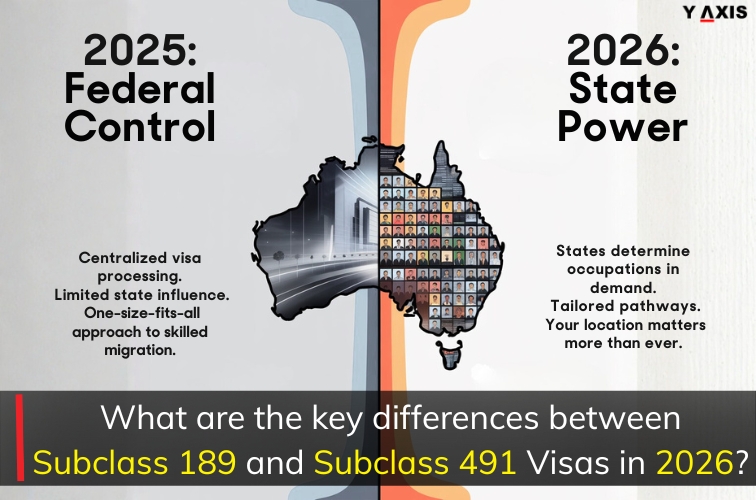
What are the key differences between Subclass 189 and Subclass 491 Visas in 2026?

By , Editor
Updated December 29 2025
Australia remains one of the most popular destinations for skilled professionals seeking global employment opportunities and a pathway to permanent residency (PR). Two of the most discussed visas under Australia’s General Skilled Migration (GSM) program are the Subclass 491 Skilled Work Regional (Provisional) visa and the Subclass 189 Skilled Independent visa. With ongoing updates to the migration policy for 2025–26, including quarterly invitation rounds for 189 visas and shifting nomination allocations, understanding the differences between these two visas is more important than ever.
Subclass 189 and Subclass 491 Visas
The Subclass 189 and Subclass 491 visas are two popular skilled migration options for people who want to settle in Australia. The Subclass 189 Skilled Independent Visa is a permanent residence visa. It does not require sponsorship from a state, territory, or family member. Applicants must score at least 65 points, but higher scores increase the chances of getting an invitation. Once granted, this visa allows you to live, work, and study anywhere in Australia. You also get access to Medicare and can later apply for Australian citizenship. From 2026 onwards, invitations for this visa are expected to be issued on a quarterly basis instead of randomly.
The Subclass 491 Skilled Work Regional Visa is a temporary visa valid for five years and is designed for people willing to live and work in regional Australia. To apply, you must either be nominated by an Australian state or territory government or sponsored by an eligible family member living in a regional area. Visa holders must live and work only in designated regional areas during the visa period. After living and working in a regional area for at least three years and meeting the income requirements, applicants can apply for permanent residency through the Subclass 191 visa.
*Want to apply for Subclass 189 and Subclass 491? Contact the Y-axis for complete guidance
Key Differences Between Subclass 189 and Subclass 491
The Subclass 189 and Subclass 491 visas are both part of Australia’s skilled migration program, but they differ in terms of visa type, eligibility, and long-term benefits. While the Subclass 189 visa offers direct permanent residency without any sponsorship, the Subclass 491 visa is a temporary pathway designed for skilled workers willing to live and work in regional Australia. Understanding these key differences helps applicants choose the visa option that best matches their career goals, location preference, and eligibility.
|
Feature |
Subclass 189 – Skilled Independent |
Subclass 491 – Skilled Work Regional |
|
Visa Type |
Permanent Residency from day one |
Provisional visa (temporary), leads to PR after conditions are met |
|
Sponsorship |
Not required |
State/territory or eligible family sponsorship required |
|
Place of Living |
Can live and work anywhere in Australia |
Must live and work only in designated regional areas |
|
Points Bonus |
Based purely on your points score |
Often offers extra points for regional nomination or family sponsorship |
|
Pathway to PR |
Direct PR (granted immediately) |
Indirect PR via Subclass 191 after meeting regional requirements |
|
Invitation Frequency (2026) |
Quarterly invitation rounds |
Depends on state or territory nomination allocations |
|
Processing Time |
Usually faster once invited, as it is a direct PR visa |
May take longer due to state nomination and later PR transition |
|
Visa Cost (Primary Applicant) |
Higher upfront cost as it grants permanent residency |
Lower initial cost, but additional costs apply later for PR (Subclass 191) |
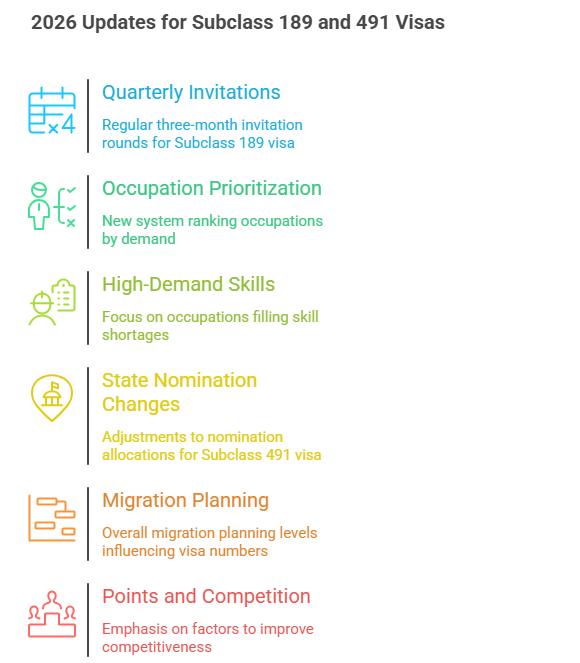
2026 Updates for Subclass 189 and 491 Visas
From 2026, the Australian skilled migration system is being updated, and these changes affect how the Subclass 189 (Skilled Independent) and Subclass 491 (Skilled Work Regional) visas are selected and processed. Below are the main changes and important things to consider:
Regular Quarterly Invitation Rounds for 189 Visa
Previously, invitations for the Subclass 189 visa were issued irregularly based on processing capacity and demand. Starting in 2026, invitations will now be released every three months (quarterly). This makes the process more predictable, so applicants know when selection rounds happen.
New Prioritisation for Occupations
A new system is being used to sort occupations into different priority levels. Occupations in high demand (like healthcare and certain skilled trades) are given higher priority for invitations, while others with less demand may receive fewer spots. This means your chances of getting an invitation can depend on how your occupation is ranked under this system.
Focus on High-Demand Skills
Australia is now focusing more on occupations that fill real skill shortages in the economy, such as healthcare, construction, engineering, IT, and education. If your skills are in these fields, you may have better chances of being invited for both the 189 and 491 visas.
Changes to 491 State Nomination Allocations
The number of nomination places for the Subclass 491 visa from some states has been changed. Some states have reduced the number of places they can give out, while others have increased them. This affects how easy or hard it is to get a state nomination, which is required for the 491 visa.
Migration Program Planning Remains Important
The overall migration planning levels, including the number of skilled migration places available each year, continue to guide how many visas are offered. These planning levels influence how many invitations and nominations are issued for both the 189 and 491 visas.
Points and Competition Still Matter
Although the basic points test (minimum of 65 points) stays the same, competition is higher. More emphasis is placed on factors like strong English skills, skilled work experience, relevant qualifications, and partner skills to improve your score and competitiveness in the pool.
Eligibility Requirements for Subclass 189 and 491 Visas
Both the Subclass 189 and Subclass 491 visas are part of Australia’s skilled migration program. While they have some common rules, there are also important differences in eligibility.
Common Requirements
To apply for either visa, you must:
- Score at least 65 points in the points test.
- Have a positive skills assessment for your nominated occupation from the relevant authority.
- Meet the English language requirement (competent or higher).
- Be under the age limit set by the government at the time of invitation (usually under 45 years).
Different Requirements
- Subclass 189: No sponsorship is needed. Selection is based only on your points score and occupation demand.
- Subclass 491: You must have state or territory nomination or family sponsorship from a relative living in a regional area, and you must agree to live and work in a designated regional area during your visa period.
* Want to work in Australia? Start here to get expert guidance with the Migrate to Australia Flipbook.
Subclass 189 or Subclass 491 – Which Visa Should You Choose?
Choose Subclass 189 if:
- You have a strong points score and don’t need regional sponsorship.
- You want permanent residency immediately.
- You want the freedom to live anywhere in Australia.
Choose Subclass 491 if:
- You’re open to living in a regional area and potentially earning extra points for regional nomination.
- You need a higher probability of invitation even if your points are not as competitive for 189 invitations.
- You want a clear pathway to PR after satisfying regional work and residency requirements.
How to Apply for Subclass 189 and Subclass 491 Visas?
Step 1: Check if your occupation is on the skilled list and meet the basic eligibility rules.
Step 2: Get a positive skills assessment from the relevant authority.
Step 3: Submit an Expression of Interest (EOI) in SkillSelect.
Step 4: Apply for state nomination (for Subclass 491) or wait for selection (for Subclass 189).
Step 5: Receive an invitation to apply for the visa.
Step 6: Submit your visa application with all required documents.
Step 7: Get your visa approved and move to Australia.
*Want assistance with the Australia Immigration? Talk to Y-Axis, the world’s No.1 overseas immigration consultant for end-to-end support.
FAQs
What is the main difference between Subclass 189 and Subclass 491 visas?
The main difference between Subclass 189 and Subclass 491 visas is the type of residency they offer. The Subclass 189 visa gives permanent residency from the beginning and allows you to live and work anywhere in Australia. The Subclass 491 visa is a temporary visa that requires you to live and work in a regional area before becoming eligible for permanent residency later through another visa.
Which visa is better – Subclass 189 or Subclass 491?
The better visa depends on your situation. If you have a high points score and want permanent residency immediately, the Subclass 189 visa is the better option. However, if your points are lower or you are open to living in a regional area, the Subclass 491 visa offers a good opportunity to move to Australia and later apply for permanent residency.
What are the eligibility requirements for Subclass 189 and 491 visas?
To apply for either visa, you must score at least 65 points, have a positive skills assessment, meet English language requirements, and be under the age limit. For the Subclass 189 visa, no sponsorship is needed. For the Subclass 491 visa, you must have sponsorship from a state government or an eligible family member living in a regional area.
How long does it take to get PR through Subclass 491?
The Subclass 491 visa is valid for five years. To get permanent residency, you must live and work in a designated regional area for at least three years and meet income requirements set by the government. After completing these conditions, you can apply for the Subclass 191 visa, which gives you permanent resident status in Australia.
How long does it take to process Subclass 189 and 491 visas?
Processing times can vary depending on the number of applications and your personal documents. Generally, the Subclass 189 visa may be processed faster after invitation because it leads directly to permanent residency. The Subclass 491 visa can take longer because it involves state nomination and later a second stage for permanent residency through Subclass 191.
Do I need a job offer for Subclass 189 or Subclass 491?
A job offer is not mandatory for either visa. However, for the Subclass 491 visa, some states prefer applicants who already have a job or job offer in a regional area. Having a job offer can improve your chances of getting state nomination but is not always required.
Can I live anywhere in Australia with a Subclass 491 visa?
No, Subclass 491 visa holders must live and work only in designated regional areas of Australia. You are not allowed to live or work in major cities such as Sydney, Melbourne, or Brisbane. Following this condition is important, as breaking it can affect your eligibility for permanent residency later.
What happens if my points are low for Subclass 189?
If your points are not high enough for the Subclass 189 visa, you still have a good chance through the Subclass 491 visa. This visa gives extra points for regional nomination or family sponsorship, which helps improve your overall score and chances of receiving an invitation to apply.
Can I include my family in my visa application for Subclass 189 and Subclass 491 visas?
Yes, you can include your spouse and dependent children in both Subclass 189 and Subclass 491 visa applications. All included family members receive the same visa rights as the main applicant. This allows families to live, work, and study together in Australia under one visa application.
Which visa gives faster permanent residency between subclass 189 and 491?
The Subclass 189 visa gives permanent residency immediately once it is approved. In contrast, the Subclass 491 visa requires you to live and work in a regional area for at least three years before you can apply for permanent residency. So, the 189 visa provides a faster path to permanent residence.
Can I switch from Subclass 491 to Subclass 189 later?
No, you cannot directly switch from Subclass 491 to Subclass 189. If you hold a 491 visa, you must first meet the required conditions, such as living and working in a regional area for at least three years. After meeting these conditions, you can apply for permanent residency through the Subclass 191 visa, not the Subclass 189.
Does Subclass 491 offer more chances of invitation than Subclass 189?
Yes, in many cases the Subclass 491 offers better chances of invitation. This is because it includes state or regional sponsorship, which adds extra points to your profile. Many applicants who do not have enough points for Subclass 189 find Subclass 491 easier to access, especially if they are willing to live in regional Australia.
Is English language score important for both the Subclass 189 and Subclass 491 visas?
Yes, English language ability is very important for both Subclass 189 and Subclass 491 visas. You must meet at least the competent English level, but higher scores in English tests like IELTS or PTE can give you more points. Better English results increase your overall points score and improve your chances of receiving an invitation.
Can I change jobs while on a Subclass 491 visa?
Yes, you can change jobs while holding a Subclass 491 visa, but you must continue working in a designated regional area. You should also ensure that your new job aligns with your nominated occupation or is acceptable under visa conditions. Changing jobs without following the rules could affect your future permanent residency application.
Is the Subclass 491 visa suitable for families?
Yes, the Subclass 491 visa is suitable for families. You can include your spouse and dependent children in your application. Your family members can live, work, and study in regional Australia. This visa is a good option for families looking for affordable living, stable jobs, and a clear pathway to permanent residency in Australia.
Tags:
Subclass 189 visa
Subclass 491 visa
Australia skilled migration
Skilled Independent visa
Skilled Work Regional visa
Australia PR pathway
Australian work visa
Skilled migration Australia
Share
Options for you by Y-Axis

Get it on your mobile

Get News alerts

Contact Y-Axis
Latest Article
Popular Post
Trending Article
Posted On March 30 2026
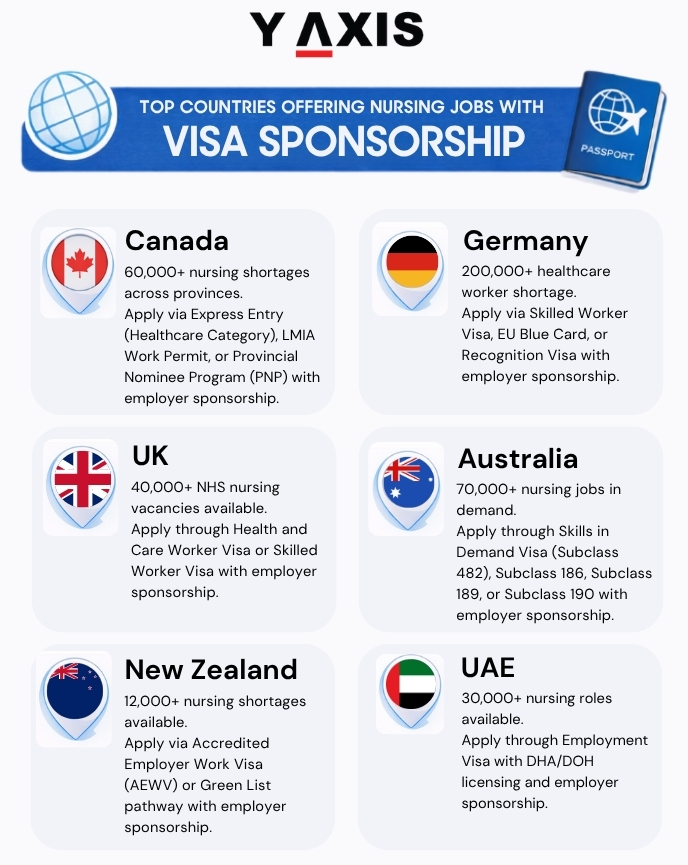
Top Countries Offering Nursing Jobs with Visa Sponsorship