

Posted on September 25 2026
How Can I Get Permanent Residency in Germany?

By , Editor & Director
Updated September 25 2026
Germany offers several immigration pathways for people who want to live and work in the country on a long-term or permanent basis. For non-EU nationals, permanent residence is generally obtained through a settlement permit (Niederlassungserlaubnis) after meeting the applicable residence, employment, language, financial and integration requirements.
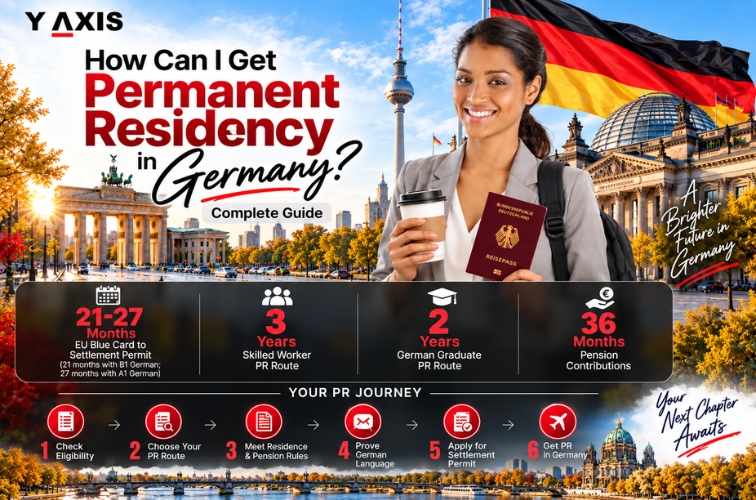
The pathway and waiting period depend on your residence status. Skilled workers, EU Blue Card holders, people who complete vocational training or higher education in Germany, self-employed people and certain family members may qualify under different rules. EU Blue Card holders, for example, can qualify for a settlement permit after 27 months of qualified employment with A1 German, or after 21 months with B1 German, subject to the other requirements. Germany also has routes for qualified professionals with recognised qualifications, vocationally trained workers and people with substantial professional experience.
*Willing to migrate to Germany on a permanent residence pathway? Get in touch with our experts to get FREE counselling.
What Are the Main Ways to Get Permanent Residency in Germany?
Germany has different residence pathways for skilled workers, EU Blue Card holders, graduates, vocationally trained workers, self-employed people and family members. Some of the main routes that can eventually lead to permanent residence include:
|
PR Pathway |
Who It May Suit |
|
Highly qualified professionals with a qualifying job offer and salary who meet the EU Blue Card requirements |
|
|
Skilled Worker Residence Permit |
Professionals with a recognised or comparable academic or vocational qualification and a qualified job in Germany |
|
Settlement Permit for Skilled Workers |
Eligible skilled workers who have lived and worked in Germany for the required period and meet language, pension, financial and other requirements |
|
German Graduate/Vocational Training Pathway |
People who complete higher education or vocational training in Germany and subsequently work as skilled employees |
|
Self-Employment Pathway |
Eligible entrepreneurs and self-employed individuals who establish a sustainable business in Germany |
|
Family Reunification |
Eligible spouses and family members of people who hold qualifying residence permits or permanent residence in Germany |
|
Permanent EU Residence Permit |
Applicants who have generally lived legally in Germany for at least five years and meet the financial, language, integration and pension requirements |
|
Other Eligible Residence Pathways |
Applicants who qualify under other provisions of German residence law and can progress toward permanent residence |
Germany's official immigration portal states that skilled workers can generally apply for a settlement permit after three years of qualifying residence, while people who completed higher education or vocational training in Germany may qualify under special provisions after two years of skilled employment.
Germany PR Requirements
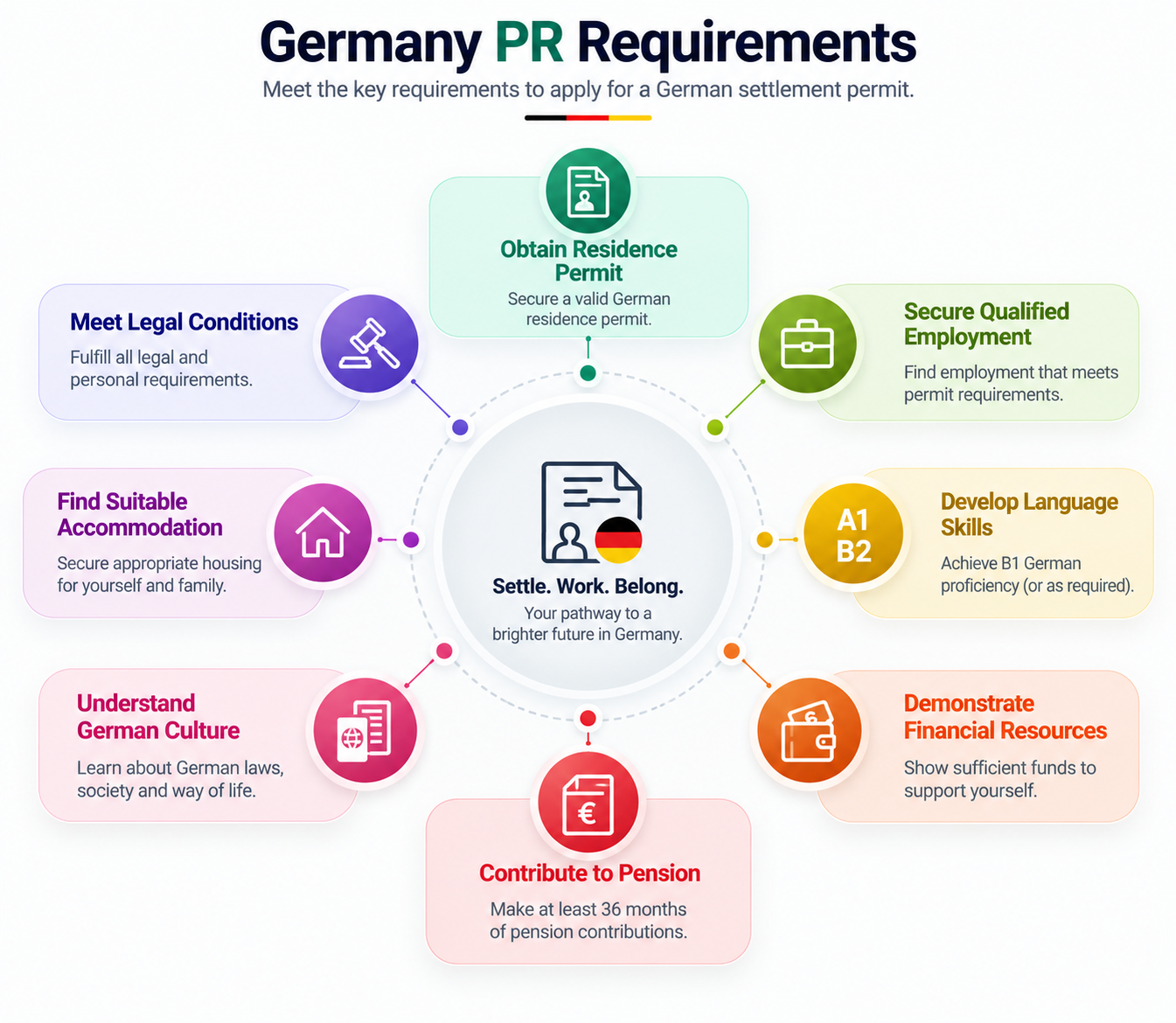
- A valid German residence permit and the required period of residence are needed. Skilled workers can generally apply for permanent residence after 3 years.
- Qualified employment that meets the requirements of the residence permit.
- German language skills, with B1 German required for many skilled-worker routes.
- Sufficient financial resources to support yourself without relying on certain government benefits.
- At least 36 months of pension contributions for the standard skilled-worker route.
- Basic knowledge of Germany's laws, society and way of life.
- Suitable accommodation for yourself and your family, if applicable.
- Compliance with the required legal and personal conditions, along with the necessary supporting documents.
- EU Blue Card holders may qualify for permanent residence after 27 months with A1 German or 21 months with B1 German, subject to the other requirements.
- People who complete university studies or vocational training in Germany may qualify after 2 years of skilled employment and 24 months of pension contributions.
- Additional requirements may apply depending on the specific residence pathway.
*Check your eligibility to migrate to Germany through the Y-Axis Germany Immigration Points calculator.
Steps to Apply for Permanent Residency in Germany
Step 1: Identify the right pathway, such as an EU Blue Card, skilled-worker permit, family reunification or self-employment.
Step 2: Check the eligibility requirements, including qualifications, employment, residence period, German language and financial status.
Step 3: Get your foreign qualification recognised if required for your occupation.
Step 4: Secure an eligible job offer in Germany if applying through a work-based pathway.
Step 5: Apply for the appropriate German visa or residence permit and enter Germany legally.
Step 6: Register your address and obtain your residence permit from the local foreigners authority.
Step 7: Maintain eligible employment, health insurance, financial stability and required pension contributions.
Step 8: Meet the required German-language and integration requirements.
Step 9: Prepare documents such as your passport, residence permit, employment records, income proof and language certificate.
Step 10: Submit your settlement-permit application to the responsible foreigners authority. If approved, you receive a settlement permit (Niederlassungserlaubnis) for permanent residence in Germany.
*Want to work in Germany? Contact Y-Axis for complete guidance
Germany PR Cost and Processing Time
The cost of applying for permanent residence in Germany depends on the application and local authority. The settlement permit application fee can be up to around €150. Additional expenses may include language tests, qualification recognition, document translation and certification. For a long-term German visa before moving to Germany, the standard national visa fee is generally €75.
The time needed to qualify for permanent residence depends on the pathway:
- Skilled workers: Generally 3 years
- EU Blue Card holders: 21 months with B1 German or 27 months with A1 German
- German university or vocational training graduates: Potentially 2 years of skilled employment
The processing time for the permanent residence application can vary based on the local immigration office, application volume and completeness of the documents.
*Looking for help with overseas immigration? Contact Y-Axis, worlds’s number one immigration consultancy for guidance and visa assistance.
FAQs
How can I get permanent residency in Germany?
Permanent residency in Germany is usually granted through a settlement permit. The pathway depends on your residence status, work, qualifications and time spent in Germany. Skilled workers, EU Blue Card holders, German graduates, self-employed people and eligible family members may qualify under different rules. Meeting the required residence period, language, employment, financial and other conditions is important before applying.
How long does it take to get PR in Germany?
The time depends on your residence pathway. Skilled workers can generally apply for a settlement permit after three years of qualifying residence. EU Blue Card holders may qualify after 21 months with B1 German or 27 months with A1 German. People who completed university studies or vocational training in Germany may qualify after two years of skilled employment, subject to the required conditions.
What are the main requirements for Germany PR?
Common requirements include a valid residence permit, qualifying employment, sufficient income, German language skills, pension contributions and suitable accommodation. Knowledge of Germany’s legal and social system may also be required. The exact conditions depend on your residence pathway. Applicants also need to provide supporting documents and meet other requirements set by the responsible foreigners authority when submitting their settlement permit application.
Is German language required for Germany PR?
German language skills are required for many permanent residence pathways. For the standard skilled-worker route, B1 German is generally required. EU Blue Card holders may qualify sooner with B1 German, while A1 German can be sufficient for the longer Blue Card settlement route. Language requirements can vary depending on the residence category, so checking the conditions for your specific pathway is important before applying.
Can EU Blue Card holders get permanent residency in Germany?
Yes, EU Blue Card holders can apply for a German settlement permit after meeting the required conditions. The qualifying period can be 21 months with B1 German or 27 months with A1 German. Other requirements also apply, including qualifying employment, sufficient income, pension contributions, language knowledge and other settlement conditions. The exact requirements should be checked before submitting the application.
Can international students get PR in Germany?
International students can potentially progress toward permanent residence after completing their studies and obtaining qualifying skilled employment. People who complete higher education or vocational training in Germany may qualify for a settlement permit after two years of skilled employment, subject to the applicable requirements. This can include pension contributions, language skills, financial stability and other conditions required by German immigration authorities.
How much does Germany PR cost?
The settlement permit application fee can be up to around €150. Additional costs may apply depending on your situation. These can include expenses for German language tests, qualification recognition, document translation and certification. If you also need a long-term German visa before moving to Germany, the standard national visa fee is generally €75. Fees can change, so applicants should check the latest applicable charges.
What documents are needed for Germany PR?
Documents can vary depending on your residence pathway and local immigration authority. Common documents include a valid passport, current residence permit, employment contract, salary records, pension contribution records, proof of health insurance, language certificate, proof of accommodation and evidence of financial resources. Qualification documents and other supporting papers may also be requested. It is important to provide complete and valid documents with your application.
Can I get Germany PR without a job?
For many employment-based pathways, qualifying employment is an important requirement for permanent residence. Skilled workers and EU Blue Card holders generally need to show qualifying employment and sufficient income. However, Germany has different residence pathways, including some family and self-employment routes. The requirements depend on the specific residence category. Applicants should check which settlement permit rules apply to their individual situation.
Where do I apply for permanent residency in Germany?
Permanent residency applications are generally submitted to the local foreigners authority, known as the Auslanderbehorde, responsible for your place of residence in Germany. The authority reviews your documents and checks whether you meet the settlement permit requirements. Processing times can vary between locations. Applicants should check with their local authority for application procedures, required documents, fees and current processing timelines.
Tags:
How to Get Germany PR
Germany Permanent Residency
Germany PR Process
Germany Immigration
Germany Skilled Migration
Germany EU Blue Card
Germany PR Eligibility
Germany PR Requirements
Germany Immigration for Skilled Workers
Germany PR for Indians
Share
Options for you by Y-Axis
Get it on your mobile

Get News alerts

Contact Y-Axis
Latest Article
Popular Post
Trending Article
Posted On September 25 2026
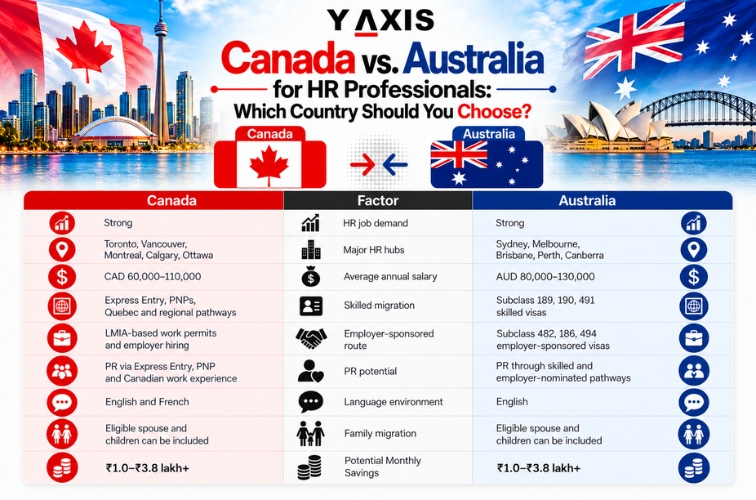
Canada vs. Australia for HR Professionals: Which Country Should You Choose?