

Posted on September 30 2026
How Can I Get Permanent Residency in Denmark?

By , Editor & Director
Updated September 30 2026
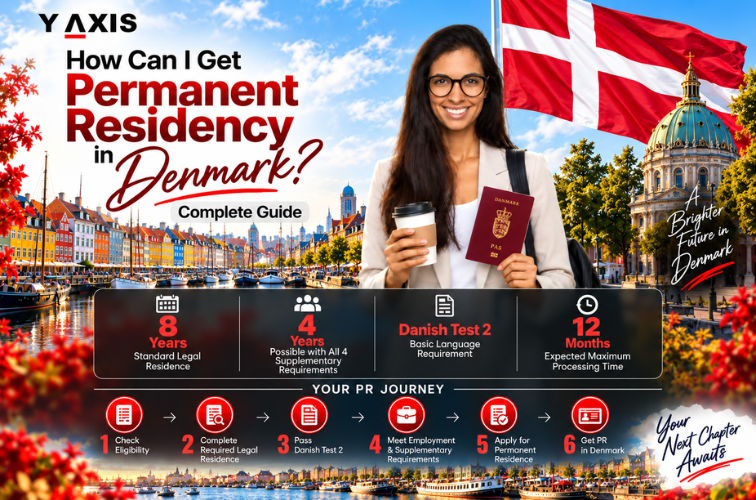
Denmark offers several ways for non-EU citizens to live and work in the country for a long time. Common options include work, highly skilled jobs, study, family reunification and starting a business. The right option depends on your education, work experience, job offer, salary, business plans and family situation. For skilled professionals, work-based residence permits can provide a pathway to permanent residence. Popular work routes include the Pay Limit Scheme, Positive List and Fast-Track Scheme. In general, you can apply for permanent residence after 8 years of legal residence in Denmark. In some cases, you may qualify after 4 years if you meet additional requirements.
*Want to migrate to Denmark? Contact Y-Axis for complete guidance and support.
What Are the Main Ways to Get Permanent Residency in Denmark?
|
PR / Residence Pathway |
Who It May Suit |
|
Employment Residence Visa |
Foreign workers with a valid job offer or employment contract in Denmark. |
|
Pay Limit Scheme |
Professionals with a Danish job that meets the required minimum salary. |
|
Positive List |
Skilled workers whose occupation is on Denmark's shortage occupation list. |
|
Fast-Track Scheme |
Skilled workers employed by companies approved under Denmark's Fast-Track system. |
|
Highly Qualified Work / Researcher |
Highly skilled professionals and researchers with eligible jobs in Denmark. |
|
Study Residence Permit |
International students accepted into an eligible Danish education programme. |
|
Start-up Denmark |
Entrepreneurs with an approved business idea who want to run a business in Denmark. |
|
Family Reunification |
Eligible spouses, partners, children and other qualifying family members of people living in Denmark. |
|
Permanent Residence |
Non-EU citizens who meet the required residence period and other permanent-residence conditions. |
Note: Denmark does not have a general investment or passive-income residence programme. People working remotely usually need to qualify through another suitable residence or work route.
*Do you want to work in Denmark? Contact Y-Axis, the No. 1 Overseas Immigration Consultant.
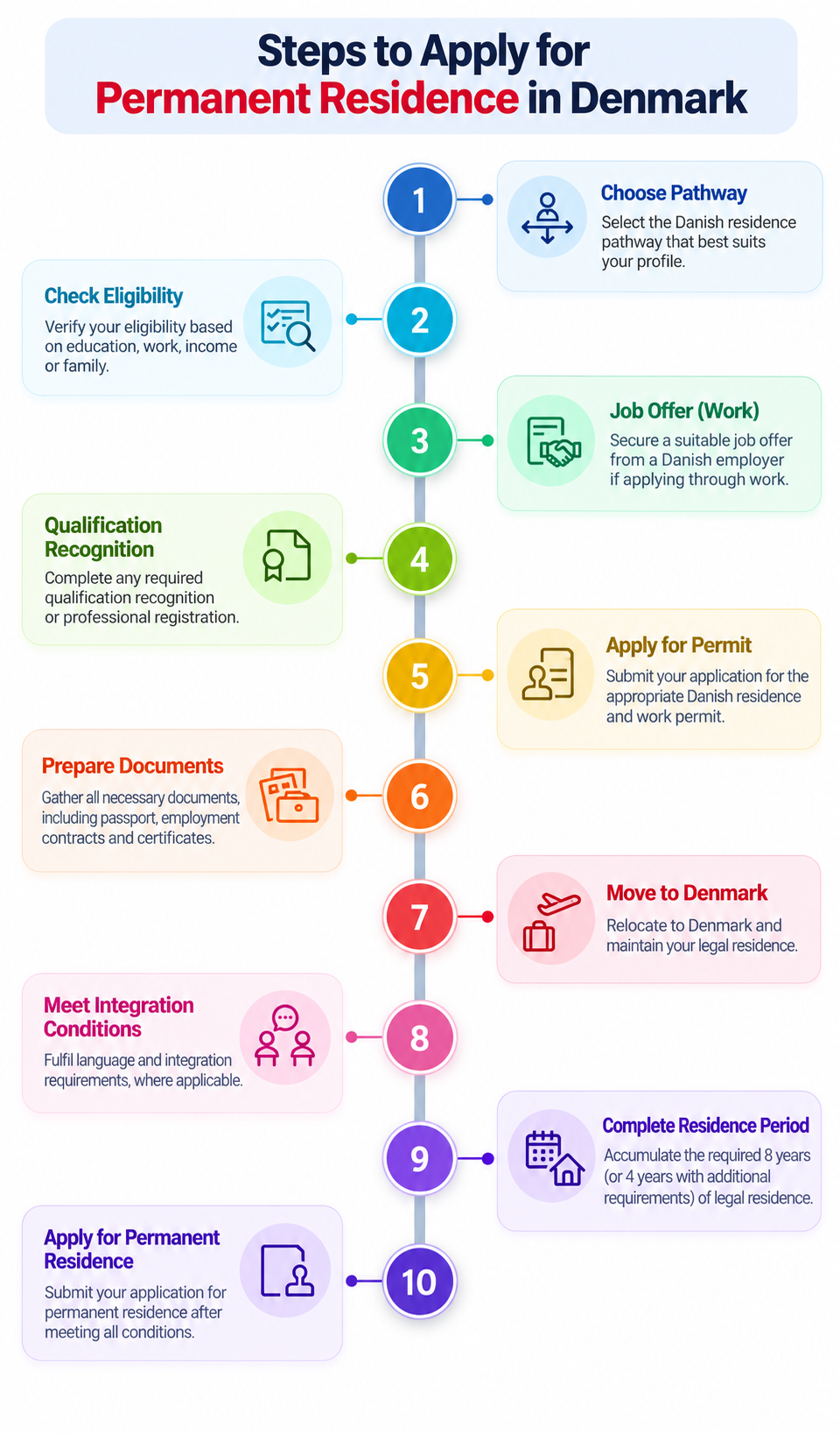
Steps to Apply for Permanent Residence in Denmark
Step 1: Choose the Danish residence pathway that matches your profile, such as work, study, family reunification or business.
Step 2: Check your eligibility based on your education, work experience, job offer, salary, income or family relationship.
Step 3: If applying through work, get a suitable job offer from a Danish employer.
Step 4: Complete any required qualification recognition or professional registration.
Step 5: Apply for the appropriate Danish residence and work permit.
Step 6: Prepare documents such as your passport, employment contract, education certificates, proof of income and other required documents.
Step 7: Move to Denmark and maintain your legal residence.
Step 8: Meet the required language and integration conditions, where applicable.
Step 9: Complete the required residence period. The normal requirement is 8 years of legal residence. Some applicants may qualify after 4 years if they meet all the additional requirements.
Step 10: Apply for permanent residence after meeting the required conditions and submit the necessary documents and application fee.
Note: Permanent residence requirements can include language skills, employment, financial independence, integration and other conditions. Requirements and fees may change, so applicants should check the latest rules before applying.
Denmark PR Requirements
- You usually need to live legally in Denmark for at least 8 years before applying for permanent residence.
- In some cases, you may qualify after 4 years of legal residence if you meet all the additional requirements.
- You must have a valid residence permit and meet the conditions for permanent residence.
- You generally need to show that you are financially self-supporting and have not received certain types of public benefits.
- You must meet the required Danish-language conditions, depending on the permanent residence route.
- You may need to meet requirements related to employment or work history in Denmark.
- You must meet applicable integration and active citizenship requirements, where required.
- You must comply with Denmark's tax and legal requirements.
- You must meet the applicable criminal-record and conduct requirements.
- You need to provide documents such as your passport, residence documents, employment records, language certificates and other supporting documents, depending on your situation.
- After meeting the requirements, you can apply for permanent residence in Denmark through the Danish immigration authorities.
*Read about...
Denmark PR Cost and Processing Time
The cost of permanent residence in Denmark depends on your application category. The application fee for permanent residence based on work or study is DKK 7,570. Different fees may apply to other categories. The processing time can vary depending on the application and the workload of the Danish immigration authorities. The stated processing time for permanent residence applications can be up to 12 months, although some applications may be processed faster. Permanent residence requirements, fees and processing times can change, so applicants should check the latest requirements before submitting an application.
*Looking for assistance with overseas immigration? Contact Y-Axis, the world's number one immigration consultancy, for guidance and visa assistance.
FAQs
How long do I need to live in Denmark before applying for permanent residence?
Most applicants need to live legally in Denmark for 8 years before applying for permanent residence. In some cases, the period can be reduced to 4 years if all additional requirements are met. You must continue to meet the conditions of your residence permit and follow Denmark’s rules on work, language, public benefits and integration during your period of residence.
Can I get Denmark permanent residence after 4 years?
Yes, some applicants may qualify after 4 years of legal residence. However, they must meet all the required basic conditions and additional requirements. These may include stronger Danish language skills, longer full-time employment, a certain income level and active participation in Danish society. The 4-year option has stricter conditions, so applicants should carefully check whether they meet every requirement before applying.
What are the basic requirements for Denmark permanent residence?
To apply for permanent residence, you generally need to be 18 or older and have lived legally in Denmark for the required period. You must also meet conditions related to employment, language, criminal record, public benefits, financial obligations and integration. Your current residence permit must remain valid and you must continue to follow its conditions when your permanent residence application is processed.
Do I need to know Danish to get permanent residence?
Yes, Danish language skills are an important part of the permanent residence process. Applicants generally need to pass a required Danish language test or meet an accepted equivalent condition. A higher level of Danish may help satisfy additional requirements. Learning Danish can also help with everyday communication, work and integration into Danish society while building your long-term life in the country.
Do I need to work in Denmark to get permanent residence?
Yes, employment is an important requirement for many permanent residence applicants. You generally need to meet specific work conditions and have a qualifying employment history. Full-time work for a required period may also help you meet additional requirements. Your employment record, unemployment periods and current job can affect your application, so maintaining stable employment can be important when preparing for permanent residence.
Can students apply for permanent residence in Denmark?
Students can later apply for permanent residence if they meet the required conditions, but studying in Denmark alone does not automatically provide permanent residence. After completing their studies, many students move into qualifying employment and build their residence history. They must meet the required rules for legal residence, employment, Danish language skills, financial independence and integration before becoming eligible to apply for permanent residence.
Can I get permanent residence through family reunification in Denmark?
Yes, people living in Denmark through family reunification may later qualify for permanent residence. However, they still need to meet the relevant permanent residence requirements. These can include legal residence, employment, Danish language skills, financial conditions, criminal record requirements and integration rules. Family reunification gives you a residence pathway, but it does not automatically change into permanent residence without meeting the required conditions.
How much does it cost to apply for permanent residence in Denmark?
For 2026, the application fee for permanent residence based on work or study is DKK 7,570. Different fees can apply to applications based on family reunification or other categories. The fee may change in future years, so applicants should check the latest amount before submitting their application. Other expenses, such as document translation, certificates or travel, may also need to be considered.
How long does Denmark permanent residence processing take?
The processing time for a Denmark permanent residence application can be up to 12 months. Some applications may be completed sooner, depending on the case and whether all required information is provided correctly. Missing documents or requests for additional information can cause delays. Applicants should submit a complete application and respond quickly if the immigration authorities ask for more documents or clarification.
Where can I apply for permanent residence in Denmark?
You can apply for permanent residence through the Danish immigration authorities using the required application process. You need to complete the application, pay the correct fee and provide supporting documents. Depending on your application, you may also need to provide biometric information such as fingerprints and a photograph. Make sure your current residence status remains valid while your permanent residence application is being processed.
Tags:
How to Get Denmark PR
Denmark Permanent Residency
Denmark PR Process
Denmark Immigration
Denmark Skilled Migration
Denmark Work Visa
Denmark PR Eligibility
Denmark PR Requirements
Denmark Immigration for Skilled Workers
Denmark PR for Indians
Share
Options for you by Y-Axis

Get it on your mobile

Get News alerts

Contact Y-Axis
Latest Article
Popular Post
Trending Article
Posted On September 30 2026
How Can I Get Permanent Residency in Denmark?