

Posted on September 25 2026
What Is the Average Salary in Germany?

By , Editor & Director
Updated September 25 2026
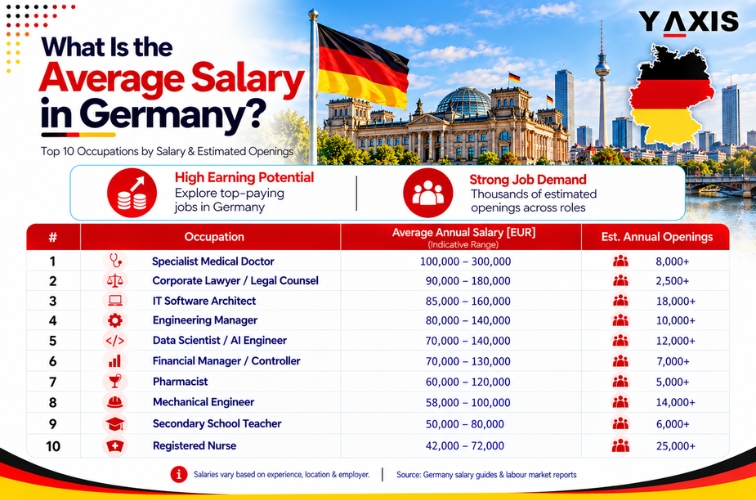
The average salary in Germany is about €4,784 (roughly ₹5.26 lakh) per month for full-time employees, excluding bonuses and additional incentives. Including special payments/festive bonuses such as holiday and Christmas pay, the average income is around €64,441 (₹70.9 lakh approx.) per annum. These figures come from the Federal Statistical Office of Germany (Destatis). The median salary, a more typical figure, is €54,066 per year, or about €4,505 per month. Skilled professionals in medicine, IT, engineering, and finance often earn €65,000 to €110,000 or more per year. The salary in Germany for foreign skilled workers wil further vary based on aspects like state, city, and sector. Hesse, Hamburg, Baden-Württemberg, and Bavaria pay more than most other states, and Munich, Frankfurt, and Stuttgart offer some of the highest salaries in the country.
*Want to work in Germany? Let Y-Axis guide you through the process.
Top 10 Highest-Paying Occupations in Germany
Germany job market mainly comprises sectors such as IT, engineering, automotive, finance, and healthcare. Salaries for professionals in Germany vary widely by sector while many high-demand roles face ongoing skill shortages. This creates more job openings and higher pay, especially in IT, engineering, and healthcare.
The table below highlights 10 occupations with strong salaries and steady hiring demand in Germany:
|
Occupation |
Average Annual Salary (EUR) |
Est. Annual Salary (INR) |
Demand Outlook |
|
Specialist Doctor / Senior Physician |
€85,000-160,000 |
₹93.5 lakh-1.76 crore+ |
Persistent shortage of doctors, especially in rural and eastern regions |
|
Corporate Lawyer / Legal Counsel |
€70,000-130,000 |
₹77 lakh-1.43 crore+ |
Law firms and multinationals in Frankfurt, Munich, and Düsseldorf pay well above average |
|
AI Engineer / Data Scientist |
€65,000-110,000 |
₹71.5 lakh-1.21 crore+ |
Strong demand across automotive, finance, and tech; AI/ML skills command a premium |
|
Finance / Tax Manager |
€65,000-110,000 |
₹71.5 lakh-1.21 crore+ |
Frankfurt's banking and finance hub sustains steady senior hiring |
|
Senior Software Engineer |
€65,000-100,000 |
₹71.5 lakh-1.1 crore+ |
Cloud, backend, and automation skills drive hiring in Berlin, Munich, and Hamburg |
|
IT Security / Cybersecurity Specialist |
€60,000-95,000 |
₹66 lakh-1.05 crore+ |
Rising demand as companies and public bodies strengthen digital security |
|
Electrical / Automotive Engineer |
€58,000-85,000 |
₹63.8-93.5 lakh+ |
Electric mobility and energy transition projects keep demand high |
|
Mechanical Engineer |
€55,000-80,000 |
₹60.5-88 lakh+ |
Machinery and manufacturing hubs in Bavaria and Baden-Württemberg hire steadily |
|
Pharmacist |
€50,000-70,000 |
₹55-77 lakh+ |
Steady demand across pharmacies, hospitals, and pharma manufacturers |
|
Registered Nurse / Care Professional |
€42,000-55,000 |
₹46.2-60.5 lakh+ |
A listed shortage occupation with strong hiring of foreign nurses |
Also, read...
Highest Paying Job Opportunities in Germany
Average Lifestyle Expenses in Germany
Germany offers strong salaries, but living costs vary widely by city. Housing is the largest expense, followed by groceries, utilities, and transport. Knowing these costs in advance helps you judge whether a salary offer in Germany is truly competitive.
- Rent (1-bed apartment, city centre, Munich or Frankfurt): €1,200-1,800 per month
- Rent (1-bed apartment, outside city centre / smaller cities, e.g. Leipzig, Dortmund): €600-950 per month
- Groceries (single person): €250-400 per month
- Utilities (electricity, heating, and water, ~85 m² apartment): €250-350 per month
- Public transport (Deutschlandticket, nationwide monthly pass): €63 per month
- Mobile and internet plan: €40-70 per month combined
- Broadcasting licence fee (Rundfunkbeitrag, per household): €18.36 per month
- Dining out (casual meal for two): €40-70
- Overall monthly budget, single person, excluding rent: €900-1,300
- Overall monthly budget, single person, including rent (comfortable baseline, Munich): €2,300-3,000
Note: Many professionals reduce costs by living in nearby towns, such as Augsburg near Munich or Offenbach near Frankfurt. Cities such as Leipzig, Dresden, and Nuremberg also offer competitive salaries with much lower rent and daily costs.
Also, read...
What are the most in-demand jobs in Germany for the next 10 years?
Salary Structure and Take-Home Pay in Germany
Germany applies a progressive income tax, which employers withhold monthly as wage tax (Lohnsteuer). Income up to €12,348 in Germany in a year is tax-free. Above this, taxes may range from 14% to 42%. The 42% rate starts at €69,879 of taxable income, and a top rate of 45% applies above €277,826. The solidarity surcharge currently affects only high earnering professionals in Germany. Church tax of 8% to 9% applies only to registered church members. On top of income tax, employees pay social security contributions. These are 9.3% for pension, 1.3% for unemployment insurance, and about 8.75% for health insurance. Long-term care insurance adds 1.8%, or 2.4% for childless employees aged 23 and over. Pension and unemployment contributions are capped at a €8,450 monthly salary. Health and care contributions are capped at €5,812.50 per month.
The table below shows illustrative gross monthly salary and approximate take-home pay for a single employee in Tax Class I, with no children, statutory health insurance, and no church tax. Figures are indicative only; actual take-home pay depends on tax class, health insurer, and personal situation:
|
Gross Monthly Salary |
Mandatory Deductions (Income Tax + Social Security) |
Approx. Take-Home Pay |
|
€3,500 (~€42,000/year) |
~€1,150 (~33%) |
~€2,350 (~67%) |
|
€4,800 (~€57,600/year) |
~€1,750 (~36%) |
~€3,050 (~64%) |
|
€6,500 (~€78,000/year) |
~€2,550 (~39%) |
~€3,950 (~61%) |
|
€9,000 (~€108,000/year) |
~€3,780 (~42%) |
~€5,220 (~58%) |
Also, read...
What are the eligibility requirements for a Germany work visa?
How Germany's Average Salary Compares to Other Countries
Germany pays more than most European countries. Its median full-time salary is about €54,000 a year. This is higher than the UK's median full-time salary of about £39,000 (roughly €45,000). France, Spain, Italy, and Poland generally pay less for similar roles. Switzerland, Luxembourg, and Denmark pay more, but their living costs are also higher. When comparing job offers, look at net income after tax, rent, and living costs. This gives a more realistic view of how far your income will go.
Germany is especially attractive for professionals in IT, engineering, healthcare, and the natural sciences, where skill shortages continue to create strong opportunities. Salaries can also vary significantly by state, city, experience, qualifications, and industry.
*Are you looking for step-by-step assistance with Germany immigration? Contact Y-Axis, the world's No. 1 overseas immigration consultancy, for end-to-end assistance!
FAQs
What is the average salary in Germany?
The average (mean) gross salary for full-time employees in Germany is about €4,784 per month, excluding bonuses. Including special payments such as holiday and Christmas pay, the average is €64,441 per year. These figures come from the Federal Statistical Office (Destatis). High earners in finance, IT, and senior management pull the average upward. The median salary, a more typical measure, is €54,066 per year, or about €4,505 per month.
What is the difference between average and median salary in Germany?
The average (mean) salary adds up all earnings and divides the total by the number of workers. A small group of very high earners pulls this figure upward. Germany's average is €64,441 per year for full-time employees. The median is the middle value, so half of all workers earn more and half earn less. Germany's median is €54,066 per year, which gives a more realistic picture of typical pay.
Which jobs pay the highest salaries in Germany?
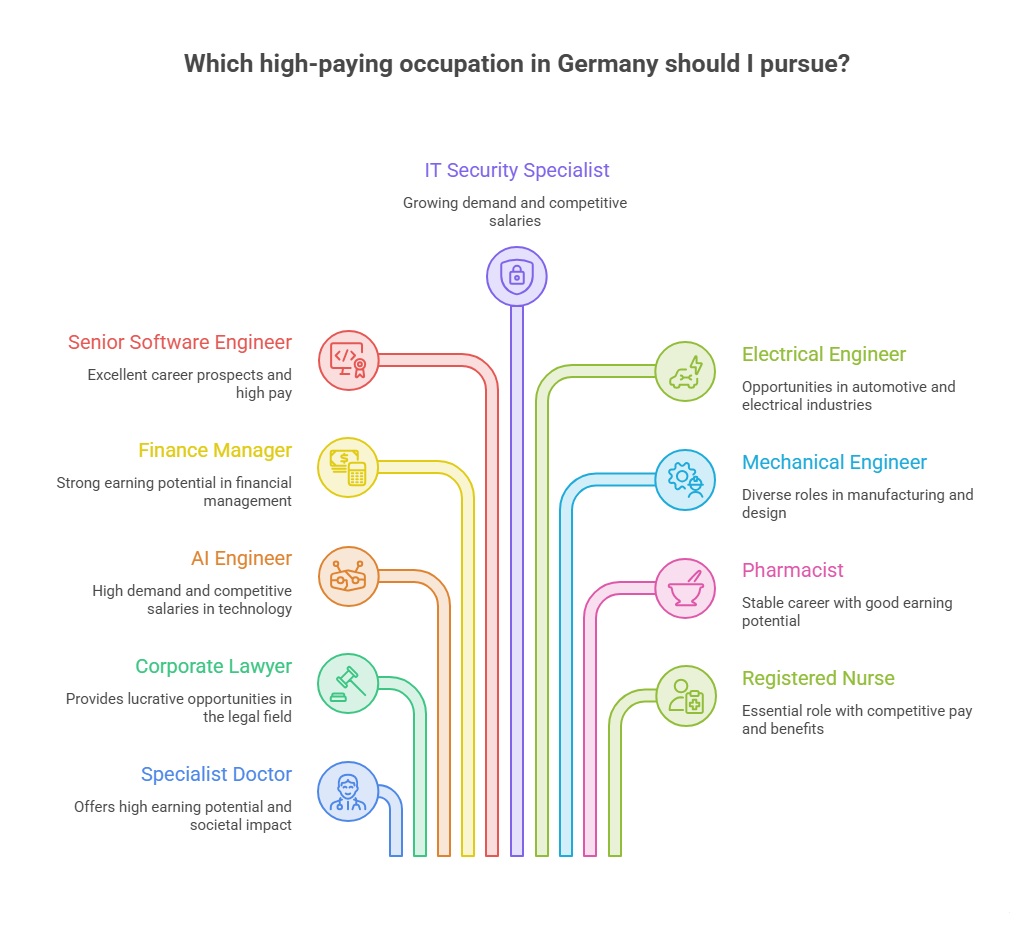
The highest-paying roles in Germany include specialist doctors, corporate lawyers, AI engineers, and finance managers. These professionals often earn €70,000 to €130,000 or more per year. Senior software engineers, cybersecurity specialists, and engineers also earn well above the national median. Pay is highest in Munich, Frankfurt, Stuttgart, and Hamburg, which host major finance, technology, and automotive employers.
Is there a minimum wage in Germany?
Yes. Germany has a national statutory minimum wage of €13.90 gross per hour. It applies to most employees in all states and sectors, including foreign workers. A full-time employee working 40 hours a week earns about €2,400 gross per month at this rate. The minimum wage is scheduled to rise to €14.60 per hour. Some sectors set higher minimum rates through collective agreements.
How much tax do I pay on my salary in Germany?
Germany levies a progressive income tax, which employers withhold monthly as wage tax. The first €12,348 of taxable income each year is tax-free. Rates then rise from 14% to 42%, and a top rate of 45% applies above €277,826. Employees also pay about 21% to 22% of their salary in social security contributions, up to set ceilings. These cover pension, health, unemployment, and long-term care insurance.
Is the average salary in Germany enough to live comfortably?
Yes, for most single people. The average monthly salary leaves about €3,000 after income tax and social security. This comfortably covers rent, groceries, transport, and some savings in most German cities. In Munich or Frankfurt, rent takes a larger share of income. Choosing a smaller city, a suburb, or shared accommodation helps an average salary go considerably further.
Do foreign workers earn more than local workers in Germany?
Foreign professionals in Germany are generally paid the same as local workers in similar roles. For many work permits, the Federal Employment Agency checks that pay and working conditions match those of German employees. In high-demand fields such as IT, engineering, and healthcare, skilled foreign professionals often earn at or above the national median. Pay depends on qualifications, experience, German language skills, and the employer.
What is a good salary in Germany for a single person?
A good salary for a single person in Munich or Frankfurt is about €4,500 or more gross per month. This covers rent, living costs, and regular savings. In smaller cities such as Leipzig, Dresden, or Dortmund, €3,500 or more per month is a realistic threshold, since rent and daily costs are lower. A gross salary above €6,500 per month places you well above the national median.
How does Germany's average salary compare to other countries?
Germany pays more than most European countries. Its median full-time salary of about €54,000 is higher than the UK's median full-time salary of about £39,000. France, Spain, Italy, and Poland generally pay less for similar roles. Switzerland, Luxembourg, and Denmark pay more, but living costs there are also higher. Comparing net income after tax and rent gives the most accurate picture.
What salary do I need to qualify for an EU Blue Card in Germany?
The EU Blue Card requires a minimum gross annual salary of €50,700 for most occupations. A lower threshold of €45,934.20 applies to shortage occupations, recent graduates, and qualifying IT specialists. Shortage occupations include IT, engineering, natural sciences, and medicine. First-time applicants aged 45 or older must earn at least about €55,770, unless they can show adequate pension provision. These thresholds are updated every year.
What is the standard working week in Germany?
Most full-time employees in Germany work 35 to 40 hours per week over five days. The Working Hours Act limits work to 8 hours a day. This can extend to 10 hours if the average stays at 8 hours over six months. Employees are entitled to at least 20 paid leave days a year on a five-day week. Many employers offer 25 to 30 days.
Do German employers pay a 13th month salary or bonus?
Many German employers pay a Christmas bonus (Weihnachtsgeld) or holiday pay (Urlaubsgeld), and some pay a full 13th month salary. These payments are not required by law. They usually come from the employment contract or a collective agreement. Always check whether a quoted annual salary includes these payments or is simply paid in 12 equal monthly instalments.
Why do salaries vary so much between German states?
Salaries vary by state mainly due to industry concentration and cost of living. Hesse, Hamburg, Baden-Württemberg, and Bavaria offer the highest pay. These states host major finance, automotive, engineering, and technology employers. Eastern states such as Mecklenburg-Western Pomerania, Saxony-Anhalt, and Thuringia generally report lower wages. Rent and living costs in these states are also lower.
Is health insurance included in my German salary?
Yes, for most employees. Health insurance is mandatory in Germany. Statutory health insurance contributions are deducted automatically from your salary, and your employer pays half. Employees earning above €77,400 per year can choose private health insurance instead. Private insurance premiums depend on age, health, and the level of cover, so compare both options before deciding.
What work permits can Indian professionals use to work in Germany?
Indian professionals can work in Germany through several routes. The EU Blue Card suits university graduates with a qualifying job offer and salary. The Skilled Worker visa covers professionals with recognised degrees or vocational training. The Opportunity Card (Chancenkarte) lets qualified candidates enter Germany to look for work for up to one year. Each route has its own eligibility rules.
How much does a software engineer earn in Germany?
A software engineer in Germany typically earns €50,000 to €75,000 per year. Senior software engineers often earn €65,000 to €100,000 or more. Pay depends on experience, technical skills, employer size, and city. Munich, Frankfurt, Berlin, and Hamburg offer the strongest demand. Cloud, AI, and cybersecurity skills often command an additional salary premium.
What are the mandatory social security contributions on a German salary?
German employees and employers share four social insurance contributions. The employee pays 9.3% for pension and 1.3% for unemployment insurance. Health insurance costs about 8.75%, including half of the average additional contribution. Long-term care adds 1.8%, or 2.4% for childless employees aged 23 and over. Pension and unemployment contributions stop at a €8,450 monthly salary, and health and care contributions at €5,812.50.
Which German city offers the best salary-to-cost-of-living ratio?
Stuttgart, Nuremberg, and Düsseldorf offer a strong salary-to-cost-of-living ratio. They combine high pay in engineering, automotive, and industry with lower rent than Munich. Leipzig and Dresden offer somewhat lower salaries but much lower living costs, which suits professionals focused on savings. Munich and Frankfurt pay the most in absolute terms but also have the highest rents.
Do salaries in Germany increase with experience?
Yes. Salaries in Germany rise steadily with experience, especially in IT, engineering, and finance. Senior specialists and managers can earn 1.5 to 2.5 times more than entry-level staff in the same field. Good German language skills often support faster career growth. Further qualifications, such as professional certifications or a master's degree, can also add a salary premium.
What should I check before negotiating a German job offer?
Before negotiating a German job offer, research salary data for your role, city, and experience level. Confirm whether the quoted figure is gross or net. Check whether it includes a Christmas bonus, holiday pay, or a 13th month salary. Factor in income tax and social security contributions. Finally, compare the net amount with rent and living costs in your city.
Tags:
average salary in Germany
Germany salary guide
cost of living in Germany
Germany income tax
highest paying jobs in Germany
work in Germany
Germany job market
take-home pay Germany
Share
Options for you by Y-Axis

Get it on your mobile

Get News alerts

Contact Y-Axis
Latest Article
Popular Post
Trending Article
Posted On September 25 2026
Canada vs. Australia for HR Professionals: Which Country Should You Choose?