

Posted on November 27 2025
What are the most in-demand jobs in Thailand for the next 10 years?

By , Editor
Updated January 23 2026
High-Paying and In-Demand Jobs in Thailand
The most in-demand and high-paying jobs in Thailand over the next decade will primarily be concentrated in the hospitality & tourism, healthcare, IT, engineering, logistics, construction, and education sectors. As one of Southeast Asia’s most visited and economically diverse countries, Thailand offers a high quality of life, affordable living costs, excellent infrastructure, and widespread opportunities for skilled foreign professionals.
Job roles expected to remain in high demand in Thailand over the next 10 years include software developers, cybersecurity experts, mechanical and electrical engineers, nurses, medical technicians, hotel managers, chefs, logistics coordinators, digital marketing specialists, and English language teachers. Thailand’s ongoing digital transformation, strong tourism recovery, industrial growth through the Eastern Economic Corridor (EEC), and its ageing population are key drivers behind this increased demand for skilled talent.
Thailand continues to attract foreign workers due to its expanding economy, business-friendly environment, stable job market, and competitive salary packages across multiple sectors. With thousands of openings projected across hospitality, healthcare, IT, manufacturing, and logistics, Thailand is emerging as one of Asia’s promising destinations for professionals seeking long-term international career opportunities.
*Want to work in Thailand? Let Y-Axis guide you with the process.
In-Demand Jobs in Thailand and Their Average Salaries
Some of the jobs currently in high demand in Thailand include roles in the hospitality and tourism, healthcare, IT, engineering, logistics, and education sectors. Thailand’s growing economy, digital transformation, tourism recovery, and industrial expansion continue to fuel demand for skilled workers across these fields.
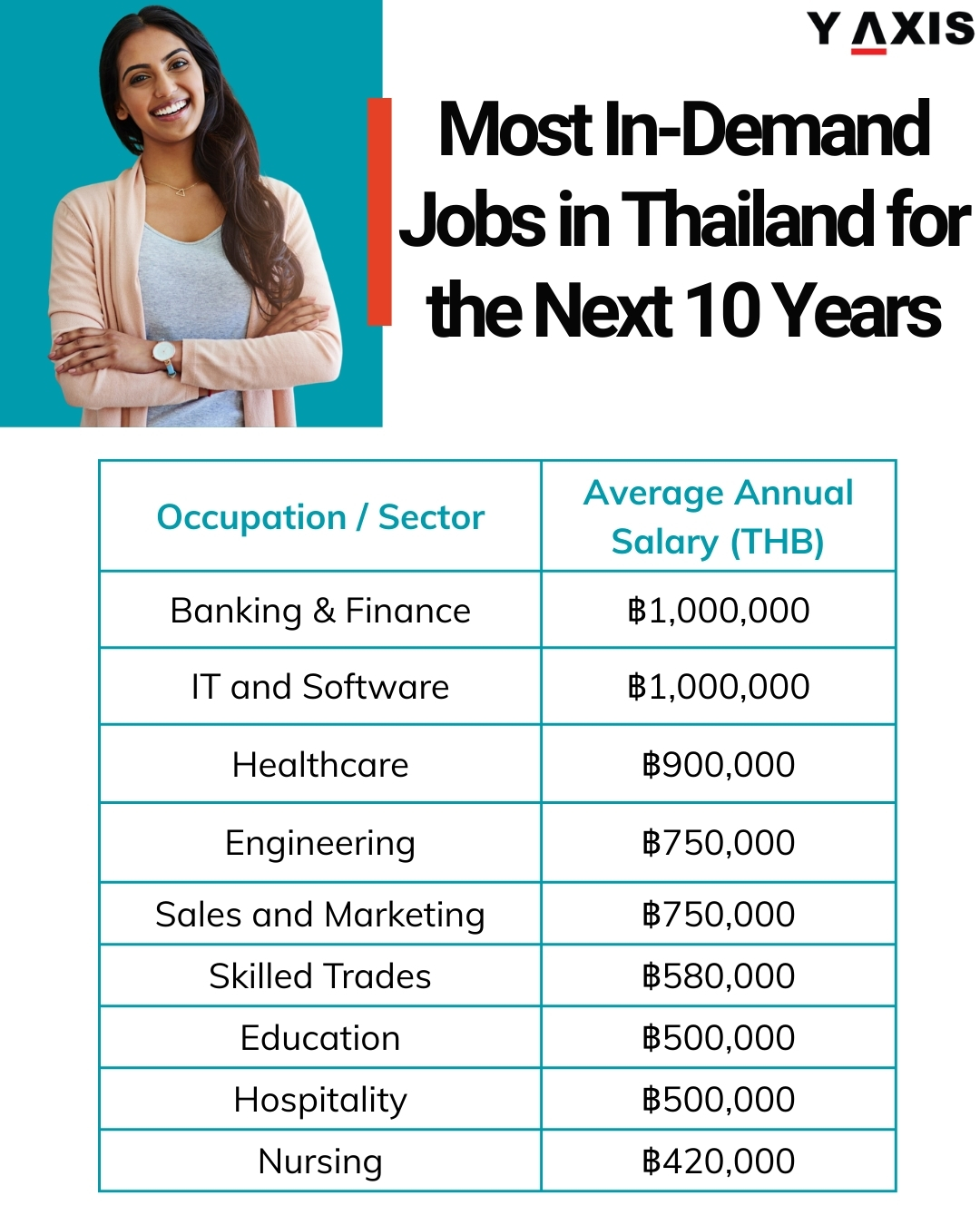
The table below shows the list of top-paying in-demand jobs in Thailand, along with the average annual salaries offered for each:
|
Occupation |
Average Salaries per year (THB) |
|
Engineering |
฿750,000 |
|
IT & Software |
฿1,000,000 |
|
Healthcare |
฿900,000 |
|
Marketing & Sales |
฿750,000 |
|
Banking & Finance |
฿1,100,000 |
|
Nursing |
฿420,000 |
|
Education |
฿500,000 |
|
Hospitality |
฿500,000 |
|
Skilled Trades |
฿580,000 |
*Want to apply for jobs in Thailand? Avail Y-Axis Resume Marketing Services to find the right one.
In-Demand Jobs in Thailand for the Next 10 Years
Thailand’s job market is projected to grow steadily over the next decade, driven by strong expansion in tourism, healthcare, manufacturing, logistics, construction, IT, and digital services. As Thailand continues its economic transformation under the Thailand 4.0 vision, the demand for skilled professionals, especially those with technical, digital, and service-oriented expertise, will rise significantly.
Thailand employs over 2.3 million foreign workers, and workforce needs are expected to increase as the country expands its industrial development zones, boosts medical tourism, accelerates digitalization, and strengthens its logistics and tourism sectors. Salaries vary by sector, experience level, and location, with competitive packages offered in IT, engineering, hospitality, and healthcare roles.
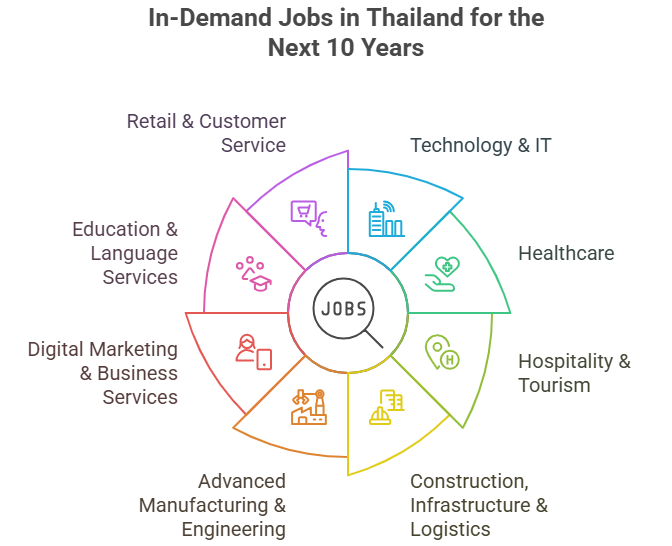
The table below has complete details of job roles that are expected to be in demand in Thailand over the next 10 years:
|
Sector |
Job Roles in Demand |
|
Technology & IT |
Software Developers, IT Support Specialists, Cybersecurity Analysts, Data Analysts, Cloud & Network Engineers, Digital Transformation Specialists |
|
Healthcare |
Nurses, Medical Technicians, Caregivers (Elderly Care), Physiotherapists, Healthcare Administrators |
|
Hospitality & Tourism |
Hotel Managers, Guest Relations Officers, Chefs & Culinary Professionals, Tour Coordinators, F&B Supervisors |
|
Construction, Infrastructure & Logistics |
Civil Engineers, Construction Supervisors, Electricians, Technicians, Logistics Coordinators, Supply Chain Managers |
|
Advanced Manufacturing & Engineering |
Mechanical Engineers, Electrical Engineers, Automation Technicians, Quality Control Specialists, Industrial Machinery Operators |
|
Digital Marketing & Business Services |
Digital Marketing Specialists, Content Managers, Sales Executives, Business Development Managers |
|
Education & Language Services |
English Teachers, Corporate Trainers, Curriculum Developers |
|
Retail & Customer Service |
Customer Service Executives, Store Supervisors, Operations Managers |
Read more…
Thailand Job Market: Trends & Job Opportunities
How to Apply for a Job in Thailand from India?
To work in Thailand from India, you must apply for jobs with Thai employers, secure an offer, and then complete the Thailand work visa and work permit process as per immigration rules.
Step-by-step process to apply for a job in Thailand from India:
Step 1: Apply for jobs with registered Thai employers with the help of Y-Axis Resume Marketing Services.
Step 2: Secure a job offer and receive employer-approved documents
Step 3: Apply for a Thailand Non-Immigrant B (Work) Visa from India
Step 4: Travel to Thailand and apply for a Work Permit through the Ministry of Labour
Step 5: Receive Work Permit approval and begin employment legally
*Are you looking for step-by-step assistance with overseas immigration? Contact Y-Axis, the world’s No. 1 overseas immigration consultancy, for end-to-end assistance!
FAQs
What jobs will be most in demand in Thailand over the next decade?
Thailand is expected to see high demand for jobs in technology, healthcare, engineering, tourism, logistics, manufacturing, and green energy. Roles such as software developers, data analysts, civil engineers, nurses, hotel managers, supply chain specialists, and renewable energy technicians will grow steadily. As the country moves toward digital transformation and smart industries, tech-driven and skilled professional roles will be essential. Population needs, tourism recovery, and industrial expansion will keep these jobs relevant for years to come.
Which industries in Thailand are expected to grow the fastest in the coming years?
Rapid growth is expected in technology, healthcare, tourism, logistics, renewable energy, and advanced manufacturing. Thailand’s shift toward a digital economy fuels demand for IT and software roles, while an aging population expands healthcare needs. Tourism continues to rebound, boosting hospitality jobs. Manufacturing and logistics are growing with increased exports and industrial development. Renewable energy is also becoming a major focus, creating both technical and engineering opportunities.
Why are tech and digital roles becoming more in demand in Thailand?
Tech and digital roles are rising due to Thailand’s ongoing digital transformation, expansion of e-commerce, growing cybersecurity needs, and increased use of automation. Businesses are adopting new technologies, cloud systems, and data-driven processes, creating strong demand for IT professionals. Government initiatives like Thailand 4.0 also encourage innovation and smart industry development. As technology becomes essential across every sector, digital skills are becoming indispensable for long-term career growth.
What engineering jobs will remain highly needed in Thailand?
Civil, mechanical, electrical, and industrial engineers will remain in high demand as Thailand continues investing in transportation networks, manufacturing plants, renewable energy projects, and smart infrastructure. Engineering roles related to automation, robotics, environmental systems, and quality control will also grow. Large-scale construction and industrial development require experienced engineers, making this field one of the most stable and long-term career paths in Thailand.
Are healthcare professionals expected to be in strong demand in Thailand?
Yes, healthcare professionals will continue to be in strong demand due to Thailand’s aging population, growing medical tourism sector, and expanding private healthcare facilities. Nurses, doctors, medical technologists, physical therapists, pharmacists, and caregivers are consistently needed. Healthcare remains one of the most stable and secure employment sectors in the country. Technological advancements in healthcare will also create demand for telemedicine staff, health IT professionals, and specialized clinicians.
Will tourism and hospitality jobs continue to be major employers in Thailand?
Yes, tourism and hospitality will remain major employers, as Thailand is one of the world’s most visited destinations. Jobs for hotel staff, chefs, tour operators, customer service agents, event planners, and travel consultants will continue to grow. Luxury resorts, airlines, and tourism businesses will keep hiring as visitor numbers increase. Multilingual staff and hospitality professionals with digital skills will be especially valued in the coming decade.
What manufacturing and industrial jobs will be needed long-term?
Manufacturing will continue to need machine operators, industrial engineers, quality control inspectors, maintenance technicians, and automation specialists. Thailand’s industrial zones rely heavily on skilled workers to support automotive, electronics, food processing, and export-driven manufacturing. As factories adopt smart technology and robotics, demand for technicians trained in automation, programming, and equipment maintenance will steadily rise.
Are green and renewable energy jobs expected to grow in Thailand?
Yes, renewable energy is a major growth area. Thailand’s investments in solar, wind, biomass, and energy-efficient systems are creating demand for solar technicians, energy auditors, environmental engineers, sustainability specialists, and project managers. As the country moves toward cleaner energy policies, skilled workers in green technology and environmental management will have excellent long-term opportunities.
Which high-paying careers will dominate Thailand’s job market in the next 10 years?
High-paying careers will include software architects, data scientists, cybersecurity experts, cloud engineers, doctors, dentists, senior engineers, financial analysts, and corporate executives. Leadership roles in operations, human resources, and business strategy will also offer competitive salaries. The rise of digital transformation ensures that tech and STEM-based careers will continue to offer some of the highest earning potential.
Are remote and digital nomad jobs rising in popularity in Thailand?
Yes, remote work and digital nomad lifestyles are becoming more popular as global companies hire Thai and foreign workers for online roles. Thailand’s good internet infrastructure, affordable living, and co-working spaces attract professionals in tech, design, marketing, consulting, and content creation. While official digital nomad visas are evolving, remote work opportunities continue to grow, especially in digital and freelance sectors.
What skills do Thai employers expect future workers to have?
Employers expect workers to have strong digital literacy, communication skills, English proficiency, adaptability, and problem-solving abilities. Technical skills in AI, data analysis, cloud systems, automation, and engineering will be increasingly important. Soft skills — teamwork, creativity, leadership, and customer service — will also remain essential. Future workers who combine digital and interpersonal skills will have the highest demand.
Which jobs are suitable for foreigners looking to work in Thailand?
Foreigners often find opportunities in IT, engineering, education, hospitality, business development, marketing, and specialized technical roles. English teachers, software developers, chefs, hotel managers, and international sales professionals commonly work in Thailand. Foreign workers with experience in niche areas or global companies may have better chances, especially if they meet work permit requirements.
Will Thailand face labour shortages in certain industries in the next decade?
Yes, labour shortages are expected in healthcare, engineering, tourism, manufacturing, and logistics. Thailand’s aging workforce and expanding industrial development create hiring gaps in technical and specialized fields. The service sector, especially hospitality, also faces seasonal shortages. Demand for skilled workers will increase across multiple sectors, making upskilled professionals highly valuable.
How will automation and AI affect job demand in Thailand?
Automation and AI will reshape the job market by eliminating some manual roles and creating new tech-driven careers. Jobs in robotics, software engineering, machine learning, and data science will grow, while repetitive tasks become automated. Workers with digital and analytical skills will benefit, while others may need to upskill to remain competitive. Overall, AI will create more opportunities in high-value roles.
What STEM careers are expected to grow in Thailand?
STEM careers in engineering, computer science, biotechnology, environmental science, data analytics, and renewable energy will experience strong growth. Thailand’s move toward smart manufacturing, digital healthcare, and green technology contributes to rising demand for STEM professionals. Technical specialists who can support automation, innovation, and scientific development will be highly sought after.
Are logistics and supply chain jobs expected to remain in demand?
Yes, logistics and supply chain roles will continue growing due to Thailand’s strong position as a regional trade hub. Jobs such as supply chain analysts, warehouse managers, transport coordinators, procurement officers, and logistics planners will remain essential. E-commerce growth and export industries further strengthen the need for skilled logistics professionals.
What careers will be most attractive for fresh graduates in Thailand?
Fresh graduates will find attractive opportunities in digital marketing, IT support, customer service, hospitality, HR, finance, sales, and e-commerce. Entry-level roles in software development, engineering, and logistics are growing as more companies invest in technology. Graduates with digital skills, English proficiency, and internship experience will have a competitive advantage.
Which regions in Thailand will offer strong job opportunities in the future?
Bangkok will continue to lead in corporate, IT, finance, and service-sector jobs. The Eastern Economic Corridor (Chonburi, Rayong, Chachoengsao) will offer major jobs in manufacturing, engineering, and logistics. Chiang Mai, Phuket, and Pattaya will provide opportunities in tourism, hospitality, creative work, and remote jobs. Industrial and tech hubs are expanding across multiple provinces.
How can workers prepare for Thailand’s future job market?
Workers can prepare by developing digital skills, gaining industry-specific certifications, improving English proficiency, and embracing continuous learning. Staying updated with industry trends, networking, and gaining hands-on experience through internships or project work will improve employability. Adaptability, problem-solving, and strong communication skills will be essential in a tech-driven future.
What emerging careers should professionals consider for the next 10 years?
Emerging careers include AI specialists, data analysts, cybersecurity experts, renewable energy engineers, digital marketers, cloud engineers, automation technicians, telemedicine professionals, UX designers, e-commerce managers, and sustainability consultants. As Thailand transitions into technology-driven and green industries, these roles will offer excellent long-term stability, growth, and earning potential.
Tags:
Jobs in Thailand
Jobs in Thailand for Indians
Work in Thailand
Thailand work visa
in-demand jobs in Thailand
In demand jobs in Thailand for the next 10 years
Highest paying jobs in Thailand
Job opportunities in Thailand for foreigners
Share
Y - Axis services

Get it on your mobile

Get News Alerts

Contact Y-Axis
Latest Article
Popular Post
Trending Article

Posted On April 02 2026
190 Skilled Jobs in Denmark Eligible for Work Visa (2026) – Check If You Qualify