


Posted on January 12 2026
US to hike premium processing visa fees from March 2026 — Apply now to save costs!

By , Editor
Updated January 13 2026
Highlights: US Revises Its Premium Processing Fees Effective from March 2026
- USCIS increases premium processing visa fees, which will impact work, study, and other employment-based immigration processes.
- The US Department of Homeland Security announced that the updated processing fees will be imposed for all applications made on and from March 1, 2026.
- The increase in premium processing fees addresses inflation between June 2023 and June 2025, which is aligned with the federal fee-adjustment rules.
- The USCIS Stabilization Act authorizes fee revisions every two years to reflect the inflation rate and preserve service value.
- The hike in fees will facilitate efficient processing and reduce the backlogging of applications, while also strengthening USCIS adjudication capacity.
*Want to apply for a US visa? Let the Y-axis guide you with the steps.
USCIS Updates Premium Processing Charges Under New Final Rule
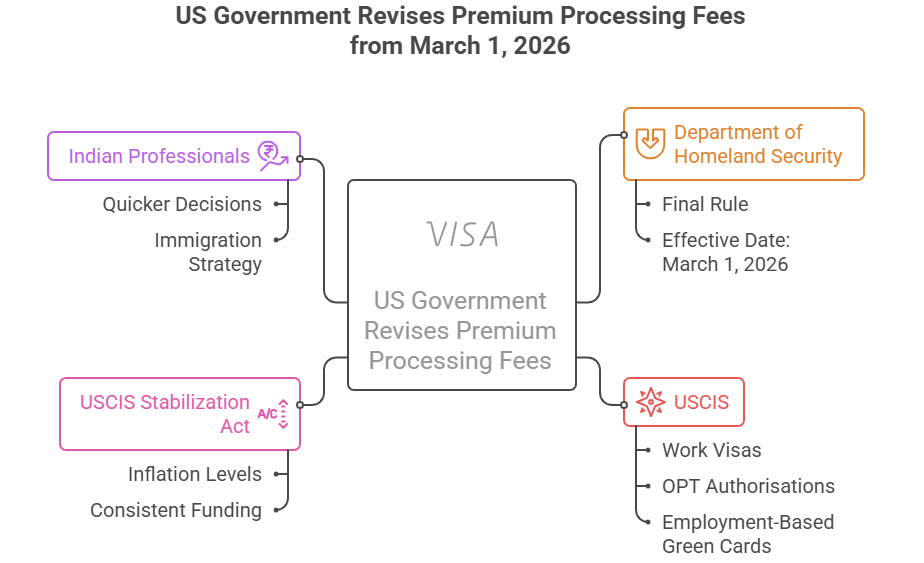
The US Department of Homeland Security has decided to increase the premium processing fees under the New Final Rule, effective for all applications made on and from March 1, 2026. The revised fee structure is part of the mandatory biennial adjustment under the USCIS Stabilization Act, which allows the government to increase fees every two years to account for the inflation rate.
The latest processing fees adjustment is made to reflect the inflation between June 2023 and June 2025. The DHS confirms that the revised premium processing fees structure aims to protect the actual value of the service and secure consistent funding for faster adjudication.
For working professionals and international students from India, as well as many US employers, the premium processing service is an integral pathway to faster migration through streamlined work visa approval, OPT authorizations, and employment-based green card applications. Candidates planning to apply in 2026 should consider the revised fee structure to develop a more effective immigration strategy.
Also, read…
US Government Launches Major Hiring Drive for 1,000 AI and Tech Engineers — Apply Now!
Cost of US Premium Processing Fees from March 2026
Candidates applying for US immigration in 2026 should pay the revised premium processing fees, along with Form I-907, as the older fee structure has been discarded.
The processing fees will vary based on the type of visa, such as US work visas, employment-based permits, and visas for international students.
The US hiked the premium processing visa fees, which are given below:
|
Form |
Category |
Previous Fee |
New Fee (From March 1, 2026) |
|
Form I-129 |
H-2B or R-1 non-immigrant status |
$1,685 |
$1,780 |
|
Form I-129 |
All other eligible classifications including E-1, E-2, E-3, H-1B, H-3, L-1A, L-1B, O, P, Q, TN |
$2,805 |
$2,965 |
|
Form I-140 |
Employment-based immigrant visa categories (EB-1, EB-2, EB-3) |
$2,805 |
$2,965 |
|
Form I-539 |
F-1, F-2, J-1, and related status change applications |
$1,965 |
$2,075 |
|
Form I-765 |
Employment Authorisation (OPT and STEM-OPT) |
$1,685 |
$1,780 |
*Want to migrate to the US? Sign up with Y-Axis to help you with the steps.
How will the Revised Premium Processing Fees Affect Indian Applicants in 2026?
USCIS’s decision to update the premium processing fees for visa applications will significantly impact Indian students, working professionals, and employers, who will need to develop strategies for coping with higher immigration costs and stricter fee compliance. Here is how the increase in premium processing fees impacts US immigration for Indian applicants:
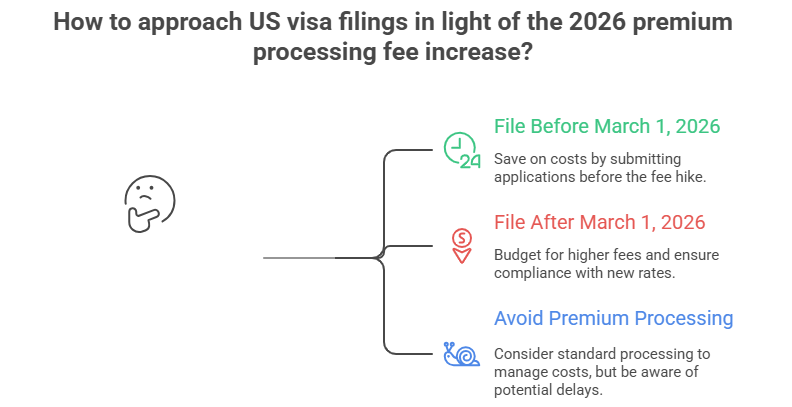
- Applicants seeking to expedite visa processing for H-1B, L-1, OPT, STEM-OPT, and employment-based green cards should consider the higher fees for premium services.
- Only applications made on or after March 1, 2026, will have to pay the revised charges for premium processing.
- Candidates must apply with the new processing charges, as paying the older processing fees from March 1 onwards may result in either a delay or rejection of the application by USCIS.
- Applying for US immigration before March 1 can help Indian professionals and students avoid the fee increase.
- USCIS has mentioned that the additional revenue will be utilized to support faster adjudication, reduce backlogs, and improve processing efficiency.
*Are you looking for a step-by-step with US Immigration? Contact Y-Axis, the world’s No. 1 overseas immigration consultancy, for end-to-end support!
For more US updates, check out the Y-Axis US Immigration News page!
FAQs
What is premium processing for US visas?
Premium processing is an optional service offered by US Citizenship and Immigration Services (USCIS) that allows applicants to receive faster decisions on certain visa and immigration petitions. By paying an additional premium processing fee and filing Form I-907, applicants can get a response—approval, denial, or request for evidence—within a guaranteed processing timeframe set by USCIS. This service is commonly used for employment-based visas such as H-1B, L-1, O-1, and for OPT and STEM-OPT applications. Premium processing does not increase approval chances; it only speeds up case adjudication.
When will the new US premium processing fees take effect?
The revised premium processing fees will take effect on March 1, 2026. USCIS has clearly stated that the new fees will apply to all eligible applications postmarked on or after this date. Applications filed before March 1, 2026, will continue to be charged at the current premium processing rates. Applicants must carefully check filing dates, as even a one-day delay could result in higher fees. This effective date applies across all visa categories that offer premium processing, including work visas, student-related authorisations, and employment-based green cards.
Why is USCIS increasing premium processing fees?
USCIS is increasing premium processing fees as part of a mandatory inflation adjustment under the USCIS Stabilization Act. The law allows the Department of Homeland Security to revise premium processing fees every two years based on inflation. The latest increase reflects inflation recorded between June 2023 and June 2025. According to DHS, the goal is to maintain the real value of premium processing services and ensure consistent funding. The additional revenue will help USCIS manage higher workloads, reduce backlogs, and continue offering faster processing services.
Which visa categories are affected by the premium processing fee hike?
The fee increase affects multiple high-demand visa categories commonly used by Indian applicants. These include H-1B, L-1, O-1, E, TN, P, Q visas, OPT, and STEM-OPT employment authorisation, status change applications, and employment-based immigrant visas (EB-1, EB-2, EB-3). The revised fees apply to applications filed using premium processing through Form I-907. Family-based petitions and visa categories not eligible for premium processing remain unaffected. Applicants should verify eligibility before opting for premium processing under the new fee structure.
Will premium processing timelines change after the fee increase?
No, USCIS has not announced any changes to premium processing timelines. The fee hike only affects the cost of the service, not the processing speed. Premium processing will continue to offer expedited decision-making within the timeframes defined by USCIS for each form category. These timelines may vary depending on the type of petition but remain unchanged under the new rule. USCIS has stated that the increased fees will help maintain service quality and support faster adjudication amid rising application volumes and operational demands.
Does the fee hike apply to all USCIS applications?
No, the premium processing fee increase applies only to applications that are eligible for premium processing and are filed with Form I-907. Many USCIS applications, including most family-based petitions and certain visa categories, do not offer premium processing and are not affected by this change. The revised fees also do not replace standard filing fees; they are charged in addition to regular application costs. Applicants should always confirm whether their visa category qualifies for premium processing before submitting the request.
What happens if I pay the old premium processing fee after March 1, 2026?
If an applicant submits a premium processing request with the old fee amount on or after March 1, 2026, USCIS may reject the application or issue a request for correct payment, causing delays. USCIS has clearly stated that applications postmarked after the effective date must include the revised fee. Rejected applications may need to be refiled, leading to longer processing times and potential disruptions, especially for time-sensitive cases like work start dates, OPT approvals, or visa extensions.
Can Indian students and professionals avoid the higher fees?
Indian applicants who are eligible for premium processing may avoid the higher fees by filing their applications before March 1, 2026, provided all documentation is complete and accurate. This may be particularly beneficial for H-1B extensions, L-1 transfers, OPT and STEM-OPT applications, and employment-based green card petitions. However, applicants should not rush filings without proper preparation, as incomplete applications can lead to delays. Consulting immigration experts early can help applicants plan timelines effectively and potentially reduce costs.
How will USCIS use the additional revenue from the fee hike?
According to the US Department of Homeland Security, the additional revenue generated from higher premium processing fees will be used to improve USCIS adjudication capacity, manage growing application volumes, and reduce long-standing processing backlogs. The funds will also support staffing, technology upgrades, and operational improvements across immigration and naturalisation services. DHS has emphasised that premium processing fees are reinvested into the system to ensure faster and more reliable service for applicants who opt for expedited processing.
Is premium processing mandatory for US visa applications?
No, premium processing is completely optional. Applicants can choose standard processing if they do not require expedited decisions. Premium processing is typically used by employers, professionals, and students who have urgent timelines, such as job start dates, travel plans, or work authorisation needs. While premium processing speeds up case decisions, it does not influence approval outcomes. Applicants should weigh the cost against urgency before opting for this service, especially in light of the revised fees from March 2026.
Tags:
US immigration
US immigration news
US visas
Migrate to the US
US visa fees
USCIS Premium Processing Fees
USCIS Fee Increase 2026
Department Of Homeland Security
H-1B Premium Processing
US Naturalization Services
USCIS Stabilization Act
Share
Options for you by Y-Axis

Get it on your mobile

Get News alerts

Contact Y-Axis
Latest Article
Related Post
Trending Article

Posted On April 02 2026
Canada Introduces Eight Major Immigration Changes from April 1, Impacting PR Applicants and Newcomers. Check Your Eligibility Now!