


Posted on February 05 2026
Greece to hire Indians to fill skill shortages. Apply now!

By , Editor
Updated February 07 2026
Highlights: Greece Announces A Major Immigrant Recruitment Drive to Address Skill Shortage
- Greece has been hiring more than 80,000 skilled workers annually over the last two years to address workforce shortages.
- The new bill is set to welcome ten thousand workers from South and Southeast Asia, including India, Bangladesh, and Egypt.
- The country faces a severe skills shortage across sectors such as tourism, agriculture, construction, and large infrastructure projects, which is influencing the latest recruitment drive.
- About 50% of the total workforce gaps have been filled, leaving opportunities to hire more foreign professionals in recent years.
- The government has decided to introduce a fast-track hiring pathway for major public infrastructure and development projects.
*Want to apply for a Greece work visa? Let Y-Axis guide you with the steps.
The Greek Government Plans to Hire Thousands of Skilled Workers from India and Asia
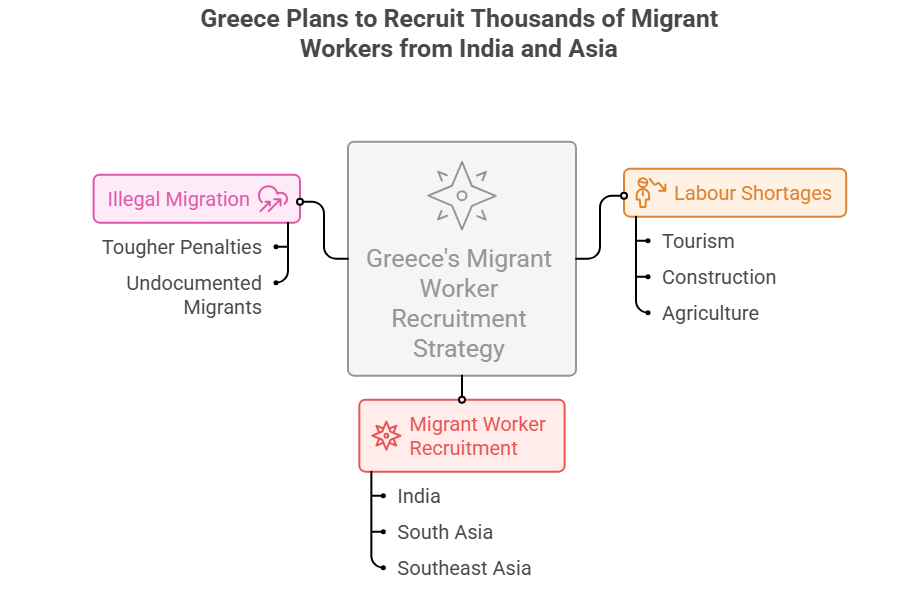
The Greek government has officially announced its decision to recruit a large number of skilled professionals from South and Southeast Asian countries, including India, to stabilise the country’s workforce. The strategic move aims to address the acute labour shortage across diverse high-demand sectors in Greece, including tourism, agro-industry, and construction. The government will take simultaneous measures to curb illegal immigration by introducing strict penalties for undocumented migrants.
The proposed legislation reflects the country’s intent for dual establishments, legal pathways for migration, and faster hiring options for overseas skilled workers.
Also, read…
How will Greece’s Migration Laws affect Indians and Asian Workers?
The latest labour migration laws in Greece aim to address the growing labour shortage by placing strong emphasis on legal, structured recruitment from partner nations. Here is how the new labour immigration policies in Greece will impact skilled workers from India and other south-east Asian countries:
- Simplified hiring procedures through bilateral labour agreements.
- Countries such as India, Bangladesh, and Egypt will be primary sources of skilled professionals, emphasizing legal immigration with reduced paperwork and processing delays.
- Foreign workers are integral to sustaining economic growth and workforce stability in Greece across sectors such as tourism, construction, agriculture, and public infrastructure.
- Streamlined, fast-track recruitment process for labour-shortage industries with extensive infrastructure and development projects.
- Clear visa pathways and increased job opportunities in Europe for skilled and semi-skilled workers from India.
- Emphasis on authorised and legal channels for working and migrating to Greece.
Also, read…
What are the eligibility requirements for a work visa in Greece?
Greece Announces Stricter Rules and Penalties for Irregular Immigration
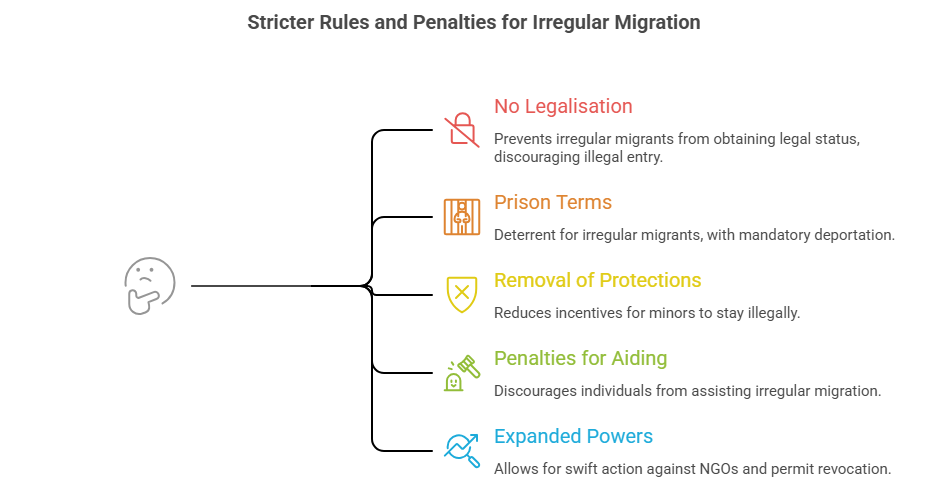
With the rapid expansion of authorised and legal immigration pathways for foreign workers to Greece, the country will exercise tighter controls and stricter penalties for irregular migration. While the government needs thousands of foreign professionals to contribute to the workforce, immigration will only be allowed through transparent, legal routes.
- Migrants who entered Greece illegally will be denied regularisation and a residence permit.
- Imprisonment of at least 2-5 years for undocumented migrants, followed by mandatory deportation to the home country.
- Minors accompanying adult migrants will no longer be granted a residence permit upon turning 18 in Greece.
- Assisting illegal migration will result in a prison term of up to 10 years and a heavy fine.
- The migration minister will have the authority to deregister NGOs if any criminal charges are proven, even against a single member of the community, with immediate revocation of the residence permit.
*Are you looking for step-by-step assistance with overseas immigration? Contact Y-Axis, the world’s No. 1 overseas immigration consultancy!
For recent Schengen immigration updates, check out the Y-Axis Schengen News Page!
FAQs
Is Greece really hiring migrant workers from India?
Yes. Greece is planning to recruit tens of thousands of migrant workers from countries such as India, Bangladesh, and other South and Southeast Asian nations. This move is part of a new legislative reform aimed at addressing severe labour shortages in key sectors like tourism, agriculture, construction, and infrastructure. The Greek government has acknowledged that domestic labour supply is insufficient and that legal migrant workers are essential to sustaining economic growth.
Which sectors in Greece are facing the biggest labour shortages?
Labour shortages in Greece are most acute in tourism, agriculture, construction, and large public infrastructure projects. Seasonal tourism alone requires thousands of additional workers each year, while agriculture and construction face long-term workforce gaps. Industry groups estimate that actual labour demand is more than double the number of positions currently approved by the government, highlighting strong job potential for foreign workers.
How many migrant worker jobs has Greece approved recently?
Greece has approved more than 80,000 migrant worker positions annually over the past two years. However, only about 50% of these approved roles are being filled, according to industry estimates. This gap has pushed the government to expand recruitment and simplify hiring procedures, potentially opening up more legal job opportunities for Indian and Asian workers.
What changes does the new law introduce for legal migrant workers?
The new law simplifies recruitment through bilateral labour agreements and introduces faster hiring mechanisms for employers. It reduces bureaucratic delays and allows quicker processing for sectors facing urgent shortages, especially large infrastructure projects. For legal migrant workers, this means clearer pathways, improved transparency, and faster access to employment through authorised recruitment channels.
Will Indian workers benefit from bilateral labour agreements?
Yes. India is among the countries included in Greece’s bilateral labour agreements. These agreements are designed to make legal recruitment easier, safer, and more structured. Indian workers applying through these channels are more likely to receive government-backed work permits, reducing the risks associated with informal or illegal employment routes.
Does this law create new work visa opportunities for Indians?
The legislation is expected to expand work visa opportunities indirectly by making it easier for Greek employers to hire foreign workers legally. While visa categories remain regulated, streamlined recruitment and fast-track processes can lead to quicker approvals and more consistent hiring demand, especially for skilled and semi-skilled Indian workers.
What is Greece’s stance on illegal migration under the new law?
Greece has taken a strict stance on illegal migration. The new law removes any chance of legalisation for migrants who entered the country illegally. Undocumented migrants may face arrest, imprisonment ranging from two to five years, and repatriation. The government has made it clear that only legal migration routes will be supported.
Are there penalties for helping undocumented migrants in Greece?
Yes. The law proposes severe penalties for assisting irregular migration. Individuals or organisations found helping undocumented migrants enter, travel within, or remain in Greece could face prison sentences of up to 10 years and heavy financial fines. These provisions have drawn criticism from opposition parties and human rights groups.
Why is Greece tightening rules while also hiring migrant workers?
Greece is following a dual approach—expanding legal migration to meet labour needs while enforcing strict controls against irregular migration. The government believes this balance is necessary to support economic growth, protect labour standards, and maintain border control, while still welcoming workers through authorised and lawful pathways.
What should Indian job seekers keep in mind before applying for jobs in Greece?
Indian job seekers should apply only through legal, government-approved recruitment channels and avoid informal offers. Understanding visa requirements, sector-specific demand, and eligibility criteria is essential. Applying through authorised consultants ensures compliance with Greek immigration laws and reduces legal risks while maximising chances of securing long-term employment.
Tags:
Greece work visa
Greek work visa
work visa in Greece
Indians in Greece
Jobs in Greece
Jobs in Greece for Indians
Greece jobs
Greece migrant workers
Greece Migration policy
Asian Migrant Workers Recruitment Greece
Overseas immigration news
Share
Options for you by Y-Axis

Get it on your mobile

Get News alerts

Contact Y-Axis
Latest Article
Related Post
Trending Article

Posted On March 18 2026
Greece launches Tech Talent Visa and relaxes EU Blue Card rules – Apply Now!