

Posted on September 03 2026
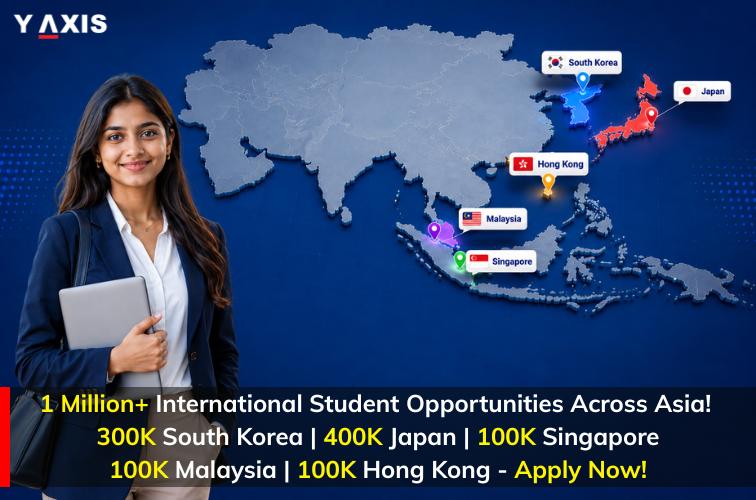
1 Million+ International Student Opportunities Across Asia! 300K South Korea | 400K Japan | 100K Singapore | 100K Malaysia | 100K Hong Kong - Apply Now!

By , Editor
Updated September 05 2026
Highlights: Asian Study Destinations Expand Opportunities as Global Education Trends Shift
- Asian countries are expanding international education opportunities as student flows decline comparatively in the US, UK, Canada and Australia.
- South Korea reached its target of 300,000 international students two years ahead of schedule, while Japan achieved its 2033 target eight years early.
- Hong Kong will raise the permitted share of international students from 40% to 50% of total enrolments from next year.
- Applications and enrolments from international students have declined across major Western destinations, including the US, UK, Canada and Australia.
- Lower costs, improving universities, scholarships and growing career opportunities are making Asia a stronger study-abroad destination.
*Want to study abroad? Let Y-Axis assist you with the process.
Asian Countries to Emerge as New Study-abroad Hubs in 2026
In a major shift in global higher education, Asian countries are stepping up efforts to attract international students as traditional study destinations such as the US, UK, Canada and Australia tighten their policies on overseas enrolments. China, Japan, South Korea and Hong Kong are expanding their international education ambitions as students increasingly look closer to home for affordable and high-quality education.
The shift comes as international student numbers and applications decline across several major English-speaking destinations.
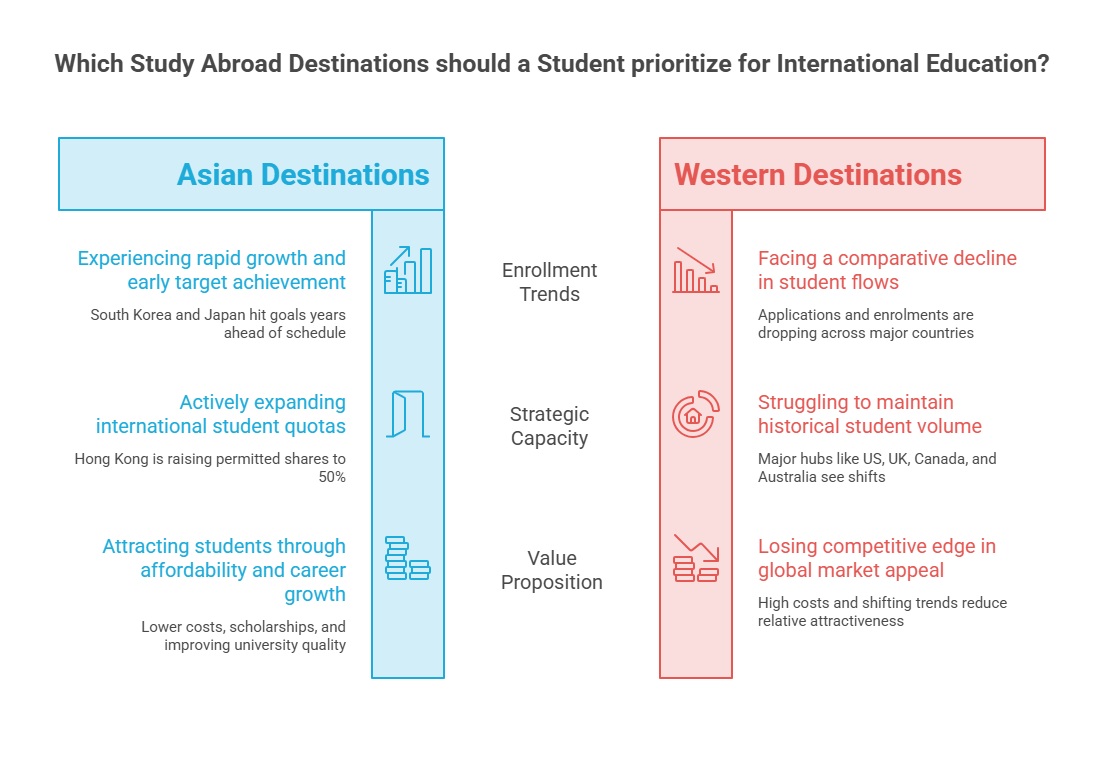
Several Asian destinations are moving in the opposite direction by increasing international student targets, expanding university capacity and creating new pathways for overseas graduates.
|
Country/Region |
Key international education development |
|
Reached its target of 300,000 international students two years ahead of schedule |
|
|
Crossed its target of hosting 400,000 international students by 2033, eight years ahead of schedule |
|
|
Hong Kong |
Will increase the permitted share of international students from 40% to 50% of total enrolments |
|
China |
Hosted 380,000 international students from 191 countries and regions in 2024–25 |
|
China |
Asian students accounted for 61% of international enrolments, followed by African students at 16% |
The growing focus on international education is also linked to demographic challenges across Asia. Countries such as Japan, South Korea, Taiwan and Singapore are facing ageing populations and declining birth rates, increasing the need to attract young international students who could eventually contribute to their future workforce.
China, in particular, is emerging as an alternative destination for students who may previously have considered Western countries. Improving university quality, comparatively lower costs, scholarships and growing regional employment opportunities are making Asian destinations increasingly attractive to international students.
Also, read...
Singapore boosts finance careers with tax incentives and easier visas for fund managers. Apply now!
Why are International Students choosing Asian countries?
Asian countries are becoming more competitive by combining affordable education with improving academic standards, scholarships and opportunities to gain work experience after graduation. For students from India and other Asian countries, studying closer to home can also mean lower travel costs, cultural familiarity and easier access to growing regional job markets.
China has also introduced pathways involving internships, work permits and residence extensions for some international graduates, particularly those in STEM and other priority fields. However, Asian countries will need to improve graduate employment opportunities and long-term work pathways if they want to retain international talent after graduation.
The table below highlights the current study abroad trends in 2026:
|
Study destination |
Latest trend |
|
United States |
Indian student applications fell 15% in 2025–26 |
|
United Kingdom |
Sponsored study visa applications fell 11% in the year ending July 2026 |
|
Australia |
New international enrolments declined 15% |
|
Canada |
International enrolment estimated to have fallen nearly 30% in 2024–25 |
|
Japan |
International student target achieved eight years early |
|
South Korea |
International student target achieved two years early |
|
Hong Kong |
International student enrolment cap to increase from 40% to 50% |
Also, read...
World needs 85 Million Skilled Workers. Indians are in High Demand. Apply now!
What should International Students Consider before Choosing Asia?
Students considering an Asian study destination should look beyond university rankings and tuition fees. The long-term value of studying abroad will also depend on language requirements, post-study work options, career opportunities and the country's ability to retain international graduates.
Key factors to consider before choosing Asia as a study abroad destination are as follows:
- University and programme quality
- Tuition fees and living costs
- Scholarship availability
- Language of instruction
- Internship and practical training opportunities
- Post-study work options
- Work visa requirements
- Local language requirements for employment
- Career opportunities in the chosen field
- Long-term residence pathways
Also, read...
Thailand Remains Visa-Free for Indians with 30-Day Stays from September 15. Apply Now!
Benefits for Indian Students Planning to Study Abroad
The growing competition among Asian education hubs could create more affordable and accessible study-abroad options for Indian students. As countries such as China, Japan, South Korea and Hong Kong increase their international student intake, Indian students may benefit from a wider choice of universities, scholarships and career pathways closer to home.
Asian destinations can also offer Indian students an alternative at a time when visa policies and international student rules are becoming stricter in some traditional Western destinations. However, students should carefully compare course quality, language requirements and post-study employment prospects before choosing a programme.
- More study destinations: Indian students can explore a wider range of universities across Asia.
- Potentially lower costs: Several Asian destinations offer more affordable tuition and living costs compared with Western countries.
- More scholarships: Governments and universities are expanding scholarships and financial support for international students.
- Growing STEM opportunities: Students in science, technology, engineering and other priority fields may benefit from stronger graduate pathways.
- Closer to India: Shorter travel distances can reduce travel costs and make visits home easier.
- Improving university quality: Asian universities are investing heavily in research, infrastructure and international education.
- Growing regional job markets: Expanding economies across Asia could create new employment opportunities for graduates.
- Internship opportunities: Some countries are developing pathways for international students to gain practical work experience.
- Alternative to Western destinations: Students have more options as rules tighten in countries such as Canada, Australia, the UK and the US.
- Long-term talent opportunities: Countries facing ageing populations may increasingly seek to retain young international graduates.
*Are you looking for step-by-step assistance with overseas immigration? Contact Y-Axis, the world’s No. 1 overseas immigration consultancy!
For recent immigration updates, check out Y-Axis News Page!
FAQs
Why are Asian countries becoming popular study destinations for Indian students?
Asian countries are becoming increasingly attractive because they offer quality education, lower tuition costs and growing career opportunities closer to India. Countries such as Japan, South Korea, China, Singapore and Hong Kong are also expanding their international student recruitment efforts. As the US, UK, Canada and Australia tighten international student rules, Indian students are increasingly exploring Asian destinations as affordable alternatives.
Which Asian countries are attracting the most international students?
China, Japan, South Korea and Hong Kong are among the Asian destinations expanding their international education ambitions. South Korea has already reached its target of 300,000 international students ahead of schedule, while Japan has crossed its international student target years earlier. China and Hong Kong are also increasing efforts to attract overseas students through university expansion, scholarships and international recruitment policies.
Why are Indian students looking beyond the US, UK, Canada and Australia?
Indian students are exploring alternatives as several traditional study destinations introduce stricter international student policies. The report noted declines in applications and enrolments across major destinations. Factors such as higher costs, stricter visa rules and uncertainty around post-study opportunities are encouraging students to consider Asian countries that offer affordable education, regional connectivity and growing employment opportunities.
Is studying in Asia more affordable for Indian students?
Many Asian study destinations can offer lower tuition and living costs compared with countries such as the US, UK, Canada and Australia. China, Japan and South Korea also provide scholarships and financial support for eligible international students. However, costs vary depending on the university, programme and city. Indian students should compare tuition fees, accommodation expenses and scholarship opportunities before choosing a destination.
What opportunities does China offer international students?
China is emerging as an alternative destination for international students because of improving academic standards, relatively lower costs and expanding regional job opportunities. The country also offers scholarships and subsidies for international students. In some priority sectors, including STEM fields, international graduates may access opportunities involving internships, work permits and residence extensions after completing their studies.
Why is Japan attracting more international students?
Japan is attracting international students through its expanding higher education sector, strong technology and research ecosystem and growing need for young skilled workers. The country has reached its target of hosting 400,000 international students significantly ahead of schedule. Japan's ageing population and labour shortages are also encouraging efforts to attract overseas students and potentially retain skilled international graduates.
What challenges could Indian students face while studying in Asian countries?
Language barriers can be a major challenge, particularly in countries where local language skills are important for employment. International graduates may also face difficulties navigating work visa rules and local job markets. Students should therefore research whether their chosen programme is taught in English, the availability of post-study work opportunities and whether learning the local language could improve career prospects.
Are Asian countries offering scholarships to international students?
Yes, several Asian countries offer scholarships, tuition support and other financial assistance to international students. China, for example, provides scholarships and subsidies to eligible overseas students. Universities and governments in countries such as Japan, South Korea, Singapore and Hong Kong also offer various funding opportunities. Eligibility, funding amounts and application requirements vary depending on the programme and institution.
Can international students work in Asian countries after graduation?
Post-study work opportunities depend on the country and its immigration policies. Some Asian destinations are developing pathways that allow international graduates to access work permits, internships or residence extensions. However, employment opportunities may depend on language skills, qualifications and labour market demand. Students should check the latest visa and employment rules before choosing a university or planning their post-study career.
How should Indian students choose an Asian country for higher education?
Indian students should compare universities, course quality, tuition fees, scholarships, language requirements and post-study employment opportunities. They should also consider whether their qualification will be recognised internationally and whether the destination offers a clear pathway to gain work experience after graduation. Choosing a country should involve evaluating long-term career opportunities rather than focusing only on lower education costs.
Tags:
Study abroad
Indian students studying in Asian countries
overseas immigration
study in China
overseas enrolment rules for international students
higher education in Asia
overseas immigration update
Share
Options for you by Y-Axis

Get it on your mobile

Get News alerts

Contact Y-Axis
Latest Article
Related Post
Trending Article

Posted On October 15 2026
India-Switzerland Mobility Pact Opens New Work, Study and Travel Opportunities for Indians. Check Your Eligibility!