

Posted on September 02 2026
Thailand Remains Visa-Free for Indians with 30-Day Stays from September 15. Apply Now!

By , Editor & Director
Updated September 05 2026
Highlights: Thailand Keeps Visa-Free Entry Open for Indians with a New 30-Day Stay Rule
- Thailand will reduce visa-free stays for Indian tourists from 60 days to 30 days starting September 15, 2026.
- Indian passport holders will continue to enjoy visa-free entry for tourism and will not be moved to a paid Visa on Arrival system.
- Indian travellers entering Thailand before September 15 can remain until the expiry of the stay period granted at entry.
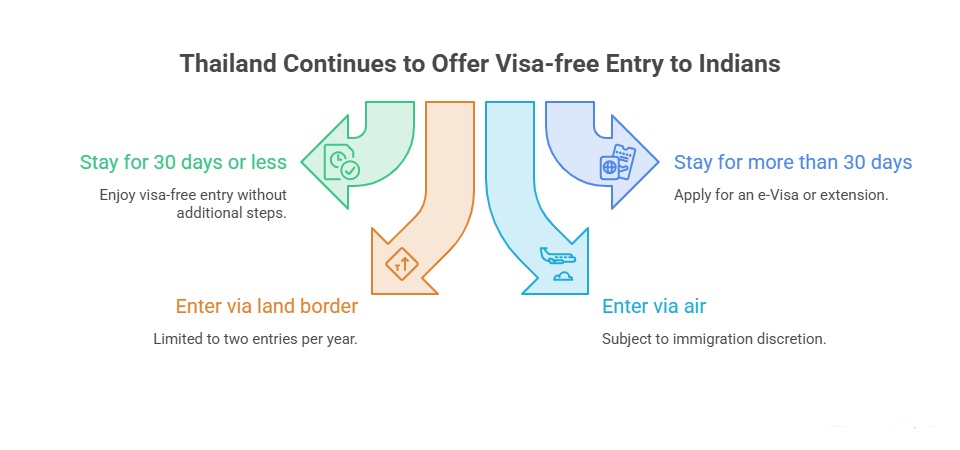
- Tourists planning to stay beyond 30 days can apply for an appropriate Thai e-Visa or seek an extension subject to immigration approval.
- Visa-exempt land-border entries will generally be limited to two per calendar year, while air entries will remain subject to immigration discretion.
*Want to apply for Thailand tourist visa? Let Y-Axis assist you with the process.
Thailand to Update Visa-free Entry Rules for Indians from September 15, 2026
Thailand is set to reduce the maximum visa-exempt stay from 60 days to 30 days from September 15, 2026. The revised rules, published officially in Thailand's Royal Gazette on August 31, replace the broader 60-day visa-exemption framework that had covered 93 countries and territories since 2024.
The key relief for Indian tourists is that India remains on Thailand's visa-exemption list. Indian passport holders travelling for a typical holiday of one or two weeks will continue to enter Thailand without applying for a visa or paying for a Visa on Arrival. The change will mainly affect travellers planning longer stays and frequent visa-exempt visits.
|
Travel situation |
Rule from September 15, 2026 |
|
Visa requirement for Indian tourists |
Visa-free entry continues |
|
Maximum visa-exempt stay |
Up to 30 days |
|
Previous visa-exempt stay |
Up to 60 days |
|
Travellers entering before September 15 |
Can remain until their originally permitted stay expires |
|
Stay beyond 30 days |
Appropriate Thai e-Visa recommended |
|
Possible extension |
Up to another 30 days, subject to immigration approval |
|
Land-border visa-exempt entries |
Generally limited to 2 entries per calendar year |
|
Air entries |
No fixed annual limit, but subject to immigration discretion |
|
Work in Thailand |
Appropriate work authorisation may be required |
Also, read...
Why Apply for a Thailand Digital Nomad Visa?
What should Indian travellers know before travelling to Thailand?
Indian travellers should focus on their date of entry, as the new 30-day limit applies from September 15, 2026. Those entering Thailand before the effective date will not have their permitted stay automatically reduced when the new rules come into force.
Travellers planning to stay beyond 30 days should not assume that an extension will automatically be granted. While a visa-exempt stay may be extended for up to another 30 days, the decision rests with Thai immigration authorities. Applying for the appropriate e-Visa before travelling may therefore be a more suitable option for longer stays.
The major rules that apply to Indian travellers to Thailand in 2026 are as follows:
- Indian passport holders will continue to receive visa-free entry for tourism.
- The maximum visa-exempt stay will reduce from 60 days to 30 days.
- Travellers entering Thailand before September 15 can stay until their originally permitted period expires.
- Indian tourists staying for more than 30 days should consider applying for an appropriate Thai e-Visa.
- A possible 30-day extension is not automatic and depends on immigration approval.
- Visa-exempt land-border entries will generally be limited to two per calendar year.
- Air travellers will not face a fixed annual entry limit but remain subject to immigration discretion.
- Frequent visitors may be asked to provide information about the purpose and frequency of their trips.
- Visa-free entry does not automatically provide the right to work in Thailand.
- Activities classified as employment may require separate work authorisation.
Also, read...
Thailand Introduces Online Work Permit Portal for Foreign Workers from October 13
How Thailand’s Visa-free Immigration Update benefit Indians?
Despite the reduction in the maximum visa-free stay, the revised policy remains a positive development for Indian tourists because Thailand has decided to retain visa-free access for Indian passport holders. This means most travellers can continue planning short holidays without the additional cost, paperwork and processing time associated with applying for a visa.
The decision is particularly beneficial for Indian families, leisure travellers, wedding groups and short-term visitors, who form an important part of Thailand's tourism market. With most Indian holidays lasting well under 30 days, the revised stay period is expected to have limited impact on regular tourists.
Here is how visa-free entry in Thailand will benefit Indians:
- Visa-free travel continues: Indians can still visit Thailand for eligible tourism without applying for a regular visa.
- No Visa on Arrival fee: Indian travellers avoid the additional cost that could have applied under the earlier proposal.
- Ideal for short holidays: The 30-day stay is more than sufficient for most Indian trips to Thailand.
- Easier travel planning: Families and leisure travellers can continue planning short trips with fewer visa formalities.
- Support for group travel: Wedding groups, celebrations and leisure groups can continue benefiting from simplified entry.
- Popular destinations remain accessible: Bangkok, Phuket, Krabi, Pattaya and Chiang Mai remain easy-to-reach holiday options.
- Flexibility for longer stays: Travellers planning extended visits can explore appropriate Thai e-Visa options.
- No disruption for existing visitors: Indians entering before September 15 will retain the stay period granted to them on arrival.
- Continued tourism opportunities: Thailand's decision reflects the importance of Indian visitors to its tourism sector.
- Greater clarity: The revised framework provides clearer rules for short-term visitors, long-stay tourists and frequent travellers.
*Are you looking for step-by-step assistance with overseas immigration? Contact Y-Axis, the world’s No. 1 overseas immigration consultancy!
For recent immigration updates, check out Y-Axis News Page!
FAQs
When will Thailand's new visa-free rules for Indians take effect?
Thailand's revised visa-free entry rules will take effect on September 15, 2026. From this date, Indian passport holders will be eligible for visa-exempt tourist entry for up to 30 days instead of the previous 60 days. The rules were published in Thailand's Royal Gazette on August 31, 2026, replacing the broader visa-exemption framework that had been in place since 2024.
Do Indians still get visa-free entry to Thailand in 2026?
Yes, Indian passport holders will continue to receive visa-free entry to Thailand for eligible tourism visits under the revised rules. Thailand decided to retain India on its visa-exemption list despite earlier discussions about moving Indian travellers to a paid Visa on Arrival arrangement. From September 15, 2026, the main change is the reduction of the maximum visa-exempt stay from 60 days to 30 days.
How long can Indian tourists stay in Thailand without a visa?
From September 15, 2026, Indian passport holders can generally stay in Thailand for up to 30 days under the visa-exemption scheme. This replaces the previous 60-day visa-exempt stay. The 30-day period should be sufficient for most tourists taking short holidays. Travellers planning longer stays should explore an appropriate Thai e-Visa or other eligible visa options before travelling.
What happens if I enter Thailand before September 15, 2026?
Indian travellers who enter Thailand before September 15, 2026, under the existing visa-exemption rules will not have their permitted stay automatically shortened. They can remain in Thailand until the expiry of the period granted when they entered the country. Therefore, the date of entry is important when determining which visa-exemption rules apply to an Indian traveller's stay in Thailand.
Can Indian tourists stay in Thailand for more than 30 days?
Yes, Indian travellers planning to stay for more than 30 days should consider applying for an appropriate Thai e-Visa before travelling. A visa-exempt stay may also potentially be extended for another period of up to 30 days, but this is subject to the discretion of Thai immigration officials. Travellers should not assume that an extension will be automatically granted when planning a longer stay.
Is there a limit on how many times Indians can enter Thailand visa-free?
Thailand's revised rules generally limit visa-exempt entries through land-border checkpoints to two entries per calendar year, subject to nationality-specific exceptions. There is no equivalent fixed annual limit for visa-exempt entries by air. However, every entry remains subject to the discretion of Thai immigration officers, and frequent travellers may be questioned about the purpose and frequency of their visits.
Will frequent Indian travellers face problems under the new rules?
Frequent Indian travellers can still enter Thailand, but repeated visa-exempt visits may receive greater scrutiny from immigration officials. Travellers making frequent short trips could be asked about the purpose of their travel and may need to provide supporting information. This is particularly relevant for people using repeated visa-free entries instead of applying for an appropriate visa for longer stays or activities requiring specific authorisation.
Can Indians work in Thailand using visa-free entry?
No, visa-free entry should not be considered a general right to work in Thailand. The visa-exemption category is primarily intended for tourism and other permitted non-work activities, although certain specific business engagements or urgent activities may be allowed under applicable rules. Activities that legally qualify as employment generally require appropriate work authorisation. Travellers should check Thailand's work permit requirements before undertaking any employment-related activities.
Why did Thailand reduce the visa-free stay from 60 days to 30 days?
Thailand said the visa policy overhaul is intended to balance tourism, national security, economic interests, international relations and reciprocity. The government also aims to reduce overlapping visa privileges and prevent misuse of the visa system. The revised 30-day stay period is expected to better align with typical travel patterns while allowing Thailand to retain visa-free access for important tourism markets, including India.
What should Indian travellers check before visiting Thailand?
Indian travellers should check their planned date of entry, as the new 30-day visa exemption applies from September 15, 2026. Those staying longer should review appropriate Thai e-Visa options. Frequent visitors should understand land-border entry limits, while all travellers should ensure they meet applicable immigration requirements. Anyone planning activities that may be considered employment should also verify whether separate work authorisation is required.
Tags:
Thailand visit visa
Thailand tourist visa
Indian tourists in Thailand
visit to Thailand
Thailand immigration update
overseas immigration
migrate abroad
work in Thailand
Share
Options for you by Y-Axis

Get it on your mobile

Get News alerts

Contact Y-Axis
Latest Article
Related Post
Trending Article
Posted On October 15 2026
India-Switzerland Mobility Pact Opens New Work, Study and Travel Opportunities for Indians. Check Your Eligibility!