

Posted on October 22 2026
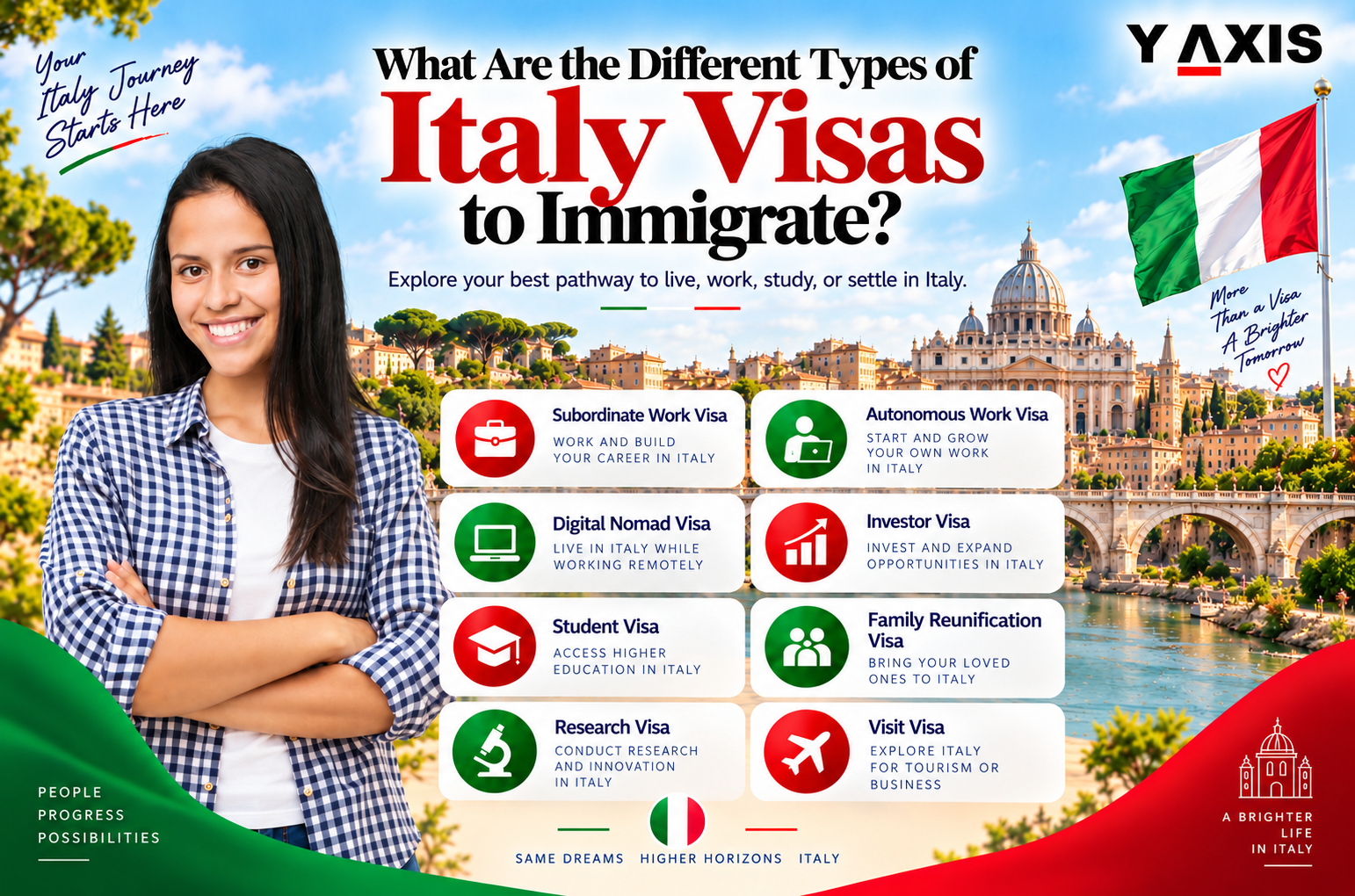
What Are the Different Types of Italy Visas to Immigrate?

By , Editor & Director
Updated October 22 2026
There are different types of Italy visas for people who want to live, work, study or join their family in Italy. The right visa depends on the reason for your move and how long you plan to stay. If you want to stay in Italy for less than 90 days, you may need a Schengen Visa. If you plan to stay for more than 90 days, you generally need a National Visa (Type D) and a residence permit. Italy offers visa options for skilled workers, students, families, researchers, business owners, investors and remote workers. Skilled professionals can also apply through options such as the EU Blue Card and other work visas.
*Willing to migrate to Italy? Y-Axis will help you with the step-by-step process.
Different Types of Italy Visas
|
Italy Visa Type |
Who Is It For? |
Main Purpose |
|
Permanent Residence / EU Long-Term Residence Permit |
Non-EU citizens who have lived legally in Italy for the required period and meet the eligibility rules |
To live and work in Italy for the long term |
|
Skilled workers and professionals who have a suitable job in Italy |
To work in Italy |
|
|
Highly skilled non-EU professionals with a qualifying job offer |
To live and work in Italy as a highly skilled professional |
|
|
Self-Employment Visa |
Eligible business owners, entrepreneurs and self-employed professionals |
To start or run a business or work as a self-employed person in Italy |
|
Eligible remote workers who work for companies or clients outside or inside Italy, depending on the rules |
To live in Italy while working remotely |
|
|
International students who have been accepted by an approved Italian school, college or university |
To study in Italy |
|
|
Eligible spouses, children and other family members of people living in Italy |
To join family members living in Italy |
|
|
Tourists, business visitors and people visiting family or friends |
To visit Italy for up to 90 days within a 180-day period |
|
|
Research Visa |
Researchers and academic professionals who have an approved research opportunity |
To conduct research in Italy |
|
Investor Visa |
Eligible investors who meet Italy's investment requirements |
To live in Italy through an approved investment |
|
Elective Residence Visa |
People with enough regular income or savings to support themselves without working in Italy |
To live in Italy without taking up employment |
|
Business professionals travelling to Italy for approved business activities |
To attend meetings, conferences, negotiations and other business activities |
|
|
Working Holiday Visa |
Citizens of countries that have a working holiday agreement with Italy |
To travel and do permitted temporary work in Italy |
*Want to apply for Italy work visa? Let Y-Axis guide you with the process.
What Are the Italy Visa Requirements for Indian Citizens?
The requirements depend on the type of Italy visa you are applying for. However, applicants may commonly need the following documents:
- Valid Indian passport with enough validity
- Completed Italy visa application form
- Recent passport-size photographs, if required
- Proof of accommodation in Italy
- Proof that you have enough money to support yourself
- Valid health or travel insurance, depending on the visa type
- Educational certificates and qualifications
- Job offer or employment contract, if applying for a work visa
- Work experience documents and reference letters
- Italian or English language test results, if required
- Proof of skills or professional qualifications for certain work visas
- Admission letter from an Italian school, college or university for student visas
- Proof of relationship for family visa applications
- Police clearance certificate, if required
- Medical documents, if required
- Travel details and itinerary for visitor visas
- Employer documents, if required
- Work authorisation or Nulla Osta, where required
- Proof of income and accommodation for certain residence visas
- Any additional documents requested by the Italian authorities
The documents can be different for each visa category. Applicants should check the requirements for their specific visa before submitting the application.
*Read about...
Top In-Demand Jobs in Italy for the Next 10 Years
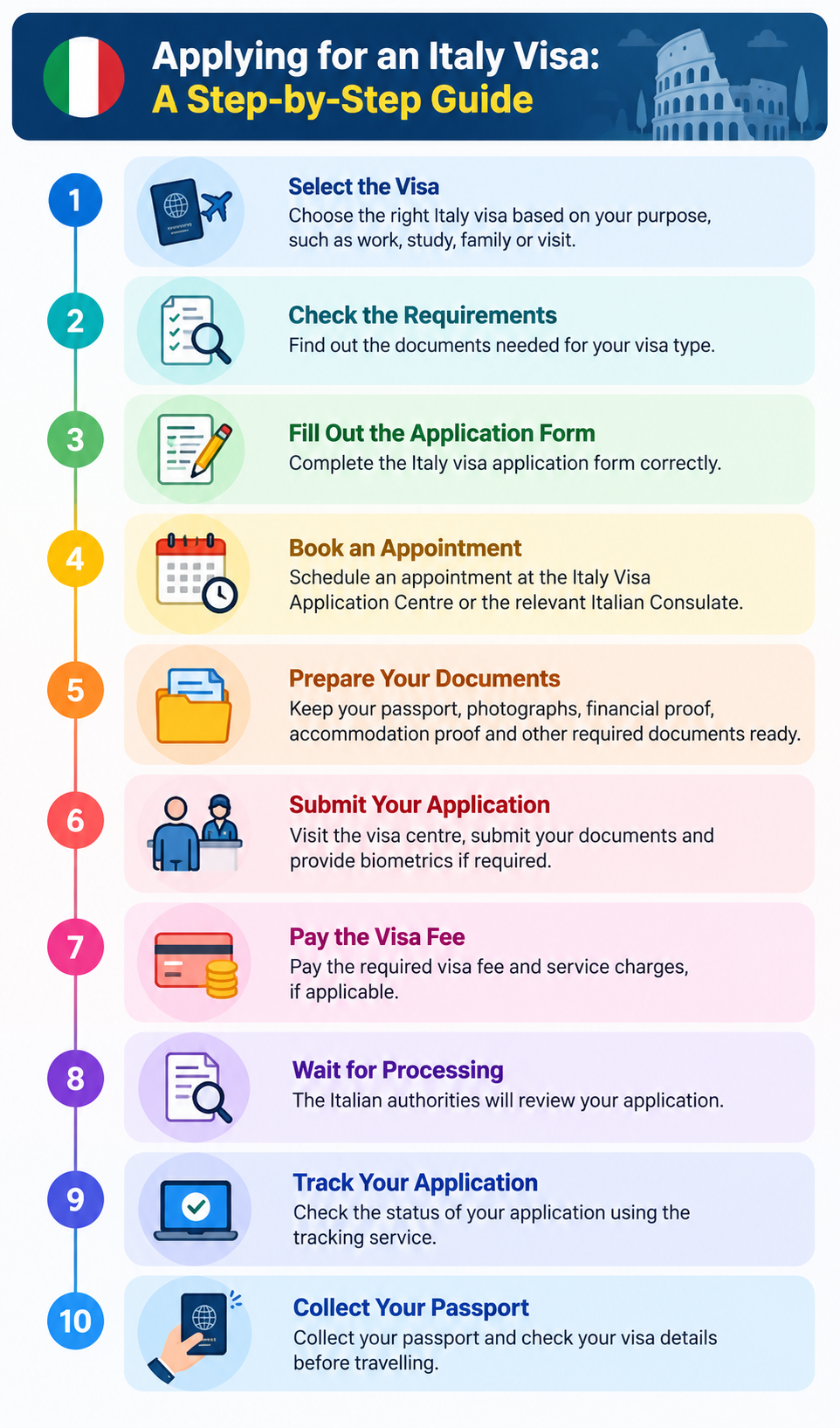
Steps to Apply for an Italy Visa
Step 1: Select the visa based on your purpose, such as work, study, family or visit.
Step 2: Check the documents needed for your visa type.
Step 3: Complete the Italy visa application form correctly.
Step 4: Schedule an appointment at the Italy Visa Application Centre or the relevant Italian Consulate.
Step 5: Keep your passport, photographs, financial proof, accommodation proof and other required documents ready.
Step 6: Visit the visa centre, submit your documents and provide biometrics if required.
Step 7: Pay the required visa fee and service charges, if applicable.
Step 8: The Italian authorities will review your application.
Step 9: Check the status of your application using the tracking service.
Step 10: Collect your passport and check your visa details before travelling.
*Also, read...
Highest Paying Job Opportunities in Italy
Italy Visa Fees for Indians
The visa fee depends on the type of visa you apply for.
Common fees include:
- Schengen Visa: €90
- Schengen Visa for children aged 6 to under 12: €45
- National Visa (Type D): €116
- National Study Visa: €50
The fee paid in India may change based on the current exchange rate. Additional service charges may also apply when submitting the application through a visa application centre.
Italy Visa Processing Time
The processing time depends on the type of visa and the documents submitted. Short-term Schengen visas are usually processed faster than long-term visas. Work, family and other long-term visas may take longer because additional checks or approvals may be required. Applicants should apply well before their planned travel date and make sure all required documents are complete.
*Planning to settle in Italy? Contact Y-Axis, the world’s number one immigration consultancy, with job search support, resume preparation, and visa guidance.
FAQs
What are the different types of Italy visas?
Italy offers different types of visas based on the reason for your stay. These include work visas, student visas, family visas, business visas, investor visas, research visas, digital nomad visas and visitor visas. People who want to stay in Italy for a longer period may need a National Visa and a residence permit. The right visa depends on your purpose, qualifications and planned stay.
Which Italy visa is suitable for Indian citizens who want to work?
Indian citizens who want to work in Italy may apply for a work visa if they have a suitable job offer and meet the required conditions. Highly skilled professionals may also qualify for an EU Blue Card. Some work categories require approval from Italian authorities before applying for the visa. Applicants should check the job, qualification, salary and other requirements before starting the application process.
What visa do I need to study in Italy?
Students from India who want to study in Italy usually need a student visa for long-term courses. You should first receive an admission letter from a recognised Italian educational institution. You may also need to show proof of funds, accommodation, health insurance and other documents. The exact requirements depend on your course, institution and length of study in Italy.
Can I take my family to Italy?
Yes, eligible family members can join a person who is legally living in Italy. This process is generally known as family reunification. Spouses, children and certain other family members may qualify, depending on the situation. The sponsor in Italy may need to meet income and accommodation requirements. Applicants must also provide documents that prove their family relationship.
What is the Italy Digital Nomad Visa?
The Italy Digital Nomad Visa is designed for eligible remote workers who want to live in Italy while working remotely. Applicants must meet certain requirements related to their work, professional skills, income and insurance. This visa is mainly intended for people who can work remotely using technology. Applicants should check the latest rules before applying because requirements may change.
What is the EU Blue Card for Italy?
The EU Blue Card is a work and residence option for highly skilled professionals from outside the European Union. To qualify, applicants generally need a suitable job offer from an Italian employer and must meet education, professional and salary requirements. It allows eligible professionals to live and work in Italy. The employer and employee may need to complete specific steps before approval.
What visa is needed to visit Italy for a short stay?
Indian citizens visiting Italy for tourism, business or family visits generally need a Schengen Visa. This visa is meant for short stays of up to 90 days within a 180-day period. Applicants may need to provide documents such as a passport, travel insurance, accommodation details, financial proof and travel plans. The visa does not normally allow long-term employment in Italy.
Can I get permanent residence in Italy?
Yes, eligible non-EU citizens may apply for an EU long-term residence permit after meeting the required period of legal residence in Italy. Applicants generally need to meet conditions related to income, accommodation, language skills and legal residence. The exact requirements depend on the applicant's situation. Permanent residence allows eligible people to continue living and working in Italy.
How much does an Italy visa cost?
The cost of an Italy visa depends on the type of visa you are applying for. Short-stay Schengen visas and long-stay National Visas have different fees. Some applicants, such as certain students or children, may pay lower fees or qualify for exemptions. Visa application centres may also charge additional service fees. Applicants should check the current fee before submitting their application.
How long does it take to get an Italy visa?
Italy visa processing time depends on the type of visa and the documents submitted. Short-stay visas may be processed faster, while work, family and other long-term visas can take more time. Delays may happen if documents are missing or additional checks are needed. It is best to apply early and submit complete and correct documents to avoid unnecessary delays.
Tags:
Italy Visa
Italy Visa for Indians
Italy Immigration
Italy Work Visa
Italy Study Visa
Italy Family Visa
Italy Permanent Residence
Italy Visa Requirements
Italy Visa Fees
Italy Visa Processing Time
Italy Visa Application Process
Share
Options for you by Y-Axis

Get it on your mobile

Get News alerts

Contact Y-Axis
Latest Article
Popular Post
Trending Article
Posted On October 22 2026
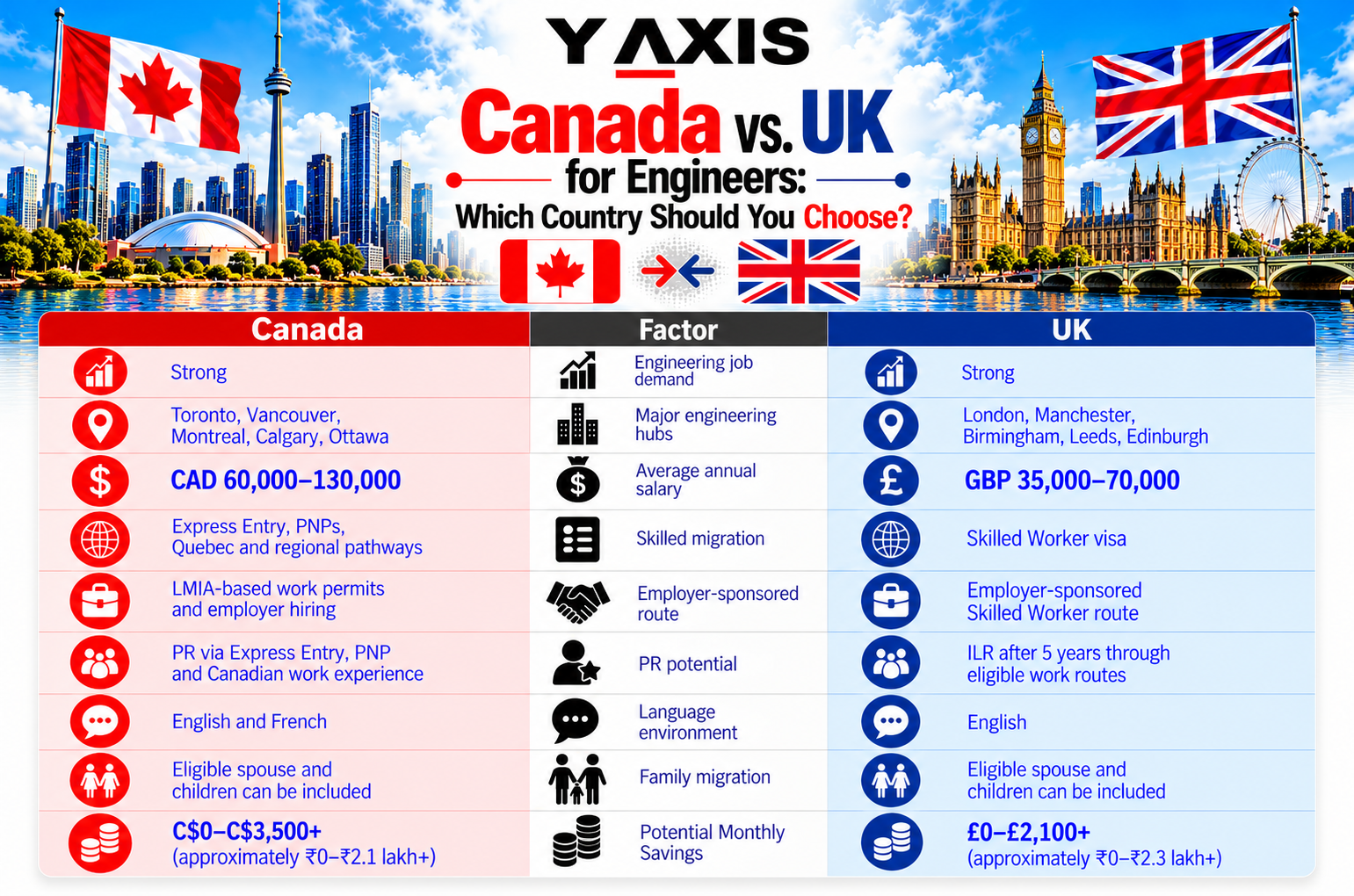
Canada vs. UK for Engineers: Which Country Should You Choose?