

Posted on November 20 2026
US Court Blocks New CPT Restrictions: What Indian Students Must Know About Internships

By , Editor & Director
Updated November 20 2026
~ Dr. Serah Vinodini Vilvaraj
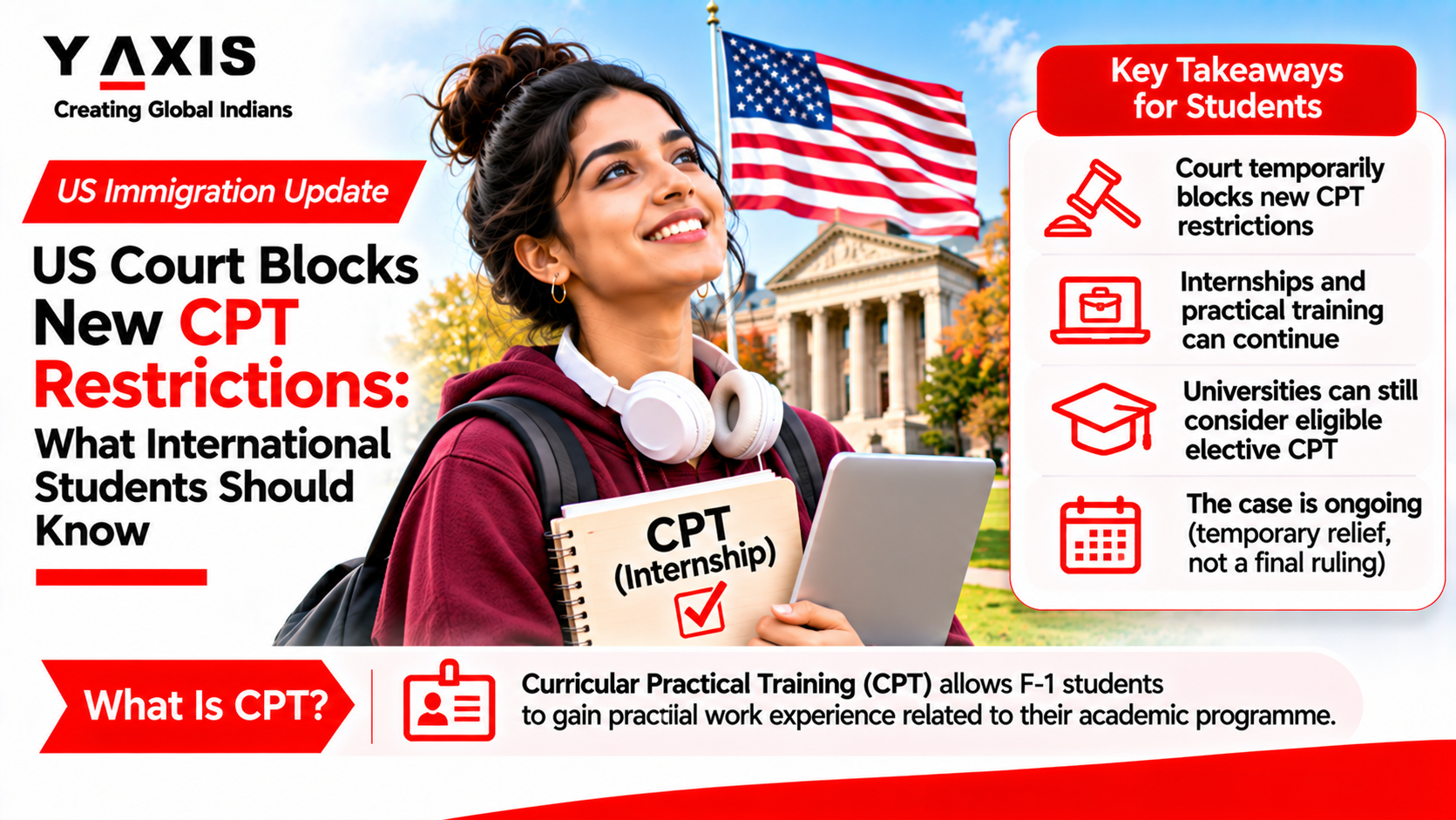
A US federal court has temporarily stopped new restrictions on Curricular Practical Training (CPT), offering relief to international students pursuing internships and practical experience during their studies. The November 17 ruling protects existing training arrangements while the legal challenge continues.
Why Has a US Court Blocked New Internship Restrictions?
International students in the United States have received an important update concerning their ability to gain practical experience while studying. On November 17, 2026, Judge Julia E. Kobick of the US District Court for the District of Massachusetts granted a nationwide stay and preliminary injunction against new government guidance on Curricular Practical Training. The guidance, issued by the Student and Exchange Visitor Program in August, would have narrowed the circumstances in which universities could authorise internships for F-1 students.
The court's intervention means the government cannot currently enforce the challenged guidance while the litigation proceeds. For Indian students pursuing courses involving internships, cooperative education or industry projects, the ruling offers greater clarity about the existing training framework.
What Is Curricular Practical Training?
Curricular Practical Training, or CPT, is a form of employment authorisation available to eligible F-1 international students. It allows practical training that is an integral part of an established academic curriculum. Depending on the programme, CPT may involve internships, cooperative education or other structured work-based learning. A university's designated school official (DSO) must determine eligibility and authorise CPT in the student's SEVIS record.
Students receive an updated Form I-20 showing the approved employer, training dates and authorisation details. CPT is not a general work permit. The employment must satisfy the applicable academic and immigration requirements.
What Restrictions Did the Government Introduce?
On August 12 and August 24, 2026, SEVP issued broadcast messages to designated school officials outlining a narrower interpretation of CPT eligibility. Under that interpretation, practical training generally needed to be mandatory for every student in a particular degree programme. Elective internships undertaken for academic credit could therefore have become ineligible, even when they formed part of an established curriculum. The change created uncertainty for universities and students who had organised training programmes under longstanding guidance. It also raised concerns about internships already authorised before the August notices.
Why Did Universities Challenge the Restrictions?
Four higher education organisations filed a lawsuit on October 5, 2026.
They included the Association of American Universities, NAFSA: Association of International Educators, the Presidents' Alliance on Higher Education and Immigration, and the Association of Independent Colleges and Universities in Massachusetts. The organisations argued that the government had abruptly changed its interpretation without adequately explaining the departure from longstanding practice. They also raised concerns about the consequences for universities, students and existing training arrangements. The lawsuit challenged the administrative process used to introduce the new requirements.
What Did the Court Decide on November 17?
The court granted two forms of temporary relief. First, it stayed both August broadcast messages nationwide, preventing their enforcement or application pending judicial review. Second, it issued a preliminary injunction protecting the plaintiffs and their members, including their employees and students. That injunction covers both future conduct and relevant training arrangements or approvals predating the challenged notices. The distinction matters because the nationwide stay has broader reach than the separately described injunction. However, neither order represents a final judgment on the underlying lawsuit.
Can Students Still Apply for Elective Internships?
Potentially, yes.
Following the court's decision, Columbia University confirmed that it would resume considering elective CPT applications where the practical training forms an integral part of the established curriculum. Its guidance also requires an appropriate agreement involving the student, university and training organisation. This provides a useful example of how universities are responding.
However, students should not assume that every internship automatically qualifies. Individual universities must assess CPT requests under the applicable rules and their academic requirements. Students should contact their designated school officials before beginning any employment.
What Happens to Previously Approved CPT?
The court's order provides important protection against enforcement of the challenged August interpretation, including in relation to relevant conduct and approvals predating those notices. Nevertheless, the ruling does not automatically validate every CPT authorisation or excuse unrelated violation of immigration requirements. Students with existing CPT should continue following the employer, location, dates and other conditions recorded on their authorisation. They should seek guidance before making changes to an internship or training arrangement.
Does This Ruling Change OPT Rules?
No.
Curricular Practical Training and Optional Practical Training are separate employment authorisation arrangements. CPT generally concerns practical training integrated into a student's curriculum. OPT allows eligible F-1 students to undertake practical training directly related to their major field of study, subject to separate requirements. The November 17 court order specifically concerns SEVP's August CPT guidance. It does not automatically change OPT eligibility, application procedures or employment conditions.
How Is This Different From the Four-Year Student Visa Ruling?
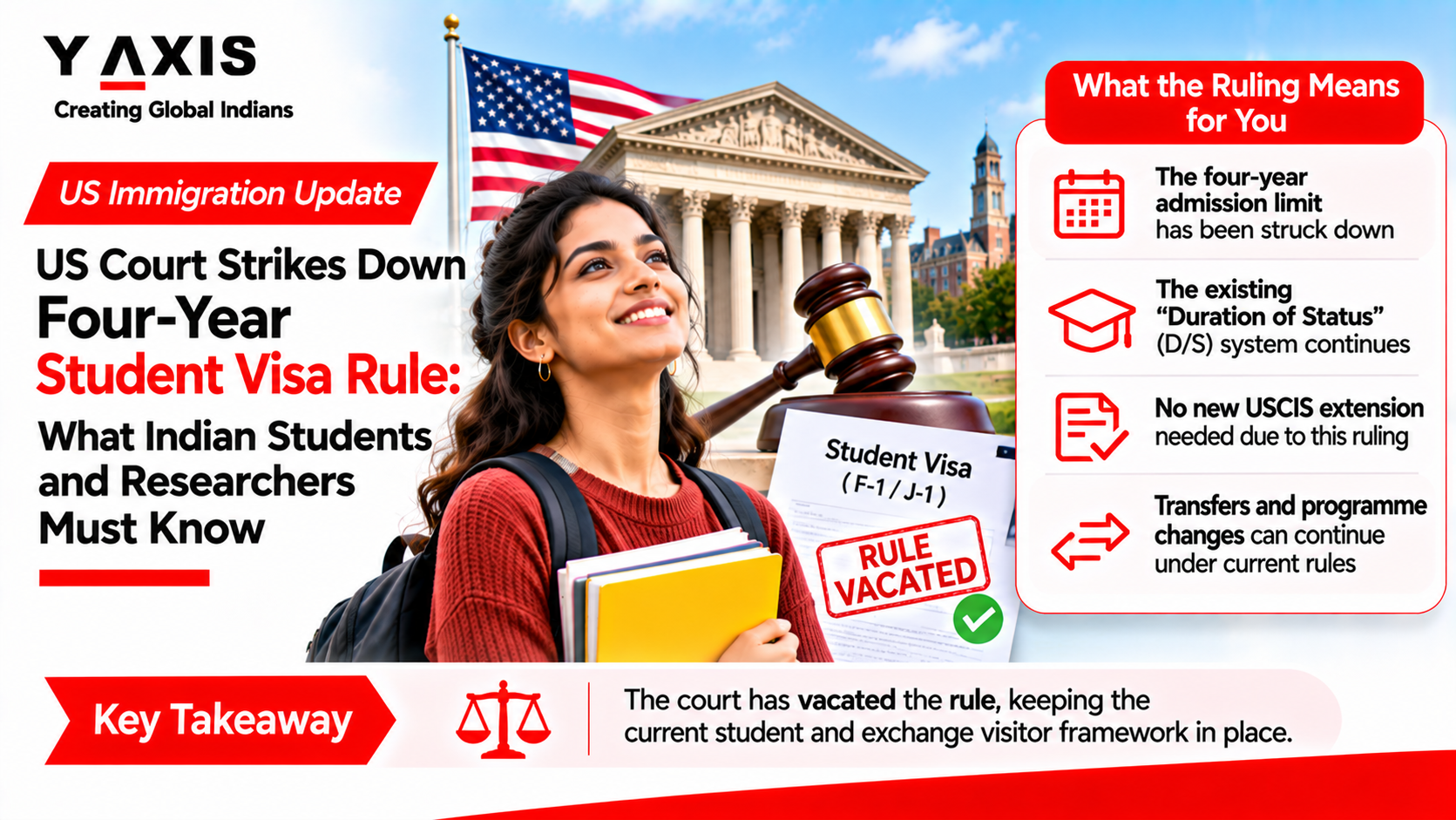
The two decisions concern different immigration issues. On November 16, a separate federal judge vacated the rule that would have replaced Duration of Status with fixed admission periods for international students and exchange visitors. The November 17 CPT decision instead concerns internship and practical training eligibility. The Duration of Status rule was vacated, whereas the CPT restrictions have been temporarily blocked pending further litigation. Both developments affect international students, but they should not be confused.
What Should Indian Students Do Now?
Students considering internships should confirm that the proposed training is academically connected to their programme. They should obtain approval from their designated school official before starting work. Applicants should also check whether their institution has updated its CPT application procedures following the court order. Those with existing authorisations should retain their records and continue complying with approved employment conditions. Importantly, students must not begin an internship simply because the court has blocked the new restrictions. Proper CPT authorisation remains essential.
The ruling protects access to qualifying practical training, but it does not remove the requirement to obtain university authorisation before starting an internship.
Official and Institutional Sources
- US District Court — November 17, 2026 Order
- Presidents' Alliance — CPT Litigation and Court Updates
- NAFSA — Legal Challenge to CPT Guidance
- Columbia University — Important CPT, OPT and Duration of Status Updates
- Dartmouth College — Federal Immigration Law and Policy Changes
Frequently Asked Questions
Has the US cancelled the new CPT restrictions?
The court has temporarily blocked enforcement of the August 2026 guidance. The litigation is ongoing.
Can F-1 students undertake elective internships?
Eligible elective internships may qualify when they are integral to an established curriculum and satisfy applicable requirements.
Does every internship qualify for CPT?
No. Universities must assess eligibility, and students need appropriate authorisation before beginning work.
Are previously approved CPT arrangements protected?
The order blocks enforcement of the challenged interpretation, including relevant earlier approvals, but students must still comply with existing CPT conditions.
Does the decision affect OPT?
No. The ruling specifically addresses the challenged CPT guidance.
What Happens Next?
The lawsuit will continue while the preliminary court protections remain in place. The government may seek further judicial review, and universities may revise their procedures as the case develops. For Indian students, the immediate benefit is the continued availability of established CPT eligibility principles while the court considers the dispute.
Tags:
US Immigration
CPT
F-1 Visa
US Student Visa
Indian Students
Study in USA
Student Internships
Practical Training
Immigration Court Ruling
US Visa Updates
Share
Options for you by Y-Axis

Get it on your mobile

Get News alerts

Contact Y-Axis
Latest Article
Popular Post
Trending Article
Posted On November 20 2026
US Court strikes down four-year student visa rule: What Indian students and researchers must know