

Posted on November 27 2026
UK Net Migration Falls to 77,000 in 2026, Lowest Outside Pandemic Since 1997: What the Latest Figures Reveal

By , Editor & Director
Updated November 27 2026
~ Dr. Serah Vinodini Vilvaraj
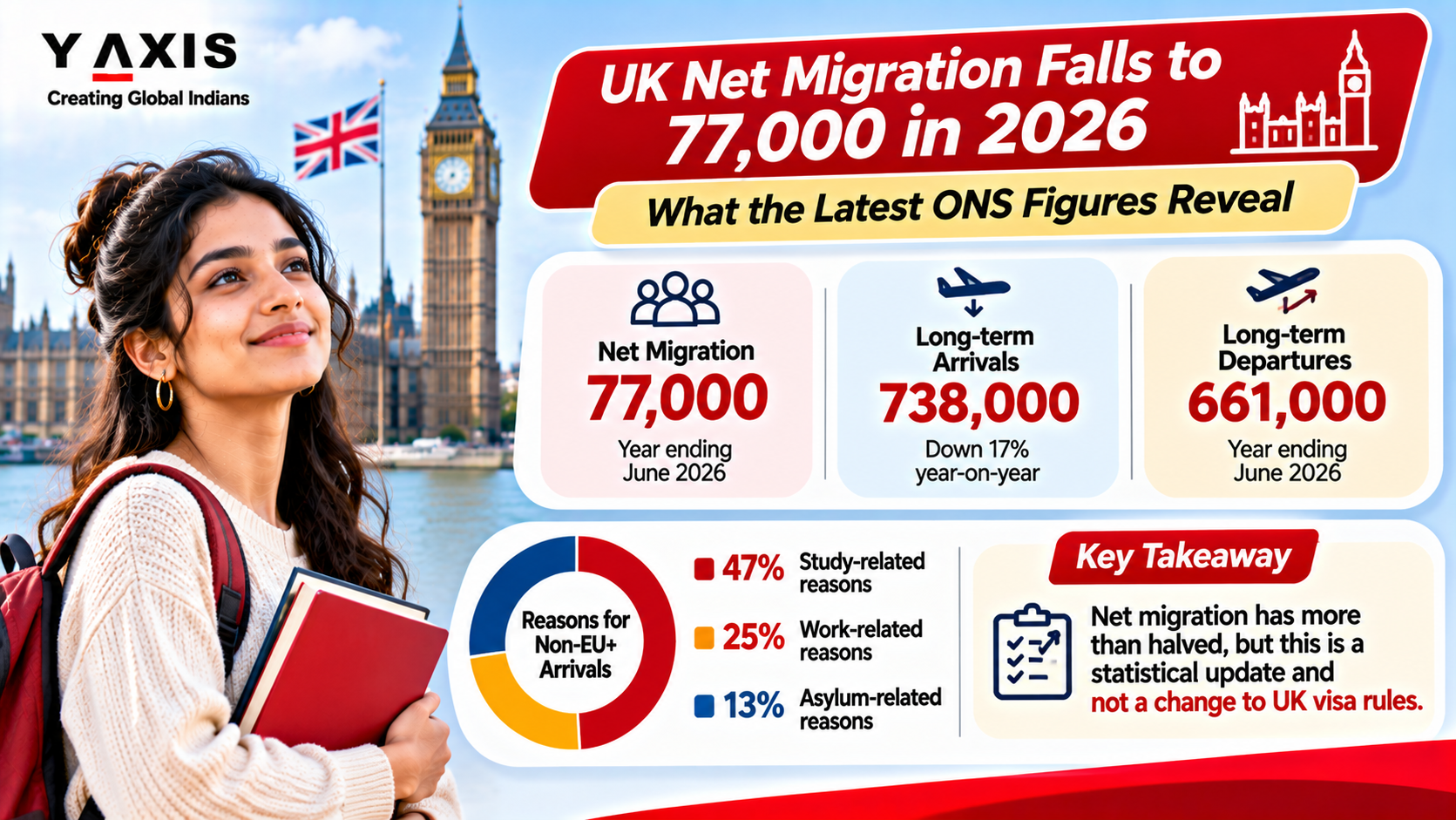
UK net migration has fallen to an estimated 77,000 in the year ending June 2026, more than halving from 204,000 a year earlier. New figures released by the Office for National Statistics (ONS) on November 26 show that 738,000 people moved to the UK long term, while 661,000 left. The decline reflects fewer international arrivals, particularly for work and study. For Indian students and professionals considering the UK, the findings reveal changing migration patterns but do not introduce new visa restrictions.
How Much Has UK Net Migration Fallen in 2026?
The ONS published its latest provisional long-term international migration estimates on November 26, covering the year ending June 2026. Net migration measures the difference between people entering and leaving the country for at least twelve months. The latest figures show a substantial reduction.
|
Migration indicator |
Year ending June 2025 |
Year ending June 2026 |
|
Net migration |
204,000 |
77,000 |
|
Long-term immigration |
893,000 |
738,000 |
|
Long-term emigration |
689,000 |
661,000 |
The earlier figures have been revised using updated administrative information. ONS describes the latest net migration estimate as the lowest recorded since 1997, excluding the COVID-19 pandemic period. However, changes in statistical methods mean historical comparisons require caution.
Why Has UK Net Migration Declined?
The principal driver was a reduction in immigration among people from outside the European Union and associated countries. Non-EU+ immigration fell from 671,000 to approximately 550,000. Meanwhile, non-EU+ emigration remained broadly stable. ONS reports that, compared with the previous year, non-EU+ arrivals declined by approximately:
- 45,000 for work-related reasons
- 33,000 for study-related reasons
- 19,000 for asylum-related reasons
These movements contributed to lower net migration. However, the statistics alone do not establish how much of the decline resulted from individual immigration policies, economic conditions or changing applicant preferences.
How Many People Moved to the UK in 2026?
An estimated 738,000 people arrived in the UK for long-term residence during the year ending June 2026. The nationality breakdown was:
|
Nationality group |
Estimated arrivals |
|
Non-EU+ nationals |
550,000 |
|
British nationals |
109,000 |
|
EU+ nationals |
79,000 |
|
Total |
738,000 |
Non-EU+ nationals accounted for most long-term immigration. Among these arrivals, study remained the largest recorded reason, accounting for 47%. Work-related migration represented 25%, while asylum-related migration accounted for 13%. These percentages describe the reasons for immigration among non-EU+ nationals, not all migrants arriving in the UK.
What Do the Figures Reveal About International Students?
The latest statistics show that education remains a major reason for non-EU+ nationals to move to the UK. Although study-related arrivals declined compared with the previous year, they continued to account for the largest share of non-EU+ immigration. The data also highlight the importance of distinguishing student arrivals from subsequent departures.
ONS estimates that approximately 53% of non-EU+ nationals who emigrated during the latest period had originally arrived on study-related visas. This does not mean that 53% of international students left the UK during 2026. Instead, it describes the original visa route of people who departed during the reporting period. For prospective Indian students, the figures provide context about international education trends rather than evidence of changes to individual study permit eligibility.
What Is Happening to Work-Related Migration?
Work-related immigration among non-EU+ nationals declined by approximately 45,000 compared with the previous year. This indicates fewer people arriving for employment-related reasons. However, the ONS release does not establish that every skilled occupation experienced the same decline. The statistics also do not show that employers have stopped recruiting international professionals. Applicants considering UK employment must continue assessing the requirements of their intended visa route, including sponsorship, occupation eligibility and applicable salary thresholds. National migration figures cannot determine whether an individual job offer qualifies for immigration permission.
How Many People Left the UK?
The ONS estimates that 661,000 people emigrated from the UK during the year ending June 2026.
The breakdown includes:
- 292,000 non-EU+ nationals
- 245,000 British nationals
- 124,000 EU+ nationals
Non-EU+ emigration remained broadly stable compared with the previous year.
British and EU+ net migration were both negative, meaning more people in those groups left the UK than arrived. The estimates for British nationals are subject to additional uncertainty because ONS used extended projections while awaiting updated administrative data.
Does Lower Net Migration Mean Fewer UK Visas Are Available?
Not necessarily. Net migration statistics measure population movements, while visa statistics record immigration permissions issued under specific categories. A reduction in net migration does not automatically indicate that the government has introduced new visa caps or suspended particular immigration pathways. The November 26 ONS publication is a statistical release, not an announcement changing Skilled Worker, Student or Graduate visa eligibility. Applicants should consult current Home Office guidance for the requirements applying to their circumstances.
What Should Indian Students and Professionals Consider?
The latest figures reinforce the importance of making decisions based on current visa requirements rather than interpreting national migration totals as individual opportunities or restrictions. Prospective students should verify their institution, course eligibility, financial requirements and post-study options. Professionals should confirm whether employers hold the necessary sponsorship authorisation and whether proposed employment meets the applicable immigration rules. Applicants should also distinguish between migration estimates, visa grants and actual immigration policy changes.
For Indian applicants, the essential distinction is that falling national migration figures do not replace the need to assess current study, employment and immigration requirements individually.
Official Sources
- Office for National Statistics — Long-Term International Migration, Provisional: Year Ending June 2026, November 26, 2026
- UK Government — Immigration System Statistics
- UK Government — Skilled Worker Visa
- UK Government — Student Visa
Frequently Asked Questions
1. What is the UK's latest net migration figure?
ONS estimates net migration at 77,000 for the year ending June 2026.
2. How many people immigrated to the UK?
Approximately 738,000 people arrived for long-term residence during the reporting period.
3. Are fewer international students moving to the UK?
ONS estimates that non-EU+ study-related arrivals declined by approximately 33,000 compared with the previous year.
4. Does the decline mean the UK has stopped issuing work visas?
No. The statistical release does not announce a suspension of work visas or changes to eligibility.
What Do the Latest UK Migration Figures Mean?
The November 26 release reveals a substantial change in the UK's migration balance, with fewer long-term arrivals and broadly stable departures. However, the estimates remain provisional and may be revised as additional information becomes available.
Tags:
UK Immigration
UK Net Migration 2026
UK Immigration Statistics
Office for National Statistics
UK Student Visa
UK Skilled Worker Visa
International Students UK
UK Migration Trends
Indian Professionals UK
UK Immigration News
Share
Options for you by Y-Axis

Get it on your mobile

Get News alerts

Contact Y-Axis
Latest Article
Popular Post
Trending Article

Posted On November 27 2026
New Zealand changes skilled residence processing from November 30: Who gets priority under the new rules?