

Posted on November 06 2026
UK Changes Skilled Worker Visa Rules: Modern Slavery Victims Can Switch Employers

By , Editor & Director
Updated November 06 2026
~ Dr. Serah Vinodini Vilvaraj
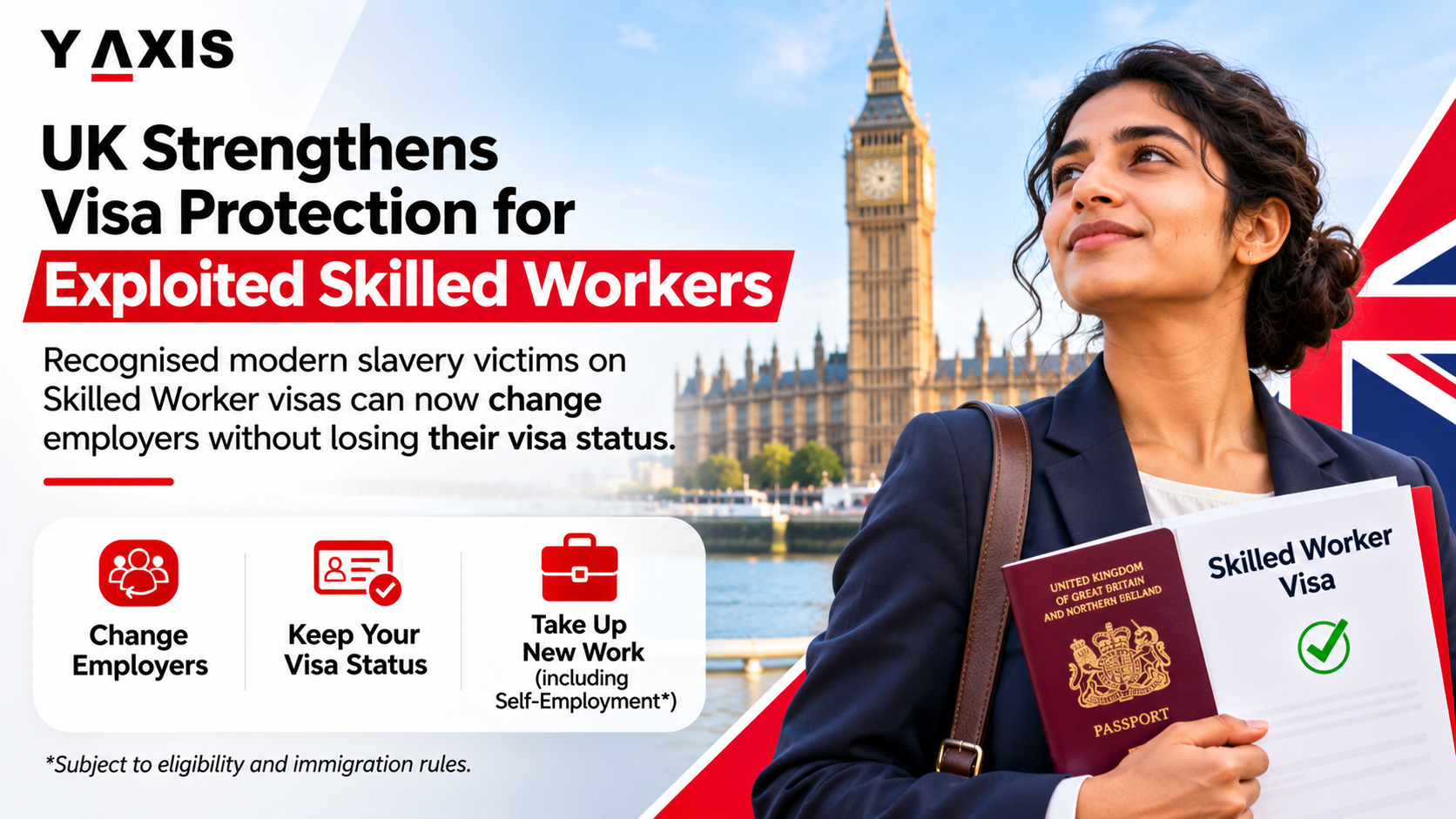
The UK has introduced new immigration protections allowing recognised modern slavery victims on Skilled Worker visas to leave exploitative employers and work elsewhere without automatically losing their existing immigration permission. The changes, effective October 8, 2026, are designed to prevent abusive sponsors from using workers' visa status to control them.
Announced by the UK Home Office on October 9, the measure applies to qualifying Skilled Worker visa holders, including sponsored care workers, who have been formally identified as victims of modern slavery. The protection allows eligible workers to seek alternative employment during the remaining validity of their existing visa. However, it does not automatically grant a new visa, permanent residence or unrestricted immigration status.
What Has Changed in the UK Skilled Worker Visa Rules?
Under the usual Skilled Worker visa conditions, foreign nationals are sponsored for a specific job with an approved UK employer. Changing employers generally requires meeting sponsorship requirements and obtaining the appropriate immigration permission. This dependency can create serious problems when a sponsoring employer becomes exploitative. The October 2026 rule change introduces an exception for workers formally recognised as modern slavery victims through the UK's National Referral Mechanism (NRM).
Under the amended Immigration Rules, qualifying workers may have their employment restrictions lifted, allowing them to work for another employer during the remaining period of their Skilled Worker permission. The change also permits eligible individuals to undertake self-employment and voluntary work, although employment as a professional sportsperson or sports coach remains excluded.
Who Qualifies for the New UK Visa Protection?
The protection is specifically intended for Skilled Worker visa holders who have received formal recognition as victims of modern slavery.
To qualify under the relevant Immigration Rules, a worker must:
- Hold permission under the Skilled Worker route.
- Have been referred to the National Referral Mechanism.
- Receive a positive Conclusive Grounds decision confirming recognition as a modern slavery victim.
- Meet the rule requiring that the decision was made during their most recent Skilled Worker permission.
A positive Conclusive Grounds decision is important because it represents the formal assessment of whether a person is a victim of modern slavery. Workers who have only reported exploitation or received an initial Reasonable Grounds decision should not assume their sponsorship restrictions have automatically been removed.
Why Did the UK Introduce These Protections?
The Home Office says some overseas workers have faced exploitation because their right to work was closely linked to an individual sponsor. In one case highlighted by the government, a care worker reportedly paid £20,000 to an agency for employment she believed would provide stable, full-time work. Her sponsor subsequently demanded an additional £400 every month to maintain her visa sponsorship, despite providing little or no employment.
When work was available, she reportedly earned only £200–£300 per month. The worker also faced threats concerning her immigration status. The government cited the case to demonstrate how sponsorship dependency can leave vulnerable workers fearful of reporting abuse or leaving an employer. The new rules seek to remove that dependency for workers who meet the formal recognition requirements.
UK Revokes More Than 6,600 Sponsor Licences Amid Enforcement Drive
The immigration reform comes alongside increased enforcement against employers that misuse the sponsorship system.
According to the Home Office:
- More than 6,600 sponsor licences have been revoked since the current UK government took office.
- Over 4,400 licences were revoked in the year ending June 2026.
- This represented a 140% increase compared with the preceding year.
The Home Office described the annual revocation figure as the highest on record. These figures relate to sponsorship enforcement overall. They do not mean that every employer involved was found responsible for modern slavery. Where authorities identify evidence of criminal conduct, employers may also be referred to the police.
How Serious Is Modern Slavery in the UK?
Official figures provide further context for the government's decision. According to the Home Office, 23,407 potential modern slavery victims were referred to the National Referral Mechanism in 2025, the highest annual number since the system began. During the same year, authorities issued 25,276 Conclusive Grounds decisions, a 48% increase from 17,154 in 2024.
The government has also reported progress in reducing the number of cases awaiting final decisions. As of September 30, 2026, 6,277 cases were awaiting a Conclusive Grounds decision, compared with a peak of 31,101 in January 2023. That represents an approximately 80% reduction. However, these national figures cover modern slavery referrals across different circumstances and immigration categories. They should not be interpreted as statistics exclusively concerning Skilled Worker visa holders.
Can Recognised Victims Work for Any UK Employer?
Qualifying workers whose employment restrictions have been amended may undertake lawful employment with another employer without being restricted to their original Skilled Worker sponsor. The amended rules also allow self-employment and voluntary work.
However, the flexibility is subject to important limitations. It applies only for the remaining duration of the worker's existing immigration permission, and the rules continue to exclude employment as a professional sportsperson or sports coach. Importantly, the change does not automatically extend a person's visa or guarantee eligibility for settlement. Workers should verify their updated employment conditions before taking up alternative work.
What Should Exploited Skilled Workers Do?
Workers experiencing threats, coercion, withheld wages or other potentially exploitative practices should seek appropriate support.
Practical steps include:
- Seek immediate safety: Contact emergency services if facing immediate danger.
- Obtain specialist advice: Speak with a qualified immigration adviser or an organisation supporting modern slavery victims.
- Understand the NRM process: Ask an authorised first responder about referral and identification procedures.
- Check immigration conditions: Confirm whether any employment restrictions have formally been amended.
- Keep relevant records: Preserve employment contracts, payslips, communications and other evidence where it is safe to do so.
Not every employment dispute constitutes modern slavery, and workers should not assume that reporting exploitation alone changes their immigration conditions.
Official sources:
- UK Home Office — Victims freed from abusive employers under new visa rules, October 9, 2026
- UK Immigration Rules — Appendix Skilled Worker, SW 18.3
- Home Office — Immigration and Asylum Bill: Modern slavery, October 8, 2026
- Home Office — Modern slavery cases awaiting a Conclusive Grounds decision, September 2026
FAQs
Can UK Skilled Worker visa holders change employers without new sponsorship?
Normally, changing employers requires complying with Skilled Worker sponsorship and immigration requirements. An exception may apply to formally recognised modern slavery victims whose work conditions have been amended under the October 2026 rules.
When did the new protection take effect?
The Immigration Rules change took effect on October 8, 2026. The Home Office publicised the protection on October 9.
Does the protection apply to Indian workers in the UK?
Yes, potentially. Nationality is not the determining factor. Indian nationals holding Skilled Worker permission may qualify if they meet the relevant modern slavery recognition and immigration requirements.
Does a positive Conclusive Grounds decision automatically grant permanent residence?
No. The protection concerns employment conditions during existing immigration permission. It does not automatically provide Indefinite Leave to Remain or British citizenship.
Can eligible workers become self-employed?
Yes. Where the relevant work restrictions have been amended, the rules permit self-employment, subject to the applicable immigration conditions.
What Does This Mean for Overseas Workers?
The October 2026 reform represents an important shift in the UK's approach to protecting vulnerable sponsored workers. By allowing formally recognised modern slavery victims to work independently of an abusive sponsor, the government aims to reduce the risk of immigration status being used as a means of exploitation. For overseas professionals, including Indian workers employed in the UK, the development highlights the importance of understanding employment rights alongside visa requirements.
The central change is clear: eligible modern slavery victims can gain greater freedom to leave abusive sponsors while retaining their existing immigration permission.
Workers should consult official Home Office guidance and obtain appropriate specialist advice before making decisions affecting their employment or visa status.
Tags:
UK Immigration
Skilled Worker Visa
UK Work Visa
Visa Sponsorship
UK Immigration Rules
Modern Slavery
Worker Rights
UK Home Office
Overseas Workers
Immigration Policy 2026
Share
Options for you by Y-Axis

Get it on your mobile

Get News alerts

Contact Y-Axis
Latest Article
Popular Post
Trending Article
Posted On November 06 2026
Canada Reports 68% Drop in Asylum Claimants as New Immigration Rules Take Effect