

Posted on November 27 2026
The visa deadline trap: Why submitting an application on time may still put your Immigration plans at risk

By , Editor & Director
Updated November 27 2026
~ Dr. Serah Vinodini Vilvaraj
An applicant submits a visa form minutes before the deadline and receives an online confirmation. The application appears complete, but an expired document, missing employer certificate or unanswered biometric request may still create problems. Across Canada, the UK, Australia and New Zealand, immigration authorities distinguish between submitting an application, meeting completeness requirements and receiving a decision. For Indian students, skilled professionals and families planning to move abroad, understanding these differences can help prevent avoidable delays and costly mistakes.
Why Is Meeting a Visa Deadline Not Always Enough?
Immigration applications involve several stages, each with different requirements. An applicant may complete an online form, pay the application fee and receive a submission confirmation. However, immigration authorities may still need to verify documents, collect biometric information or confirm that the application satisfies legal requirements. Some countries conduct completeness checks before processing begins. Others allow applicants to upload additional evidence after submission, subject to applicable instructions.
The critical distinction is that submitting a form, lodging a valid application and receiving immigration approval are not the same thing.
What Makes a Canadian Immigration Application Complete?
Immigration, Refugees and Citizenship Canada (IRCC) define a complete application package as one containing the required answers, forms, documents and applicable fee payments. If information is missing, IRCC may return the application, delay processing or refuse it, depending on the programme and circumstances. The department also explains that processing time generally begins when it receives a complete application.
For applicants approaching an immigration deadline, this distinction can be significant. A returned application may require resubmission, and applicants cannot assume that their original submission date will remain valid. Requirements differ between temporary residence, permanent residence and other immigration programmes.
Why Do Biometrics Create a Second Deadline?
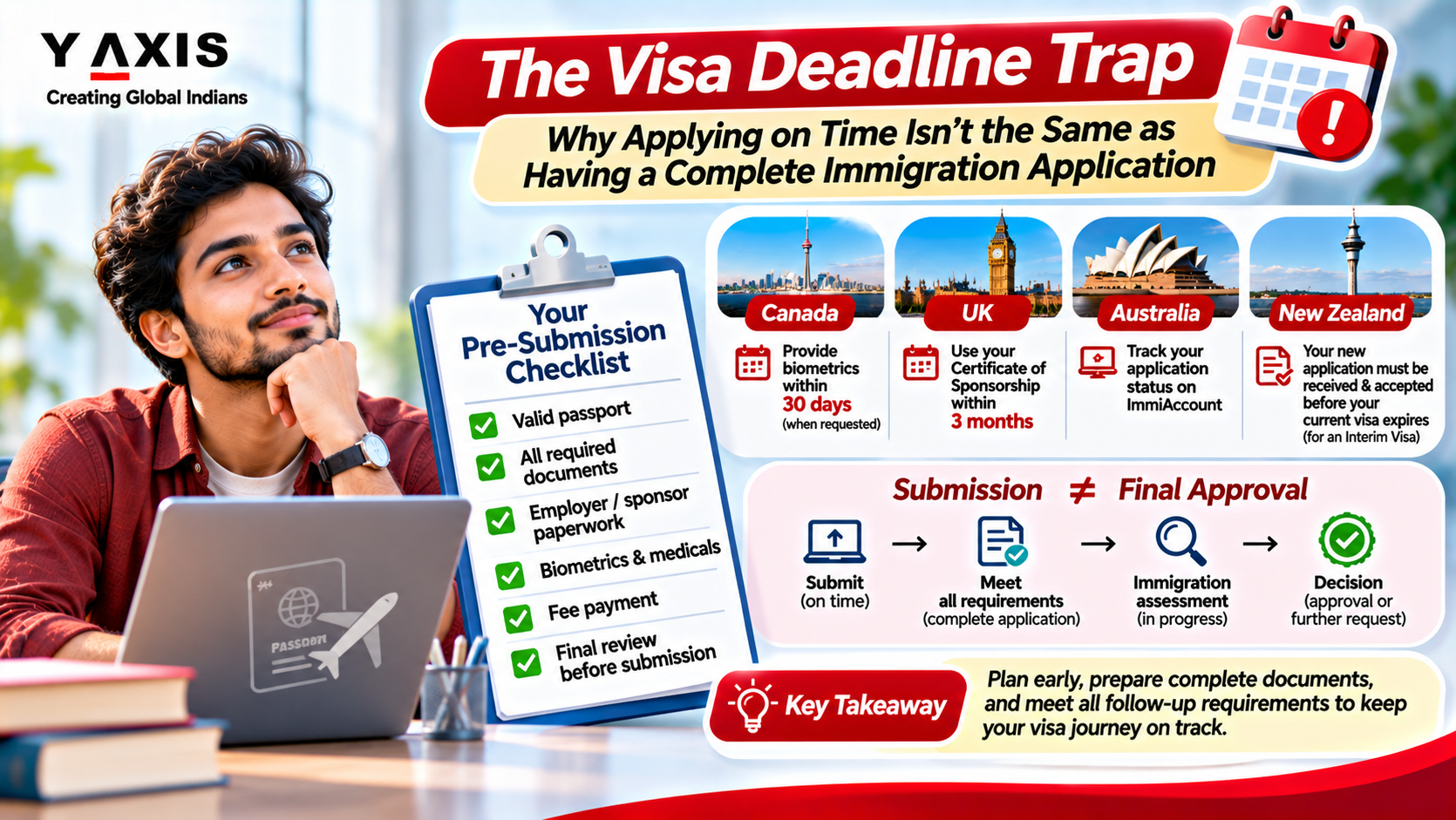
Biometric requirements can introduce another important stage after an application is submitted. In Canada, applicants who receive a biometric instruction letter are generally expected to provide fingerprints and a photograph within 30 days. Applicants should follow the deadline stated in their individual letter. Submitting the visa application does not automatically complete the biometric requirement.
Similarly, Australia's Department of Home Affairs may request biometric collection after an application has been lodged. Applicants must monitor their accounts and follow the instructions provided. Missing a required appointment or failing to respond to an official request can affect application processing.
How Can UK Employer Paperwork Affect Visa Timing?
The UK's Skilled Worker visa demonstrates how employer documentation and application deadlines interact. Applicants generally need a valid Certificate of Sponsorship (CoS) assigned by an approved employer. According to GOV.UK, the certificate must normally be used to apply for a visa within three months of assignment. Applicants must also avoid applying more than three months before the employment start date listed on the certificate. Other requirements include proof of identity, English-language ability and relevant supporting documents. An applicant who has received a job offer but has not obtained the necessary sponsorship documentation may therefore be unable to complete a valid Skilled Worker application.
What Do Australian Visa Application Statuses Mean?
Australia's ImmiAccount system distinguishes between several application stages.
|
Application status |
What it indicates |
|
Incomplete |
The applicant has started but not completed the application |
|
Awaiting documents |
Supporting documents are needed before submission |
|
Ready to submit |
The application can be submitted |
|
Submitted |
The application has been successfully submitted |
|
Received |
Home Affairs has received the application for assessment |
|
Initial assessment |
Initial checks have been completed |
Home Affairs may subsequently request medical examinations, character information, biometrics or additional documents. Applicants should regularly review the Actions required section of ImmiAccount. A submitted application is not necessarily ready for a decision.
Why Is New Zealand's Interim Visa Rule Important?
New Zealand provides another example of why application timing matters. An eligible person already in New Zealand may receive an Interim Visa when their current temporary visa expires while another temporary visa application is being assessed. However, Immigration New Zealand states that the new application must be received and accepted for processing before the existing visa expires. The application must include the required documentation.
An Interim Visa is not available automatically to everyone who begins an online application. Eligibility also depends on the person's immigration circumstances and the type of visa requested. Applicants should verify their status before relying on interim arrangements.
Which Documents Should Applicants Check Before Submission?
Although requirements vary, applicants should review several common areas:
- Passport validity: Confirm that the passport satisfies the destination country's requirements.
- Supporting evidence: Check whether financial, educational, employment and relationship documents are required.
- Employer documentation: Verify sponsorship certificates, employment details or employer approvals where applicable.
- Biometrics and medicals: Identify separate appointments, requests and deadlines.
- Application confirmation: Retain submission receipts and monitor the official immigration account.
Applicants should also check whether documents require certified translations or updated signatures. Submitting incorrect information simply to meet a deadline can create additional complications.
Can Applicants Correct Mistakes After Submission?
Some immigration systems allow applicants to provide additional documents or respond to official requests after submission. For example, Australia's ImmiAccount permits applicants to attach further supporting evidence where applicable. Immigration New Zealand may also request additional information during assessment. However, these options should not be interpreted as permission to submit an incomplete application deliberately. Certain errors may affect validity or require a new application. Applicants should follow the instructions for their specific immigration programme rather than assume every mistake can be corrected later.
A timely application matters, but an accurate, complete and properly submitted application is what gives applicants the strongest foundation for immigration processing.
Official Sources
- IRCC — What Is a Complete Application Package?
- IRCC — How to Avoid Application Delays or Refusals
- UK Government — Certificates of Sponsorship
- UK Government — Skilled Worker Visa Application Process
- Australian Department of Home Affairs — After You Apply
- Immigration New Zealand — Interim Visa
- Immigration New Zealand — Checking Your Visa Application Status
Frequently Asked Questions
1. Does an online visa submission confirmation guarantee approval?
No. Confirmation of submission does not establish that all immigration requirements have been satisfied.
2. Can missing documents delay a Canadian visa application?
Yes. IRCC confirms that missing documents or fees can lead to delays, returns or refusals.
3. How long is a UK Skilled Worker Certificate of Sponsorship valid for an application?
It generally must be used within three months of assignment.
4. Does New Zealand automatically grant an Interim Visa after an application is started?
No. Applicants must meet the relevant conditions, including having a qualifying application accepted for processing before their current visa expires.
What Is the Best Way to Avoid the Visa Deadline Trap?
Applicants should treat immigration deadlines as part of a broader application process rather than the final step. The safest approach is to verify the applicable rules, prepare required documents early, complete mandatory identity checks and monitor official communications after submission.
Tags:
Visa Application Deadlines
Immigration Document Requirements
Visa Application Mistakes
Work Visa Applications
Student Visa Requirements
Canada Immigration
UK Skilled Worker Visa
Australia ImmiAccount
New Zealand Interim Visa
Immigration Applicati
Share
Options for you by Y-Axis

Get it on your mobile

Get News alerts

Contact Y-Axis
Latest Article
Popular Post
Trending Article
Posted On November 27 2026
New Zealand changes skilled residence processing from November 30: Who gets priority under the new rules?