

Posted on November 26 2026
The Degree-to-Career Test: Why Indian Students Must Look Beyond University Rankings Before Studying Abroad

By , Editor & Director
Updated November 26 2026
~ Dr. Serah Vinodini Vilvaraj
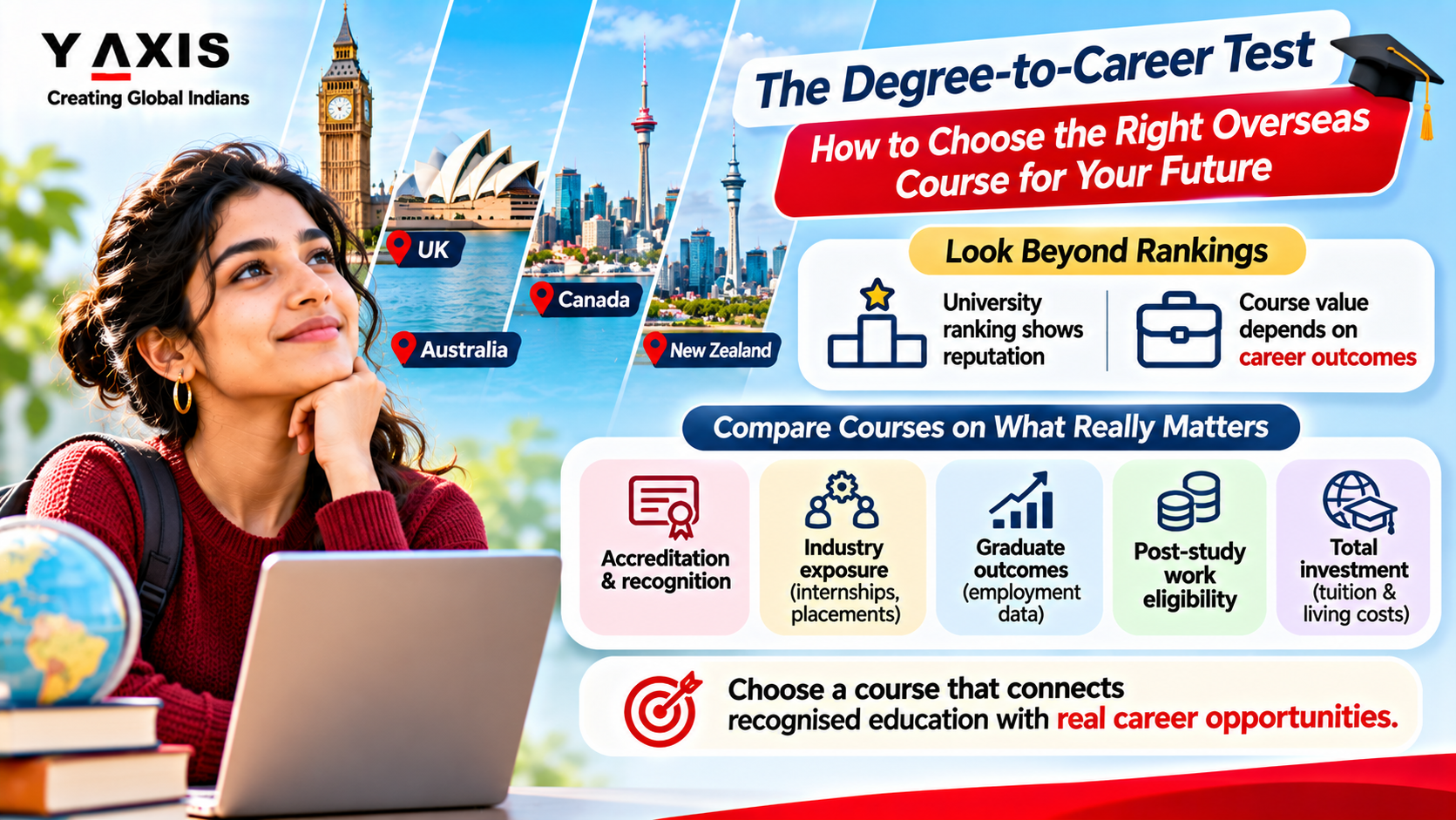
An overseas university may rank among the world's best, but does that guarantee its graduates find suitable employment? For Indian students investing substantial savings in international education, the answer matters. Official graduate employment surveys from Australia and the UK reveal why university reputation alone cannot measure career outcomes. Before choosing an overseas course, students increasingly need to examine accreditation, practical training, graduate employment evidence and post-study work eligibility.
Why Are University Rankings Not Enough?
University rankings typically assess combinations of research performance, academic reputation, international engagement and other institutional indicators. These measures can provide useful context, but they do not necessarily show whether a particular course prepares students for their intended profession. Two universities with similar reputations may offer different internship arrangements, teaching approaches and employer connections.
Likewise, two courses at the same institution may produce different graduate outcomes. Students should therefore compare the specific qualification rather than relying exclusively on the university's overall position. The central question is not simply where to study, but what the qualification enables graduates to do afterward.
What Do Australia's Graduate Employment Figures Reveal?
Australia's 2025 Graduate Outcomes Survey provides an important example. The Australian Government commissions the Quality Indicators for Learning and Teaching (QILT) surveys to measure student experiences and graduate outcomes. The international graduate report included responses from more than 39,000 graduates across 119 institutions.
Among international graduates available for full-time work, the survey reported employment rates of 50.8% for undergraduates, 52.2% for postgraduate coursework graduates and 71.8% for postgraduate research graduates. These figures were measured approximately four to six months after course completion.
They should not be interpreted as unemployment rates for all international graduates because some respondents were undertaking further study or were otherwise outside the full-time-work measure. The survey also changed its labour-force methodology in 2025, limiting direct comparisons with previous years. The findings demonstrate why students should investigate graduate outcomes rather than assume that obtaining an international qualification guarantees employment.
How Can Students Verify Whether a Course Is Recognised?
Accreditation is an essential part of evaluating overseas education. In Australia, the Tertiary Education Quality and Standards Agency (TEQSA) maintains the National Register of higher education providers. Students can use it to verify institutional registration and relevant accreditation information.
International students should also check the Commonwealth Register of Institutions and Courses for Overseas Students (CRICOS), which identifies providers and courses approved for international student enrolment. However, institutional recognition and professional licensing are not always equivalent. Graduates entering regulated occupations may need additional recognition from a professional authority. Students considering healthcare, engineering, teaching or other regulated careers should verify these requirements before enrolment.
Can Students Compare Graduate Outcomes in the UK?
Yes. The UK's official Discover Uni platform provides information designed to help prospective students compare higher education courses. Its data includes graduate employment, earnings, student experiences and course characteristics. The platform's 2026 dataset was published on October 1.
Students can compare up to seven courses using its comparison tool. Graduate Outcomes information generally examines graduates approximately fifteen months after completing their qualifications.
Discover Uni also provides longer-term earnings information where available. However, employment outcomes can be influenced by location, previous experience, economic conditions and individual circumstances. A published graduate salary should therefore be treated as historical evidence, not a guaranteed starting salary.
Why Does Practical Work Experience Matter?
Work-integrated learning can help students understand how academic knowledge is applied in professional settings. Depending on the programme, it may include internships, supervised placements, industry projects or practical training. However, students should investigate whether these opportunities are compulsory, optional, competitive or dependent on employer availability.
An advertised internship opportunity does not necessarily mean every student receives a placement. Applicants should ask universities about placement arrangements, industry partners, assessment requirements and support available to international students. They should also check whether placements comply with applicable student visa conditions.
Does Every Overseas Qualification Offer Post-Study Work Rights?
No. Post-study immigration eligibility varies by destination, institution and programme. In Canada, Post-Graduation Work Permit eligibility depends on requirements including the institution, programme, language ability and, where applicable, the field of study. The UK's Graduate visa requires successful completion of an eligible course at an appropriate education provider, alongside other immigration conditions. Students should verify the rules applicable to their intended course and expected graduation date. A recognised qualification does not automatically guarantee permission to remain overseas for employment.
How Should Indian Students Compare Two Overseas Courses?
Before accepting an offer, students can evaluate each programme against six criteria.
|
Selection criterion |
Question to ask |
|
Accreditation |
Is the institution and qualification officially recognised? |
|
Curriculum |
Does the course develop relevant professional skills? |
|
Practical experience |
Are internships or placements available? |
|
Graduate outcomes |
What do official employment datasets indicate? |
|
Immigration eligibility |
Could the course meet applicable post-study work requirements? |
|
Total investment |
Are tuition and living costs financially sustainable? |
Students should compare evidence from government sources, universities and relevant professional regulators. Where course-level employment data is unavailable, that limitation should be acknowledged rather than replaced with unsupported promotional claims.
The most useful overseas degree is not necessarily the one with the highest-ranked university name. It is the qualification that best connects recognised education with realistic career opportunities.
Official Sources
- Australian Government QILT — 2025 International Graduate Outcomes Key Findings
- QILT — Graduate Outcomes Survey
- TEQSA — Checking Provider Registration or Course Accreditation
- Australian Government — CRICOS Course and Institution Register
- UK Discover Uni — Official Course Comparison Guidance
- UK Discover Uni — Understanding Graduate Employment and Earnings
- IRCC — Post-Graduation Work Permit Eligibility
- UK Government — Graduate Visa Eligibility
Frequently Asked Questions
1. Does a highly ranked university guarantee employment?
No. Graduate employment depends on several factors, including qualifications, skills, experience and labour-market conditions.
2. Where can students check Australian graduate outcomes?
The official QILT Graduate Outcomes Survey publishes employment and further-study information.
3. Can students compare UK university courses using government data?
Yes. Discover Uni provides official course comparisons and graduate outcome information.
4. Does studying overseas guarantee a post-study work visa?
No. Graduates must meet the immigration requirements of the relevant destination and visa category.
What Is the Real Value of an Overseas Degree?
The value of international education extends beyond a university's ranking or reputation. A suitable qualification should offer academic credibility, relevant skills and a realistic connection to the student's career objectives. For Indian families, comparing verified outcomes before paying tuition fees can support better-informed financial and educational decisions.
Tags:
Study Abroad
Overseas Education
International Students
University Rankings
Graduate Employment Outcomes
Study Abroad for Indian Students
Overseas University Courses
Post-Study Work Visa
International Education Careers
Choosing a University Abroad
Share
Options for you by Y-Axis

Get it on your mobile

Get News alerts

Contact Y-Axis
Latest Article
Popular Post
Trending Article
Posted On November 26 2026
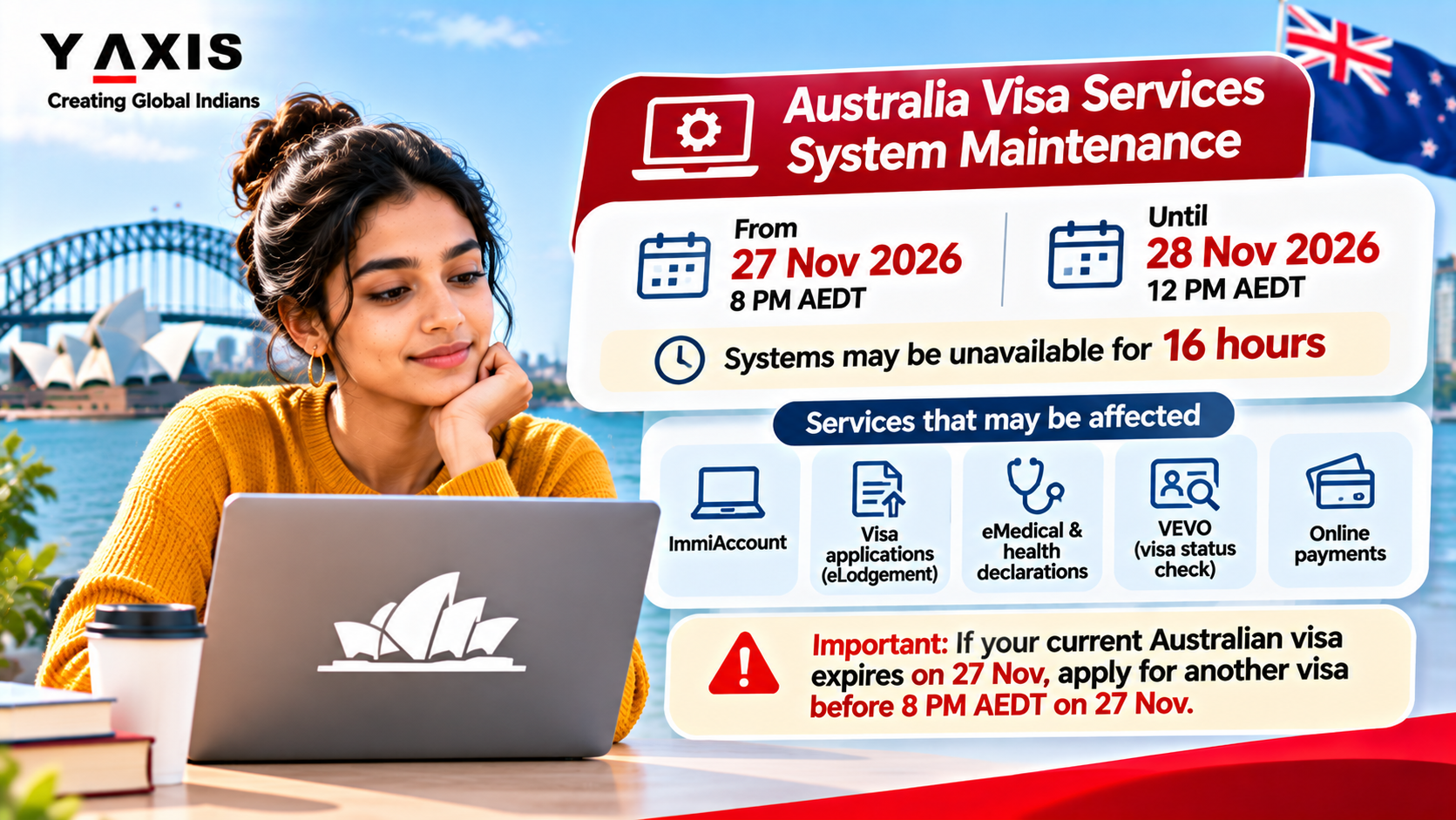
Australia visa services to go offline November 27–28: Applicants warned to act before shutdown