

Posted on December 04 2025
What are the most in-demand jobs in South Korea for the next 10 years?

By , Editor
Updated February 23 2026
High-Paying and In-Demand Jobs in South Korea
The most high-paying and in-demand jobs in South Korea over the next decade will be concentrated in sectors such as IT and software, engineering, semiconductors, healthcare, finance, accounting, digital marketing, and education. South Korea is known for its advanced technology, world-class infrastructure, safe environment, and strong public transportation system, making it an attractive destination for foreign professionals seeking to work in South Korea.
With an ageing population, rapid automation, and expanding high-tech industries, South Korea is experiencing significant labour shortages, increasing the demand for international talent. Some of the most in-demand jobs in South Korea include software developers, IT specialists, AI engineers, data analysts, semiconductor engineers, nurses, caregivers, accountants, English teachers, and financial analysts. These roles are among the highest-paying jobs in South Korea for Indians and other foreign nationals.
As one of Asia’s strongest and most advanced economies, South Korea offers competitive salaries, excellent job stability, strong employee benefits, and long-term career growth. Many Korean companies also provide additional perks such as housing support, meal allowances, bonuses, and performance incentives.
This combination of high-quality living standards, a growing demand for skilled talent, and a strong South Korea job market makes the country one of the top destinations for Indians seeking high-paying jobs abroad and promising career opportunities.
*Want to apply for a South Korea work visa? Let Y-Axis help you with the process.
In-Demand Jobs in South Korea and Their Average Salaries
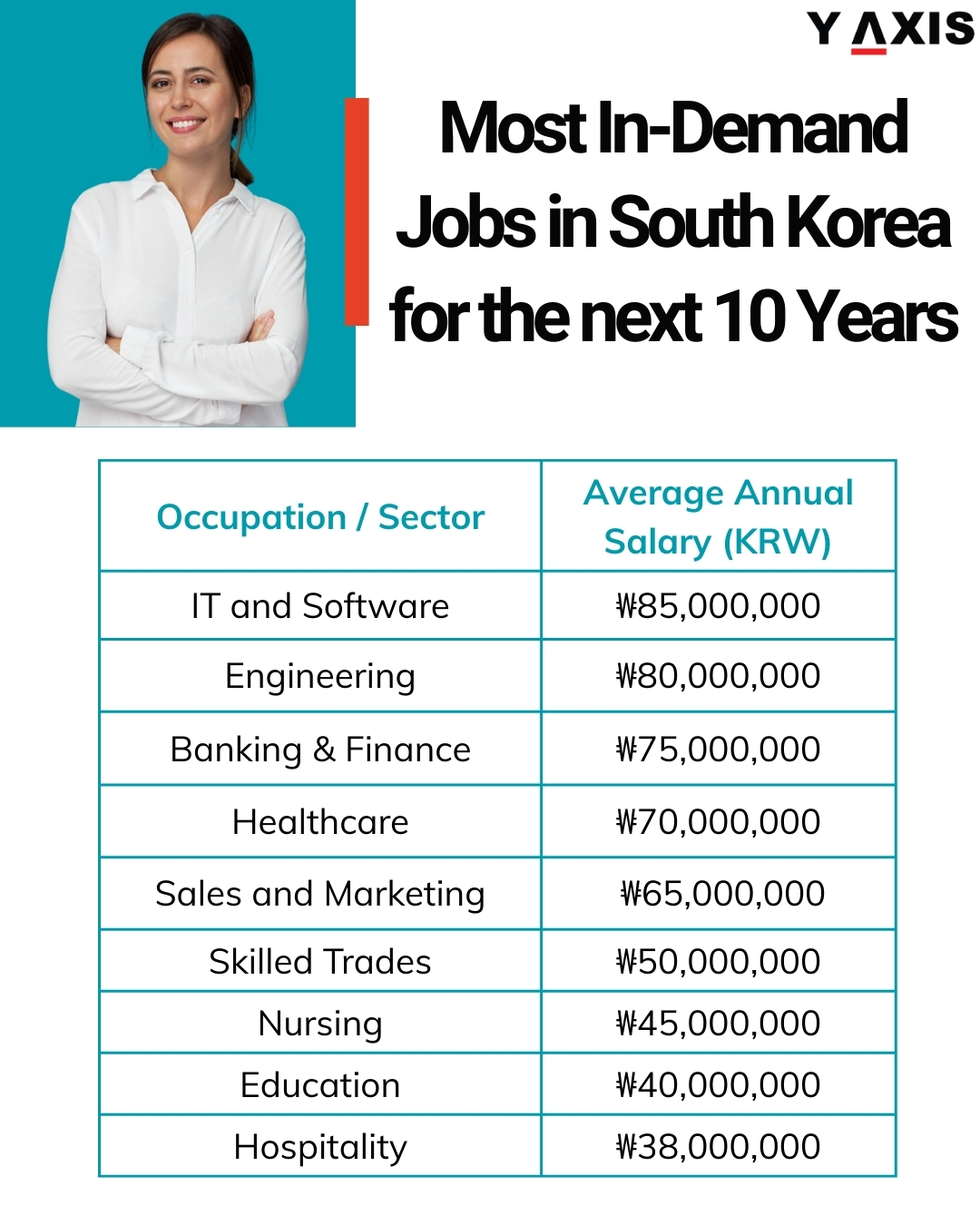
Some of the most in-demand jobs in South Korea are found in the IT, engineering, accounting and finance, healthcare, education, HR, sales, and hospitality sectors. South Korea’s growing labour shortages, technological advancement, and expanding high-tech industries continue to create strong demand for skilled foreign professionals.
The table below lists the top-paying jobs in South Korea along with the average annual salary offered for each role:
|
Occupations |
Average Annual Salary (KRW) |
|
Engineering |
₩80,000,000 |
|
Information Technology (IT) |
₩85,000,000 |
|
Healthcare |
₩70,000,000 |
|
Marketing & Sales |
₩65,000,000 |
|
Banking & Finance |
₩75,000,000 |
|
Nursing |
₩45,000,000 |
|
Education |
₩40,000,000 |
|
Hospitality |
₩38,000,000 |
|
Skilled Trades |
₩50,000,000 |
*Want to apply for jobs in South Korea? Avail Y-Axis Resume Marketing Services to find the right one.
In-Demand Jobs in South Korea for the Next 10 Years
South Korea currently has over 500,000 job vacancies across key industrial sectors, driven by labour shortages, an aging population, and the rapid growth of high-tech industries. The average annual salary in South Korea ranges from ₩35,000,000 to ₩85,000,000, depending on the occupation, industry, and experience level.
Due to skill shortages and increased demand for global talent, South Korea is expected to require hundreds of thousands of foreign professionals over the next decade, especially in fields such as IT, engineering, semiconductors, healthcare, education, finance, and logistics. The government continues to expand pathways like the E-7 Skilled Worker Visa, E-7-4 Points Visa, and the D-10 Job Seeker Visa to attract skilled workers.
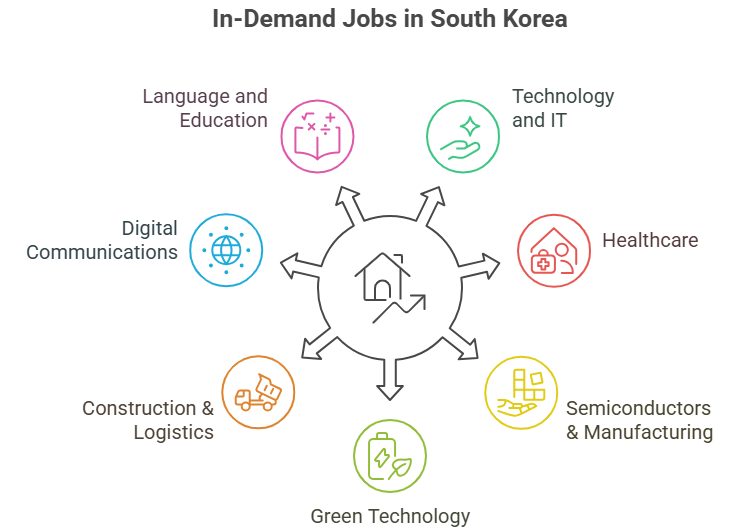
The table below has complete details of job roles that are expected to be in demand in South Korea over the next 10 years:
|
Sector |
Job Roles |
|
Technology and IT |
Software Developers, IT & AI Specialists, Data Engineers, Software Engineers, Data Scientists, Cybersecurity Analysts, Cloud Computing Specialists |
|
Healthcare |
Doctors, Specialists (Surgery, Pediatrics, Gynaecology), Nurses, Caregivers, Medical Technicians, Medical & Health Services Managers |
|
Semiconductors & Advanced Manufacturing |
Semiconductor Process Engineers, Industrial Automation Engineers, Robotics Systems Architects, Quality/Process Improvement Engineers, Electronics Engineers |
|
Green Technology & Sustainability |
Renewable Energy Project Manager, Green Construction Engineer, ESG Consultant, Environmental Engineer |
|
Construction, Infrastructure & Logistics |
Site Manager (Large Projects), Logistics Coordinator/Manager, Supply Chain Supervisor, Transport Supervisor, Civil Engineer |
|
Digital Communications & Global Business |
Global HR Business Partner, Talent Acquisition Specialist, International Sales & Business Development Lead, Digital Marketing Specialist, Foreign Client Relations Manager |
|
Language and Education |
English Teachers, Korean–English Translators, Corporate Language Trainers, International School Teachers |
Read more…
South Korea Job Market: Trends & Job Opportunities
How to Apply for Jobs in South Korea from India?
To get a job in South Korea from India, you must prepare a resume in the Korean format, secure a job offer from a South Korean employer, and then begin the work visa application process. Most skilled professionals apply under visa categories such as the E-7 Skilled Worker Visa, E-7-4 Points Visa, or the D-10 Job Seeker Visa before transitioning to a full work visa.
Here is a step-by-step process to apply for a job and work visa in South Korea from India:
Step 1: Get a job offer from a registered South Korean employer/company with the help of Y-Axis Resume Marketing Services.
Step 2: Receive sponsorship documents from the employer (employment contract and supporting paperwork)
Step 3: Apply for a South Korea work visa that aligns with your qualifications and job role (E-7, E-1 to E-6, etc.)
Step 4: Attend the visa interview at the Korean Embassy or submit additional documents if required
Step 5: Await a decision from Korean Immigration and receive your South Korea work visa
*Are you looking for step-by-step assistance with overseas immigration? Contact Y-Axis, the world’s No. 1 overseas immigration consultancy, for end-to-end assistance!
FAQs
What are the most in-demand jobs in South Korea for the next 10 years?
Over the next decade, South Korea will see strong demand for jobs in IT, engineering, semiconductors, healthcare, caregiving, education, manufacturing, and logistics. The country’s digital transformation, aging population, and global expansion of Korean industries will drive the need for foreign talent. Software developers, AI experts, data scientists, semiconductor engineers, mechanical/electrical engineers, nurses, caregivers, English teachers, and skilled factory workers will remain highly sought after. As the country faces labour shortages, opportunities will continue to grow for skilled professionals across these sectors. Foreign workers who meet visa requirements and possess strong qualifications will find South Korea a promising long-term destination.
Which industries in South Korea are expected to grow the most over the next decade?
The industries expected to grow significantly in South Korea include IT and software, semiconductors, AI and robotics, biotech, healthcare, renewable energy, education, logistics, and advanced manufacturing. South Korea’s strong focus on digital innovation, chip production, automotive engineering, and global competitiveness will drive major job growth in these sectors. The healthcare and caregiving industries will expand due to demographic shifts. Additionally, e-commerce, fintech, and green technology will experience long-term demand. These industries will continue to hire foreign professionals with specialised skills and global experience to fill talent shortages and support Korea’s economic advancement.
What skilled occupations will South Korea need more foreign workers for in the future?
South Korea will increasingly need foreign workers in skilled occupations such as AI engineering, software development, cloud computing, semiconductor processing, robotics, mechanical and electrical engineering, nursing, caregiving, teaching, logistics management, and digital marketing. Labour shortages in healthcare, advanced manufacturing, and tech sectors will continue as local workforce numbers decline. Highly skilled foreign professionals will be welcomed under visas like E-7 and E-7-4. Mid-skill roles in manufacturing, food processing, and caregiving will also rely heavily on foreign workers. Korea’s long-term hiring needs align strongly with global technical, engineering, and service-based talent.
Is South Korea facing long-term labour shortages in certain sectors?
Yes. South Korea is experiencing long-term labour shortages in healthcare, caregiving, manufacturing, construction, hospitality, logistics, and certain STEM fields. The country’s declining birth rate and rapidly aging population are reducing the domestic workforce, especially in physically demanding or service-oriented jobs. Skilled tech roles—such as AI, cybersecurity, software engineering, and semiconductor production—also face shortages due to strong global competition for talent. These labour gaps are expected to persist for at least the next decade, creating opportunities for foreign professionals and mid-skill workers to enter South Korea’s workforce through various employment visa routes.
What technology jobs will be most in demand in South Korea over the next 10 years?
Technology jobs in high demand include software developers, AI and machine learning engineers, data scientists, cloud architects, cybersecurity specialists, blockchain developers, semiconductor engineers, automation experts, and mobile application developers. South Korea’s ambition to remain a global tech powerhouse—alongside its strong semiconductor and electronics industries—will ensure continuous hiring in these fields. Government initiatives supporting digital transformation across finance, manufacturing, healthcare, and public services will also accelerate demand for tech talent. Foreign IT professionals with specialised skills, certifications, and advanced degrees will find strong opportunities under Korea’s E-7 Skilled Worker Visa.
Are engineering jobs expected to grow in South Korea?
Yes. Engineering jobs are expected to grow substantially in South Korea due to continued investment in semiconductors, automotive innovation, electronics, robotics, renewable energy, and construction. Mechanical, electrical, chemical, civil, and robotics engineers will be particularly in demand. Korea’s EV development, chip manufacturing expansion, smart factory automation, and infrastructure upgrades will increase the need for skilled engineers. Companies such as Samsung, SK Hynix, LG, Hyundai, and Kia regularly hire foreign engineering talent. Engineering roles often qualify for the E-7 visa, making South Korea an ideal long-term destination for international engineers.
What healthcare roles will be needed in South Korea as the population ages?
As South Korea’s population ages rapidly, healthcare roles will be in high demand, including nurses, caregivers, physiotherapists, medical technicians, geriatric care specialists, and nursing assistants. Elderly care facilities, hospitals, rehabilitation centres, and home-care services will rely heavily on foreign workers to fill staffing shortages. Caregiving careers, in particular, will expand significantly under special visa programs as the elderly population continues to grow. Healthcare support staff and workers trained in long-term care management will also be needed. Korean language ability enhances opportunities, especially for patient-facing roles. This sector will remain one of the most stable and expanding fields.
Will South Korea continue to hire foreign teachers in the next decade?
Yes. South Korea will continue to hire foreign teachers, especially English instructors, due to strong demand for language training in schools, universities, and private academies. English proficiency remains essential for Korean students and professionals, ensuring steady demand for E-2 visa teachers. International schools and corporate training programs will also hire foreign educators for STEM, business, and language-related subjects. As Korea expands global partnerships and international programs, foreign teachers will play a key role. This sector offers stable employment, competitive salaries, housing benefits, and long-term opportunities for qualified educators.
Are manufacturing and factory jobs likely to remain in demand in South Korea?
Yes. Manufacturing and factory jobs will remain in high demand due to Korea’s strong industrial base in electronics, automotive parts, semiconductors, shipbuilding, and food production. As fewer local workers choose factory roles, companies increasingly depend on foreign workers under the Employment Permit System (EPS). Common roles include machine operators, assembly line workers, welders, quality controllers, and technicians. These jobs offer stable income, overtime opportunities, and long-term contracts. As Korea’s manufacturing exports continue to grow, foreign workers will remain essential to maintaining production capacity for the next decade.
What jobs will be most in demand under the E-7 Skilled Worker Visa category?
E-7 Skilled Worker Visa hiring will focus on software developers, AI engineers, data analysts, semiconductor process specialists, robotics engineers, industrial designers, financial analysts, accountants, chefs, English teachers, and logistics professionals. The visa targets skilled workers who can support Korea’s high-tech industries, advanced manufacturing, and specialised service sectors. Over the next 10 years, the E-7 will become even more important due to national talent shortages. Applicants with strong qualifications, relevant experience, and industry-specific skills will find excellent long-term employment opportunities under this visa pathway.
How will South Korea’s semiconductor industry influence future job demand?
South Korea’s semiconductor industry—led by Samsung and SK Hynix—is one of the largest in the world and will continue to expand aggressively. This growth will create long-term demand for foreign engineers, chip designers, process technicians, quality engineers, cleanroom specialists, and research scientists. As global demand for chips increases and Korea invests heavily in advanced semiconductor manufacturing, the industry will face ongoing domestic talent shortages. Foreign professionals with semiconductor experience will be essential to maintaining production, R&D, and innovation. This sector will likely generate some of the highest-paying jobs for foreign workers in the coming decade.
What soft and technical skills will be most valuable in South Korea’s future workforce?
Technical skills such as software development, AI engineering, data analytics, cloud computing, cybersecurity, robotics, automation, semiconductor fabrication, and mechanical/electrical engineering will be essential. Soft skills like communication, teamwork, adaptability, critical thinking, creativity, leadership, and problem-solving will also be highly valued. Korean language proficiency will significantly boost employability and workplace integration. As companies modernise, digital literacy and cross-cultural communication skills will become increasingly important. Workers who combine technical expertise with strong soft skills will be well-positioned for long-term success in South Korea’s evolving job market.
Can foreigners expect strong job opportunities in South Korea in the coming years?
Yes. Foreigners can expect strong job opportunities in IT, engineering, semiconductors, caregiving, healthcare, education, manufacturing, and logistics. Labour shortages, demographic changes, and Korea’s rapid technological advancements will continue to create demand for foreign workers across both skilled and mid-skill roles. Professionals with globally competitive qualifications, language skills, or niche expertise will have particularly strong prospects. South Korea’s visa options—including E-7, E-7-4, E-2, D-10, and EPS—support foreign employment. As Korea deepens international cooperation and faces declining domestic workforce numbers, opportunities for foreign workers will remain strong over the next decade.
Will South Korea hire more IT and AI specialists in the next 10 years?
Yes. South Korea will significantly expand hiring for IT and AI specialists as the country accelerates digital transformation across all sectors. Korean companies are investing heavily in artificial intelligence, automation, smart factories, blockchain, cybersecurity, autonomous vehicles, and semiconductor software. Demand for AI engineers, machine learning developers, data scientists, cloud architects, and software developers will continue to rise. Government initiatives promoting digital innovation will further boost recruitment of foreign tech experts. The tech sector offers some of the highest-paying and most stable roles for international professionals.
What jobs will be needed to support South Korea’s aging population and healthcare system?
Jobs needed to support Korea’s aging population include caregivers, nurses, nursing assistants, physiotherapists, eldercare specialists, medical technicians, and social workers. As the elderly population grows, demand for long-term care staff in hospitals, nursing homes, and homecare services will increase. Caregiving roles are among the most urgent national priorities and rely heavily on foreign workers. Trained healthcare support staff will also be essential for rehabilitation and chronic care management. Korean language proficiency helps greatly in patient-facing roles. This sector will offer long-term career stability for foreign workers over the next decade.
Will logistics and supply chain jobs grow in South Korea in the future?
Yes. Logistics and supply chain jobs will grow substantially due to expanding e-commerce, global trade routes, and Korea’s central role as a northeast Asian logistics hub. Demand will rise for logistics coordinators, warehouse supervisors, freight handlers, procurement specialists, customs clearance staff, and last-mile delivery workers. Korea is investing in advanced logistics technologies such as automation, smart warehouses, and digital tracking systems, increasing the need for skilled workers. Foreign workers with experience in logistics, supply chain management, or warehouse operations will find strong opportunities in the coming years.
What high-paying jobs will be in demand in South Korea long-term?
High-paying jobs expected to be in long-term demand include AI engineers, software developers, cloud architects, data scientists, semiconductor engineers, robotics specialists, EV engineers, financial analysts, English lecturers, and research scientists. Korea’s high-tech industries offer competitive salaries, global projects, and career growth. Senior IT roles, engineering positions in the semiconductor sector, and specialised STEM roles often offer some of the highest compensation packages. Foreign experts with advanced degrees, certifications, and in-demand skills will be highly valued and well-rewarded in South Korea’s evolving economy.
How will Korea’s digital transformation impact future job trends?
Korea’s digital transformation will fuel long-term demand for jobs in IT, AI, data analysis, cloud engineering, cybersecurity, fintech, robotics, and smart manufacturing. As industries adopt automation and advanced technologies, both high-skilled tech roles and mid-skill support roles will grow. Digital adoption in healthcare, education, finance, and government services will create new job categories. Workers with digital literacy, coding skills, or experience with emerging technologies will be highly valued. The shift will also increase remote-work-compatible jobs and drive up demand for innovation-based occupations across the country.
Will South Korea’s job market offer long-term opportunities for Indian professionals?
Yes. South Korea’s job market will continue offering strong long-term opportunities for Indian professionals, especially in IT, engineering, semiconductors, research, finance, hospitality, caregiving, and education. Indian workers are valued for strong technical skills, English proficiency, and adaptability. Korea’s talent shortages and expanding industries will open doors for more Indian workers under E-7, E-7-4, D-10, E-2, and EPS visa programs. As Korea deepens economic ties with India, demand for Indian professionals is expected to rise, providing excellent prospects for long-term career growth.
What sectors in South Korea offer the best long-term career prospects for foreigners?
Sectors offering the best long-term prospects for foreigners include IT, software development, AI, semiconductors, robotics, automotive engineering, healthcare, caregiving, education, logistics, finance, digital marketing, and advanced manufacturing. Korea’s high-tech industries provide excellent opportunities for skilled professionals, while demographic shifts create strong demand for healthcare and caregiving roles. Education and English teaching will also remain steady. With continued economic diversification and global integration, foreign professionals will find stable, well-paid, long-term roles across these key sectors, especially if they possess specialised skills or Korean language proficiency.
Tags:
High paying jobs in South Korea
Jobs in South Korea
In demand jobs in South Korea
High demand jobs in South Korea
Jobs in South Korea for Indians
Salaries in South Korea
Highest paying jobs in South Korea
Share
Options for you by Y-Axis

Get it on your mobile

Get News alerts

Contact Y-Axis
Latest Article
Popular Post
Trending Article

Posted On April 01 2026
Study vs Work Abroad – Which is Better for Indians in 2026?