

Posted on November 17 2026
Ireland Opens 2027 Seasonal Work Permit Preparations: Employers Must Apply by December 12

By , Editor & Director
Updated November 18 2026
~ Dr. Serah Vinodini Vilvaraj
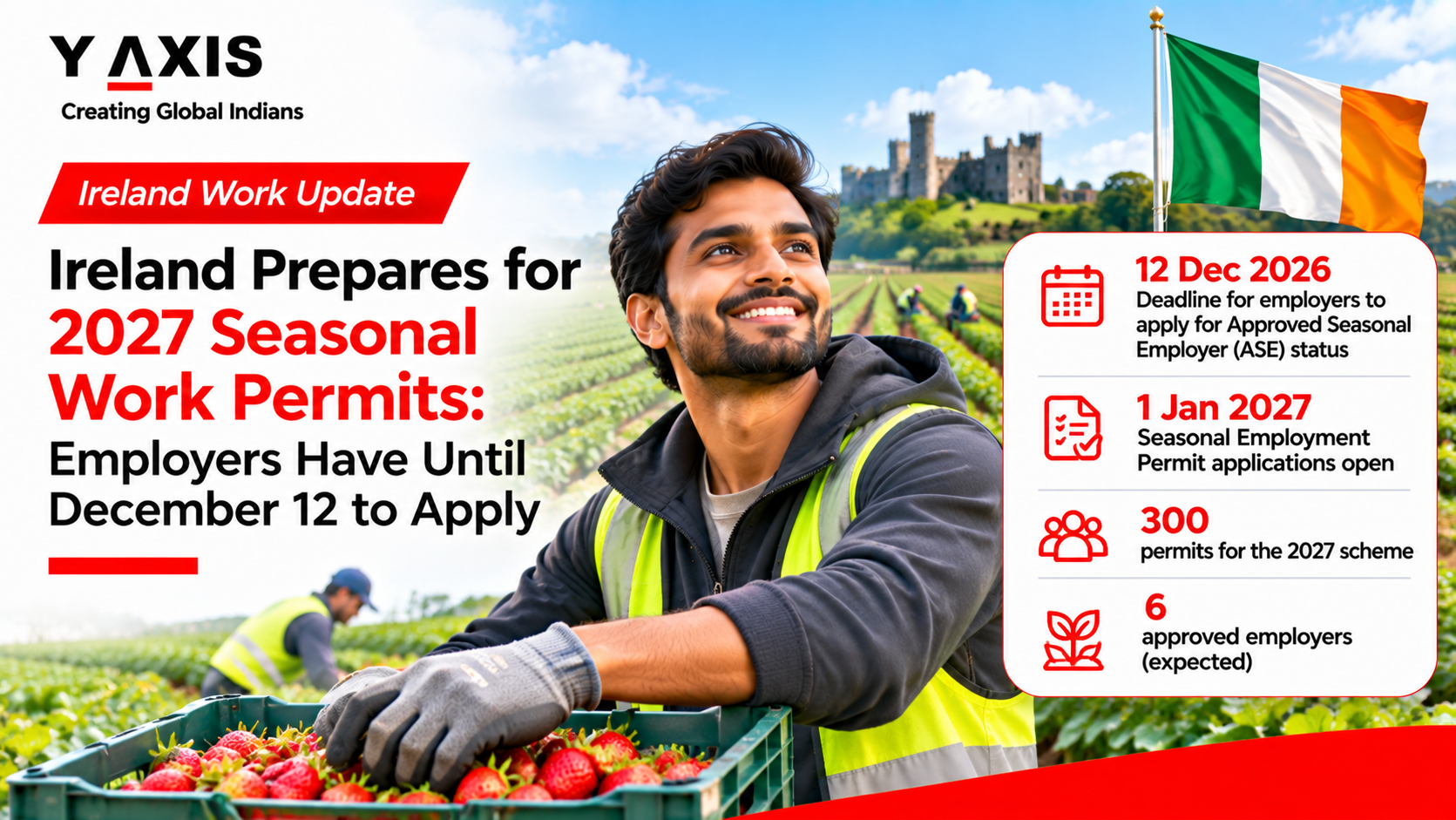
Ireland is preparing its 2027 Seasonal Employment Permit scheme, with up to 300 permits and six approved employers expected to participate. The latest government announcement establishes a December deadline for employers and a January application window for seasonal recruitment.
Highlights: Ireland Seasonal Employment Permits 2027
- December 12, 2026: Deadline to apply for Approved Seasonal Employer (ASE) status.
- January 1, 2027: Seasonal Employment Permit applications open to approved employers.
- 300 permits: Maximum allocation reported for the 2027 scheme.
- Six employers: Maximum number expected to receive ASE approval.
- Three to seven months: Permitted seasonal employment duration, generally during April–November.
What Has Ireland Announced About Seasonal Work Permits for 2027?
Ireland has announced preparations for its 2027 Seasonal Employment Permit (SEP) scheme, offering a regulated route for eligible non-European Economic Area workers to undertake temporary employment in the country's horticulture sector. On November 4, 2026, Ireland's Department of Enterprise, Tourism and Employment (DETE) confirmed that employers wishing to recruit workers for the 2027 picking season must first obtain Approved Seasonal Employer status.
Completed employer applications must reach the department by December 12, 2026. Employers who secure approval can begin submitting Seasonal Employment Permit applications from January 1, 2027. The announcement is particularly relevant to overseas jobseekers interested in short-term agricultural employment. However, the December deadline applies to employers seeking approval, not individuals applying directly for jobs.
How Many Seasonal Employment Permits Will Ireland Offer?
The 2027 programme is expected to operate within a limited allocation. According to guidance published by Irish employers' organisation Ibec, the scheme will have a maximum of 300 Seasonal Employment Permits, distributed through no more than six Approved Seasonal Employers. Each approved employer must intend to recruit at least two seasonal permit holders.
The limited allocation reflects the programme’s-controlled implementation following Ireland's earlier seasonal employment pilot. Ireland introduced the Seasonal Employment Permit framework under the Employment Permits Act 2024, with the initial pilot operating in 2025. A government evaluation published in June 2026 examined the scheme's effectiveness in addressing seasonal labour shortages and protecting participating workers. The 2027 arrangements continue this structured approach to temporary international recruitment.
Which Jobs Are Eligible Under Ireland's Seasonal Permit Scheme?
The programme is designed for seasonal harvesting work within Ireland's horticulture industry. Potential activities include crop harvesting and other eligible seasonal horticultural operations. The scheme is not a general work permit covering every agricultural, hospitality or construction occupation. Employers must operate in an eligible sector and obtain the necessary approval before sponsoring workers. Applicants should therefore verify that a job genuinely falls within the programme rather than assuming that any temporary employment offer qualifies.
What Are the Salary and Employment Conditions?
The 2027 scheme includes employment conditions intended to protect seasonal workers. Ibec's November guidance identifies a minimum annual remuneration threshold of €32,691, calculated proportionately for the actual employment period. This is not a guarantee that every seasonal worker will receive €32,691 for a three- or seven-month contract.
Actual remuneration depends on the contract duration, hours worked and applicable employment legislation. Employers must also make appropriate arrangements for accommodation and health insurance. The programme generally allows seasonal employment lasting three to seven months, within the April–November season. Workers must spend at least five months outside Ireland after completing their seasonal employment before returning under a subsequent seasonal permit. These requirements distinguish the SEP from longer-term employment routes.
What Must Irish Employers Do Before Recruiting Overseas Workers?
Employers interested in the 2027 programme must complete the approval process before applying for individual Seasonal Employment Permits.
The principal steps are:
- Apply for ASE status: Submit the completed application and supporting information by December 12, 2026.
- Demonstrate eligibility: Meet the programme's business, workforce and recruitment requirements.
- Complete recruitment checks: Carry out any required Labour Market Needs Test.
- Arrange worker protections: Provide the required accommodation, insurance and employment conditions.
- Apply for individual permits: Approved employers can submit SEP applications from January 1, 2027.
The official ASE application form and guidance are available through the DETE website.
Can Indian Workers Apply for Ireland's 2027 Seasonal Employment Permits?
Indian nationals may be considered where they meet the applicable requirements and are recruited through an eligible Approved Seasonal Employer. However, the scheme does not currently represent an unrestricted application opportunity for all Indian jobseekers. Prospective workers need a genuine qualifying employment arrangement and must satisfy the relevant immigration requirements. The programme is also subject to restrictions on approved employers and permit numbers. Indian applicants should avoid paying recruitment charges or making travel arrangements based solely on advertisements promising guaranteed seasonal permits. Before accepting an offer, they should verify the employer's approval, employment contract, remuneration and immigration arrangements.
Does the Seasonal Employment Permit Lead to Permanent Residence?
The SEP is designed for temporary seasonal employment rather than long-term settlement. Workers are expected to leave Ireland after completing their authorised seasonal employment. The permit should not be confused with Ireland's Critical Skills Employment Permit or General Employment Permit, which operate under different conditions. Applicants seeking longer-term employment or residence should assess whether they qualify for an appropriate alternative route.
What About Ireland's Employment Permits Portal Interruption?
Ireland's general Employment Permits Portal has experienced a service interruption following a security incident. DETE has indicated that temporary arrangements for certain employment permit services are being developed.
However, the department's November 4 notice specifically directs employers to submit ASE applications by email. Employers should follow the published instructions for the seasonal approval process and monitor official announcements for changes affecting individual permit applications.
The December 12 deadline marks the next important stage in Ireland's seasonal recruitment preparations—not the opening of a direct application window for overseas workers.
Official Sources and Supporting References
- Ireland DETE — Latest Employment Permit Notices, November 4, 2026
- DETE — 2027 Approved Seasonal Employer Application Form and Guidance
- DETE — Seasonal Employment Permit Pilot Scheme 2025 Evaluation Report
- DETE — Employment Permits Portal Service Updates
- Ibec — 2027 Seasonal Employment Permit Scheme, November 6, 2026
FAQs
When is the deadline for Ireland's 2027 seasonal employer applications?
Completed Approved Seasonal Employer applications must be submitted by December 12, 2026.
When can employers apply for 2027 Seasonal Employment Permits?
Applications are scheduled to open to approved employers from January 1, 2027.
How many seasonal permits are available?
The 2027 scheme is expected to be limited to 300 permits, with a maximum of six approved employers.
How long can seasonal workers stay in Ireland?
The scheme generally permits seasonal employment for three to seven months during the designated season.
Can Indian applicants apply without an approved employer?
No. Applicants require an eligible employment arrangement through an Approved Seasonal Employer and must meet the relevant permit and immigration requirements.
What Does This Mean for Overseas Jobseekers?
Ireland's 2027 Seasonal Employment Permit scheme provides a structured opportunity for temporary international recruitment in horticulture. Its limited allocation, employer approval requirements and worker-protection measures make careful verification essential. For Indian jobseekers, the most useful next step is to understand the programme's conditions and identify genuine recruitment opportunities once approved employers begin the permit process.
Tags:
Ireland Immigration
Ireland Work Permit
Seasonal Employment Permit
Ireland Jobs
Indian Jobseekers
Approved Seasonal Employer
Ireland Horticulture
Overseas Employment
Ireland Visa News
Work Abroad
Share
Options for you by Y-Axis

Get it on your mobile

Get News alerts

Contact Y-Axis
Latest Article
Popular Post
Trending Article
Posted On November 17 2026
Ireland Opens 2027 Seasonal Work Permit Preparations: Employers Must Apply by December 12