

Posted on November 12 2026
Canada Makes Rural Immigration Pathway Permanent, Targets 5,500 PR Admissions in 2027: How Indians Can Qualify

By , Editor & Director
Updated November 14 2026
~ Dr. Serah Vinodini Vilvaraj
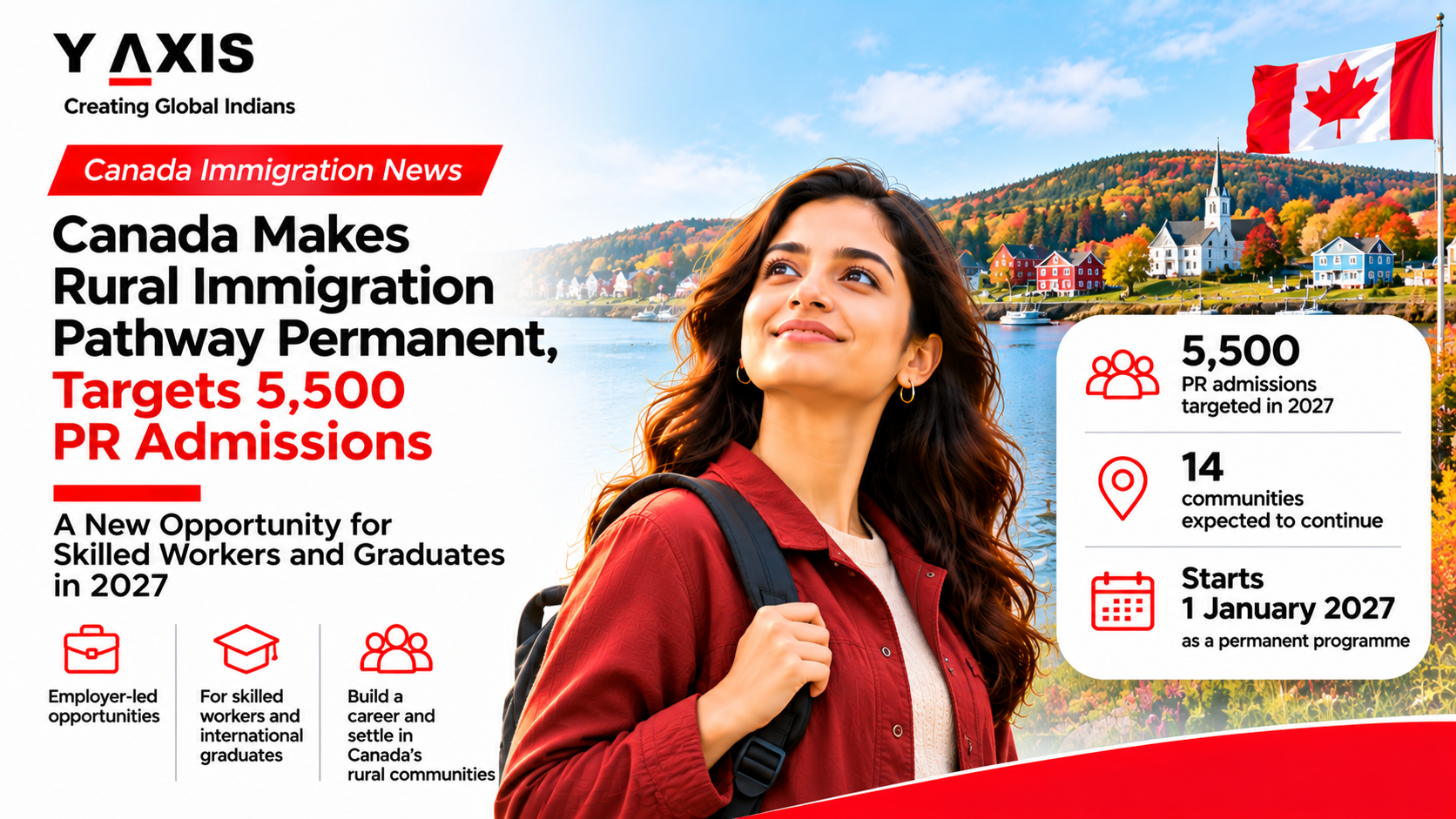
Canada has announced a permanent immigration pathway for skilled workers and international graduates seeking to live and work in smaller Canadian communities. On November 9, 2026, Immigration Minister Lena Metlege Diab confirmed that the Rural Community Immigration Pilot (RCIP) will transition into a permanent programme from January 1, 2027, with 5,500 permanent-resident admissions targeted for the year.
The announcement creates a longer-term immigration option for eligible international applicants, including Indians exploring employment and permanent settlement opportunities outside Canada's major metropolitan centres. Fourteen communities are expected to continue participating, with further expansion planned.
What Has Canada Announced About Rural Immigration?
Immigration, Refugees and Citizenship Canada (IRCC) confirmed that the Rural Community Immigration Pilot, introduced in January 2025, will become the permanent Rural Community Immigration Program. The programme will continue its employer- and community-led model, connecting skilled newcomers with businesses facing persistent recruitment challenges. The transition introduces three important developments:
- A permanent programme replacing the temporary pilot from January 1, 2027.
- A target of 5,500 permanent-resident admissions in 2027.
- Continued participation by 14 existing communities, with expansion planned.
The programme is intended to support both local economic development and long-term settlement.
Why Is Canada Making the Rural Immigration Pathway Permanent?
Canada's smaller communities need professionals across several essential industries. According to IRCC, early results from the pilot show newcomers helping employers fill positions in healthcare, education, sales and services. The government's November 9 announcement highlights the programme's progress:
|
Programme achievement |
Official figure |
|
Employers designated between January 2025 and August 2026 |
More than 1,950 |
|
Job offers and community recommendations issued during that period |
More than 4,700 |
|
PR admissions targeted for 2027 |
5,500 |
|
Communities expected to continue |
14 |
These figures demonstrate the scale of employer participation, although historical job offers should not be confused with currently available vacancies. The permanent programme is expected to give participating communities a more predictable framework for recruiting and retaining skilled workers.
Which 14 Canadian Communities Will Participate?
The government expects all 14 existing pilot communities to continue under the permanent programme.
|
Province |
Participating communities |
|
Nova Scotia |
Pictou County |
|
Ontario |
North Bay, Sudbury, Timmins, Sault Ste. Marie, Thunder Bay |
|
Manitoba |
Steinbach, Altona/Rhineland, Brandon |
|
Saskatchewan |
Moose Jaw |
|
Alberta |
Claresholm |
|
British Columbia |
West Kootenay, North Okanagan Shuswap, Peace Liard |
Each community identifies priority sectors and occupations according to local employment requirements. Applicants should check the relevant community's designated-employer list and recruitment priorities before applying.
Who Can Apply for Canada's Permanent Rural Immigration Programme?
The programme is intended for eligible skilled workers and international graduates who want to settle in participating communities. According to IRCC's published eligibility requirements, applicants generally need:
A qualifying job offer: Employment must be offered by a designated employer in a participating community.
Community recommendation: The relevant community must recommend the applicant for permanent residence.
Relevant work experience: Applicants generally require at least one year, or 1,560 hours, of qualifying work experience within the previous three years. Certain eligible international graduates may qualify for an exemption.
Language proficiency: Applicants must demonstrate the required English or French language ability through an approved test.
Educational qualifications: Applicants must have an eligible Canadian credential or an accepted foreign equivalent.
Settlement funds: Applicants must demonstrate sufficient funds where required.
Additional requirements depend on the applicant's occupation and individual circumstances.
Which Jobs Could Offer Opportunities for Indian Professionals?
The programme may be particularly relevant to candidates whose qualifications and experience match participating communities' priority occupations. IRCC has identified healthcare, education, sales and services among the sectors supported by the pilot.
Other opportunities may arise in technical occupations, skilled trades or industries prioritised by individual communities. However, eligibility is not determined by an occupation appearing on a general national shortage list.
Applicants must identify a qualifying vacancy with a designated employer in a participating community.
Job availability and occupation priorities may differ significantly between communities.
How Can Indian Applicants Apply for Permanent Residence?
The application process follows a community-driven structure.
Step 1: Select a participating community
Research its employment priorities, designated employers and settlement opportunities.
Step 2: Obtain an eligible job offer
Apply for suitable vacancies with employers designated under the programme.
Step 3: Secure a community recommendation
The employer submits the candidate's recommendation request to the relevant community for assessment.
Step 4: Prepare the required documents
Applicants may need educational credentials, language-test results, employment records, proof of funds and identity documents.
Step 5: Submit the permanent residence application
After receiving a valid community recommendation, eligible applicants can apply through IRCC's Permanent Residence Portal.
IRCC makes the final immigration decision.
What Happens to Existing Rural Immigration Pilot Applicants?
The existing Rural Community Immigration Pilot will close on January 1, 2027. Applicants holding a community recommendation dated December 31, 2026, or earlier may still apply under the pilot before their recommendation expires. IRCC will continue processing applications already received. Applicants receiving recommendations dated January 1, 2027, or later will follow the new permanent programme's application process. This distinction is important for candidates currently preparing applications.
Can International Graduates Benefit?
Yes. Eligible international graduates may qualify for the rural immigration pathway if they meet the programme's requirements. Under the published criteria, certain graduates of public post-secondary institutions located in participating communities can qualify for an exemption from the standard work-experience requirement. Conditions relating to programme duration, full-time study, graduation date and residence in the community apply. Graduation alone does not guarantee a community recommendation or permanent residence.
Frequently Asked Questions
When does Canada's permanent Rural Community Immigration Program begin?
The permanent programme opens on January 1, 2027, replacing the existing pilot.
How many permanent residents will Canada admit?
Canada has targeted 5,500 admissions in 2027 under the rural immigration programme allocation, including applicable remaining pilot applications. This is a target, not a guaranteed number of new approvals.
Can Indians apply for the rural PR programme?
Yes. Indian nationals may qualify if they meet the programme's requirements, including a valid designated-employer job offer and community recommendation.
Is a job offer mandatory?
Yes. Applicants generally need a qualifying offer from a designated employer in a participating community.
Can applicants bring their families?
Eligible accompanying family members may be included in a permanent residence application, subject to IRCC requirements.
What Should Indian Professionals Do Next?
Canada's decision to make rural immigration permanent creates a longer-term opportunity for skilled professionals seeking employment and settlement in smaller communities. Prospective applicants should research participating regions, identify designated employers and prepare their language, education and employment documentation.
For Indian professionals whose skills match local employer needs, the permanent Rural Community Immigration Program could provide a valuable route toward building a career and future in Canada.
Tags:
Canada Immigration News
Canada PR 2027
Rural Community Immigration Program
RCIP Canada
Canada Permanent Residence
Canada Jobs for Indians
Skilled Worker Immigration
Canada Immigration Pathways
Canada PR Eligibility
Work in Canada
Share
Options for you by Y-Axis

Get it on your mobile

Get News alerts

Contact Y-Axis
Latest Article
Popular Post
Trending Article

Posted On November 19 2026
Indians Account for 32% of Ireland's Employment Permits: New Research Reveals Where Global Talent Is Needed