

Posted on January 12 2026
Can I convert my Poland work visa to permanent residency?

By , Editor
Updated January 12 2026
Yes, you can convert a Poland work visa to permanent residence, but you need to first get a Temporary Residence Permit (TRP). A direct conversion of a work visa to a Poland PR is not possible, as you must live and work for at least five continuous years in Poland on a TRP. A temporary residence card and work permit allow you to legally stay and work in Poland for the required job period. On the completion of 5 years, you must qualify for the Polish language test to apply for the PR.
*Want to apply for a Poland work visa? Let the Y-axis guide you with the process.
Requirements to convert a Work Visa to Poland permanent residence (PR)
The requirements for a Poland PR are as follows:
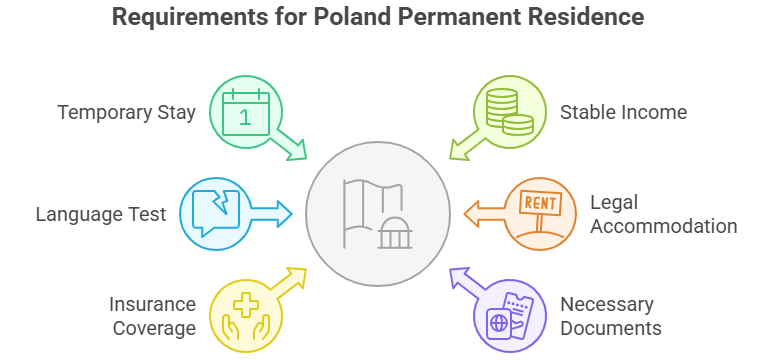
- Temporary Stay and Work Permit: Live and work in Poland for 5 continous years on a Temporary Work Permit (TRP).
- Stable income: Proof of stable and steady income in Poland ( bank statement/employment contract/tax returns).
- Polish Language Test: Qualifying for the Polish language test is mandatory.
- Legal accommodation: Secure a legal accommodation in Poland (rent receipt/lease agreement).
- Insurance coverage: Secure health and travel insurance coverage for the intended stay period.
- Necessary documents: Valid passport, PR application form, health certificates, criminal record in Poland, etc, are mandatory for permanent residence in Poland.
Note: A Poland PR is non-transferable to any other EU countries.
*Want to settle in Poland? Sign up with Y-Axis to help you with the steps.
Steps to Convert a Work Visa to Permanent Residence in Poland
After 5 years of continuous work and residence in Poland, you can apply for permanent residence. However, you must ensure that the essential requirements, such as health insurance, legal accommodation, and a pass certificate in the Polish language test, are met.
Here is a step-by-step guide to convert a work visa to a Polish PR:
Step 1: Live and work legally in Poland for at least 5 years on a temporary residence card and a work permit (Karta Pobytu/TRP).
Step 2: Secure a stable and sufficient income during the stay period.
Step 3: Secure insurance coverage for health and travel.
Step 4: Pass the B1-level Polish language exam.
Step 5: Apply for Poland PR at the Voivodeship Office with the necessary documents, application fees, and biometric data.
Step 6: Wait to collect your permanent residence card in person.
*Are you looking for step-by-step assistance with overseas immigration? Contact Y-Axis, the world’s No. 1 overseas immigration consultancy, for end-to-end assistance!
FAQs
Is it possible to convert my Polish work visa to permanent residency?
Yes, you can convert a Polish work visa into permanent residency if you meet specific legal conditions. Foreign nationals working in Poland on a temporary residence and work permit may apply for permanent residence after long-term, continuous stay. Typically, applicants qualify after legally residing in Poland for five years, including time spent working. EU Blue Card holders may qualify faster under EU long-term residence rules. Continuous employment, stable income, valid health insurance, accommodation proof, and clean legal records are required. Meeting integration and residency continuity rules is essential for successful permanent residence approval under Polish immigration law and regulations applicable.
How long must I live in Poland before applying for permanent residency?
Most foreign nationals must legally reside in Poland for at least five continuous years before applying for permanent residency. This period includes time spent on a valid work visa or temporary residence permit. For EU Blue Card holders, the required period may be shorter under EU long-term residence regulations. Continuous residence means limited absences from Poland and uninterrupted legal status. Applicants must demonstrate stable employment, regular income, health insurance coverage, and registered accommodation throughout the stay. Any long gaps, overstays, or permit violations can reset eligibility timelines or delay permanent residence approval significantly.
Does holding an EU Blue Card help with permanent residency in Poland?
Yes, holding an EU Blue Card significantly improves permanent residency prospects in Poland. EU Blue Card holders can apply for EU long-term residence after five years of legal stay within the European Union, including at least two years in Poland. Some applicants may qualify faster than standard work permit holders. The Blue Card offers stability, easier family reunification, and stronger settlement rights. Continuous employment, meeting salary thresholds, tax compliance, and legal residence are essential. The EU Blue Card is one of the most efficient pathways to permanent residency in Poland.
Do I need to stay with the same employer to qualify for permanent residency?
No, staying with the same employer is not mandatory to qualify for permanent residency in Poland. However, you must maintain continuous legal residence and valid work authorization throughout your stay. If you change employers, your residence and work permit must be updated accordingly without gaps. Any period of unauthorized work or overstaying can affect eligibility. Authorities focus on legal continuity, stable income, and compliance rather than employer loyalty. Proper documentation during job transitions is critical for maintaining eligibility for permanent residence status in Poland.
What income requirements apply for Polish permanent residency?
Applicants for permanent residency in Poland must demonstrate stable and sufficient income to support themselves and dependents. The income should meet or exceed the minimum subsistence threshold defined by Polish authorities. Proof usually includes employment contracts, salary slips, tax returns, and bank statements. Income stability over several months is assessed. Authorities want assurance that applicants will not rely on public assistance. Consistent earnings, lawful employment, and tax compliance significantly strengthen permanent residence applications and reduce the risk of rejection due to financial concerns.
Is knowledge of the Polish language required for permanent residency?
Yes, basic knowledge of the Polish language is generally required for permanent residency in Poland. Applicants may need to provide a recognized Polish language certificate, usually at A2 or B1 level, depending on the permit type. This requirement demonstrates integration into Polish society. EU long-term residence applications usually include language proof. Certain exemptions may apply for children or special cases. Preparing for language certification early helps avoid delays and improves approval chances for permanent residence in Poland.
Can my family members also get permanent residency in Poland?
Yes, family members can also qualify for permanent residency in Poland. Spouses and dependent children who have legally resided in Poland under family reunification permits may apply after meeting residency requirements. Their eligibility depends on continuous legal stay, family ties, and the main applicant’s residence status. Proof of accommodation, income, and health insurance is required. Once granted, family members receive similar residence rights. Coordinated applications help ensure smoother processing and long-term family stability in Poland.
Does time spent on a student visa count toward permanent residency?
In most cases, time spent on a student visa in Poland does not fully count toward permanent residency requirements. However, partial credit may apply under specific conditions. Residence on a work permit or EU Blue Card is more strongly recognized for settlement purposes. Applicants should verify how previous visas contribute to total legal stay. Converting from student status to work status early helps build qualifying residence time. Always maintain legal continuity to protect permanent residence eligibility.
What documents are required to apply for permanent residency in Poland?
Permanent residency applications in Poland require a valid passport, current residence permit, proof of continuous legal stay, employment records, income proof, tax compliance documents, health insurance, accommodation registration, and criminal background clearance. Language certificates may also be required. Documents must be accurate and up to date. Incomplete or inconsistent paperwork can cause delays or rejection. Proper preparation and document verification significantly improve approval chances and speed up permanent residency processing.
Can permanent residency in Poland lead to citizenship later?
Yes, permanent residency in Poland can lead to Polish citizenship. After holding permanent residence and living in Poland for several additional years, applicants may apply for citizenship by residence. Requirements include long-term legal stay, stable income, language proficiency, and strong integration. Citizenship offers full EU rights and unrestricted employment access. While not automatic, permanent residency is a critical step toward Polish citizenship and long-term settlement within the European Union.
Tags:
work visa Poland requirements
how to get Poland work visa
Poland work visa requirements for indians
Poland work visa application form online
Poland work visa application form
Poland work visa for Indians
Poland PR requirements for Indians
Share
Options for you by Y-Axis

Get it on your mobile

Get News alerts

Contact Y-Axis
Latest Article
Popular Post
Trending Article

Posted On April 01 2026
Study vs Work Abroad – Which is Better for Indians in 2026?