

Posted on November 04 2026
Before Modern Work Visas: How Indian Railway Workers Helped Shape East Africa's Indian Diaspora

By , Editor & Director
Updated November 04 2026
~ Dr. Serah Vinodini Vilvaraj
Long before today's skilled-worker visas and international recruitment programmes, thousands of workers travelled from British India to East Africa to build a railway across difficult terrain. Their journey transformed the region's labour landscape, connected two continents and helped shape communities whose influence continues today.
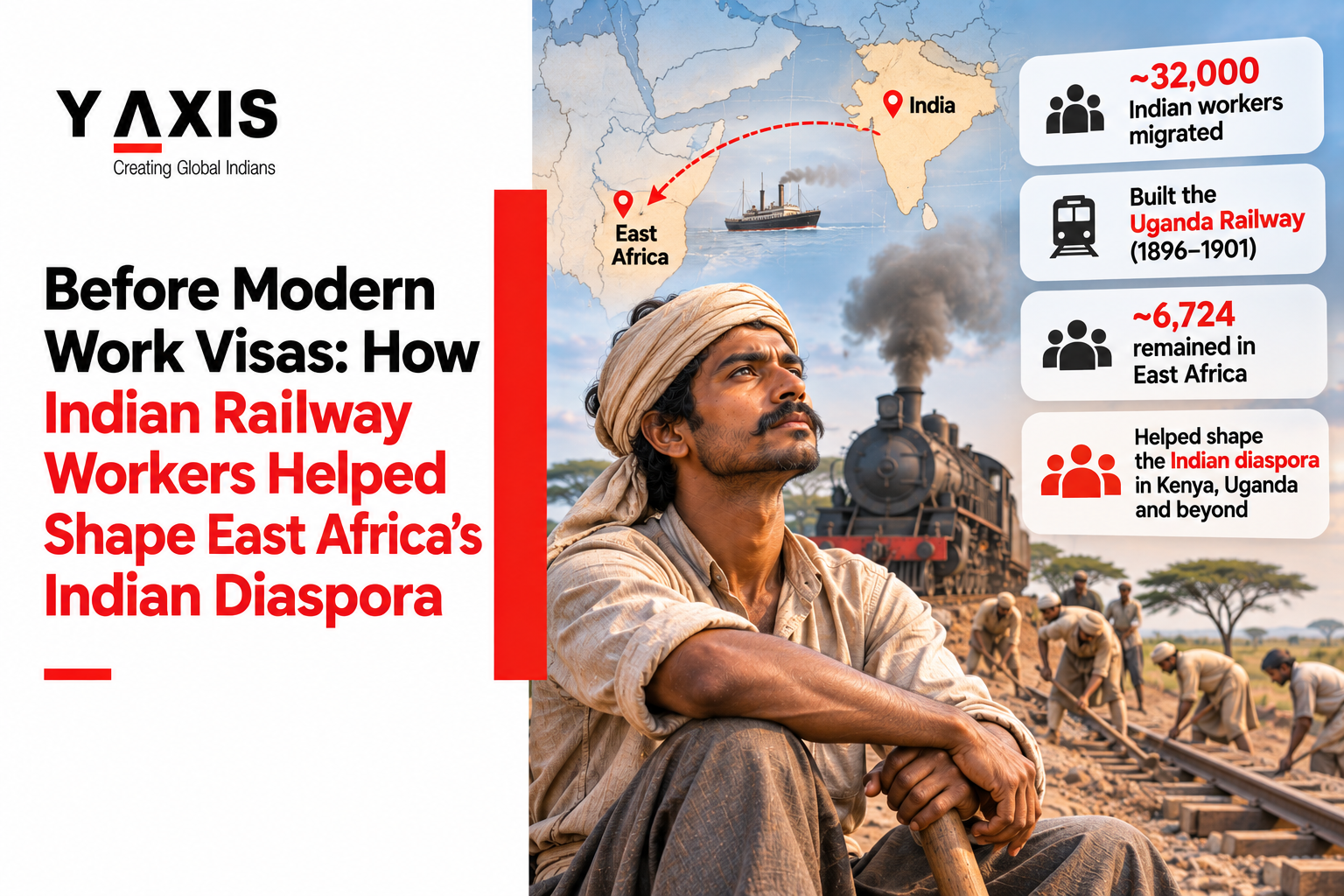
In 1896, thousands of men began arriving by ship at Mombasa, on the coast of present-day Kenya. They had travelled from British India to work on an ambitious railway project that would cut through East Africa and reach the shores of Lake Victoria. There were no modern work visa systems, international recruitment platforms or global mobility consultants to guide them. Their movement was organised under British colonial administration, and the work ahead was dangerous. The railway became known as the Uganda Railway. But its most enduring story may not be the engineering achievement itself. It is the story of the workers who crossed the Indian Ocean, the communities that developed around their settlement and the early history of a migration corridor connecting South Asia with East Africa.
A railway built on international labour
The British colonial administration wanted a railway connecting the Indian Ocean port of Mombasa with the interior of East Africa, improving access to Uganda and strengthening British commercial and administrative interests in the region. Construction began in 1896. The project required a large workforce capable of building tracks, bridges, stations and supporting infrastructure across challenging landscapes.
The authorities recruited heavily from British India, particularly Punjab. Many workers were Sikhs, while the wider workforce also included skilled tradespeople, artisans, clerks and other labourers. According to the UK's National Railway Museum, approximately 32,000 workers migrated from India during the railway's construction. By March 1901, nearly 20,000 Asian workers were employed on the project at its peak. The scale of this movement makes the railway an important chapter in the history of international labour migration. Workers were recruited across colonial territories to meet the needs of an infrastructure project thousands of kilometres from their homes.
The human cost behind the railway
The railway's construction was far from an easy passage to overseas employment. Workers faced disease, heat, dangerous terrain, difficult working conditions and the threat of wildlife attacks. The Tsavo lions became particularly notorious during construction, although they represented only one part of the dangers faced by the workforce.
The National Railway Museum reports that 2,493 of the Indian workers died in East Africa and another 6,454 were seriously injured. These figures reveal the human cost behind a project often remembered for its engineering ambition. They also illustrate an important distinction between migration for opportunity and migration under unequal colonial labour arrangements. The workers' experiences cannot be compared directly with today's voluntary skilled-worker migration. Their employment took place within an imperial system in which power, labour rights and working conditions were heavily unequal.
When a temporary journey became a permanent settlement
One of the most consequential developments came after the railway's construction.
Not everyone returned to India.
The National Railway Museum records that approximately 6,724 Asian workers remained in East Africa after the project was completed. Some moved into trading and business, while others continued working in railway operations and related industries. The railway also provided new commercial connections. Small businesses and trading settlements developed along the route, while established Asian merchant networks expanded their activities. It is important to recognise that Indian traders and other South Asian communities had already been present in East Africa before the railway project. The railway did not create the region's Indian presence from nothing. Rather, it accelerated and reshaped an existing history of Indian Ocean trade and migration. Over time, these communities became part of the economic and social fabric of Kenya, Uganda and the wider East African region.
From East Africa to Britain: Migration continued across generations
The movement of people did not stop when the railway was completed.
Following independence in East Africa during the 1960s, some Asian residents moved to Britain, while others remained in the region. A major later turning point came in August 1972, when Uganda's President Idi Amin ordered Asians to leave the country within 90 days. The expulsion triggered another major displacement, with many Ugandan Asians rebuilding their lives in Britain and elsewhere.
This later migration was distinct from the railway workers' original movement, but it demonstrates how migration histories develop across generations, shaped by employment, settlement, political change and the search for security. The communities established through earlier movements became part of a much wider story of international mobility.
What this history tells us about migration today
The Uganda Railway offers a valuable perspective on how international migration shapes societies beyond the immediate purpose of employment. A worker may initially cross a border for a particular job, but the consequences of that movement can extend much further. Families settle, businesses develop, children grow up in new countries and cultural connections emerge between distant regions.
Modern immigration systems are very different. Today's international workers generally require specific work authorisations, employer sponsorship or other legal permissions, depending on the destination country and occupation. Yet the broader relationship between labour demand and international mobility remains relevant.
The railway's history also reminds destination countries that migrant workers are not simply numbers in labour-market statistics. They are people whose work, settlement and family histories can influence a country's development for generations.
A connection that began with a railway
Today, the old railway route remains a physical reminder of a period when international labour movement helped reshape East Africa. The tracks were laid to serve an imperial project. But the people who built them became part of a much larger history connecting India, Kenya, Uganda and Britain.
Their journey was not a modern immigration success story, nor was it free from exploitation and loss. It was a complex chapter in global labour migration. And that is precisely why it deserves to be remembered: the history of migration is not only about the countries people leave or the visas they obtain. It is also about the communities and connections they leave behind and build along the way.
FAQs
1. Why did Indian workers migrate to East Africa to build the Uganda Railway?
The British colonial administration recruited workers from British India to construct the railway connecting Mombasa with the interior of East Africa and Lake Victoria. The project required a large workforce, including labourers and skilled tradespeople.
2. How many Indian workers migrated to build the Uganda Railway?
The UK's National Railway Museum estimates that approximately 32,000 workers migrated from India during construction. It reports that around 6,724 Asian workers remained in East Africa after the railway was completed.
3. How did the Uganda Railway influence the Indian diaspora in East Africa?
The railway encouraged settlement, trade and employment opportunities for some workers who remained in the region. It helped expand existing South Asian commercial networks and contributed to the development of Indian communities in East Africa.
Tags:
Global Migration
Indian Diaspora
East Africa
Uganda Railway
Kenya
Uganda
Labour Migration
Migration History
International Mobility
Indian Workers
Share
Options for you by Y-Axis

Get it on your mobile

Get News alerts

Contact Y-Axis
Latest Article
Popular Post
Trending Article
Posted On November 06 2026
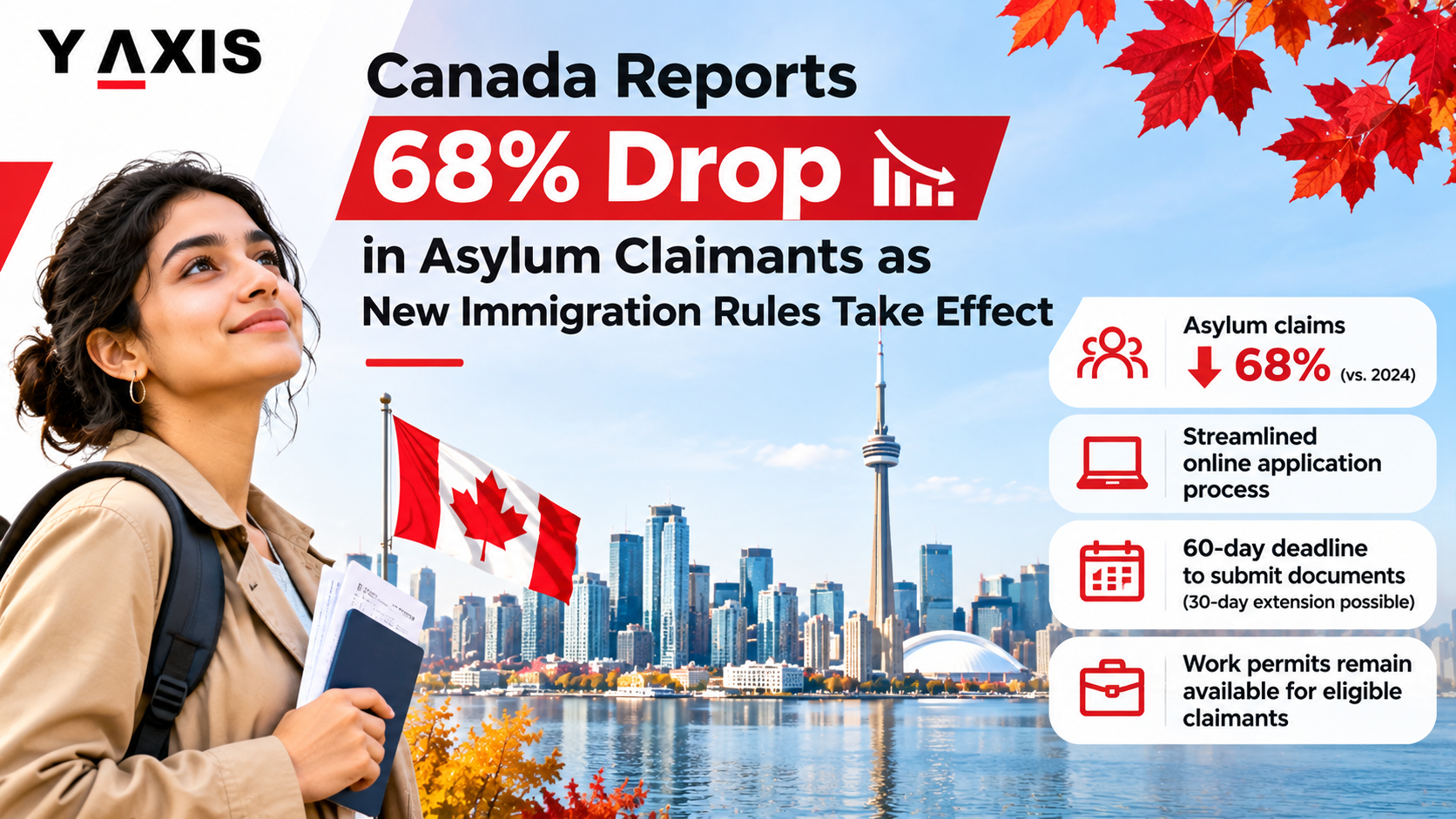
Canada Reports 68% Drop in Asylum Claimants as New Immigration Rules Take Effect