

Posted on November 04 2026
A Job Abroad Does Not Always Mean a New Home: How Temporary Work Visas Are Reshaping Global Migration

By , Editor & Director
Updated November 04 2026
~ Dr. Serah Vinodini Vilvaraj
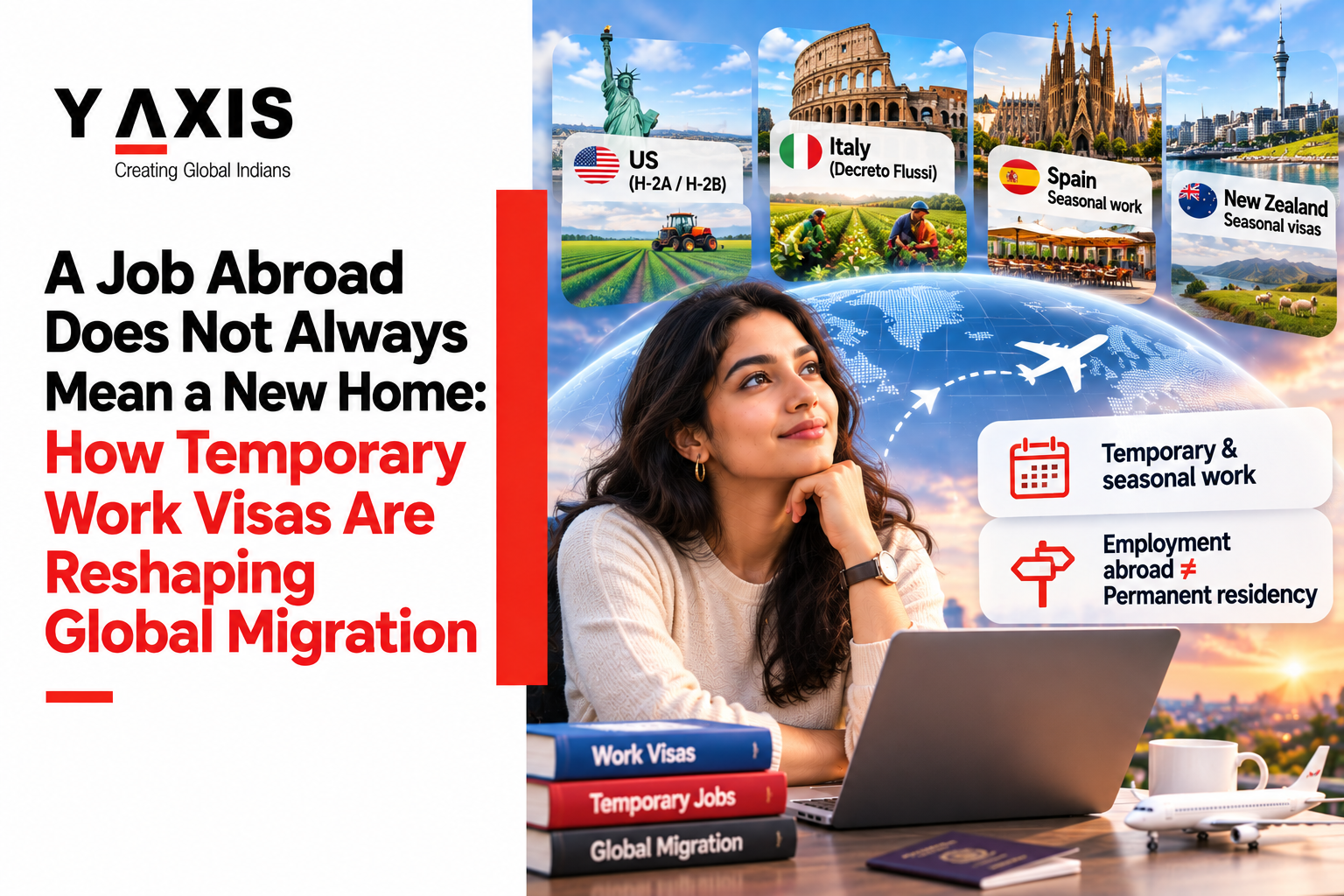
From farms in the United States to seasonal industries in Europe and New Zealand, countries are increasingly relying on overseas workers to meet short-term labour needs. But for international jobseekers, there is an important distinction between getting permission to work abroad and securing a pathway to settle permanently.
For many people considering an international career, the idea of working overseas comes with a familiar expectation: find an employer, secure a work visa, build a career and eventually make the destination country home. But international migration does not always follow that journey.
A growing part of the global labour market operates through temporary and seasonal work programmes. These allow employers to recruit overseas workers for specific periods, often when local labour supply cannot meet demand. The numbers reveal how significant this model has become. The Organisation for Economic Co-operation and Development (OECD), in its International Migration Outlook 2025, reported that OECD countries issued 666,000 new seasonal work permits in 2024, excluding Poland. This was an 8% increase from 2023 and almost three times the number recorded in 2015.
The trend raises an important question for anyone considering working abroad: does a temporary overseas job offer a stepping stone to long-term migration, or is it designed to remain temporary?
Why countries are recruiting workers for shorter periods
Seasonal industries do not always need the same number of employees throughout the year.
Agriculture requires additional workers during harvesting periods. Tourism businesses experience higher demand during holiday seasons. Food processing, hospitality and certain manufacturing activities can also face temporary workforce requirements. Recruiting permanent employees for every short-term increase in demand may not be practical. Governments therefore use temporary labour migration programmes to help employers access international workers.
According to the OECD, around 70% of temporary labour migrants entering OECD countries in 2024 went to four destinations: the United States, Australia, Japan and Canada. This shows that temporary migration is not a marginal part of international mobility. It is an established component of how several major economies manage their labour requirements.
The United States leads seasonal worker recruitment
The United States accounted for approximately two-thirds of seasonal foreign workers across OECD countries in 2024. The OECD recorded 314,000 new H-2A visas for temporary agricultural employment and 136,000 H-2B visas for temporary non-agricultural work and other seasonal or intermittent labour requirements.
The two programmes serve different employment needs. The H-2A programme covers temporary or seasonal agricultural work, while H-2B covers eligible temporary non-agricultural employment, including seasonal and peak-load requirements.
Both are employer-driven temporary non-immigrant routes. A prospective worker generally needs an eligible employer to complete the required petition and labour certification process. These programmes should not be confused with permanent employment-based immigration. Receiving an H-2A or H-2B visa does not automatically provide permanent residency.
Europe is expanding seasonal employment opportunities
Seasonal labour migration is also changing across Europe. The OECD recorded a 103% year-on-year increase in seasonal permits issued by Italy in 2024. The country issued approximately 17,000 such permits, around four times its 2019 level.
Italy uses its Decreto Flussi system to regulate the entry of non-EU workers, including those employed in seasonal occupations.
Spain has also introduced a more structured approach to certain seasonal employment arrangements. Under changes described by the OECD in its 2025 report, some seasonal authorisations can remain valid for up to four years, allowing employment for up to nine months annually, provided workers return to their home countries between working periods. These arrangements illustrate how temporary migration can be organised across recurring seasons rather than through a single short-term contract.
However, they should not be interpreted as automatic permanent settlement routes.
New Zealand introduces longer-duration seasonal work options
New Zealand provides another example of how temporary labour migration is evolving.
On December 8, 2025, Immigration New Zealand introduced two new seasonal visa options under its Accredited Employer Work Visa framework: the Global Workforce Seasonal Visa and the Peak Seasonal Visa. The Global Workforce Seasonal Visa is valid for up to three years for eligible skilled seasonal roles. Applicants must have worked in a relevant seasonal occupation for at least three seasons during the previous six years. Visa holders must spend at least three months outside New Zealand each year.
The Peak Seasonal Visa, designed for eligible entry-level and lower-skilled seasonal positions, allows a stay of up to seven months. Workers must then spend four months outside New Zealand before applying again. Neither route allows holders to support partner or dependent visa applications. These programmes demonstrate that a longer visa validity period does not necessarily mean continuous residence or a permanent migration pathway.
The UK makes the distinction particularly clear
The UK's Seasonal Worker visa provides a useful example of a route designed specifically for temporary employment. It allows eligible overseas workers to undertake horticultural work for up to six months or poultry production work during the designated annual period. Applicants need an approved sponsor and must meet the relevant immigration requirements.
The route does not permit workers to take permanent employment or bring family members as dependants. Most importantly, the UK's Immigration Rules explicitly state that the Seasonal Worker route is not a route to settlement. For someone hoping to build a long-term career in Britain, this distinction matters. A seasonal job may provide overseas work experience, but it does not create an entitlement to remain permanently.
What should international jobseekers understand before applying?
A temporary work opportunity can be valuable, but candidates should understand the conditions before accepting an offer.
The following questions are particularly important:
- Duration: How long can the worker legally remain in the destination country?
- Employer restrictions: Is the visa tied to one employer, occupation or approved position?
- Family rights: Can a spouse or children accompany the worker?
- Renewal: Is an extension or repeat application permitted?
- Permanent residence: Does the immigration category offer a formal settlement pathway, or would the worker need to qualify independently under another visa?
- Employment protection: What rules govern wages, working hours, accommodation and employer conduct?
Jobseekers should also verify that recruitment agencies and employers are legitimate. A promise of guaranteed permanent residency in exchange for accepting a seasonal job should be treated with caution.
Temporary employment is not the same as permanent migration
The expansion of seasonal work programmes highlights an important change in international labour mobility. Countries increasingly need access to overseas workers without necessarily offering every worker a long-term settlement option. For jobseekers, the distinction is essential.
A temporary overseas job may offer income, international experience and an opportunity to understand a new labour market. However, anyone whose ultimate objective is permanent migration should examine skilled-worker, employer-sponsored or other eligible residence pathways separately. An overseas job can be the beginning of an international career. But the right immigration route depends on more than the destination or the employment offer. It depends on the legal conditions attached to the visa and the worker's longer-term plans.
FAQs
1. What is a temporary work visa?
A temporary work visa allows a foreign national to work in another country for a specified period under particular employment and immigration conditions. Depending on the programme, it may be linked to an employer, occupation, industry or seasonal requirement.
2. Do seasonal work visas lead to permanent residency?
Not automatically. Some seasonal routes explicitly exclude settlement, while other immigration systems allow eligible workers to transition to different visa categories if they independently meet the requirements.
3. Which countries offer seasonal work visa programmes?
The United States, United Kingdom, Italy, Spain, South Korea and New Zealand operate different forms of seasonal or temporary labour migration programmes. Eligibility, permitted occupations, duration and family rights vary.
4. Can temporary foreign workers bring their families?
It depends on the visa category. For example, the UK's Seasonal Worker route and New Zealand's two new seasonal visa options do not allow workers to support partner or dependent visa applications.
5. What should applicants check before accepting a temporary overseas job?
Applicants should verify the employer, job contract, visa duration, wages, permitted working conditions, renewal rules, family rights and whether any separate permanent residence pathway is available.
Tags:
Temporary Work Visas
Global Migration
Seasonal Employment
Labour Migration
International Mobility
US H-2A Visa
US H-2B Visa
UK Seasonal Worker Visa
New Zealand Work Visa
Overseas Jobs
Share
Options for you by Y-Axis

Get it on your mobile

Get News alerts

Contact Y-Axis
Latest Article
Popular Post
Trending Article
Posted On November 06 2026
Canada Reports 68% Drop in Asylum Claimants as New Immigration Rules Take Effect