

Estonia Tourist Visa
Down Arrow
Down Arrow
Down Arrow

I accept the Terms & Conditions

Don't know what to do
Don't know what to do?

Get Free Counselling

Why apply for an Estonia Tourist Visa?

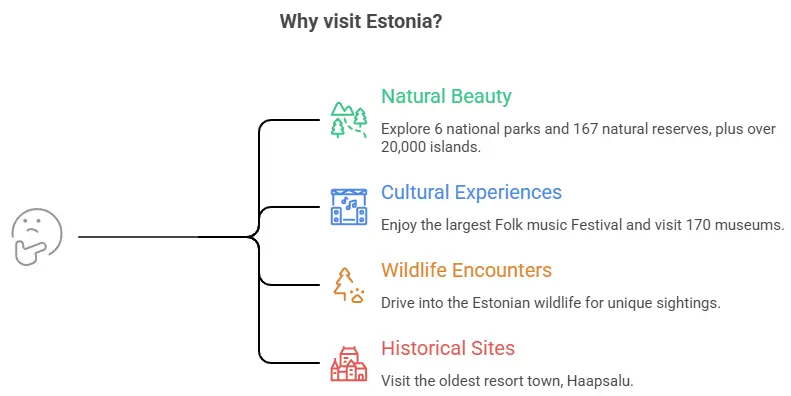
  • Visit 6 national parks with 167 natural reserves
  • More than 20,000 islands to explore
  • Enjoy the largest Folk music Festival
  • Drive into the Estonian wildlife
  • 170 museums to witness their artistic heritage
  • Visit the oldest resort Town, Haapsalu
Estonia tourist visa

Estonia Visa for Indians

Indian citizens planning to visit Estonia must obtain a Schengen Type C visa before travelling, as Estonia is a member of the Schengen Area and does not offer a visa-on-arrival for Indian passport holders. To apply, Indian nationals must fulfil all standard Schengen visa requirements, including a valid travel insurance policy, proof of sufficient funds, confirmed accommodation, and relevant supporting documents. The current Estonia visa fee for Indian applicants is €90 for adults and €45 for children aged 6-11, with a standard processing time of up to 15 calendar days. With the right documentation and expert guidance from Y-Axis, applying for an Estonia visa from India can be a smooth, straightforward process.

*Want to apply for an Estonia tourist visa? Sign up with Y-Axis to help you with the process.

Types of Estonia Visit Visa

There are three types of Estonian visit visas:

Type A Schengen Visa or Airport Transit Visa

This visa allows nationals of specific countries to transit through the international zone of an airport located in a Schengen member state while waiting for a connecting flight, without entering the Schengen Area. It is important to note that this visa is not required for all travellers — it is mandatory only for nationals of certain countries as determined by EU regulations. Travellers are advised to verify whether this visa is valid for their nationality before booking itineraries that include a layover at a Schengen airport.

Schengen Visa (C-visa)

This short-term visa allows visitors to stay in the country for 90 days within any 180 days. It is primarily used for tourism, visiting family members, or attending conferences. Applicants can choose between a single-entry and a multiple-entry visa, where a multiple-entry visa may be valid for up to 5 years.

Long-Stay (D) Visa

This visa is designed for extended stays in Estonia, allowing the visitor to remain in the country for up to 365 days within 12 consecutive months. It can be issued as a single-entry or multiple-entry visa. Additionally, holders of a Type D visa are permitted to travel within the broader Schengen Area for up to 90 days within any 180 days.

*Want to apply for a visit visa? Let Y-Axis guide you with the steps. 

Benefits of an Estonian Tourist Visa

  • Travel across all 29 Schengen member countries on a single visa.
  • Option to apply for a single-entry or multiple-entry visa
  • Valid for multiple purposes, including tourism, family visits, and short-term business
  • Travel freely within the Schengen Area for up to 90 days within a 180-day period.
  • Valid for attending conferences, seminars, and cultural events

Top 5 Places to Visit in Estonia

Estonia is one of the most captivating destinations in Northern Europe, known for its well-preserved medieval towns, vast forests, pristine coastlines, and over 20,000 islands waiting to be explored. Estonia is an ideal destination for travellers seeking a unique blend of history, culture, and unspoilt natural beauty.
Places to Visit in Estonia

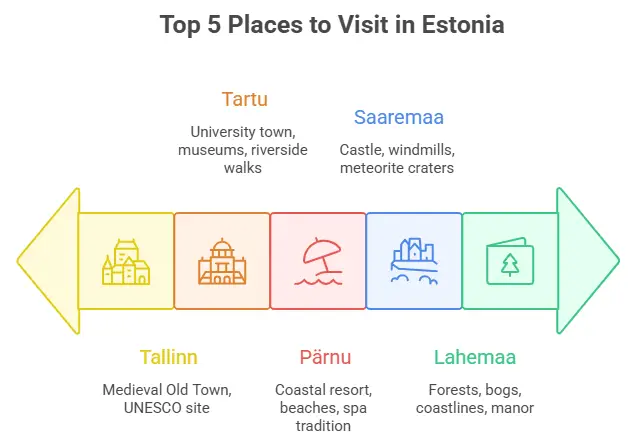
Here are the top 5 places to visit in Estonia:

  • Tallinn: The capital city of Estonia, Tallinn is home to one of the best-preserved medieval Old Towns in Europe, recognised as a UNESCO World Heritage Site. The Old Town takes visitors back to the Middle Ages with its cobbled streets, ancient towers, and remarkably preserved 13th-century architecture. Must-visit landmarks include Toompea Hill, the Alexander Nevsky Cathedral, the Town Hall Square, and the Patkuli Viewing Platform, which offers sweeping views across the city. Tallinn is also celebrated for its thriving food scene, vibrant cafe culture, and a stunning Christmas market that transforms the town square every winter.
  • Tartu: Estonia's second-largest city, Tartu is the country's intellectual and cultural heart, home to the University of Tartu, one of the oldest universities in Northern Europe, founded in 1632. The city has a charming Old Town and is home to the Estonian National Museum, which offers compelling interactive exhibits on Estonian history, culture, and traditions. Tartu is a lively and welcoming city, known for its youthful energy, scenic riverside walks along the Emajõgi River, and a strong sense of local identity that sets it apart from the capital.
  • Lahemaa National Park: Estonia's largest national park, Lahemaa spans over 725 square kilometres and is a haven for nature lovers, offering diverse landscapes including ancient forests, pristine bogs, rocky coastlines, and peaceful river valleys. The Viru Bog, accessible via a scenic wooden boardwalk trail, is one of the park's most popular attractions. The park is also home to Sagadi Manor, an 18th-century estate that offers a fascinating glimpse into Estonia's architectural and rural heritage. Lahemaa is a must-visit for anyone who enjoys hiking, wildlife watching, and expansive natural landscapes.
  • Pärnu: Known as Estonia's summer capital, Pärnu is a charming coastal resort city situated where the Pärnu River meets the Gulf of Riga. The city is celebrated for its fine white sand beaches, scenic dunes, and a relaxed seaside atmosphere that draws visitors from across the country during the warmer months. Pärnu has a long-standing spa tradition dating back to the 19th century and is widely regarded as Estonia's wellness capital, offering a range of historic and modern spa hotels known for therapeutic mud treatments and mineral baths.
  • Saaremaa: The largest of Estonia's islands, it lies in the Baltic Sea and has a rich history spanning over 8,000 years, shaped by centuries of Danish, Swedish, German, and Russian rule. The island is best explored from its capital, Kuressaare, home to the well-preserved Kuressaare Episcopal Castle, one of the finest medieval fortresses in the Baltic region. Saaremaa is also known for its traditional windmills, juniper forests, unique meteorite craters at Kaali, and a peaceful way of life that offers a welcome contrast to Tallinn's energy.

Eligibility Criteria to Apply for the Estonia Tourist Visa

  • Must be nationals of countries that are not visa-exempt for the Schengen Area
  • Valid reason for travelling to Estonia
  • Passport issued within the last 10 years and valid for at least 3 months beyond the intended date of departure from the Schengen Area.
  • Travel insurance with a minimum coverage of €30,000, valid across all Schengen member states
  • Proof of sufficient funds of at least €70 per day of the intended stay

Requirements to Apply for the Estonia Tourist Visa

  • Valid passport issued within the last 10 years, valid for at least 3 months beyond the intended date of departure from the Schengen Area, with a minimum of two blank pages
  • Duly completed and signed Schengen visa application form.
  • One recent passport-sized photograph, not older than 6 months, taken against a plain light background
  • Cover letter stating the purpose and details of the visit
  • Travel itinerary including confirmed flight bookings or travel reservations
  • Schengen travel insurance with a minimum coverage of €30,000, valid across all Schengen member states for the entire duration of the stay
  • Proof of accommodation, such as a hotel booking, rental agreement, or invitation letter from a host in Estonia
  • Bank statements from the last 3 to 6 months demonstrating sufficient funds of at least €70 per day of the intended stay
  • Proof of visa fee payment
  • Biometric fingerprints collected in person at the visa application centre

*Need assitance with Schengen visa appointments? Get in touch with experts at Y-Axis to help you with the process. 

Steps to apply for the Estonia Tourist Visa

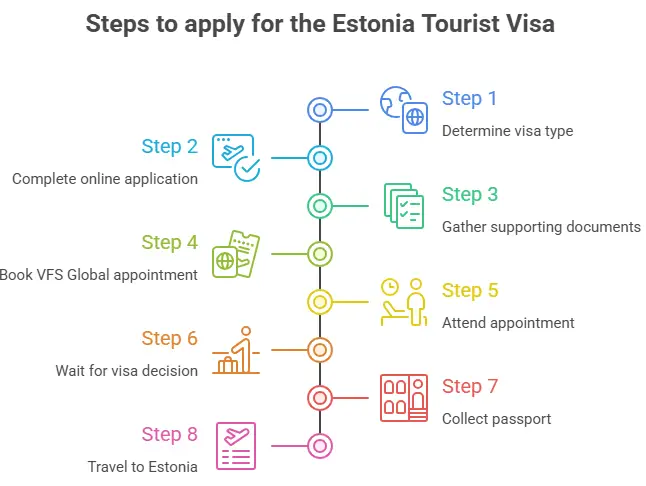
Step 1: Determine the type of visa required based on the purpose and duration of your visit

Step 2: Complete the visa application form online through the official Estonian e-visa portal

Step 3: Gather all required supporting documents as per the official checklist

Step 4: Book an appointment at the nearest authorised VFS Global visa application centre

Step 5: Attend the appointment in person to submit documents, pay the visa fee, and provide biometric data

Step 6: Wait for the visa decision, which is typically issued within 15 calendar days

Step 7: Collect your passport from the visa application centre upon receiving the email notification

Step 8: Travel to Estonia
Steps to apply for the Estonia Tourist Visa

Estonia Tourist Visa Processing Time

Estonia Visit Visa Processing Time
Short-term Visa (C) Up to 15 calendar days
Long Stay Visa (D) Up to 15 calendar days (may vary)
Airport Transit Visa (A) Up to 15 calendar days
Exceptional Cases (All Visa Types) Up to 45 calendar days

Estonia Tourist Visa Fees

Estonia Visit Visa Processing Fees
Short-term Visa (C) €90
Long Stay Visa (D) €100
Airport Transit Visa (A) €90
Children Aged 6 to 11 (Short-term) €45
Children Under 6 Free

*Want to apply for a Schengen visa? Let Y-Axis guide you with the steps. 

How Can Y-Axis Help You?

Y-Axis is one of the world’s leading visa and immigration consultancies. Our experience and expertise in the Schengen visa process makes us your partner of choice for your visa application. Our teams will help you with:

  • Immigration documents checklist
  • Complete application processing
  • Forms, documentation & application filing
  • Assistance with booking appointments for Interviews 
  • Preparing the client to face the Interview at the Consulate
  • Updates & Follow-up
Sign up for a free consultation
Down Arrow
Down Arrow
Down Arrow

I accept the Terms & Conditions

Don't know what to do
Don't know what to do?

Get Free Counselling

Looking For Inspiration

Explore What Global Indians have to say about Y-axis

Frequently Asked Questions

Do I need to apply for a visit visa to Estonia?
plus

If a non-EU/EEA/Switzerland resident wants to visit Estonia for a short-term stay, they must apply for an Estonia Visit visa.

What type of visa do visitors need to apply for to stay in the country longer?
plus

If a visitor wants to stay in the country for more than 90 days, they need a Long-Stay national (D) visa, which allows them to stay for 12 months.

Can I extend my Estonia Tourist Visa?
plus

An Estonia Short term (D) visa cannot be extended, whereas the long-term stay visa (D) can be extended if they want to stay longer.

How long should I apply for the Estonia visit visa before the intended visit date?
plus

The candidate should apply for an Estonia visit visa at least 15 days before their intended visit date but not before six months.

How much does an Estonia visit visa cost?
plus

An Estonian visit visa generally costs up to € 80 for a short-term stay.

Do I need a visa to visit Estonia from India?
plus

Yes, Indian passport holders must obtain a Schengen visa (Type C) before travelling to Estonia. Since Estonia is part of the Schengen Area, and India does not have a visa waiver agreement with the EU, a visa is required for all Indian nationals regardless of the purpose or duration of the visit. Applications can be submitted through the Estonian embassy, consulate, or an authorised visa application centre such as VFS Global. It is recommended to begin the process well ahead of the intended travel date to ensure timely processing.

How long can I stay in Estonia on a tourist visa?
plus

A short-stay Schengen visa (Type C) allows a maximum stay of 90 days within any 180-day period across the entire Schengen Area. This limit applies collectively — time spent in other Schengen countries during the same trip counts toward the 90-day allowance, not just the days spent in Estonia. Travellers should plan their itinerary carefully to avoid overstaying, as doing so can result in entry bans and complications with future visa applications across all Schengen member states.

What is the visa fee for an Estonia tourist visa?
plus

The standard Schengen visa (Type C) fee is €90. Children between 6 and 11 years of age are charged a reduced fee of €45, while children under 6 are fully exempt. Applications submitted through VFS Global attract an additional service charge of approximately €10.96, which is non-refundable. Citizens of countries that have signed a Visa Facilitation Agreement with the EU are eligible for a reduced fee of €35. All visa fees are non-refundable, regardless of whether the application is approved or rejected.

How long does it take to process an Estonia tourist visa?
plus

Under the EU Visa Code, a decision is generally issued within 15 calendar days from the date the application is registered at the Embassy. In some cases, particularly when additional verification is needed or during busy travel periods, processing may take up to 45 calendar days. To avoid any disruption to travel plans, it is advisable to submit the application at least 4 to 6 weeks before the planned date of departure.

How early can I apply for an Estonia tourist visa?
plus

Applications can be submitted no earlier than 6 months before the planned travel date, and no later than 15 days prior to departure. Applying at the earliest possible opportunity is recommended, as it allows adequate time to address any additional document requests or processing delays. Every applicant, including children, must attend an in-person appointment at the visa application centre. During peak travel seasons, appointment slots tend to fill up quickly, so early scheduling is strongly advised.

What documents do I need for an Estonia tourist visa?
plus

A complete application requires the following documents: a filled and signed application form, a valid passport, two recent passport-sized photographs meeting Schengen photo standards, travel medical insurance with a minimum coverage of €30,000, confirmed proof of accommodation, a detailed travel itinerary, recent bank statements, and proof of employment or income. Biometric fingerprints are collected in person at the visa centre on the day of the appointment. Submitting an incomplete set of documents may lead to delays or rejection of the application.

How much money do I need to show in my bank account for an Estonia visa?
plus

The Estonian Ministry of Foreign Affairs requires applicants to demonstrate available funds of at least €70 per day of their intended stay. For a 10-day visit, this translates to approximately €700 or more in accessible funds. Bank statements from the last 3 to 6 months are typically required as proof. The statements should reflect consistent savings over time, as accounts that show a sudden large deposit shortly before the application date are often flagged during assessment.

Can I travel to other countries with an Estonia tourist visa?
plus

Yes. A valid Estonia Schengen visa allows travel across all 29 Schengen member states, including France, Germany, Italy, Spain, and others, within the visa's validity period. However, it does not cover non-Schengen EU countries such as Ireland or Cyprus, nor the United Kingdom. The total stay across all Schengen countries combined must not exceed 90 days within any 180-day period. For travellers planning a multi-country European trip, an Estonia Schengen visa is a practical and widely accepted option.

What is the difference between a Type C and Type D Estonia visa?
plus

A Type C visa is a short-stay Schengen visa for stays of up to 90 days within a 180-day period, suitable for tourism, family visits, or short-term travel. A Type D visa is Estonia's national long-stay visa, designed for those who need to remain in the country for more than 90 days, with stays of up to 365 days permitted within 12 consecutive months. While both allow limited travel within the Schengen Area, the Type D visa falls under Estonian national immigration law and has different eligibility and documentation requirements compared to the Schengen visa.

What is an Airport Transit Visa (Type A) for Estonia?
plus

A Type A Airport Transit Visa is required for nationals of certain non-Schengen countries who need to pass through an Estonian international airport while waiting for a connecting flight, without entering Estonian territory. This visa only permits the holder to remain within the international transit zone and does not allow entry into Estonia or the Schengen Area. Whether this visa is required depends on the applicant's nationality. Travellers with connecting flights through Schengen airports are advised to confirm the requirement with the Estonian embassy or their airline before booking their travel.

Is travel insurance mandatory for an Estonia tourist visa?
plus

Yes, travel insurance is a mandatory requirement for all Schengen visa applications, including Estonia. The policy must cover medical emergencies and repatriation with a minimum coverage of €30,000, and must be valid for the full duration of the stay across all Schengen member states. Applications submitted without a valid insurance certificate will not be processed. Airport transit visa applicants are the only category exempt from this requirement. Insurance should be obtained from a recognised provider, and the policy must clearly state that it covers the Schengen region.

Can I apply for an Estonia visa online?
plus

The Estonia Schengen visa application form is completed online through the official Estonian e-visa portal. However, the process is not fully online. Applicants must visit an authorised visa application centre or Estonian consulate in person to submit documents and provide biometric data, including fingerprints and a photograph. Children under 12 are exempt from the biometric fingerprint requirement but must still be present at the appointment. Given high demand at visa centres, especially during peak seasons, applicants are advised to book their appointment as early as possible.

What happens if my Estonia visa application is rejected?
plus

If an application is rejected, the applicant receives a formal refusal notice explaining the reason for the decision. The notice will also outline the process and timeline for filing an appeal. Common reasons for rejection include insufficient financial proof, incomplete documentation, inconsistent travel history, or concerns about the applicant's intent to return home. A rejection does not permanently prevent future applications; however, it is recorded and may be considered during subsequent visa assessments. Thorough and accurate documentation from the outset significantly improves the chances of approval.

Can my Estonia tourist visa be extended?
plus

A Schengen Type C tourist visa is generally not extendable. Extensions are only considered in exceptional circumstances, such as a medical emergency or force majeure, where the applicant is genuinely unable to depart within the visa's validity period. Travellers who know in advance that they will need to stay longer than 90 days should apply for a Type D long-stay visa before travelling, rather than attempting an extension after arrival. Overstaying a Schengen visa without proper authorisation can result in entry bans across all Schengen member states.

Do children need a separate Estonia visa?
plus

Yes, every traveller including infants and children of all ages must hold an individual visa. A separate visa application must be filed for each child, who must also have their own valid passport. When a minor is travelling without one or both parents, or is in the company of a third party, a notarised travel consent letter from the absent parent or legal guardian is required. The application form for a minor must be signed by the parent holding parental responsibility or the appointed legal guardian. Children under 6 are exempt from visa fees, while those aged 6 to 11 pay a reduced fee of €45.

Where do I submit my Estonia visa application in India?
plus

In India, Estonia Schengen visa applications are processed through VFS Global, which has authorised visa application centres in major cities including New Delhi, Mumbai, Chennai, Bengaluru, Hyderabad, Kolkata, and Ahmedabad, among others. Applicants must book an appointment in advance through the VFS Global online portal. On the day of the appointment, both original documents and photocopies must be brought to the centre. VFS Global collects the application, supporting documents, biometric data, and applicable fees before forwarding everything to the Estonian consulate for a final decision.

What passport validity is required for an Estonia tourist visa?
plus

To qualify for an Estonia Schengen visa, the passport must have been issued within the last 10 years and must remain valid for at least 3 months beyond the intended date of departure from the Schengen Area. The passport should also have a minimum of two blank pages available for the visa sticker. Applicants whose passports are close to expiry should renew them before submitting a visa application, as an ineligible passport will result in the application being rejected.

Can I get a multiple-entry Estonia tourist visa?
plus

Yes, Estonia can issue both single-entry and multiple-entry Schengen visas. A multiple-entry visa allows the holder to enter and exit the Schengen Area more than once during the visa's validity, provided the total stay does not exceed 90 days within any 180-day period. Whether a single or multiple-entry visa is granted depends on the applicant's travel history, the stated purpose of the visit, and the decision of the issuing authority. A multiple-entry visa is particularly useful for those planning visits to multiple Schengen countries or anticipating return trips within a short period.

What is ETIAS and does it affect my Estonia visa requirement?
plus

ETIAS, which stands for the European Travel Information and Authorisation System, is an upcoming electronic pre-travel authorisation for nationals of visa-exempt countries visiting the Schengen Area. It is expected to come into effect in the fourth quarter of 2026. ETIAS does not apply to citizens of countries that are already required to obtain a Schengen visa, such as India. Indian travellers holding a valid Estonia Schengen visa do not need to apply for ETIAS separately. The two systems serve different categories of travellers and should not be mistaken for one another.

What are the minimum funds required per day for an Estonia visa?
plus

The Estonian Ministry of Foreign Affairs requires visa applicants to show a minimum of €70 in available funds per day of their intended stay in Estonia. This is to confirm that the applicant can financially support themselves throughout the visit without relying on public resources. Supporting documents may include recent bank statements, an employer letter confirming salary, proof of sponsorship where applicable, or prepaid accommodation bookings that help reduce the daily cost estimate. All financial documents must be genuine, up to date, and clearly reflect the applicant's ability to fund the trip.