


Don't know what to do ?
Get Free Counseling
University of Jena: Admission, Fees & Top Courses
University of Jena also known as the Friedrich Schiller University Jena is one of Germany’s oldest and most prestigious public research universities, known for academic excellence, interdisciplinary learning, and strong global research collaborations. Located in Jena, Thuringia, Germany’s science and innovation hub, the university attracts international students from India, Asia, Europe, Africa, and the Middle East.
The university is well regarded for its affordable education, research-driven programs, modern campus facilities, experienced faculty, and strong industry connections. It is especially popular for degrees in sciences, medicine, biotechnology, humanities, linguistics, business, law, social sciences, and IT.
- Acceptance Rate: 25–30%
- Scholarships: Students can receive up to 100% tuition support and 20–50% living cost coverage, depending on the scholarship program and academic profile.
About the Friedrich Schiller University Jena
Founded in 1558, the University of Jena (Friedrich Schiller University Jena) is one of Germany’s oldest and most respected public universities. It is located in Jena, a modern and research-driven city in the state of Thuringia. The university is known for its strong academic reputation, world-class research, and global partnerships.
With 17,000+ students from over 110 countries, Jena is a popular destination for international students. The university is well known for excellence in optics, photonics, physics, biotechnology, humanities, social sciences, environmental sciences, and medicine.
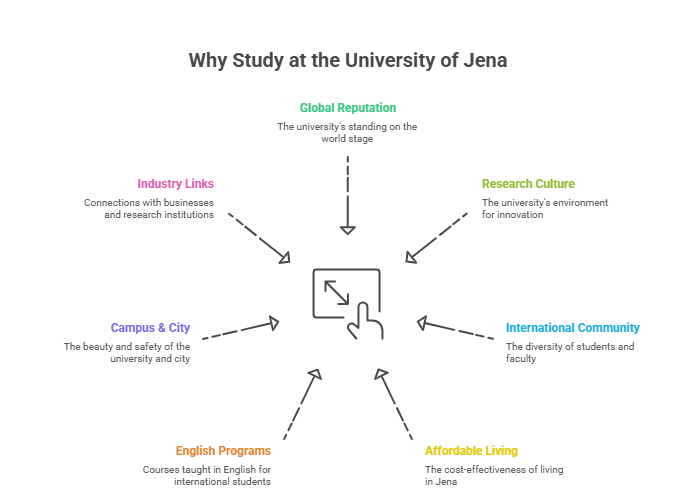
Why Study at the University of Jena?
- Strong Global Reputation: Ranked among Germany’s top research universities.
- Excellent Research Culture: Known for optics, photonics, life sciences, medicine, and environmental sciences.
- International Community: Welcomes thousands of international students every year.
- Affordable Living: Jena is cheaper than major German cities like Munich and Berlin.
- English-Taught Programs: Many master’s programs are offered fully in English.
- Beautiful Campus & Safe City: Student-friendly, well-connected, and modern infrastructure.
- Industry & Research Links: Collaboration with research institutes, labs, and top companies.
*Planning to study in Germany? Cantact Y-Axis for end-to-end support
Friedrich Schiller University Programs
Popular Master’s Programs
- Master of Physics / Optics & Photonics
- Master of Data Science
- Master of Biotechnology / Molecular Biology
- Master of Computer Science
- Master of Business Administration & Economics
- Master of Environmental Sciences
- Master of Psychology / Cognitive Science
- Master of International Relations
Popular Bachelor’s Programs
- Bachelor of Physics / Photonics
- Bachelor of Life Sciences / Biotechnology
- Bachelor of Business Administration / Economics
- Bachelor of Computer Science
- Bachelor of Psychology
- Bachelor of Environmental & Earth Sciences
- Bachelor of Social Sciences
- Bachelor of Engineering Sciences
Scholarships for International Students to Study at University of Jena
|
Scholarship |
Amount / Coverage |
|
Deutschlandstipendium |
€300 per month |
|
DAAD Scholarships |
Fully or partially funded (incl. €934–€1,300/month) |
|
Merit Scholarships (University of Jena) |
Partial tuition or €300–€1,000/month |
|
Erasmus+ Mobility Grants |
€900–€1,400/month |
|
Heinrich Böll Foundation Scholarship |
€934–€1,500/month |
|
Konrad-Adenauer-Stiftung (KAS) Scholarship |
€934–€1,200/month |
|
Friedrich Ebert Stiftung (FES) Scholarship |
€850–€1,500/month |
|
Rosa Luxemburg Foundation Scholarship |
€850–€1,350/month |
|
Thuringia State Scholarships |
€300–€1,350/month |
|
Humboldt Foundation Scholarships |
€2,000–€2,670/month |
*Willing to apply for scholarships in Germany? Y-Axis is here to assist you in all the procedures.
Eligibility Requirements to apply for Friedrich Schiller University
For Bachelor’s Programs
- 10+2 or equivalent (recognized by German authorities)
- Minimum academic percentage as per course requirement
- English or German proficiency depending on the program
For Master’s Programs
- Bachelor’s degree in relevant field
- Minimum 55–65% or equivalent (varies by program)
- Proof of English or German proficiency
- Motivation letter & CV
- Letters of recommendation (if required)
Documents Required
- Academic transcripts (10th, 12th, Bachelor’s)
- Passport
- English/German proficiency test score
- Curriculum Vitae (CV)
- Statement of Purpose (SOP)
- Letters of Recommendation (if required)
- Work experience certificates (if applicable)
- Proof of health insurance
- Proof of funds (for visa)
University of Jena Fees
Public universities in Germany, including the University of Jena, are government-funded, which means most programs have very low or no tuition fees, especially for international students. Students generally only pay a semester contribution, which helps cover administrative services and public transport.
|
Program Type |
Approx. Annual Tuition Fee |
Notes |
|
Bachelor’s Programs |
Mostly tuition-free |
Students only pay a semester contribution of EUR 300–450, which includes public transport |
|
Master’s Programs |
EUR 1,500 – 4,000 (if applicable) |
Some specialized or English-taught programs may charge tuition |
|
Pathway/Foundation Courses |
EUR 2,500 – 4,000 |
Fees vary based on program provider and duration |
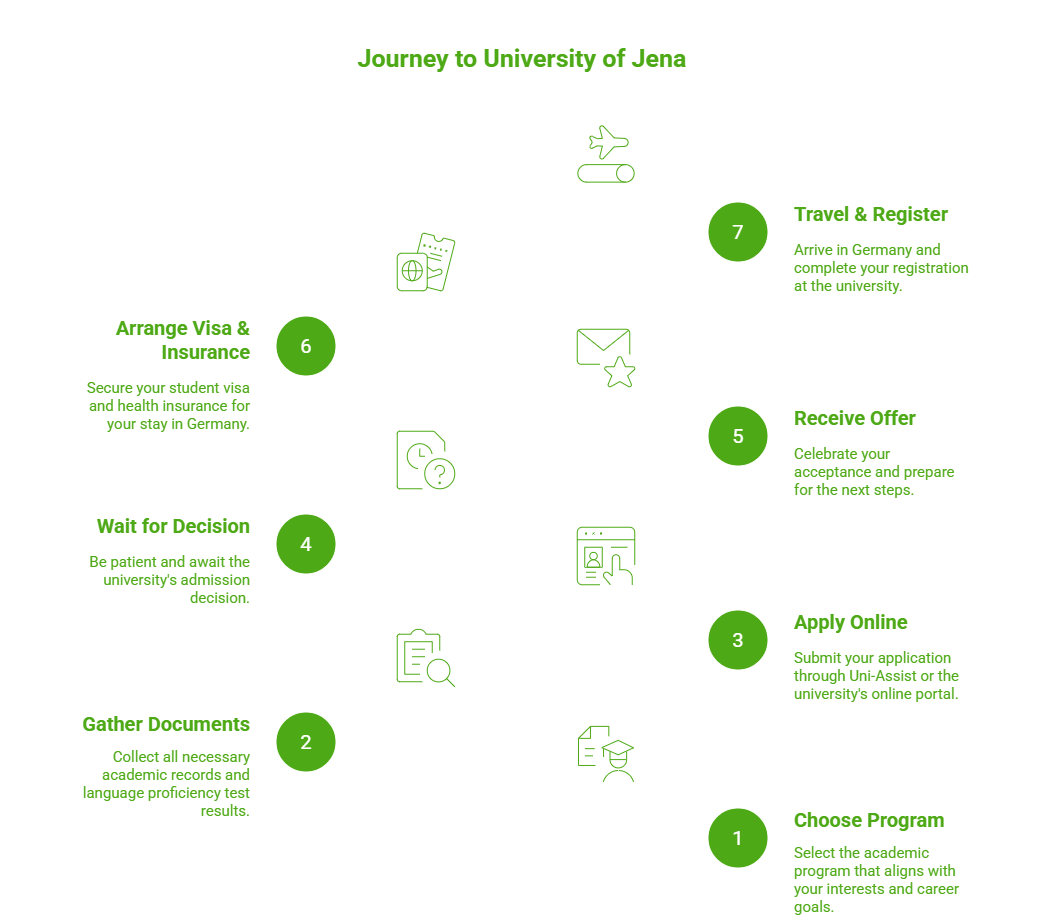
Steps to Apply for University of Jena
Step 1: Choose your preferred program
Step 2: Collect academic documents and language test results
Step 3: Apply through Uni-Assist or the university portal
Step 4: Wait for admission decision
Step 5: Receive your offer/acceptance
Step 6: Arrange student visa & health insurance
Step 7: Travel & register in Germany
Career Opportunities After Graduation at University of Jena
University of Jena graduates enjoy high employability, especially in research and technology sectors.
Top Industries Hiring Friedrich Schiller University Graduates
- Optics & Photonics
- Biotechnology & Life Sciences
- Information Technology
- Sustainability & Environmental Engineering
- Business & Management
- Health Sciences & Psychology
Career Services Include
- Career counselling
- Resume & cover letter support
- Job and internship fairs
- Industry networking events
Cost of Living in Jena
Living in Jena is relatively affordable for international students compared to other German cities. On average, monthly expenses include:
- Accommodation: EUR 350–550
- Food: EUR 200–300
- Transport: EUR 30–50
- Miscellaneous: EUR 100–200
Students can work 120 full days or 240 half days per year.
Intakes at the University of Jena
The University of Jena offers two admission periods during the year. Most international students apply for the winter semester, while some programs are available in summer. It’s important to apply early to secure admission, visa, and accommodation.
- Winter Semester (October): Major intake
- Summer Semester (April): Limited programs
Apply early for visa and accommodation.
Why Indian Students Prefer Friedrich Schiller University
- Low or no tuition fees
- Safe, multicultural student city
- English-taught courses
- Strong research focus
- Affordable living
- Great post-study career options
Your Future at the University of Jena
The University of Jena is a great place for students who want good education, international experiences, and strong career opportunities in Germany. It is well known for its quality teaching, modern research, friendly campus, and safe student environment. International students receive support with academics, housing, jobs, and integration. After graduation, students can find internships, research roles, or full-time jobs in Germany, especially in science, technology, healthcare, and business. It is a university that helps you grow personally, professionally, and globally.
How Y-Axis Can Help You
Y-Axis provides complete guidance for students aspiring to study at Griffith University, including:
- Program and university selection
- Application and documentation support
- Scholarship guidance
- Assistance in applying for Germany study visa.
- Y-Axis Coaching will help you learn German and English, and prepare for tests like IELTS, TOEFL, and PTE.
- Pre-departure and post-arrival support
Don't know what to do ?
Get Free Counseling
Looking for Inspiration
Explore what Global Indians have to say about Y-Axis in shaping their future
Frequently Asked Questions