


Posted on December 06 2025
Most Demanded Jobs in Canada - What Employers Actually Want

By , Editor
Updated January 13 2026
High-demand jobs in Canada continue to evolve, with healthcare professionals leading the employment market. Canada consistently reports hundreds of thousands of job vacancies nationwide, creating labour shortages across multiple sectors while maintaining a relatively stable unemployment rate.
Current data shows that registered nurses and psychiatric nurses hold a top position among in-demand jobs, reflecting the growing need for healthcare services across the country. Transport truck drivers also remain essential to the Canadian economy, ensuring the smooth operation of national supply chains. In the technology sector, software engineers and designers continue to see strong demand as Canada expands its digital infrastructure and innovation capabilities.
Understanding these high-demand occupations can significantly improve your employment prospects and strengthen your Canadian immigration opportunities.
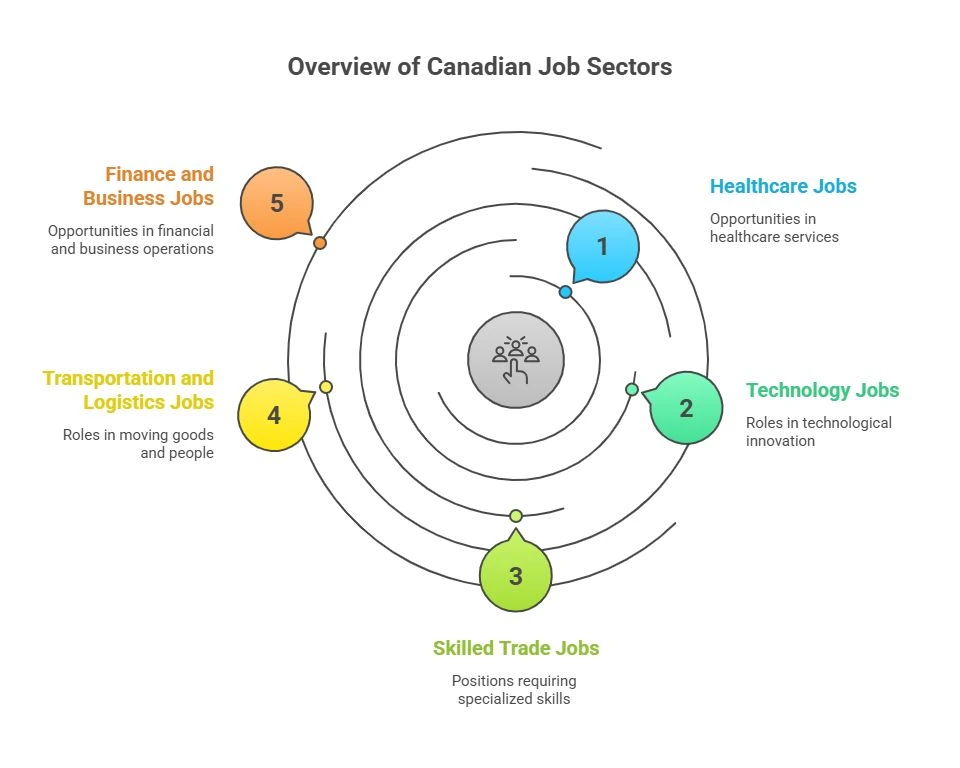
Top High-Demand Job Categories in Canada for Indians
Canada offers strong job opportunities for Indians across high-demand fields such as IT, healthcare, engineering, finance, and skilled trades. These sectors consistently face talent shortages, making them ideal pathways for immigration and long-term career growth.
1. Healthcare Jobs in Canada
Healthcare forms the backbone of Canada’s job market. Medical professionals including physicians, medical technologists, and personal support workers are critical in addressing the healthcare needs of an aging population, particularly in rural and underserved areas.
2. Technology Jobs in Canada
As Canadian businesses accelerate digital transformation, technology roles such as cybersecurity analysts, data scientists, and cloud architects are in high demand. Major tech hubs like Toronto, Vancouver, and Montreal continue to attract skilled professionals in this sector.
3. Skilled Trade Jobs in Canada
The skilled trades remain a vital component of the Canadian workforce. Electricians, welders, plumbers, and construction managers face nationwide shortages and benefit from stable employment and competitive wages. These roles typically require trade certification and offer excellent long-term prospects.
4. Transportation and Logistics Jobs in Canada
Beyond truck drivers, Canada’s growing logistics sector offers opportunities for supply chain managers, logistics coordinators, and warehouse supervisors. The rise of e-commerce has made these positions particularly crucial in provinces like Ontario and British Columbia.
5. Finance and Business Jobs in Canada
The financial services industry continues to expand, creating opportunities for financial analysts, accountants, and insurance specialists. These positions often require Canadian-recognized credentials and offer strong career advancement potential for both local and international professionals.
What Canadian Employers Look For in Indian Professionals
Canadian employers seek well-rounded candidates who combine technical expertise with strong soft skills. Communication, teamwork, problem-solving, and adaptability are highly valued with many employers rating these attributes as equally important as academic qualifications.
Key Competencies for Jobs in Canada
Employers often highlight nine core abilities essential for workplace success:
-
Reading and writing
-
Numeracy and digital literacy
-
Problem-solving and critical thinking
-
Communication and collaboration
-
Creativity and adaptability
Emotional intelligence and conflict resolution skills are also important, fostering inclusive and diverse work environments.
Language Requirements for Jobs in Canada for Indians
For foreign workers, English or French language proficiency is crucial. Most jobs require Canadian Language Benchmark (CLB) levels between 5 and 7, equivalent to IELTS scores of 5.0 to 6.0 across all sections. Higher-skilled occupations (TEER 0 and 1) generally require CLB 7, while mid-level positions (TEER 2 and 3) often require CLB 5.
Technical Certifications to Boost Your Career in Canada
Professional certifications enhance employability in Canada’s competitive job market:
-
IT professionals benefit from certifications such as AWS Cloud Practitioner, CompTIA A+, or Cisco Certified Network Associate (CCNA).
-
Cybersecurity specialists can stand out with credentials like CISA or CISM.
Remote Work Opportunities in Canada
With the rise of hybrid and remote working, employers increasingly value candidates who demonstrate digital communication skills, time management, and self-motivation. Strong virtual collaboration abilities are now as critical as technical expertise.
How to apply for jobs in Canada from abroad?
Applying for jobs in Canada for Indians and other foreigners starts with understanding immigration pathways. Express Entry serves as the primary route for skilled workers, requiring you to submit a profile that receives a Comprehensive Ranking System (CRS) score.
Canada Job Application Requirements
Identify your National Occupational Classification (NOC) code – essential for immigration applications since Canada switched to the 2021 NOC version with Training, Education, Experience and Responsibilities (TEER) categories. Search the NOC website using job titles or numeric codes to find positions matching your skills.
Creating a Canadian-style resume remains crucial for high-demand jobs in Canada. Canadian resumes should be shorter (1-2 pages), skills-focused, and without personal details like photos or marital status. Use action verbs to highlight achievements rather than listing responsibilities.
Jobs with Specific Growth Projections
|
Job Title |
Growth Projection (2025-2031) |
New Positions |
Industry |
|---|---|---|---|
|
15% |
54,105+ |
Healthcare |
|
|
8% |
28,121+ |
Transportation |
|
|
14% |
15,061+ |
Technology |
Other High-Demand Jobs by Industry
Healthcare
-
Physicians
-
Medical Technologists
-
Personal Support Workers
Technology
-
Cybersecurity Analysts
-
Data Scientists
-
Cloud Architects
Skilled Trades
-
Electricians
-
Welders
-
Plumbers
-
Construction Managers
Transportation & Logistics
-
Supply Chain Managers
-
Logistics Coordinators
-
Warehouse Supervisors
Financial Services
-
Financial Analysts
-
Accountants
-
Insurance Specialists
Important Notes for Indian Job Seekers
-
Canada reports over 500,000 job vacancies nationwide (as of May 2025)
-
Current unemployment rate: 6.9%
-
Language requirements: Most positions require Canadian Language Benchmark (CLB) levels 5-7 (equivalent to IELTS 5.0-6.0)
-
NOC TEER 0 and 1 jobs: Minimum CLB 7
-
NOC TEER 2 and 3 jobs: Minimum CLB 5
-
-
Canadian-style resume required (1-2 pages, skills-focused, no personal photos)
-
Express Entry and Provincial Nominee Programs are primary immigration pathways
Provincial Nominee Programs offer additional immigration pathways, with some PNPs granting 600 additional CRS points, virtually guaranteeing an invitation to apply for permanent residence. Building a professional network through volunteering can help access Canada's hidden job market, where many high-demand jobs in Canada are filled through connections rather than advertisements.
Canada's job market in 2025 offers opportunities across sectors. Healthcare professionals, particularly registered nurses, lead the most sought-after positions, with transport truck drivers and software engineers following closely. These high-demand jobs in Canada reflect the country's economic priorities and demographic changes.
The job market will continue changing, but focusing on high-demand jobs in Canada while developing required skills positions you for career success in this market.
FAQs
Which jobs are currently in high demand in Canada for Indians?
Healthcare professionals, software engineers, truck drivers, electricians, accountants, and data scientists are among the most in-demand jobs in Canada. Registered nurses and psychiatric nurses top the list, followed by technology and skilled trade roles, which face ongoing labour shortages nationwide.
Can Indians apply for jobs in Canada without PR?
Yes, Indians can apply for jobs in Canada without PR. However, securing a job offer is easier with strong skills, Canadian-style resumes, and in-demand expertise. Employers may sponsor a work permit under the Temporary Foreign Worker Program (TFWP). Many candidates also move through Express Entry after gaining relevant experience.
What is the minimum IELTS score required for jobs in Canada?
Most Canadian jobs require a Canadian Language Benchmark (CLB) level of 5–7, equal to an IELTS score between 5.0 and 6.0. Higher-skilled jobs (TEER 0 and 1) require CLB 7, while mid-level positions (TEER 2 and 3) require CLB 5. Some employers may ask for higher scores depending on the role.
Which city in Canada offers the best job opportunities for Indians?
Toronto, Vancouver, Montreal, Calgary, and Ottawa offer the strongest job markets for Indians. Toronto is popular for finance and IT, Vancouver for technology and logistics, Montreal for AI and engineering, and Calgary for energy, skilled trades, and project management roles.
Do Canadian employers hire Indians directly from India?
Yes, Canadian employers regularly hire skilled workers from India—especially in healthcare, trucking, IT, construction, and finance. Employers often conduct virtual interviews and may support LMIA-based work permits when facing local talent shortages.
What qualifications do Indians need to work in Canada?
Qualifications depend on the occupation. Most skilled jobs require a bachelor's degree, technical certifications, or trade licenses. Many employers prefer industry certifications such as AWS (Cloud), CCNA (Networking), CISM (Cybersecurity) or Red Seal (Skilled Trades). Healthcare jobs usually require licensing through Canadian regulatory bodies.
How can Indians apply for jobs in Canada from abroad?
Start by identifying your NOC TEER code, preparing a Canadian-style resume, applying on Canadian job portals, and connecting with employers on LinkedIn. Skilled workers can also apply through Express Entry, which improves job prospects by showing employers that you are eligible for permanent residency.
Which Canadian provinces have the highest job opportunities for Indians?
Ontario, British Columbia, Alberta, Saskatchewan, and Nova Scotia have the highest demand for international workers. Ontario leads in finance and IT, while British Columbia and Alberta face shortages in healthcare, trades, logistics, and technology roles.
Is it possible to get a job in Canada without Canadian experience?
Yes. While Canadian experience helps, thousands of Indians secure jobs without it. Employers prioritize relevant technical skills, certifications, soft skills, and language proficiency. Creating a Canadian-style resume and networking improves your chances significantly.
Which jobs offer the fastest PR pathway for Indians?
Occupations in healthcare, technology, trades, and transportation offer the fastest PR pathways because they align with Express Entry, Provincial Nominee Programs (PNPs), and targeted draws. Registered nurses, software engineers, accountants, truck drivers, welders, and electricians often receive priority processing.
Tags:
Most in-demand jobs in canada,Jobs in Canada
Work in Canada
jobs abroad
salary in Canada
in-demand jobs in Canada
High demand jobs in Canada
High demand jobs in Canada for foreigners
Best jobs in Canada for foreigners
Most demanding jobs in Canada
Share
Y - Axis services

Get it on your mobile

Get News Alerts

Contact Y-Axis
Latest Article
Popular Post
Trending Article

Posted On April 10 2026
Australia Jobs for Skilled Professionals: 500 Roles Eligible for Australia Work Permit