


Posted on February 11 2026
Russia Needs 11 Million Workforce by 2030. A New Chance for Indians. Apply now!

By , Editor
Updated February 12 2026
Highlights: Russia Needs 11 Million Skilled Workers by 2030
- Russia is estimated to require nearly 11 million skilled workers over the next 4 years to address its ongoing workforce shortage.
- Last year, in 2025, around 240,000 work permits were issued to foreign workers, marking the highest record since 2017.
- Indian workers are currently in demand and received 56,000 work permits last year.
- Around 5.7 million foreign nationals currently live in Russia, amid increasing demand and dependence on foreign talent.
- Hospitality, municipal services, construction, and logistics are among the high-demand sectors in Russia, offering more job opportunities.
*Want to work abroad? Let Y-Axis guide you with the process.
Russia indicates a Major Recruitment Drive in the coming 4 years
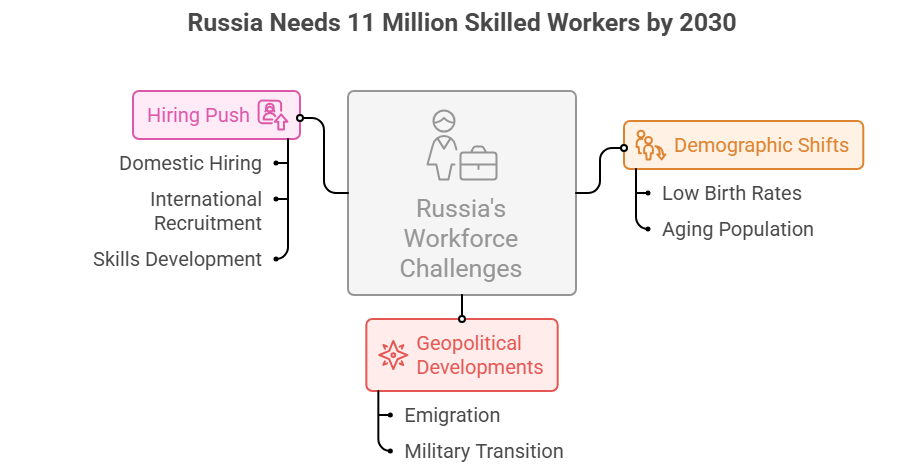
Reports suggest that Russia will need 11 million skilled workers by 2030 due to recent geographical and demographic developments.
25% of the country’s population is in the retirement stage, also hinting at reduced birth rates after the 1990s. This ongoing workforce and labour shortage, along with Russia's 2% unemployment rate, has led to increased demand for skilled foreign workers.
Data also shows that 500,000 to 800,000 working-age people in Russia have either left the country in search of better opportunities or enlisted in military-related services. This transition in the labour market has led to high demand for skilled workers across mining, hospitality, logistics, shipbuilding, construction, and municipal services.
*Want to work in Russia? Sign up with Y-Axis to help you with the steps.
What factors are causing labour shortages in Russia?
There is an ongoing labour crisis in Russia that is driven by multiple different factors, some of which include:
- A consistent decline in the birth rates since the 1990s has left nearly 25% of Russia’s population in the retirement stage.
- The current war between Russia and Ukraine has directly impacted the workforce, leading to 500,000 to 800,000 working-age population exiting Russia.
- A majority of the working population has also shifted to military-based sectors, leaving the remaining sectors with a labour shortage.
- Sectors like mining, logistics, construction, manufacturing, and municipal services are currently facing labour shortages.
To overcome these obstacles and improve conditions within the country, Russia is now focusing on recruiting foreign talent, especially from India, Sri Lanka, China, and North Korea.
Also, read…
Indian Workers are currently In-Demand in Russia
Indians are among the most sought-after nationalities in Russia, with a major focus on hiring skilled and semi-skilled labour. India and Russia have also recently signed an agreement to simplify and streamline the temporary labour migration processes between the two countries.
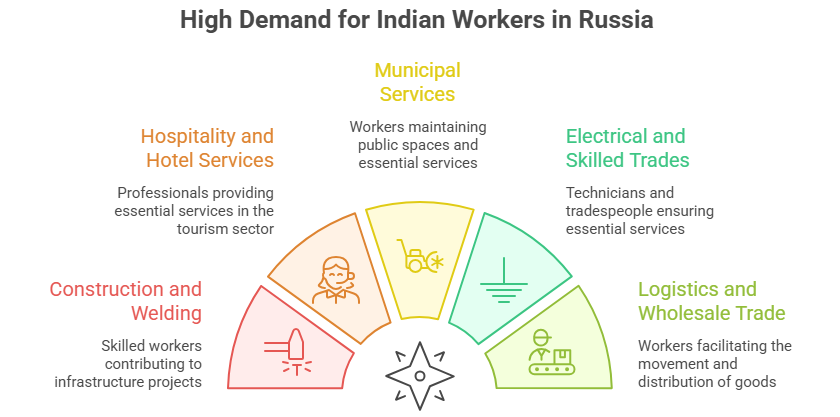
The sectors in Russia that are actively seeking skilled Indian workers are as follows:
- Construction and welding
- Hospitality and hotel services
- Municipal services (including snow clearing)
- Electrical and skilled trades
- Logistics and wholesale trade
According to reports, a renowned Moscow-based agency has teamed up with the Russian Association of Welders to set up a training centre in Chennai, where candidates can be fully trained before deployment. Some agencies are now offering Russian-language training courses to help job seekers from India prepare.
What does 11 million Job Opportunities in Russia mean for skilled Indian Workers?
Russia is positioning itself as an emerging country with opportunities for skilled overseas talent. With streamlined processes and increased work permits for Indians, opportunities are growing in the blue-collar and technical sectors.
However, skilled workers must carefully evaluate the following:
- Valid work permits
- The type of visa and the visa duration
- The credibility of the employer
- Russian language requirements
- Living conditions and safety concerns
*Are you looking for step-by-step assistance with overseas immigration? Contact Y-Axis, the world’s No. 1 immigration consultancy!
For recent immigration updates, check out the Y-Axis News Page!
FAQs
What is Russia’s 11 million workforce requirement by 2030?
Russia has officially estimated that its economy will require 11 million additional workers by 2030 to sustain growth and maintain industrial productivity. This demand stems from long-term demographic decline, a shrinking working-age population, and increased labour movement due to geopolitical developments. With nearly a quarter of the population at retirement age and unemployment at around 2%, domestic hiring alone cannot meet economic needs. As a result, Russia is expanding international recruitment, particularly from countries like India, to fill workforce gaps across construction, mining, manufacturing, logistics, hospitality, and technical sectors.
Why is Russia facing a labour shortage?
Russia’s labour shortage is primarily driven by demographic changes and workforce migration trends. Since the 1990s, declining birth rates have reduced the number of young people entering the labour market. Currently, about 25% of the population is of retirement age. Additionally, the ongoing war in Ukraine has led to an estimated 500,000 to 800,000 working-age individuals leaving the country, while others have shifted to military-linked industries. With unemployment at approximately 2%, one of the lowest globally, Russia is experiencing structural workforce pressure that is expected to continue for years.
How many work permits has Russia issued to foreign workers recently?
According to official statistics from Russia’s Ministry of Internal Affairs, more than 240,000 work permits were issued to foreign nationals in 2025, marking the highest level since at least 2017. Among these, Indian work permits saw a significant rise, increasing from around 5,000 in 2021 to over 56,000 last year. This surge highlights Russia’s expanding recruitment strategy beyond traditional labour sources. The government has also signed agreements to simplify temporary labour migration procedures, particularly with India, to support workforce needs in key sectors.
Which sectors in Russia have the highest demand for foreign workers?
Russia’s workforce demand is particularly strong in construction, mining, manufacturing, shipbuilding, hospitality, municipal services, logistics, and technical trades. Major companies such as Norilsk Nickel have reported shortages of about 10,000 employees, while shipbuilding firms like Ak Bars require between 1,500 and 2,000 additional workers. Labour gaps are affecting both skilled and semi-skilled roles. Municipal services in large cities, including snow clearance and maintenance work, are also hiring foreign workers. The growing demand spans across both blue-collar and technical occupations.
Why is India becoming a key labour partner for Russia?
India has emerged as an important workforce partner for Russia due to its large skilled and semi-skilled labour pool. During high-level diplomatic discussions, both countries agreed to simplify temporary labour migration procedures. The number of Indian work permits has increased sharply in recent years, reflecting growing demand. Recruitment agencies are actively sourcing talent from India for welding, electrical work, construction, hospitality, and logistics roles. Some firms have even established training centres in India to prepare candidates before deployment, strengthening workforce cooperation between the two nations.
How has the Ukraine war affected Russia’s labour market?
The war in Ukraine has significantly influenced Russia’s labour market. Estimates suggest that between 500,000 and 800,000 working-age Russians have left the country since the conflict escalated. In addition, many workers have transitioned from civilian sectors to defence and military-related industries. This shift has reduced workforce availability in traditional industries such as construction, mining, hospitality, and manufacturing. Combined with long-term demographic decline, the geopolitical situation has accelerated Russia’s need to recruit foreign workers to maintain economic activity.
Is Russia’s labour shortage temporary or long-term?
Experts believe Russia’s workforce shortage is not a short-term issue but a long-term structural challenge. The country’s aging population and declining birth rates mean fewer young workers are entering the labour force each year. With nearly one-quarter of the population at retirement age, demographic pressure is expected to continue for decades. Even if geopolitical conditions stabilize, the underlying population trend suggests sustained demand for foreign workers. As a result, Russia may continue expanding international recruitment to support economic stability and industrial productivity.
What should Indian job seekers consider before applying for jobs in Russia?
Indian candidates considering employment in Russia should carefully review several factors before applying. It is important to verify the authenticity of the employer, understand the work contract terms, and confirm visa type and duration. Language requirements may apply in certain sectors, particularly hospitality and customer-facing roles. Candidates should also assess working conditions, safety standards, accommodation arrangements, and local regulations. Understanding geopolitical conditions and labour laws is essential to ensure a secure and informed overseas employment decision.
Are Russian companies investing in training foreign workers?
Yes, recruitment agencies and industry associations have begun investing in structured training programs to prepare foreign workers. For example, a Moscow-based agency has partnered with the Russian Association of Welders to establish a training centre in Chennai, India. Candidates are trained and assessed before deployment to ensure they meet Russian industry standards. Additionally, crash courses in the Russian language are being organized for hospitality and service roles. These initiatives indicate that Russia is adopting a more organized approach to international labour recruitment.
How does Russia’s unemployment rate impact foreign hiring?
Russia’s unemployment rate stands at around 2%, one of the lowest globally. While low unemployment typically reflects economic stability, it also means there are limited domestic workers available to fill open positions. With strong labour demand and shrinking workforce supply, industries are facing operational constraints. This imbalance has pushed employers to expand international recruitment efforts. The issuance of over 240,000 foreign work permits in 2025 reflects how critical foreign labour has become in addressing Russia’s workforce needs across multiple sectors.
Tags:
Overseas immigration news
Migrate abroad
Migrate to Russia
Work in Russia
Jobs in Russia
India-Russia ties
work abroad
jobs abroad for Indians
work visas
Russia work visa
Share
Options for you by Y-Axis

Get it on your mobile

Get News alerts

Contact Y-Axis
Latest Article
Related Post
Trending Article

Posted On April 02 2026
Canada Introduces Eight Major Immigration Changes from April 1, Impacting PR Applicants and Newcomers. Check Your Eligibility Now!