


Posted on December 20 2025
Oman Opens Doors to More Indian Talent Under New Trade Agreement

By , Editor
Updated December 20 2025
Highlights: India–Oman Trade Pact Creates New Workforce and Business Opportunities
- A landmark trade agreement strengthening India–Oman ties, the CEPA creates new pathways for Indian companies and professionals to work, invest, and grow in Oman.
- Indian firms investing in Oman can employ up to 100% Indian workforce, with only a limited requirement to hire Omani nationals.
- The CEPA was signed on December 18, 2025, in Muscat, formalising long-term cooperation in trade, investment, and employment.
- The hiring flexibility is a binding and permanent commitment, remaining valid even if Oman amends its labour or Omanisation laws.
- Indian professionals benefit from easier entry and stay conditions, while Indian companies can enjoy 100% FDI in key services sectors such as accountancy, healthcare, and architecture.
*Want to work in Oman? Let Y-Axis guide you with the process.
India–Oman CEPA Brings Hiring Flexibility and New Job Opportunities for Indians
India–Oman economic relations have taken a significant step forward as Oman announced greater flexibility in hiring norms for Indian companies investing in the country. The assurance, confirmed by Commerce and Industry Minister Piyush Goyal, is part of the newly signed Comprehensive Economic Partnership Agreement (CEPA) and is set to create wide-ranging employment and business opportunities for Indian professionals and enterprises.
The CEPA was signed on December 18 in Muscat, marking a milestone in bilateral cooperation across trade, investment, and workforce mobility. The agreement comes at a crucial time when Indian professionals are increasingly exploring career opportunities in the Gulf region, and Indian companies are looking to expand their global footprint. By easing hiring restrictions and enabling smoother professional movement, the India–Oman CEPA positions Oman as an attractive destination for Indian talent and investment alike.
*Want to learn more about the in demand occupations in Oman? Sign up with Y-Axis for end-to-end counseling.
What This Agreement Means for Indian Professionals and Businesses
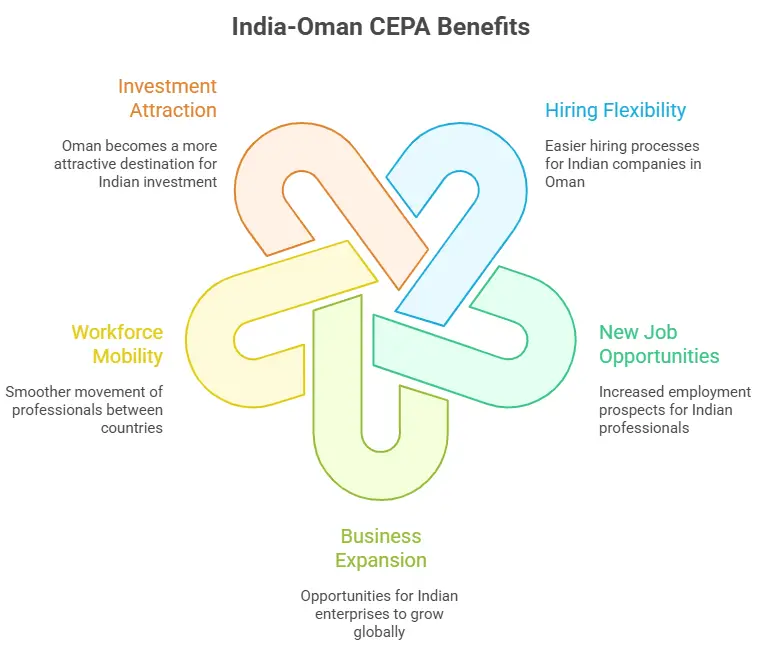
The India–Oman CEPA creates new opportunities for Indian workers, entrepreneurs, and companies by easing hiring norms, improving professional mobility, and encouraging long-term investment.
- Indian companies investing in Oman can hire a majority Indian workforce, making overseas expansion easier and more cost-effective.
- Indian investments will translate into direct employment opportunities for Indian nationals, supporting workforce continuity abroad.
- Skilled Indian professionals will benefit from easier entry and stay conditions, particularly in sectors such as accountancy, taxation, architecture, and medical and allied services.
- Indian companies are allowed 100% foreign direct investment (FDI) in key services sectors through commercial presence in Oman.
- The agreement offers long-term stability and policy certainty, helping Indian businesses and professionals plan careers and investments in Oman with confidence.
*Are you looking for step-by-step assistance with overseas immigration? Contact Y-Axis, the world’s No. 1 overseas immigration consultancy!
For recent immigration updates, check out the Y-Axis News Page!
FAQs
What hiring flexibility has Oman assured Indian companies under the trade pact?
Oman has assured Indian companies greater hiring flexibility under the proposed trade pact by easing workforce-related restrictions. This includes allowing companies to recruit skilled professionals based on business needs rather than rigid nationality quotas. The assurance aims to support Indian firms operating in Oman by making it easier to deploy talent, scale operations, and manage projects efficiently. While local employment priorities remain important, Oman has signaled a more balanced and practical approach to workforce mobility, particularly for sectors where specialized skills are required and local talent availability is limited.
How will the India–Oman trade agreement benefit Indian businesses operating in Oman?
The India–Oman trade agreement is expected to benefit Indian businesses by reducing operational barriers and improving ease of doing business. Hiring flexibility will help Indian firms bring in skilled professionals for critical roles, reducing project delays and compliance challenges. The pact also strengthens bilateral trade ties, potentially offering better market access, smoother regulatory cooperation, and investment opportunities. For Indian companies in sectors like construction, IT, manufacturing, and energy, these measures can lower costs, improve productivity, and enhance long-term business sustainability in Oman.
Which sectors are expected to gain the most from Oman’s hiring flexibility for Indian firms?
Sectors that rely heavily on skilled and semi-skilled manpower are expected to benefit the most. These include construction, infrastructure, IT services, engineering, manufacturing, energy, logistics, and healthcare. Indian companies operating large-scale projects often require specialized professionals and experienced managers, which can be difficult to source locally. Hiring flexibility allows firms to deploy Indian talent where needed while supporting project timelines. Service-based industries and knowledge-driven sectors are also likely to gain, as workforce mobility plays a crucial role in maintaining service quality and competitiveness.
What changes can Indian professionals expect in work visas and employment rules in Oman?
Indian professionals may see smoother and more predictable employment processes if the trade pact provisions are implemented effectively. While the agreement does not automatically change visa laws, hiring flexibility can lead to easier approvals for employer-sponsored work visas, especially for skilled roles. Professionals may benefit from improved job stability, clearer employment regulations, and better employer access to talent pools. However, visa eligibility, sponsorship requirements, and labour laws will continue to be governed by Omani regulations, with changes likely to be gradual rather than immediate.
How does Oman’s hiring assurance impact Indian expatriates working in the Gulf region?
Oman’s assurance sends a positive signal for Indian expatriates across the Gulf by reinforcing India’s role as a trusted talent partner. It highlights growing acceptance of skilled Indian professionals in strategic sectors and may encourage similar labour-friendly policies in the region. For Indians already working in Oman, this could mean better job security and career continuity with Indian employers. Regionally, it strengthens India’s workforce mobility narrative and reinforces the importance of bilateral agreements in protecting employment opportunities for expatriates.
What role does the India–Oman CEPA play in workforce mobility?
The India–Oman Comprehensive Economic Partnership Agreement (CEPA) plays a supporting role in workforce mobility by aligning trade, investment, and labour needs. While CEPA primarily focuses on trade facilitation, it also addresses business operations, services, and professional movement. Workforce mobility provisions help businesses deploy talent efficiently, especially for services and project-based industries. By addressing hiring flexibility within the agreement framework, CEPA helps reduce uncertainty for employers and professionals, creating a more predictable and cooperative environment for cross-border employment.
Will Indian companies be allowed to hire more Indian workers in Oman under the new pact?
The assurance suggests Indian companies may find it easier to hire Indian workers where skills are not readily available locally. However, this does not mean unrestricted hiring. Oman is balancing workforce nationalization goals with economic growth needs. Indian firms are expected to comply with local labour laws while benefiting from more flexible hiring approvals for specialized roles. The focus is on practicality—allowing businesses to function efficiently without undermining local employment priorities. Final implementation will depend on sector-specific rules and regulatory guidelines.
How does this trade pact strengthen India–Oman economic and labour ties?
The trade pact strengthens India–Oman ties by combining economic cooperation with practical workforce solutions. By addressing hiring flexibility, both countries acknowledge the role of skilled labour in driving trade, infrastructure, and investment. The agreement builds trust, encourages Indian investment in Oman, and supports long-term collaboration in key sectors. Labour cooperation also enhances people-to-people ties, making economic relations more resilient. Overall, the pact reflects a shift toward balanced partnerships that support growth while respecting domestic employment frameworks.
What did Piyush Goyal say about workforce mobility in the India–Oman agreement?
Commerce and Industry Minister Piyush Goyal highlighted that Oman has assured India of hiring flexibility for Indian companies under the trade pact. He emphasized that such assurances are critical for Indian businesses operating overseas, as workforce mobility directly impacts project execution and competitiveness. His statement reflects India’s broader strategy of negotiating trade agreements that address not just goods and tariffs but also services and labour movement. The assurance underscores mutual trust and Oman’s willingness to accommodate genuine business needs.
How will Oman’s hiring flexibility affect future job opportunities for Indians abroad?
Oman’s hiring flexibility could create more stable and predictable job opportunities for Indian professionals, especially in skilled and technical roles. It reinforces India’s position as a global talent supplier and encourages Indian companies to expand overseas operations. Over time, such agreements can lead to better employment standards, clearer regulations, and increased demand for Indian expertise. While opportunities will depend on sector growth and local policies, the assurance sets a positive precedent for future labour-focused trade agreements benefiting Indian workers abroad.
Tags:
India-Oman Trade Pact
India-Oman Trade Agreement
Indians in Oman
overseas immigration news
Oman immigration news
Work abroad
work in Oman
Invest in Oman
Jobs in Oman
Jobs in Oman for Indians
Oman work visa
Share
Options for you by Y-Axis

Get it on your mobile

Get News alerts

Contact Y-Axis
Latest Article
Related Post
Trending Article

Posted On April 09 2026
Europe Travel Rules Changing From April 10: New Entry Requirements for Visitors Announced. Check Your Eligibility Now!