


Posted on February 06 2026
New Zealand Minimum Wages to Hit ~$24/Hour from April 2026. Apply now!

By , Editor
Updated February 07 2026
Highlights: New Zealand Revises Minimum Wages from April, 2026
- New Zealand has officially confirmed a hike in the minimum wage as part of its annual wage review.
- The minimum wage will increase from $23.50 to $23.95 per hour effective April 1, 2026.
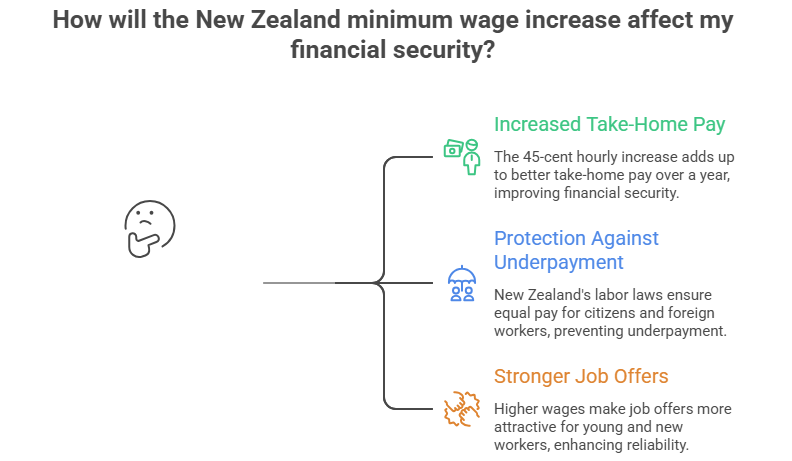
- The revised minimum wage reflects a 45-cent-per-hour increase, amounting to an approximate 1.9% increase.
- New Zealand’s updated wage rate will affect more than 122,500 foreign workers worldwide.
- The government will also revise the training and starting-out wages proportionally by $19.16 per hour.
*Want to apply for a New Zealand work visa? Let Y-Axis guide you with the process.
New Zealand’s Minimum Wage Hike Will Be Effective from April 1, 2026
New Zealand's minimum wage will increase to $23.95 per hour from April 1, 2026, benefiting Indians and other overseas workers across diverse sectors such as hospitality, retail, agriculture, and caregiving. Another advantage is that the New Zealand Minimum Wages Law applies to all professionals, whether overseas or local. Employers in the country must pay the minimum wage, irrespective of the worker's job role or nationality, to protect against underpayment.
According to the annual wages review, there will also be an increase in training and starting-out wages to $19.16 per hour to support freshers across all industries in the country. While the immigration rules remain unchanged, the latest minimum wage hike makes job offers more attractive and reliable for foreign workers.
Also, read…
New Zealand Processes 1 Million+ Visas in 2025 with Faster Approvals – Apply Now!
How does the Recent Minimum Wage Update in New Zealand Affect Indians Workers in New Zealand?
New Zealand’s decision to raise the minimum wage to $23.95 per hour from April 1, 2026, will significantly affect Indians planning to work in the country. The updated minimum wage requirement reinforces the country’s commitment to fair pay and provides reliable employment opportunities not only for local workers but also for the overseas workforce.
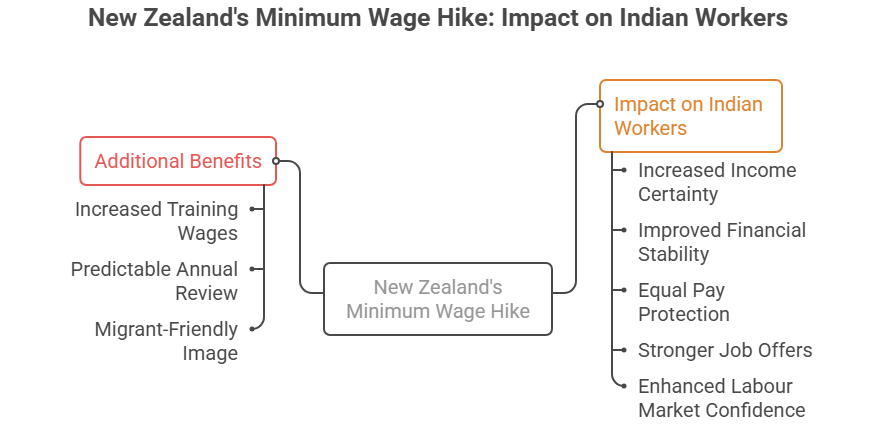
The minimum wage update can affect Indian workers in New Zealand in the following ways:
- Indian workers are actively engaged in hospitality, caregiving, agriculture, construction, logistics, and customer support, where minimum wage plays a significant role in sustaining overall income.
- Higher wages will increase monthly income, helping maintain financial stability and cover lifestyle costs.
- Migrant workers are eligible for equal income hikes under the revised minimum wage laws, encouraging equal pay protection.
- Employers must comply with the hiked minimum wage, creating reliable, financially stable job offers.
- While work visa rules for Indians migrating to New Zealand remain unchanged, the higher wage assurance will boost employment confidence.
Additional benefits under the revised minimum wages law:
- Increased training and starting-out wages to encourage freshers and trainees to work in New Zealand.
- A predictable annual wage review system to plan long-term career goals in the country.
- Reinstating New Zealand’s status as a worker-friendly destination for immigrants.
Also, read…
Top in-demand occupations in New Zealand
How Can Job Seekers Plan Their Next Move to Work in New Zealand
With New Zealand introducing its newly hiked minimum wage of $23.95 per hour, it is a good time for international job seekers to migrate to the country. The revised wages indicate New Zealand’s stable labour market, transparent employment policies, and continued high demand for foreign professionals across multiple sectors.
For overseas workers, including Indians already in New Zealand, the latest rate hikes will ensure greater financial stability and an improved lifestyle. Those planning to relocate can consider the job market in New Zealand, which values fair pay and worker rights.
If you are planning to work in New Zealand, it is vital to stay updated about:
- Job opportunities in high-demand sectors.
- Job offers that meet wage and visa requirements.
*Are you looking for step-by-step assistance with overseas immigration? Contact Y-Axis, the world’s No. 1 overseas immigration consultancy!
For recent immigration updates, check out the Y-Axis News Page!
FAQs
What is the new minimum wage announced by New Zealand?
New Zealand has announced an increase in its adult minimum wage following the government’s annual wage review. From April 1, 2026, the adult minimum wage will rise to $23.95 per hour, up from the current rate of $23.50 per hour. This change represents a 45-cent hourly increase, aimed at supporting workers amid rising living costs while maintaining economic balance. The revised wage will apply nationwide and cover all eligible workers across sectors. The announcement reinforces New Zealand’s commitment to fair pay, predictable wage growth, and strong labour protections for both local and migrant workers.
Who announced the minimum wage increase in New Zealand?
The minimum wage increase was announced by New Zealand’s Workplace Relations and Safety Minister as part of the government’s annual minimum wage review process. This review considers multiple factors, including inflation, cost-of-living pressures, business sustainability, and overall economic conditions. The government uses this annual assessment to ensure wages remain fair and aligned with economic realities. The announcement reflects New Zealand’s long-standing policy of regularly reviewing and adjusting minimum wages to protect workers while ensuring employers can continue to operate sustainably in a changing labour market.
How much is the minimum wage increase in percentage terms?
The newly announced increase of 45 cents per hour represents an approximate 1.9% rise from the current minimum wage of $23.50 per hour. While the increase is modest, it provides a steady improvement in earnings for minimum wage workers. The government has taken a balanced approach to ensure the increase supports low-income earners without placing excessive pressure on businesses. Percentage-based increases are reviewed annually to keep wages aligned with inflation and broader economic trends, ensuring gradual but consistent income growth for workers.
Who will benefit from the minimum wage hike?
Approximately 122,500 workers across New Zealand are expected to benefit directly from the minimum wage increase. These workers are primarily employed in sectors where minimum wage roles are common, such as hospitality, retail, cleaning services, agriculture, caregiving, and entry-level service positions. Many young workers, part-time employees, and migrant workers fall within this group. The wage hike is intended to provide better income stability for these workers and help them cope with rising living expenses while reinforcing fair pay standards across the labour market.
When will the new minimum wage come into effect?
The revised adult minimum wage of $23.95 per hour will officially come into effect on April 1, 2026. From this date, all employers in New Zealand must ensure eligible workers are paid at least the updated minimum wage. The timing aligns with New Zealand’s standard annual wage adjustment cycle, giving employers sufficient time to prepare for the change. Workers can expect the new rate to reflect in their wages from April 2026 onwards, provided they are covered under minimum wage regulations.
Will training and starting-out wages also increase?
Yes, training and starting-out wages will also increase proportionally in line with the adult minimum wage. From April 2026, these wages will rise to $19.16 per hour, maintaining the existing percentage relationship with the adult minimum wage. Training and starting-out wages typically apply to younger workers or those entering structured training programmes. The proportional increase ensures fairness, supports skill development, and helps new entrants to the workforce earn better wages while gaining experience and qualifications.
Does the minimum wage increase apply to migrant workers in New Zealand?
Yes, the minimum wage increase applies equally to migrant workers, including those holding valid New Zealand work visas. Labour laws in New Zealand require employers to pay migrant workers at least the same minimum wage as citizens and residents. From April 2026, migrant workers must be paid no less than $23.95 per hour, or the wage specified in their employment contract, whichever is higher. This ensures equal pay protection and prevents wage discrimination based on nationality or visa status.
How does this wage hike impact Indians planning to work in New Zealand?
For Indians planning to work in New Zealand, the minimum wage increase improves earning potential, particularly in entry-level and service-sector jobs. Higher wages can provide better financial stability, help cover living expenses, and improve overall quality of life. While the wage hike does not directly change immigration rules, stronger wage levels can enhance job offers used for work visa applications. This makes New Zealand an attractive destination for Indian workers seeking fair pay, transparent labour laws, and long-term overseas career opportunities.
Will this minimum wage increase affect work visa eligibility?
The minimum wage increase does not directly change New Zealand’s work visa eligibility criteria. However, it may indirectly benefit applicants by helping employers meet salary-related requirements for certain work visas. Higher wage levels strengthen job offers and ensure better compliance with immigration and labour regulations. For applicants, this can improve confidence in employment conditions and long-term financial sustainability while working in New Zealand, even though visa rules themselves remain unchanged.
Why does New Zealand review minimum wages annually?
New Zealand conducts annual minimum wage reviews to ensure wages remain aligned with inflation, cost-of-living changes, and economic conditions. The review process balances worker welfare with employer affordability, aiming to protect low-income earners while supporting business sustainability. Regular reviews provide predictability for both workers and employers and help maintain fair pay standards across the labour market. This structured approach has made New Zealand’s wage system transparent, stable, and worker-friendly over the long term.
Tags:
NZ immigration news
Migrate to New Zealand
work in New Zealand
minimum wage in New Zealand
hourly wages in New Zealand
wage reform New Zealand
New Zealand minimum wage increase
in demand jobs in New Zealand
average salary in New Zealand
Share
Options for you by Y-Axis

Get it on your mobile

Get News alerts

Contact Y-Axis
Latest Article
Related Post
Trending Article

Posted On March 20 2026
New Zealand introduces pathway visa for smoother student entry. Apply now!