


Posted on May 26 2026
New Zealand Mandates English Language For Work Visa Applicants From June 2026

By , Editor & Director
Updated May 30 2026
Highlights: New Zealand to Expand English Language Rules For Work Visa Applicants From June
- New Zealand has officially announced new English language requirements for work visa applicants, effective from June.
- The country has expanded the minimum language criteria under the Accredited Employer Work Visa to more mid-skilled jobs.
- The new language rules will be applicable for ANZSCO and National Occupation List skill levels 3, in addition to skill levels 4 and 5.
- The revised language rules will also apply to the Global Workforce Seasonal Visa and Peak Seasonal Visa AEWV.
- The New Zealand government is set to expand the Active Investor Growth category from 1 June to include philanthropic contributions as 20% of the total investment.
*Want to apply for New Zealand work visa? Let Y-Axis guide you with the process.
New Zealand To Mandate New English Test Rules Across Major Skilled Work Visa pathways from June, 2026
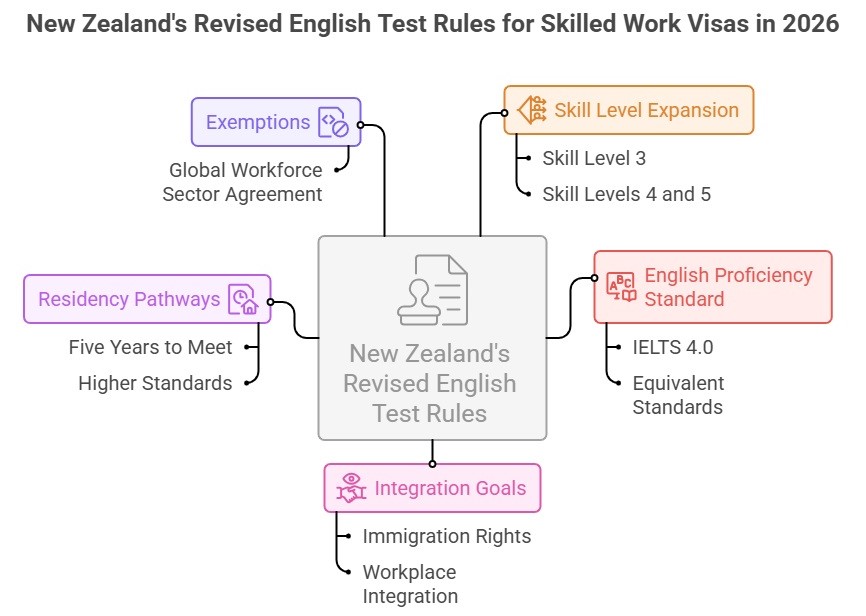
New Zealand is all set to expand its minimum English language requirement under the Accredited Employer Work Visa for more mid-skilled jobs starting June 2026. The English language rules, which currently apply to skill levels 4 and 5, will now be extended to ANZSCO and National Occupation List skill level 3 roles as well.
New Zealand’s move aims to help foreign workers understand their immigration rights and rules to effectively integrate into workplaces and communities. Applicants will still need to meet the baseline IELTS 4.0 standard or an equivalent English proficiency level.
The highlights of New Zealand’s revised language rules for 2026 are as follows:
- English language rules will now apply to skill level 3 AEWV roles.
- The requirement already exists for skill levels 4 and 5.
- Applicants must meet IELTS 4.0 or an equivalent standard.
- The change comes ahead of two new skilled residence pathways launching in August.
- Workers aiming for long-term residence will have up to five years to meet the higher English standards required for residency.
- The rule will not apply to Global Workforce Sector Agreement roles.
Also, read...
New Zealand Opens 5,000 Work Visa Opportunities for Indian Professionals in Landmark FTA Deal
How do the Updated Language Policies Affect Foreign Applicants Migrating to New Zealand?
The revised English language policy is expected to make the work visa process more streamlined for foreign applicants across mid-skilled jobs in New Zealand. Applicants under skill level 3 roles may now need to provide IELTS 4.0 or equivalent English test scores, adding an extra eligibility requirement before securing an Accredited Employer Work Visa.
Here is what the updated language policies mean to NZ work visa applicants:
- More mid-skilled foreign workers will now need proof of English proficiency.
- Candidates may have to take IELTS or equivalent language tests before applying for a work visa.
- Workers with better English skills may find it easier to integrate into workplaces and communities.
- Meeting the basic English standard could also support future residence applications in New Zealand.
*Are you looking for step-by-step assistance with overseas immigration? Contact Y-Axis, the world's No. 1 overseas immigration consultancy!
For recent immigration updates, check out the Y-Axis News Page!
FAQs
What is New Zealand’s new English language rule for work visa applicants?
New Zealand has expanded its English language requirement under the Accredited Employer Work Visa (AEWV) to include more mid-skilled jobs. From next month, applicants applying for ANZSCO and National Occupation List skill level 3 roles must demonstrate basic English proficiency through IELTS 4.0 or an equivalent test. Previously, the rule mainly applied to skill levels 4 and 5. The government says the policy is designed to help foreign workers understand workplace rights, communicate effectively, and integrate into New Zealand society. The update is also linked to upcoming skilled residence pathways expected to launch later this year.
Which jobs will now require English proficiency under the AEWV?
The revised policy will apply to ANZSCO and National Occupation List skill level 3 occupations under the Accredited Employer Work Visa. These are considered mid-skilled roles and include jobs across industries such as healthcare support, hospitality supervision, construction, trades, logistics, and administration. Workers applying for these roles may now need to submit proof of English ability before visa approval. The change significantly expands the number of foreign applicants affected by language testing rules and aligns the policy with New Zealand’s long-term skilled migration and residency goals.
What IELTS score is required for New Zealand’s work visa?
Foreign applicants applying under the updated AEWV policy must meet a minimum IELTS score of 4.0 or an equivalent English language standard. IELTS 4.0 represents basic, everyday English skills suitable for common workplace and social situations. Applicants can also use approved alternatives such as TOEFL, PTE, or Cambridge English qualifications if accepted by New Zealand immigration authorities. The requirement is intended to ensure migrants can communicate effectively with employers, understand safety instructions, and adapt more easily to life in New Zealand while working toward possible residence pathways.
How will the new English rules affect foreign workers moving to New Zealand?
The updated English language requirement may make the visa process more demanding for some foreign workers, especially applicants from non-English-speaking countries. Applicants may now need additional preparation time, coaching, and testing expenses before applying for jobs in New Zealand. However, candidates with stronger English skills could benefit from better employment opportunities, smoother workplace communication, and improved chances of securing permanent residency later. The policy may also encourage employers to prioritize applicants who already meet English standards, making language proficiency an important factor in job selection.
Will the new English requirement affect New Zealand PR pathways?
Yes, the revised English language rule is closely linked to New Zealand’s future skilled residence pathways. Immigration officials have stated that workers entering the country in mid-skilled roles with long-term residency goals should possess basic English communication skills from the beginning. While the initial work visa requires IELTS 4.0 or equivalent, applicants may need to achieve higher English standards later when applying for permanent residency. The government believes this approach will help migrants integrate better socially, professionally, and economically within New Zealand communities.
Are there any exemptions from New Zealand’s English language requirement?
Yes, certain categories of workers may still be exempt from the revised English language rules. According to the announcement, the policy will not apply to Global Workforce Sector Agreement roles. Additional exemptions may also depend on occupation type, employer agreements, or nationality-based arrangements recognized by New Zealand immigration authorities. Applicants should carefully review official visa guidelines before applying. Consulting licensed immigration advisers or checking the latest immigration updates can help foreign workers understand whether their specific role requires IELTS or another approved English language qualification.
Can applicants use alternatives to IELTS for New Zealand work visas?
Yes, New Zealand immigration authorities generally accept several English language tests apart from IELTS. Applicants may be able to submit scores from TOEFL iBT, PTE Academic, Occupational English Test, or Cambridge English exams depending on visa requirements. Each test has its own scoring equivalency to IELTS 4.0. Choosing an accepted alternative may help applicants who are more comfortable with different test formats. However, candidates should verify the latest approved tests and score requirements directly from Immigration New Zealand before submitting their visa application.
Why is New Zealand increasing English requirements for work visas?
The New Zealand government says the policy aims to improve communication, worker protection, and social integration for migrants entering the country. Officials believe that basic English skills help foreign workers understand employment contracts, workplace safety guidelines, and their legal rights. The change also supports New Zealand’s long-term immigration strategy by preparing migrants for future residence pathways and encouraging stronger participation in local communities. Expanding the rule to mid-skilled roles reflects the growing number of AEWV applicants working in occupations where communication plays an important role.
How can foreign applicants prepare for New Zealand’s IELTS requirement?
Applicants planning to work in New Zealand should begin preparing for IELTS or equivalent English tests as early as possible. Online practice platforms, coaching institutes, YouTube tutorials, and mock tests can help improve listening, reading, writing, and speaking skills. Since the required score is IELTS 4.0, candidates mainly need basic conversational and workplace English proficiency. Preparing in advance can reduce visa delays and improve overall application confidence. Applicants should also keep their test certificates valid, as immigration authorities may require recent scores during the visa application process.
Is New Zealand still a good destination for skilled foreign workers?
Despite stricter English language rules, New Zealand remains a popular destination for skilled foreign workers due to its strong job market, quality of life, healthcare system, and long-term residency opportunities. Sectors such as healthcare, construction, engineering, IT, hospitality, and agriculture continue to seek overseas talent. The updated language policy may increase competition, but applicants with relevant skills and basic English proficiency can still benefit from employment opportunities and future residence pathways. Workers who prepare early for visa requirements may improve their chances of securing jobs and settling successfully in New Zealand.
📞 Call: +91-7670800000
📩 Email: info@y-axis.com
🌐 Visit: https://www.y-axis.com
Tags:
New Zealand work visa
work in New Zealand
New Zealand immigration updates
migrate to New Zealand
overseas immigration
New Zealand Accredited Employer Work visa
National Occupation List
New Zealand immigration
new English language requirement in Ne
Share
Options for you by Y-Axis

Get it on your mobile

Get News alerts

Contact Y-Axis
Latest Article
Related Post
Trending Article

Posted On October 08 2026
Austria eases immigration rules for foreign workers with faster processing and greater flexibility. Check Your Eligibility!