

Posted on December 23 2025
New Zealand to Ease Work Visas for Indians Under FTA — Check If You’re Eligible

By , Editor
Updated December 24 2025
Highlight: India–New Zealand FTA Eases Work Visas & Student Mobility for Indians
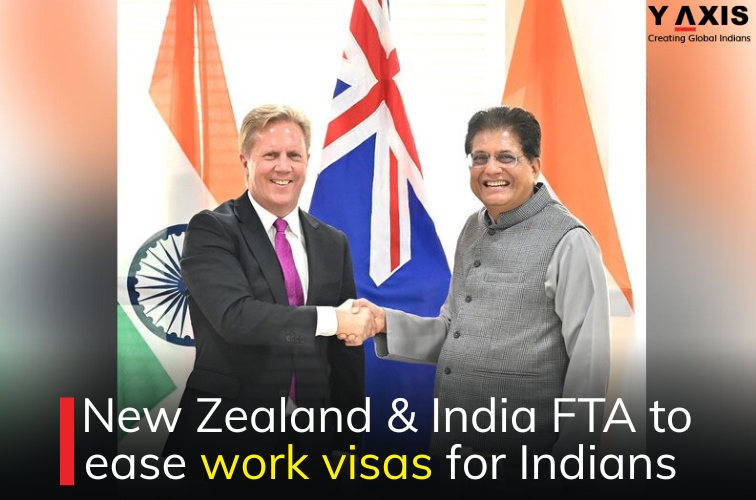
- India and New Zealand introduced a Free Trade Agreement to expand study and work opportunities for Indians.
- Through the FTA, Indians can apply for a Temporary Entry Visa for Employment, which will allow up to 5,000 professionals to migrate to New Zealand.
- Additionally, more than 1,000 temporary work visas will be issued each year to Indian professionals applying to skilled shortage sectors, including healthcare, IT, engineering, and technology.
- Under the agreement, Indian bachelor's and master's students with a STEM background are eligible for 3 years of work visa validity post study completion and 4 years of research for PhD scholars.
- The India-New Zealand FTA program also introduces Working Holiday Visas for Indians aged between 18 and 30 to work in New Zealand for up to 12 months, and allows students to work up to 20 hours per week.
*Want to work in New Zealand? Let the Y-axis guide you with the process.
India-New Zealand FTA Agreement: Easy access for Indians to study and work in New Zealand
According to the latest India-New Zealand Free Trade Agreement (FTA), the countries have announced a strong bilateral relationship centered around talent mobilization. Under the agreement, New Zealand will demonstrate flexibility in its work and study norms for Indians. The FTA will allow young working professionals and recent graduates from a STEM background to explore opportunities in New Zealand's labour market and education system.
The agreement confirms the growing need for skilled workers in New Zealand and the demand for young talent. Once FTA discussions resumed in March 2025, the agreement aimed to improve entry and long-term stay provisions by facilitating consistent work and study opportunities in New Zealand for Indians.
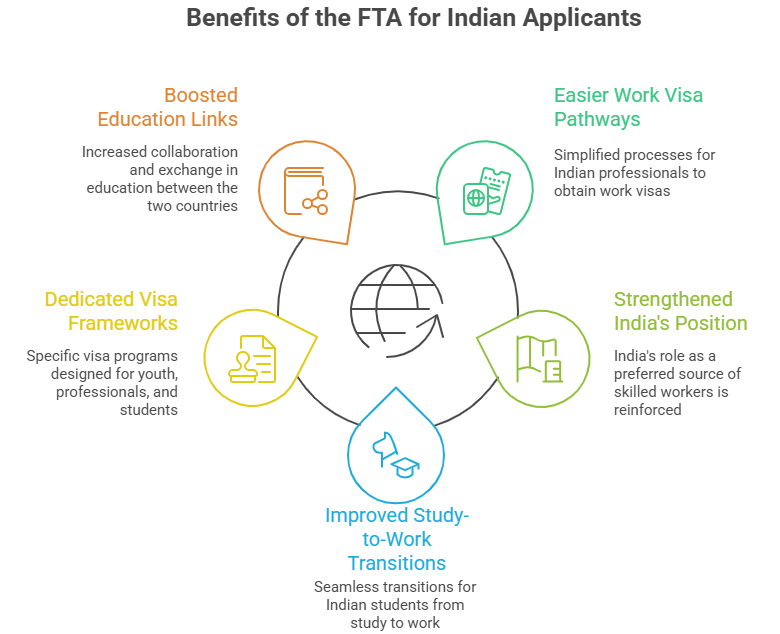
Benefits of FTA for Indians in New Zealand:
- New Zealand opens up new pathways for Indians via job roles in STEM sectors.
- The FTA reinforces India's role as a source of skilled and semi-skilled workers.
- Indian students in New Zealand will benefit from the post-study work flexibility through the work-study transition.
- Additionally, the dedicated framework visa will provide greater access for you, professionals, and students.
- The India-New Zealand FTA is estimated to enhance bilateral relations between the countries through increased employment and educational opportunities.
Also, read…
New Zealand to Increase Visa Application Fees from January 2026 — Apply Before the Hike!
FTA Announces New Temporary Employment Entry Visa for Indians
The new temporary employment entry visa for New Zealand will significantly expand work opportunities for Indians. It provides professionals with access to new and existing work visa options for employment in skilled sectors. Other existing work visa options in New Zealand include:
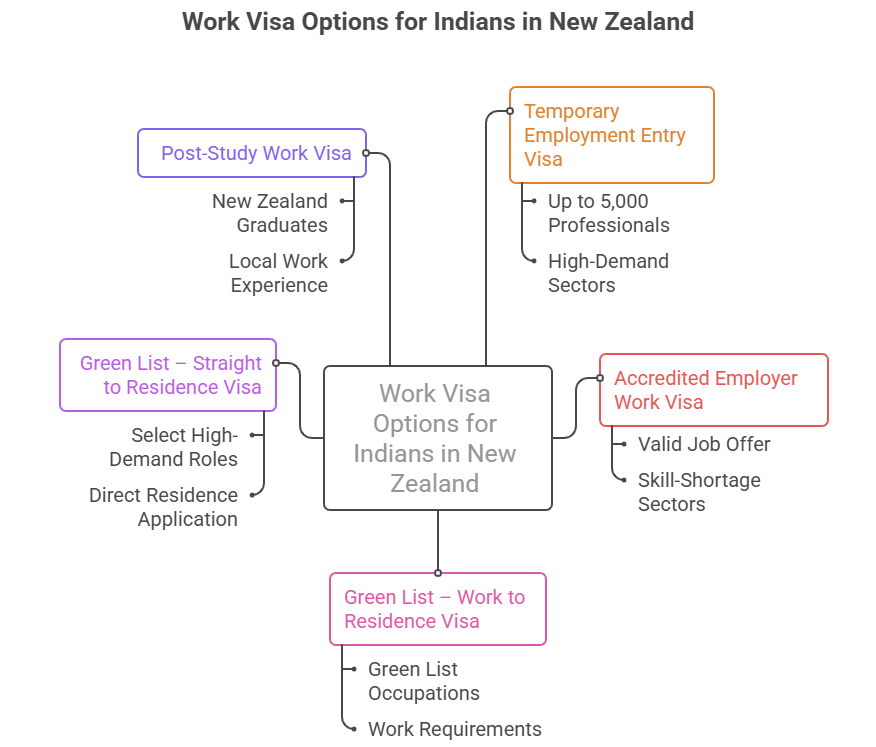
Other existing work visa options in New Zealand include:
- Accredited Employer Work Visa (AEWV)
- Accredited Employer Work Visa (AEWV)
- Accredited Employer Work Visa (AEWV)
- Post-Study Work Visa
Note: These existing visa options, combined with the newly introduced FTA-approved Temporary Employment Entry visa, allow Indian professionals and students to seek booming career opportunities in New Zealand.
*Are you looking for step-by-step assistance with overseas immigration? Contact Y-Axis, the world's No. 1 overseas immigration consultancy!
For recent immigration updates, check out the Y-Axis News Page!
FAQs
1. What changes has New Zealand announced for Indian workers under the FTA?
New Zealand has proposed easing work visa rules for Indian professionals as part of the ongoing India–New Zealand Free Trade Agreement negotiations. These changes aim to improve labour mobility by making visa pathways more flexible, faster, and aligned with workforce needs. The focus is on addressing skill shortages in key sectors while enabling Indian professionals to access job opportunities more easily. Although final details will be confirmed once the FTA is signed, the move signals New Zealand’s intent to attract skilled Indian talent and strengthen bilateral economic cooperation.
2. How will the New Zealand–India FTA impact work visa opportunities for Indians?
The FTA is expected to improve work visa access for Indians by introducing smoother mobility provisions, skill recognition, and simplified hiring mechanisms. Indian professionals may benefit from easier employer sponsorship, reduced administrative hurdles, and better alignment between qualifications and job roles. While it does not create automatic work rights, the agreement aims to make it simpler for Indians to secure lawful employment in New Zealand, particularly in sectors experiencing chronic labour shortages.
3. Which sectors in New Zealand will benefit most from eased work visas for Indians?
Sectors facing persistent labour shortages are expected to benefit the most from eased visa rules. These include information technology, engineering, healthcare, construction, agriculture, education, hospitality, and infrastructure-related services. Indian professionals are already well represented in many of these fields, and relaxed mobility provisions will help New Zealand employers recruit skilled workers more efficiently. This sector-focused approach supports economic growth while addressing workforce gaps in critical industries.
4. What student mobility benefits are proposed for Indian students under the FTA?
The FTA proposes measures to improve student mobility for Indian students by simplifying study-related movement and strengthening education-to-work pathways. This includes better recognition of Indian qualifications, enhanced cooperation between educational institutions, and clearer post-study work options. The goal is to make New Zealand a more attractive study destination for Indian students while ensuring graduates can transition smoothly into the local workforce after completing their education.
5. Will Indian students get better post-study work opportunities in New Zealand?
Yes, post-study work opportunities are a key focus of the proposed changes. Indian students graduating from New Zealand institutions may gain improved access to post-study work visas, allowing them to gain local work experience. This experience can enhance employability and open pathways to skilled work visas or residence programs. While eligibility criteria will still apply, the FTA aims to make the transition from study to work more predictable and accessible.
6. Does the FTA include pathways to permanent residency for Indian professionals?
The FTA does not directly grant permanent residency, but it is expected to strengthen work visa pathways that can lead to residence over time. Indian professionals working in skilled occupations may benefit from clearer progression routes under New Zealand’s existing residence programs. By improving access to lawful employment and long-term work visas, the agreement indirectly supports settlement opportunities for eligible skilled migrants.
7. How will employers in New Zealand benefit from relaxed visa rules for Indians?
New Zealand employers will benefit from access to a larger and more diverse talent pool, particularly in high-demand sectors. Simplified visa processes can reduce hiring delays, improve workforce planning, and enhance business productivity. Indian professionals bring strong technical and professional skills, and easier mobility helps employers address labour shortages more effectively while supporting economic expansion and innovation.
8. When are the New Zealand–India FTA visa changes expected to come into effect?
The visa-related changes will only take effect once the Free Trade Agreement negotiations are completed and the agreement is formally implemented. While discussions are ongoing, both governments have indicated strong momentum toward finalisation. Exact timelines will depend on negotiation outcomes, legal approvals, and policy implementation schedules announced by New Zealand immigration authorities.
9. Will Indian professionals still need employer sponsorship under the new rules?
Yes, employer sponsorship is expected to remain a requirement for most work visa categories. However, the FTA aims to simplify sponsorship procedures and reduce compliance complexity. This could make it easier for New Zealand employers to hire Indian professionals and for workers to secure sponsorship without unnecessary delays. Sponsorship will continue to ensure jobs are genuine and aligned with labour market needs.
10. How does this FTA make New Zealand more attractive for Indian migrants?
The FTA enhances New Zealand’s appeal by offering better access to jobs, smoother student-to-work transitions, and improved long-term prospects. Combined with strong demand for skilled workers, a high quality of life, and a transparent immigration system, these changes position New Zealand as a competitive destination for Indian professionals and students seeking international career and education opportunities.
Tags:
New Zealand visas
New Zealand student visa
New Zealand work visa
work in New Zealand
Study in New Zealand
New Zealand work visa for Indians
New Zealand student visa for Indians
India-New Zealand FTA
Indian student mobility
FTA
Share
Options for you by Y-Axis

Get it on your mobile

Get News alerts

Contact Y-Axis
Latest Article
Related Post
Trending Article

Posted On April 02 2026
Canada Introduces Eight Major Immigration Changes from April 1, Impacting PR Applicants and Newcomers. Check Your Eligibility Now!