


Posted on January 29 2026
India–EU Trade Pact Opens New Pathways for Students and Skilled Professionals. Apply now!

By , Editor
Updated February 05 2026
Highlights: The India-EU Trade Pact To Offer New Pathways to Indian Students and Professionals in Europe
- The new India-EU trade pact strengthens economic ties between the two countries and establishes immigration pathways for Indian workers and students in Europe.
- The 27 nations of Europe offer large-scale career and education opportunities due to a diverse workforce of more than 450 million people.
- The acute labour shortage in Europe due to an ageing population has created an increasing demand for foreign workers to fill the workforce gap.
- Indian professionals are in high demand in research-driven IT, engineering, healthcare, and sustainable energy sectors.
- The latest free trade agreement between India and Europe encourages mutual recognition of qualifications to build a skill-based mobility framework for faster entry into the EU job market.
*Want to migrate to Europe? Sign up wth Y-Axis for end-to-end assistance.
India-EU Trade Pact to Boost Mobility of Indian Skilled Workers and Students to Europe
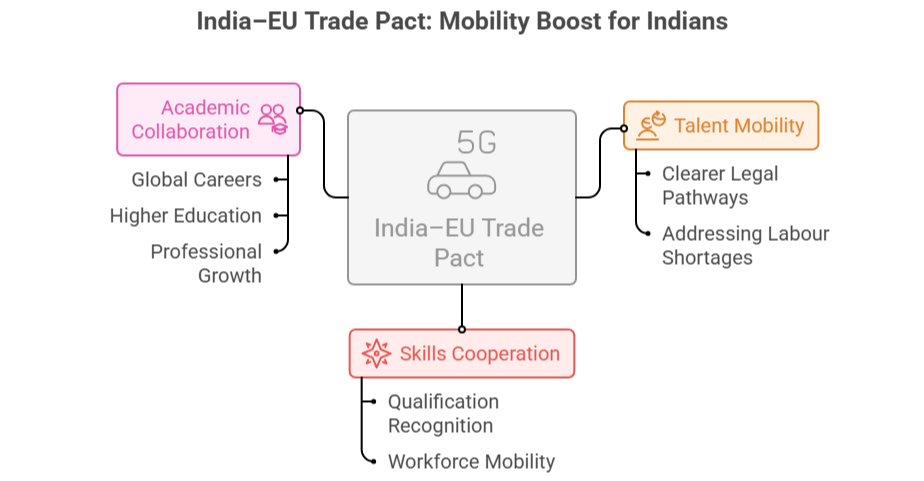
India and the European Union’s free trade pact advances towards a comprehensive mobility pathway for both Indian workers and students with thriving educational and job opportunities in Europe. Apart from investment and commerce, the recent trade pact mainly focuses on structuring talent mobility, skilled cooperation, and academic growth, directly impacting international students and foreign professionals.
The ageing population in Europe is creating a significant labour shortage across diverse sectors, compelling governments to seek skilled talent from India. The trade agreement will create legal pathways for Indian professionals, students, and young workers to access the vast job and educational opportunities in Europe. Through structured qualification recognition and workforce mobility, Indians can migrate to Europe to seek global career development.
*Want to study in Europe? Let Y-Axis guide you with the process.
India-EU Trade Agreement: New Opportunities for Indian Students/Professionals
The India-EU trade pact is not limited to policy discussions and significantly benefits Indian professionals and students migrating to Europe to work or study. The benefits of the India-EU trade pact for Indians are as follows:
- Diverse university partnerships, joint degree programmes, and smoother academic transition across EU countries.
- A greater focus on education-to-work pathways positions Europe as one of the best destinations for building a global career.
- Indian graduates with a European degree will find better employer engagement and hiring prospects.
- Skilled professionals can access streamlined immigration pathways as Europe aligns with India to create a more structured mobility framework.
- Demand for Indian professionals is higher in sectors such as IT, engineering, healthcare, manufacturing, AI, green energy, and sustainability.
- Mutual recognition of qualifications can reduce re-licensing complications and speed up workforce acquisition.
Also, read…
Italy to grant 500,000 work visas in 2026-28. Apply now!
Why is Europe Seeking Indian Professionals and Students?
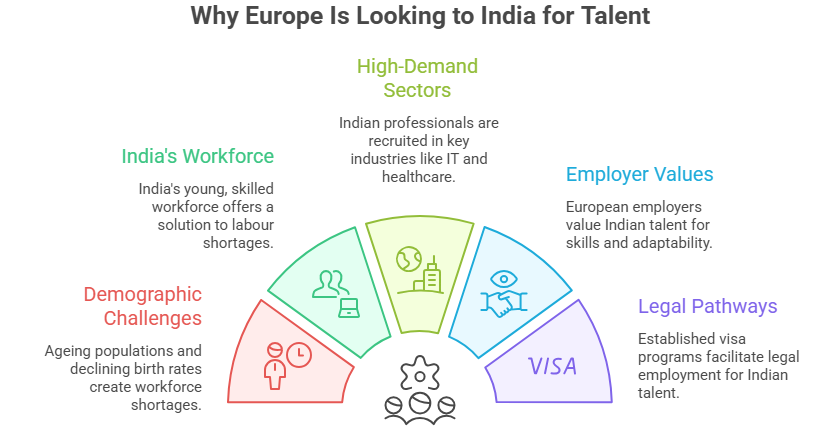
Europe is inclined to turn to India to address the long-term workforce shortage driven by the ageing population in EU nations. Other factors contributing to skilled labour shortage include declining birth rates and shrinking domestic labour pools, which create high demand for qualified and semi-skilled foreign workers to sustain economic growth and innovation. The European countries are opening their job market to Indian talent for the following reasons:
- Persistent labour shortage in the upcoming decades due to retiring workers and limited local replacements.
- India has many young, skilled workers and students with high technical expertise to contribute to the global competitive workforce.
- Indian professionals are in high demand across research and development sectors like IT, engineering, healthcare, manufacturing, AI, and renewable energy.
- European employers favour Indian professionals for their strong English proficiency, adaptability, and experience with global standards.
- Indians can migrate to Europe for work and study through faster immigration pathways such as the EU Blue Card, national skilled work visas, and post-study work schemes.
*Are you looking for step-by-step assistance with abroad immigration? Contact Y-Axis, the world’s No. 1 international immigration consultancy!
For recent Schengen immigration updates, check out the Y-Axis Schengen News Page!
FAQs
What is the India–EU trade pact, and why is it important for students and professionals?
The India–EU trade pact is a proposed comprehensive agreement aimed at strengthening economic cooperation between India and the European Union. Beyond trade and investment, it focuses strongly on mobility, skills recognition, and easier movement of professionals and students. For Indians, this pact could improve access to EU job markets, simplify work visas, and promote student exchanges. It reflects Europe’s growing need for skilled talent and India’s strong workforce advantage, making it a significant step toward structured and legal migration opportunities.
How will the India–EU trade pact benefit Indian students planning to study in Europe?
Indian students are expected to benefit through expanded academic partnerships, easier student mobility, and improved post-study work opportunities across EU member states. The pact supports mutual recognition of qualifications, joint degree programs, and industry-linked education. This can help students transition smoothly from education to employment in Europe. Enhanced mobility frameworks may also lead to clearer visa pathways and better internship or research opportunities, making Europe a more attractive and predictable destination for Indian students.
Which professionals are likely to benefit most from the India–EU trade agreement?
The trade pact is expected to favor skilled professionals in sectors where Europe faces talent shortages. These include IT, engineering, healthcare, renewable energy, manufacturing, AI, data analytics, and research-based roles. Indian professionals with internationally recognized qualifications, work experience, and language skills may find increased demand. The agreement emphasizes legal mobility and skill-based access, which could make it easier for qualified Indian professionals to secure EU work permits and long-term employment opportunities.
Will the India–EU trade pact make it easier to get work visas in Europe?
While the pact does not replace national visa systems, it aims to streamline processes by promoting transparent, skill-based mobility frameworks. This could result in faster processing, clearer eligibility rules, and better coordination between India and EU countries. Some EU nations may align their work visa policies more closely with the agreement, making it easier for Indian professionals to apply through legal channels. Overall, the pact signals improved access rather than automatic visa approval.
Does the India–EU trade pact include mutual recognition of qualifications?
Yes, one of the key objectives of the trade pact is the mutual recognition of professional qualifications. This is particularly relevant for regulated professions such as engineering, healthcare, and technical fields. Recognition can reduce re-licensing barriers and shorten the time required to enter the European workforce. For Indian students and professionals, this could mean fewer credential assessments and smoother career transitions. However, implementation will depend on individual EU member states and regulatory bodies.
How does this trade pact impact job opportunities in the European Union?
The EU faces aging populations and labor shortages across multiple sectors. The trade pact addresses this by enabling structured access to skilled Indian talent. For job seekers, this means increased demand, more employer openness to hiring from India, and potential bilateral hiring programs. Indian professionals may see more job listings, recruitment drives, and employer-sponsored visas. The pact supports long-term workforce planning in Europe while creating global career opportunities for Indians.
Can Indian students use this agreement to stay back and work in Europe after graduation?
The trade pact supports smoother education-to-employment pathways, which can strengthen post-study work prospects. While stay-back rules differ by country, the agreement encourages EU nations to retain international graduates in high-demand sectors. Indian students graduating from European institutions may benefit from clearer post-study work options, better employer access, and improved long-term residency pathways. This makes Europe more competitive with countries like Canada and Australia for Indian students.
Is the India–EU trade pact applicable to all EU countries?
The agreement is negotiated at the EU level, but implementation depends on individual member states. While overarching principles apply across the EU, visa rules, job markets, and residency policies will still vary by country. Some countries may adopt faster or more flexible mobility measures than others. Indian students and professionals should evaluate country-specific opportunities within the EU framework to identify where the pact’s benefits are most accessible.
Does the trade pact offer long-term settlement or PR opportunities in Europe?
The pact primarily focuses on mobility for study and work, not direct permanent residency. However, improved access to legal employment and skill-based visas can indirectly support long-term settlement goals. Many EU countries already offer PR or long-term residence options after several years of work. By easing initial entry and job access, the pact strengthens the pathway toward stable residence and career growth for Indian professionals in Europe.
What should Indian students and professionals do to prepare for opportunities under this pact?
Indian aspirants should focus on building globally relevant skills, recognized qualifications, and strong language proficiency. Researching country-specific visa options, in-demand occupations, and education pathways within the EU is essential. Keeping documents, experience records, and certifications ready will help when mobility rules expand. As the pact evolves, being proactive and informed can help students and professionals take early advantage of emerging opportunities across Europe.
Tags:
EU-India pact
Migrate to Europe
Study in Europe
Work in Europe
India-EU Free Trade Agreement
Indian students abroad
Study abroad
abroad immigration news
Indian students in EU
Indian students in Europe
Share
Options for you by Y-Axis

Get it on your mobile

Get News alerts

Contact Y-Axis
Latest Article
Related Post
Trending Article

Posted On April 02 2026
Canada Introduces Eight Major Immigration Changes from April 1, Impacting PR Applicants and Newcomers. Check Your Eligibility Now!