


Posted on December 29 2025
Finland Updates PR Eligibility and Residency Requirements from January 2026. Check if you qualify!

By , Editor
Updated December 29 2025
Highlight: Finland to update Permanent Residency Rules from January 2026
- Finland will revise its Permanent Residence (PR) rules, effective January 8, 2026, for new applicants.
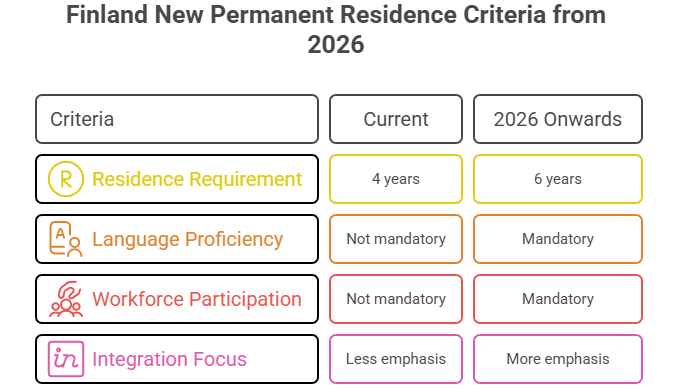
- Foreigners need to spend six years instead of four years to be eligible for a PR Application, according to the new rule.
- To be eligible for a PR application, proficiency in the Swedish and Finnish languages will become a mandatory criterion.
- Employment and income stability shall be considered for strengthening the Finnish workforce.
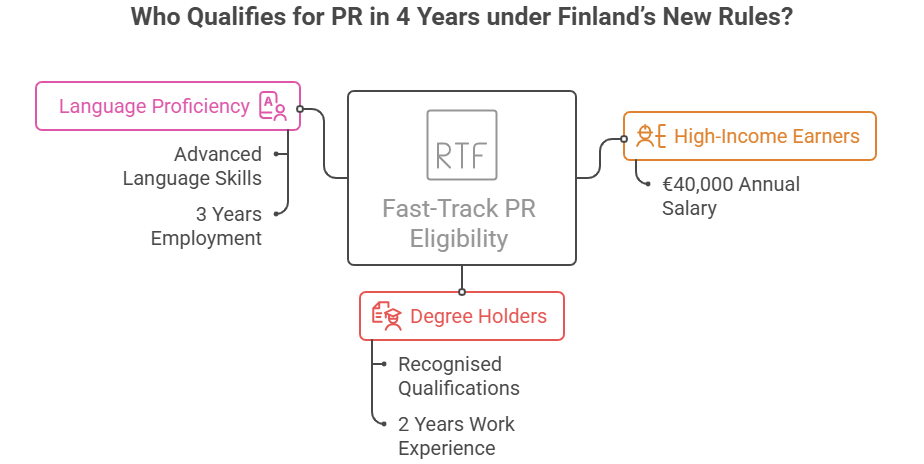
- Existing applicants may still qualify for the current 4-year PR policy if they are high-wage earners (earning € 40,000 or more), highly qualified individuals with Finnish work experience, or children of permanent residents.
*Want to migrate to Finland? Sign up with Y-Axis for end-to-end support with the process.
Finland revises eligibility criteria for PR Applications from January 2026
Under the new PR Rules, effective from January 8, 2026, foreign nationals must spend at least 6 years continuously in Finland to be eligible for a permanent residence permit, instead of the current 4 years. The updated policies aim to introduce integration-centred eligibility criteria, including language proficiency in Swedish and Finnish, along with active engagement in the Finnish workforce.
Details about language tests and benchmarks for qualification, such as minimum score requirements, have yet to be released by Finland. The authorities confirm that the tests will have stricter rules than before, making the current PR system more stringent for applicants. The updated policies encourage active workforce contribution, long-term integration, and social engagement of the foreigners applying for a PR.
Also, read…
Indians Can Secure Finland PR for Just ₹24,800. Apply now!
Is it possible to qualify for PR in 4 Years under Finland’s New Rules?
Existing applicants who have not yet qualified for a 4-year PR approval may still be eligible for this approval with certain fast-track exemptions for graduates and highly qualified individuals with significant Finnish work experience. Furthermore, applicants with strong workforce integration and social engagement may also be exempt from the new six-year PR rule.
Exemptions may apply to:
- High-wage earners (earning a minimum of €40,000) make a significant economic contribution to the Finnish workforce.
- Master's degree holder with at least 2 years of work experience in any Finnish organisation.
- Candidates with advanced Finnish and Swedish proficiency and having at least 3 years of relevant work experience in Finland.
Also, read…
Finland to Welcome English-Speaking Professionals from August 2026
Key takeways about the revised Finland PR Pathway for Indians
The following are the major takeaways about the updated policies for permanent residence permits in Finland for Indian applicants:
- The 6-year criteria will replace the current 4-year PR eligibility as of January 8, 2026.
- Under the new policy, it will become mandatory to be proficient in the Swedish and Finnish languages, which makes early language training crucial for qualifying.
- Stability of job and income range are essential parameters for PR approval under the revised rules.
- Highly skilled Indian professionals can still qualify for the 4-year PR rule based on education, work experience, and language proficiency.
- Candidates nearing their PR eligibility should apply before January 8, 2026, as they can still access the current 4-year criteria.
*Are you looking for step-by-step assistance with overseas immigration? Contact Y-Axis, the world’s No. 1 overseas immigration consultancy!
For recent Schengen immigration updates, check out the Y-Axis Schengen News Page!
FAQs
What new permanent residence rules will Finland implement from January 2026?
From January 2026, Finland will introduce stricter permanent residence rules aimed at improving long-term integration. The new system increases the minimum residence period, introduces mandatory language proficiency requirements, and places greater emphasis on employment history and financial stability. Applicants will be expected to demonstrate that they have actively participated in Finnish society through work, language learning, and limited reliance on social benefits. These changes reflect Finland’s shift toward rewarding skilled, self-sufficient migrants who show a strong commitment to settling and contributing to the country over the long term.
When will Finland’s new permanent residence rules come into effect?
Finland’s revised permanent residence regulations will officially take effect on January 8, 2026. Any permanent residence applications submitted on or after this date will be assessed under the new criteria. Applications filed before this date will continue to be processed under the existing rules, provided they are complete and valid. This transition period gives current residents time to plan ahead, meet eligibility requirements early, or submit applications before the new system comes into force, especially for those close to completing the existing four-year residence requirement.
How long must applicants live in Finland to qualify for permanent residence under the new rules?
Under the new rules, most applicants must complete six years of continuous residence in Finland before becoming eligible for permanent residence. This is an increase from the current four-year requirement. Continuous residence means legally living in Finland without long interruptions and holding valid residence permits throughout the period. The extended timeline is designed to ensure applicants have a deeper connection to Finland, stronger social integration, and a proven employment or income history before being granted permanent status.
Will language skills be mandatory for permanent residence in Finland?
Yes, language proficiency will become a mandatory requirement under the new permanent residence rules. Applicants must demonstrate sufficient knowledge of either Finnish or Swedish, Finland’s official languages. Language skills are considered essential for successful integration, employment opportunities, and participation in everyday life. Proof may be provided through recognised language tests, educational qualifications, or other officially accepted assessments. This requirement encourages migrants to invest in language learning early and supports Finland’s broader goal of social cohesion and workforce integration.
Is employment history required to obtain permanent residence in Finland?
Employment history will play a significant role in permanent residence eligibility under the new system. Applicants are generally required to show at least two years of employment in Finland. This demonstrates financial independence, contribution to the economy, and successful labour market integration. Stable work history may include full-time employment or other qualifying forms of lawful work. The emphasis on employment ensures that permanent residence is granted to individuals who can support themselves and actively contribute to Finnish society over the long term.
Are there faster pathways to permanent residence under the new rules?
Yes, Finland will continue to offer accelerated pathways for certain applicants who meet higher standards. Individuals may qualify for permanent residence after four years instead of six if they meet specific criteria. These may include earning a high annual income, holding a recognised higher education degree combined with work experience, or demonstrating strong language proficiency alongside consistent employment. These faster routes are designed to attract highly skilled professionals and encourage talented individuals to settle permanently in Finland.
How will the new rules affect children applying for permanent residence?
Children will continue to benefit from more flexible rules under Finland’s permanent residence framework. A child may be granted permanent residence without meeting the minimum residence period if their parent or legal guardian already holds permanent residence, EU long-term resident status, or Finnish citizenship. This approach prioritises family unity and ensures children are not disadvantaged by stricter adult requirements. Finland recognises the importance of stability for families and aims to protect children’s rights while maintaining stricter standards for adult applicants.
Will periods of unemployment or social benefits impact eligibility?
Yes, reliance on unemployment benefits or social assistance can affect permanent residence eligibility under the new rules. Applicants who meet work-related criteria must not have received unemployment benefits or social assistance for more than three months during the qualifying period. This condition reinforces Finland’s focus on financial self-sufficiency and economic contribution. While short-term support may be acceptable, prolonged reliance on public assistance could indicate insufficient integration and may lead to application refusal under the revised system.
Do the new permanent residence rules apply to existing applicants?
The new permanent residence rules will apply only to applications submitted on or after January 8, 2026. Applicants who submit their applications before this date will be assessed according to the current rules, even if the decision is made later. This distinction is important for residents nearing eligibility, as submitting early could allow them to qualify under more lenient conditions. Applicants are advised to carefully plan timelines and ensure documentation is complete before submitting.
Why is Finland tightening its permanent residence requirements?
Finland is tightening its permanent residence rules to promote stronger integration and long-term sustainability of its immigration system. The government aims to ensure that permanent residents have sufficient language skills, stable employment, and a proven commitment to Finnish society. By setting higher standards, Finland seeks to balance labour market needs with social cohesion, reduce dependency on welfare systems, and encourage migrants to actively participate in the economy and community before receiving permanent settlement rights.
Tags:
Migrate to Finland
New Finland PR rules
Finland PR
permanent residency in Finland
New PR rules in Finland
Finland Permanent Residence Rules
Language Proficiency Permanent Residence Finland
Finland PR rules
overseas immigration news
Share
Options for you by Y-Axis

Get it on your mobile

Get News alerts

Contact Y-Axis
Latest Article
Related Post
Trending Article

Posted On April 08 2026
New Zealand Funds Transfer Scheme (2026) – Student Visa Proof of Funds Explained