


Posted on April 09 2026
Europe Travel Rules Changing From April 10: New Entry Requirements for Visitors Announced. Check Your Eligibility Now!

By , Editor
Updated April 09 2026
Highlights: Europe to Revise its Travel Rules for International Visitors Effective from April, 2026
- Europe is set to revise its travel rules affecting entry requirements for international visitors.
- European border control is all set for a digital transformation with the full rollout of the Entry/Exit System (EES) effective from April 10, 2026.
- The new digital entry system will replace passport stamping with biometric data collection for non-EU travelers.
- The fully digital Entry/Exit System (EES) will be implemented across all 29 countries to increase efficiency and security.
- The EU has also introduced a Travel to Europe” mobile app in many countries to upload credentials and passport details 72 hours before flying.
*Want to apply for a visit visa? Let Y-Axis guide you with the process.
Europe Introduces Digital Entry-Exit System and New Travel Rules for International Visitors
Europe has updated its travel rules for international visitors, completely digitizing the entry/exit system (EES) across 29 countries. The new travel requirements will be effective from April 10 to increase the efficiency and security of international travel across the Schengen areas.
The new digital EES system will replace passport stamping with biometric registration for non-EU travelers upon arrival.
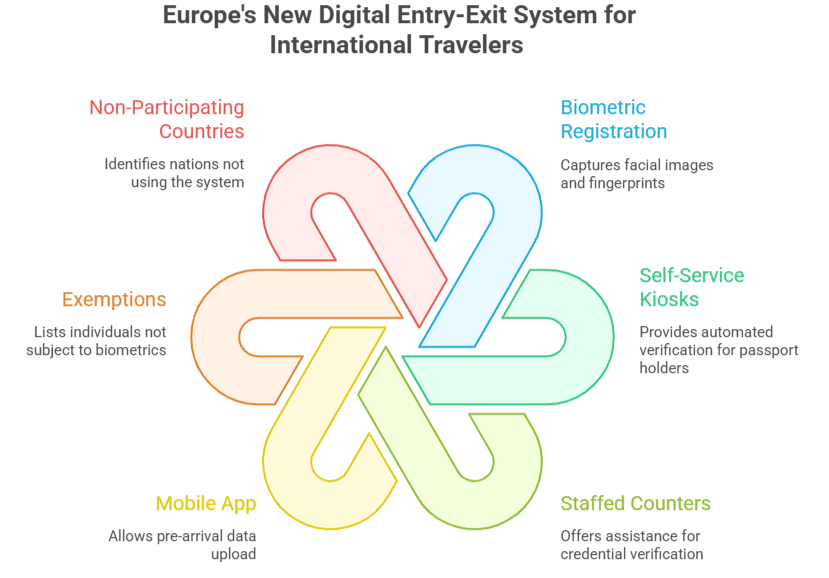
The European Border Control Agency has introduced a biometric procedure for travelers with 90-day visas. The digital system is designed to capture instant biometric data, including facial images and fingerprints, along with passport details.
The digital EES process will apply to all non-EU and non-Schengen nationals, including travelers on short-term business or tourism visits.
The phased roll-out of the digital EES system has helped the country identify travelers with authentic travel permits.
How does the Digital Entry/Exit System (EES) work?
Here is how the new digital EES system is structured to verify information for foreigners visiting European nations:
- No need to register in advance for data verification.
- Data validation and biometric checks will be conducted upon arrival at European airports.
- Self-service kiosks will be available for biometric passport holders.
- Dedicated assistance for verification of credentials at staffed counters.
- Children under 12 do not have to provide fingerprints, but photographs will be taken.
- “Travel to Europe” mobile app to upload passport details and a facial image up to 72 hours before arrival.
- Travelers refusing to provide biometric data will be denied entry across all EU nations.
Note: While European border control implements digital verification across most EU nations, Ireland and Cyprus will continue manual checks and are not part of the system.
Who is exempted from digital verification in Europe:
Individuals exempted from the biometrics EES system are as follows:
- EU and Schengen citizens traveling across Europe.
- Long-term visa or residence permit holders in Europe.
- Transport crew members.
- armed forces personnel
- European cross-border residents.
Also, read...
Best Countries to Visit from March to June for a Perfect Family Holiday
Benefits of digitalizing the Entry/Exit System in Europe in 2026
The Entry/Exit System in Europe for foreign nationals is being fully digitalized to increase security and efficiency. Biometric data collection and passport verification will speed up entry across EU nations and enhance cross-border security.
The benefits of the digital EES process in Europe are as follows:
- Stronger and more secure European borders.
- Biometric checks improve traveler verification.
- Accelerates entry procedures upon arrival.
- Eliminates pre-registration procedures.
- Improved traveler safety and monitoring.
- Large-scale digital system across 29 European countries.
*Are you looking for step-by-step assistance with Schengen visa? Contact Y-Axis, the world’s No. 1 overseas immigration consultancy!
For recent immigration updates, check out the Y-Axis Schengen News Page!
FAQs
What are the new Europe travel rules starting April 10, 2026
From April 10, 2026, Europe will introduce a digital Entry Exit System EES for non EU travellers. This system replaces manual passport stamping with biometric data collection, including fingerprints and facial images. The new rules aim to improve border security and speed up entry procedures across 29 European countries. Travellers visiting for tourism or short business trips will be required to complete biometric verification at arrival.
Who needs to follow the new Europe Entry Exit System rules
The new digital entry rules apply to all non EU and non Schengen travellers visiting Europe for short stays. This includes tourists, business travellers, and short term visitors. However, EU citizens, long term visa holders, residence permit holders, transport crew, and cross border residents are exempt from the new biometric verification process.
What biometric data will be collected under the new Europe travel rules
Under the new Entry Exit System, travellers will need to provide fingerprints and facial photographs at European border points. Passport details will also be digitally recorded. This biometric information will help authorities verify identity, prevent fraud, and track travel duration within the Schengen zone more efficiently.
Do travellers need to register before visiting Europe
Travellers do not need to register in advance. Biometric verification will be completed upon arrival at European airports and border checkpoints. Travellers can also upload passport details and facial images using the Travel to Europe mobile app up to 72 hours before arrival to speed up processing.
Which countries will implement the new Europe Entry Exit System
The new Entry Exit System will be implemented across 29 European countries within the Schengen region. Ireland and Cyprus will continue using manual passport checks and are not part of the digital Entry Exit System rollout.
What happens if travellers refuse biometric verification
Travellers who refuse to provide biometric data such as fingerprints or facial images may be denied entry into participating European countries. The biometric verification process is mandatory under the new travel rules for non EU visitors entering Europe.
Will the new Europe travel rules make entry faster
The digital Entry Exit System is designed to speed up border checks by automating identity verification. Self service kiosks and digital processing will reduce manual inspections and improve efficiency over time, making entry smoother for international travellers.
Are children required to provide biometric data under the new rules
Children under 12 years of age will not be required to provide fingerprints. However, their photographs will still be captured as part of the biometric verification process during entry into European countries.
Why is Europe introducing the new digital Entry Exit System
Europe is introducing the digital Entry Exit System to enhance border security, reduce identity fraud, and improve travel monitoring. The system also helps track short stay durations more accurately and supports faster border crossings for international visitors.
How will the new Europe travel rules impact tourists
Tourists visiting Europe may need to spend a few extra minutes during their first biometric registration. However, the new digital system is expected to improve travel efficiency, enhance security, and make future entries quicker for repeat travellers.
Tags:
Europe visit visa
Europe tourist visa
Europe visas
international travelers in Europe
new entry rules in Europe
Entry/Exit System EES
travel to Europe
Schengen news
Schengen visit visa
Schengen visa
Share
Options for you by Y-Axis

Get it on your mobile

Get News alerts

Contact Y-Axis
Latest Article
Related Post
Trending Article
Posted On April 09 2026
Europe Travel Rules Changing From April 10: New Entry Requirements for Visitors Announced. Check Your Eligibility Now!