


Don't know what to do ?
Get Free Counseling
Turkey Job Market: Trends and Opportunities
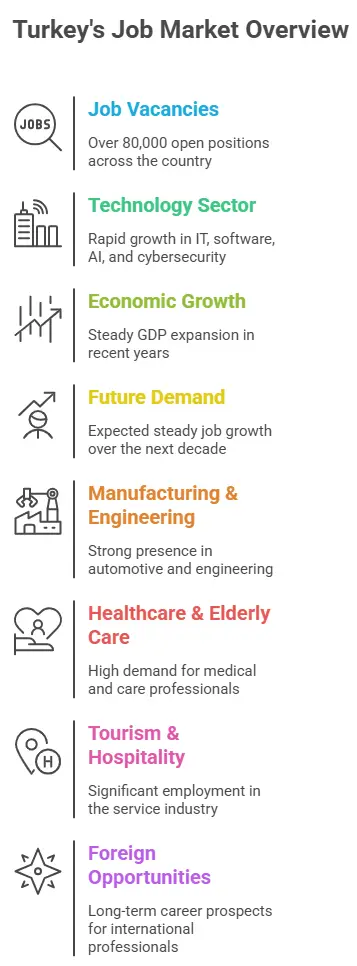
- There are around 80,000+ job vacancies across Turkey
- The technology and IT sector is growing fast, creating thousands of new jobs
- Turkey’s economy has shown steady GDP growth in recent years
- Job demand is expected to grow steadily over the next decade
- IT, software, AI, and cybersecurity roles are expanding
- Manufacturing, automotive, and engineering jobs remain strong
- Healthcare and elderly care roles are in high demand
- Tourism and hospitality continue to create large employment
- Turkey offers long-term career opportunities for foreign professionals
*Looking to work in Turkey? Get top consultation from experts at Y-Axis.
Job Outlook in Turkey
Understanding the job outlook is important for both job seekers and employers. Turkey is currently facing a shortage of skilled professionals in many sectors. These include IT, software development, manufacturing, healthcare, construction, hospitality, logistics, and renewable energy. Because there are not enough skilled workers locally, many Turkish companies are hiring foreign professionals. Candidates who have relevant work experience in these sectors have a better chance of getting a Turkey work permit and finding a suitable job.
General Employment Trends
After the COVID-19 pandemic, the way people work in Turkey changed a lot. Many companies started using remote and hybrid work models, especially in IT, customer support, and digital services. Employees now focus more on work–life balance and flexible working hours. Turkey’s job market has recovered well after the pandemic. The unemployment rate has gone down, and the number of job vacancies has increased. This shows that companies are actively looking for workers and that there is strong demand for skilled professionals, including foreign workers.
In-Demand Industries and Occupations in Turkey
Turkey is growing fast in many industries because of digital development and industrial expansion. Many companies are using new technologies and modern systems to improve their work. Because of this, employers are looking for workers who have basic digital skills, can work with data, solve problems, and think logically. However, many workers in Turkey do not yet have advanced digital or technical skills. This has created a gap between the jobs available and the skills of local workers. As a result, many positions remain unfilled. To meet this demand, Turkey is welcoming skilled foreign professionals, especially in technology-based and modern industries such as IT, engineering, manufacturing, and digital services. Foreign workers with the right skills and experience have good opportunities to find jobs and build long-term careers in Turkey.
In-Demand Jobs in Turkey
Turkey has a strong demand for skilled professionals across multiple sectors. Industries such as technology, engineering, healthcare, and services are actively hiring due to business growth and skill shortages. Salaries vary based on experience, location, and employer, but professionals with the right skills can expect stable income and long-term career growth. Below is a list of the most in-demand jobs in Turkey along with their average annual salaries.
| Occupation | Average Annual Salary |
|---|---|
| IT and Software | €25,000 |
| Engineering | €22,000 |
| Accounting and Finance | €18,500 |
| Human Resource Management | €20,000 |
| Hospitality | €15,000 |
| Sales and Marketing | €14,000 |
| Healthcare | €17,500 |
| STEM Roles | €30,000 |
| Teaching | €16,000 |
| Nursing | €18,000 |
*Read More......
In-Demand Skills in Turkey
Employers in Turkey are looking for professionals who have a good balance of technical skills and soft skills. Technical skills help employees perform their job tasks, while soft skills help them work well with others and adapt to changes at work. Professionals who can communicate clearly, work as part of a team, adapt to new situations, and manage their time well have better chances of career growth. These skills help employees perform better, build strong workplace relationships, and succeed in Turkey’s growing and competitive job market.
| Job Sector | Key Skills in Demand |
|---|---|
| Information Technology | Digital skills, software knowledge, data analysis, problem-solving |
| Engineering | Technical skills, analytical thinking, adaptability, teamwork |
| Healthcare & Nursing | Communication, patient care, teamwork, time management |
| Finance & Accounting | Attention to detail, analytical skills, financial reporting |
| Business & Management | Leadership, decision-making, communication |
| Marketing & Sales | Creativity, digital marketing, customer engagement |
| Human Resources | People management, communication, teamwork |
| Hospitality & Services | Customer service, communication, time management |
| Education & Training | Communication, adaptability, leadership |
Identification of Key Skills Sought by Employers
Employers in Turkey do not look only at degrees or technical knowledge when hiring. They also give high importance to soft skills. Skills such as good communication, teamwork, adaptability, and problem-solving show how well a person can work with others and handle everyday work situations. Employees who can learn quickly, support their team, and adjust to changes are valued more. These skills help professionals perform better at work and make a positive contribution to the company’s growth and success.
Importance of Upskilling and Reskilling
Upskilling and reskilling are very important in Turkey’s fast-changing job market. Learning new technologies, improving professional skills, and staying updated with industry trends help candidates get better job roles and higher salaries. Continuous learning also helps professionals remain competitive as job roles change over time. By upgrading their skills regularly, job seekers can build stable, long-term careers and increase their chances of success in Turkey.
Best Cities to Work in Turkey
Job opportunities in Turkey depend on the city and region. Some cities offer more jobs in technology and business, while others are strong in tourism and manufacturing.
- Istanbul, Ankara, and Izmir are major business hubs. These cities offer strong job opportunities in IT, finance, corporate offices, and multinational companies. Many foreign professionals prefer these cities because of better salaries and career growth.
- Antalya and other coastal cities have many job openings in tourism and hospitality. Hotels, resorts, restaurants, and travel services regularly hire workers, especially during the tourist season.
- Bursa and Kocaeli are important industrial and manufacturing centres. These cities offer good job opportunities in automotive, engineering, production, and factory operations.
- Call centres and customer support roles are growing across major cities. There is high demand for English-speaking professionals, especially in international companies and service centres.
Turkey still faces skill shortages in IT, healthcare, hospitality, construction, and logistics. Because of this, foreign professionals with the right skills have good chances of finding jobs and building successful careers in Turkey.
Impact of Manufacturing and Industrial Sector in Turkey
The manufacturing and industrial sector plays a very important role in Turkey’s economy. Many companies in this sector are well-established and some are family-owned, where decisions are usually made by senior management. Workplaces often value teamwork, trust, and long-term relationships.
Turkey has strong industries such as automotive, machinery, textiles, electronics, and construction materials. These industries support both domestic production and exports. As factories and industrial units continue to grow, companies are investing in modern machinery and production systems to improve quality and efficiency.
Because of this growth, there is a high demand for skilled workers such as engineers, technicians, machine operators, and quality control professionals. The manufacturing and industrial sector offers stable jobs, steady income, and long-term career opportunities, making it an attractive option for both local and foreign professionals in Turkey.
*Want to apply for a Turkey Work Visa? Y-Axis provides complete end-to-end assistance!
Remote Work and Flexible Jobs in Turkey
Remote and flexible work options have become more common in Turkey, especially after the COVID-19 pandemic. Many companies have moved away from traditional office-only work and now offer remote or hybrid job options. This is mainly seen in sectors such as IT, digital services, customer support, and business operations.
Remote work helps employees save travel time, reduce stress, and maintain a better work–life balance. For employers, it improves productivity and allows them to hire skilled professionals from different locations. Turkey has also introduced clear rules and regulations to protect employee rights in remote work arrangements, making it a stable and long-term work option.
Future Job Growth and Skill Development in Turkey
Turkey is making strong investments in technology, manufacturing, infrastructure, and renewable energy. These investments are helping create new job opportunities across the country. The government is also supporting start-ups and foreign companies, which is increasing employment options for skilled professionals.
Tourism continues to be one of Turkey’s largest employers and plays an important role in the economy. Along with this, training programs and skill development initiatives are helping workers prepare for future jobs. With continuous investment and education support, Turkey’s job market is expected to grow steadily in the coming years.
*Want to prepare a professional resume? Choose Y-Axis writing resume services.
How Government Policies Shape the Job Market in Turkey
Government policies play a key role in shaping employment in Turkey. The government supports job creation through business investments, tax benefits, and hiring incentives. These policies encourage companies to expand their operations and hire more workers.
When the demand for workers is high, salaries tend to increase, improving the standard of living for employees. At the same time, wage regulations help maintain balance between employers and workers. Overall, these policies help create a stable and sustainable job market in Turkey.
Challenges and Opportunities for Job Seekers in Turkey
While Turkey offers many job opportunities, challenges exist. Knowledge of Turkish language is important for many roles, especially outside IT and multinational companies. English-speaking professionals have better chances in IT, technology, and global firms. Non-EU nationals usually need a confirmed job offer before applying for a work permit.
Tips to Succeed in the Turkey Job Market
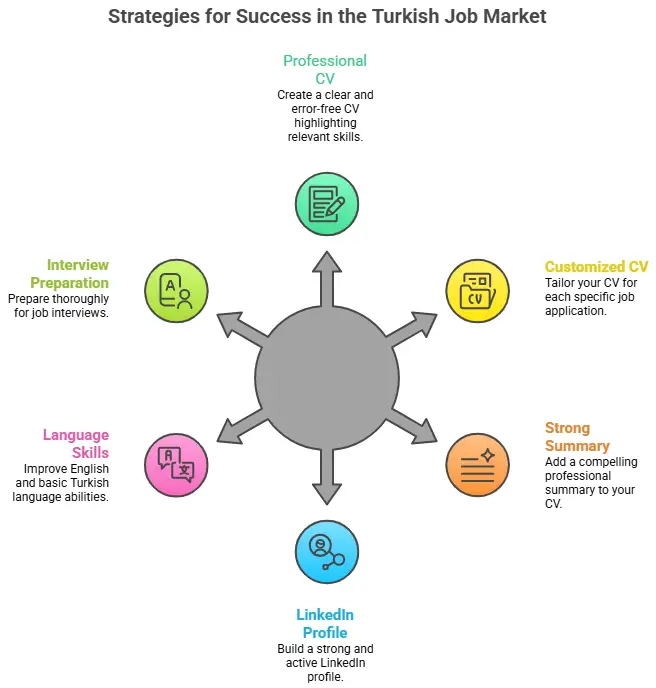
- Create a clear and professional CV
- Highlight relevant skills and experience
- Customize your CV for each job
- Keep your CV short and error-free
- Add a strong professional summary
- Build a strong LinkedIn profile
- Improve English and basic Turkish language skills
- Prepare well for interviews
Summary of Turkey Job Outlook
Turkey offers strong career opportunities for skilled professionals across key sectors such as IT, manufacturing, healthcare, tourism, construction, and renewable energy. Ongoing skill shortages and industry growth are creating more job openings for foreign professionals, including Indians. With digital growth, industrial expansion, flexible work options, and supportive government policies, Turkey’s job market continues to grow steadily. Professionals who upgrade their skills can build stable, long-term careers in a country that offers affordable living costs and a welcoming work environment.
*Searching for Jobs in Turkey? Find the right one with the help of Y-Axis resume marketing services.
Don't know what to do ?
Get Free Counseling
Looking for Inspiration
Explore what Global Indians have to say about Y-Axis in shaping their future
Frequently Asked Questions